Verena


The name is possibly derived from the Latin, verus, meaning “true.” Others have suggested that the name may actually be of some unknown Egyptian source.

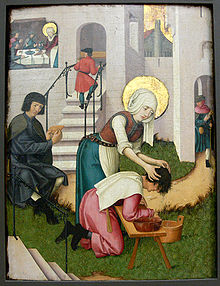
The name was borne by a 3rd-century Egyptian saint who found her way to Switzerland while marching along with the Theban legions. She is considered the patron saint of hairdressers as she was known for converting young native Swiss women to Christianity while washing and styling their hair. There is a shrine dedicated to St. Verena in Zurich, Switzerland.

The name has been popular in Germany and Switzerland and has even experienced some usage in the United States during the 18th and 19th-centuries, no doubt, brought over by German immigrants. It is also an especially common name among Mennonite, Hutterite and Amish families and is a popular name among Egyptian Christians.

It is also the name of a fictional goddess in the popular fantasy/video game series Warhammer. She is the goddess of healing and learning and is based on both Minerva and Athena.

Currently, Verena is the 383rd most popular female name in Germany, (2011).

Other forms of the name include:

  • Virina (Coptic)
  • Vérène (French)
  • Verena Верена (English/German/Italian/Russian/Slovene)
  • Werena (Polish)
  • Frena (Romansch)
  • Varena (Romansch)
  • Vreni (Swiss-German)
  • Vreneli (Swiss-German)


Florian

Gender: Masculine
Origin: Latin
Meaning: “flower.”

The name is derived from the Latin Florianus, which is derived from the Roman gens name Florus, meaning “flower.”

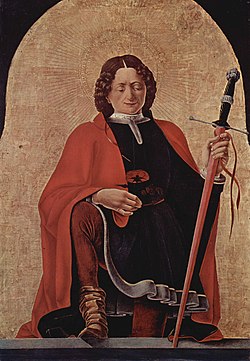
The name is borne by an early Christian saint and martyr who is considered the patron saint of Upper Austria, Poland and firefighters. In German slang, fighfighters are sometimes generically referred to as Florian, and there is a German folk saying called the Florian Principle which refers to a prayer to the saint, which goes:

O holy Saint Florian, spare my house, kindle others

This saying is the equivalent of the English saying, “not in my backyard.”

Florian has always been a popular name in German-speaking countries. It is currently the 10th most popular male name in Austria, (2010). His rankings in other countries are as follows:

  • # 35 (Germany, 2011)
  • # 79 (France, 2009)
  • # 84 (Belgium, 2009)
  • # 100 (Hungary, 2010)
  • # 155 (the Netherlands, 2010)

Other forms of the name include:

  • Florian Флориан (Albanian/Bulgarian/Dutch/English/French/German/Hungarian/Polish/Romanian/Russian/Spanish/Ukrainian)
  • Florià (Catalan)
  • Florijan (Croatian/Slovene)
  • Florián (Czech/Slovak)
  • Floriaan (Dutch)
  • Florianus (Dutch/Latin)
  • Flórián (Hungarian)
  • Flóris (Hungarian)
  • Fóris (Hungarian)
  • Fiorino (Italian)
  • Floreano (Italian)
  • Floriano (Italian/Portuguese)
  • Florians (Latvian)
  • Florijonas (Lithuanian)
  • Tworzyjan (Polish: sometimes used as a vernacular form)
  • Florin (Romanian)
  • Flurin (Romansch)
  • Florianu (Sicilian)
  • Florjan (Slovene)

Feminine forms include:

  • Floriana (Albanian/Italian/Romanian)
  • Florijana (Croatian/Slovene)
  • Floriane (French/German)
  • Fiorina (Italian)
  • Floreana (Italian)
  • Florianna (Polish)
  • Floryjana (Polish: archaic form)
  • Florina (Romanian)
  • Flurina (Romansch)
  • Florika (Slovene)
  • Florjana (Slovene)
Polish diminutives are Floszka and Tworka.


Simeon, Simon

Gender: Masculine
Origin: Biblical, Hebrew
Meaning: “he has heard.”
Eng (SIE-mun)

Simeon first appears in the Old Testament as a patriach of the Simeonite tribe and one of the 12 sons of Jacob.

The name origins are debated. The Torah claims that the name is in reference to Leah’s cry of anguish to God over her husband’s deference to her. Being a derivative of the Hebrew shama’on meaning “he has heard my suffering.” In this case, the name would share the same etymology as the name Ishmael (God has heard).

In some classical Rabbinical texts the name is sometimes translated to mean “he who listens to the words of God.” It has even been suggested that it is derived from the Hebrew sham’in meaning “there is sin” which is in reference to Zimri, an ancestor of Simeon’s, who committed the sin of having a relationship with a Midianite woman.

The name was borne by several other characters in the Old and New Testament, in the forms of Simeon and Simon. Simon later became associated with St. Peter. During the early Christian era, the Greek world took the name to mean “snub nosed” due to its similarity in sound to the Greek word σιμοσ (simos).

Simon has always been prevalent in the Western World, it is currently very trendy in continental Europe. The rankings of popularity in various countries are as follows:

  • # 3 (Poland, Szymon, 2010)
  • # 7 (Austria, 2010)
  • # 10 (Belgium, 2009)
  • # 12 (Italy, Simone, 2008)
  • # 26 (Germany, 2011)
  • # 32 (Denmark, 2010)
  • # 37 (Sweden, 2010)
  • # 49 (France, 2009)
  • # 56 (the Netherlands, Siem, 2010)
  • # 60 (Croatian, Šimun, 2010)
  • # 60 (Norway, Simen, 2010)
  • # 64 (Norway, 2010)
  • # 71 (Croatia, Šime, 2010)
  • # 75 (the Netherlands, 2010)
  • # 91 (Hungary, 2010)

Other forms of the name include (divided alphabetically by origin)

  • Simeon Սիմէօն (Albanian/Armenian/Bulgarian)
  • Simon Симон Սիմոն (Albanian/Armenian/English/Finnish/German/Hungarian/Macedonian/Malayalan/Norwegian/Occitanian/Slovenian/Swedish/ Romanian)
  • Samān (Arabic)
  • Shamo (Assyrian)
  • Shamun ܫܡܥܘܢ (Assyrian)
  • Şımon (Azeri)
  • Ximun (Basque)
  • Shyman Шыман (Belarusian)
  • Symon Сымон (Belarusian)
  • Simó (Catalan)
  • Simone (Corsican/Italian)
  • Šime (Croatian)
  • Šimo (Croatian)
  • Šimun (Croatian)
  • Šimon (Czech/Prekmurian/Slovak)
  • Simion (Danish/Romanian)
  • Simoen (Danish)
  • Siemen (Dutch/Frisian)
  • Siem (Dutch)
  • Siimon (Estonian/Finnish)
  • Smeon ስምዖን, (Ethiopian)
  • Símeon /Símun (Faroese)
  • Sema (Finnish)
  • Semen (Finnish/Gascon)
  • Semjon (Finnish)
  • Semoi (Finnish)
  • Siim (Finnish)
  • Siimoni (Finnish)
  • Simeoni (Finnish)
  • Simo (Finnish/Serbian)
  • Symeon Συμεών (Greek)
  • Symeonos Συμεώνος (Greek)
  • Siimuut (Greenlandic)
  • Shimon שמעון (Hebrew)
  • Símon (Icelandic)
  • Síomón (Irish)
  • Sshimeoni (Kosovar)
  • Sīmanis (Latvian) 
  • Sīmans (Latvian)
  • Simons (Latvian)
  • Saimonas (Lithuanian)
  • Saimontas (Lithuanian)
  • Simanas (Lithuanian)
  • Simas (Lithuanian)
  • Simeonas (Lithuanian)
  • Simonas(Lithuanian)
  • Sime Симе (Macedonian)
  • Shimon (Malayalam)
  • Simen/Simian (Norwegian)
  • Simå (Norwegian dialectical form: Norrland & Østerdalen)
  • Sømjo (Norwegian dialectical form: Rogaland)
  • Simonu/Symeonu (Old Church Slavonic)
  • Symeon (Polish)
  • Szymon (Polish: Szymek and Szymuś are diminutives)
  • Simão (Portuguese)
  • Simeão (Portuguese)
  • Simun (Quecha)
  • Schimun (Romansch)
  • Semyon Семён (Russian)
  • Sim (Scottish)
  • Šimej (Slovene)
  • Simón (Spanish)
  • Jimeno (Spanish)
  • Ximeno (Spanish)
  • Simoni (Swahili)
  • Shemod (Syrian)
  • Shimeon (Syrian)
  • Semen/Symon Симон (Ukrainian)
  • Mişon (Turkish)
  • Seimon (Welsh)
  • Simwnt (Welsh)
  • Shimmel (Yiddish)

Feminine forms include:

  • Simona (Czech/Italian/Portuguese/Romanian/Slovak/Slovenian)
  • Simonia/Simonie (Danish)
  • Simoona (Finnish)
  • Simone (French)
  • Simonette (French)
  • Szimóna (Hungarian)
  • Szimonetta (Hungarian)
  • Símonía (Icelandic)
  • Simonetta (Italian)
  • Sima (Lithuanian)
  • Simonė (Lithuanian)
  • Szymona (Polish)
  • Simoneta (Portuguese)
  • Ximena (Portuguese/Spanish)
  • Simoneta/Šimona (Slovak)
  • Simeona (Slovene)
  • Jimena (Spanish)

The designated name-day is October 28, and October 30 in Slovakia.

Felix

Gender: Masculine
Origin: Latin
Meaning: “happy; lucky.”
Eng (FEE-liks); Germ (FEH-leeks)

Felix is derived from an Old Roman agnomen, (nickname), which describes one who is happy or lucky.

In ancient History, it was bestowed as a descriptive nick name upon the Roman dictator, Lucius Cornelius Sulla, (c.138 B.C.E-78 B.C.E), it was also borne by a few other Roman officials.

The name also makes an appearance in the New Testament.

The name was borne by at least 15 saints and 5 popes, rendering the name extremely popular in Medieval Continental Europe.

The name was also in usage in Medieval England, but seems to have gone out of style after the Protestant Reformation, being revived again in the 19th-century.

Currently, Felix is the 9th most popular male name in Germany (2011), in the United States, however, he only ranked in as the 3331st most popular male name, (2010). The highest he has ever ranked in U.S. naming history was in 1884, coming in as the 137th most popular male name.

In the English speaking world, Felix is usually associated with the Cartoon character, Felix the Cat.

His rankings in other countries are as follows:

  • # 14 (Austria, 2010)
  • # 38 (Denmark, 2010)
  • # 50 (Sweden, 2010)
  • # 83 (Norway, 2010)
  • # 177 (France, 2009)
  • # 201 (the Netherlands, 2010)

A list of all the variations are as follows:

  • Feliu (Catalan)
  • Felix Феликс (Croatian/Czech/Dutch/English/Finnish/German/Romanian/Russian/Scandinavian/Serbian)
  • Feliks (Croatian/Polish/Croatian/Serbian/Slovene)
  • Feeliks (Finnish)
  • Feliksas (Finnish)
  • Félix (French/Hungarian/Portuguese/Slovakian/Spanish)
  • Feliksz (Hungarian)
  • Felice (Italian)
  • Felicetto (Italian)
  • Felicino (Italian)
  • Felicio (Italian)
  • Feluccio (Italian)
  • Felicius (Latin)
  • Szczęsny (Polish:a vernacular form of Felix, this form is archaic and has been replaced in usage by Felix)
  • Felici (Romansch)
  • Srečko (Slovene; Croatian: direct translation, literally meaning “happy, lucky” in Southern Slavic languages)

Another offshoot is the Latin Felician, which literally means “the happy one” or “the lucky one.”

Derivatives are:

  • Felician (English)
  • Félicien (French)
  • Feliciano (Italian/Portuguese/Spanish)
  • Feliziano (Italian)
  • Liciano (Italian)
  • Felicianus (Latin)
  • Felicjan (Polish: fe-LEET-syahn)
  • Felicián (Slovak)

Its feminine form of Felicia has been in usage in England since the Middle Ages, currently, she does not appear in the U.S. top 1000, she was last seen in 2005 coming in as 993rd most popular female name. The highest she ever ranked in U.S. naming history was in 1986 coming in as the 90th most popular female name.

She is currently the 251st most popular female name in the Netherlands (2008) and the 15th most popular in Sweden (2007).

Variations are:

  • Felicia (English/Italian/Romanian: feh-LEE-shah Eng; fay-LEE-chah Italian)
  • Félicie (French: fay-lee-SEE)
  • Félicienne (French)
  • Felicie (German: fe-LEE-tsee-e)
  • Felícia (Hungarian/Portuguese)
  • Felicetta (Italian: obscure)
  • Feliciana (Italian/Latin/Spanish)
  • Felicina (Italian: obscure)
  • Felicja (Polish: Felcia, Felka, Fila and Filka are the diminutives. fe-LEET-syah)
  • Felina (Polish)
  • Feliksa (Polish)
  • Szczęsna (Polish)
  • Srečka (Slovene/Croatian)

The name was borne by German composer, Felix Mendelssohn (1809-1847).

The designated name-days are January 14 (Sweden), February 12 (France), May 30 (Germany), June 9 (Hungary), November 1st (Czech Republic), November 20 (Slovakia).
Morena

Gender: Feminine
Origin: Maltese/Romansch/Spanish
Meaning: “brown; brunette.”
(moh-RAY-nah)

The name comes from a Latin element meaning “dark skinned; olive skinned; brownish” and in modern Spanish it is the word for brunette.

In Italian, morena is used to describe a particular form of sediment, composed of rock debris, carried in a glacier in its flow down stream. This is referred to in English as moraine. Its usage in Switzerland and Northern Italy may be in reference to the above, used as a sort of nature name.

The name is very popular among Romansch-speakers in Switzerland and is currently the 18th most popular female name in Argentina, (2009).

It is borne by Maltese pop singer, Morena (b.1984).

Alternately, the name could be from an Old Slavic source and is used as another name for the goddess Morana, (or Marzanna), in Slavic mythology. It is believe her name is linked with the Old Slavic word for frost.

A masculine form is Moreno, used in Italian, Portuguese, Maltese, Romansch and Spanish.

Maximus

Gender: Masculine
Origin: Latin
Meaning: “greatest”
Eng (MAKS-sim-mus)

The name comes directly from the Latin word for “greatness” and is found in several Roman designations, such as the Circus Maximus in Rome and was used as a title to denote importance in the case of the Pontifex Maximus (the highest priest in ancient Rome).

The name was most notably borne by Claudius Maximus, a 2nd-century stoic philosopher, and it was also borne by several saints.

In recent years, the name has seemed to experience a surge in popularity. In the English-speaking world, his popularity might be due to the popularity of other Max names and the release of the 2000 Ridley Scott film, Gladiator, in which the hero is named Maximus (as played by Russell Crowe).

In Europe, especially in Belgium and the Netherlands, both the male and feminine forms are very trendy. This may have been due to the marriage of Prince Willem-Alexander of the Netherlands to the Argentine-born Maxima Zorreguieta (b.1971).

Currently, Maximus 233rd most popular male name in the United States, (2010). His rankings in other countries are as follows:

  • # 9 (Belgium, Maxime, 2009)
  • # 19 (France, Maxime, 2009)
  • # 35 (Argentina,Máximo 2009)
  • # 825 (the United States, Máximo 2010)

In French, Maxime is occasionally bestowed upon females, but is far more common among males. It is currently the 444th most popular female name in the Netherlands, (2010).

Other forms of the name include:

  • Màxim (Catalan)
  • Maksimká Максимкá (Chuvash)
  • Maksim Максим (Croatian/Belarusian/Bulgarian/Macedonian/Serbian)
  • Maxim Максим(Czech/Dutch/Hungarian/Kazakh/Romanian/Russian/Slovak/Ukrainian/Uzbek)
  • Maximus (Dutch/English/German)
  • Maxime (French)
  • Maksime მაქსიმე (Georgian)
  • Maximos Μάξιμος (Greek)
  • Miksa (Hungarian)
  • Massimo (Italian)
  • Massimino (Italian)
  • Maksims (Latvian)
  • Méme (Occitanian)
  • Maksym (Polish)
  • Máximo (Portuguese/Spanish)
  • Maximino (Portuguese)
  • Macsen (Welsh)
  • Maxen (Welsh)

Feminine forms include:

  • Massima (Italian)
  • Massimina (Italian)
  • Maxima (Hungarian)
  • Maksyma (Polish)
  • Máxima (Spanish)

Joachim, Joaquin

Gender: Masculine
Origin: Hebrew
Meaning: “Yahweh has established.”
Eng (JOKE-im); Sp (wah-KEEN)

The name is possibly derived from the Biblical Hebrew male name, Jehoiachin, which is found in the Old Testament as the name of king of Judah imprisoned during the Babylonian exile.

Joachim appears in the apocryphal Gospel of James as the name of the husband of St. Anne and the father of the Virgin Mary. In the Qu’ran the father of Mary is named Imran, though Joachim and Imran are not etymological related. The Catholic Church, Eastern Orthodox Churches and the Anglican Church has traditionally revered this legendary character as a saint and as a result, the name became extremely popular across Europe, especially in Catholic countries.

The name was never very common in the English-speaking world but was occasionally used by Irish-Catholics and American-Catholics.

Currently Joachim is the 319th most popular male name in France, (2009) and the 496th most popular in the Netherlands (2010). Its Spanish form of Joaquin, however, ranks even higher in a couple of countries. His rankings are as follows:

  • # 5 (Chile, 2010)
  • # 99 (Spain, 2010)
  • # 306 (United States, 2010).

Other forms of the name include:

  • Iyakem (Amharic/Ethiopian)
  • Chuaquín (Aragonese)
  • Xuaco/Xuacu (Aragonese)
  • Jokin (Basque)
  • Chaosum (Breton)
  • Joasim (Breton)
  • Jechim (Breton)
  • Joasin (Breton)
  • Jaouas (Breton)
  • Yoakim Йоаким (Bulgarian)
  • Yakim Яким (Bulgarian)
  • Yokim Йоким (Bulgarian)
  • Joaquim (Catalan/Portuguese)
  • Quim (Catalan/Portuguese)
  • Ximo (Catalan/Valencian)
  • Youakim (Coptic/Syrian)
  • Jáchym (Czech)
  • Jokum (Danish)
  • Jochem (Dutch/German)
  • Aki (Finnish)
  • Jaakkima (Finnish)
  • Joachim (English/French/German/Hungarian/Polish)
  • Kim (Finnish/Scandinavian)
  • Kimi (Finnish)
  • Xaquín (Galician)
  • Xoaquin (Galician)
  • Xocas (Galician)
  • Ioa’kime იოაკიმე (Georgian)
  • Achim (German)
  • Jochen (German)
  • Jochim (German)
  • Jóakim (Icelandic)
  • Gioacchino/Gioachino (Italian)
  • Giovacchino (Italian)
  • Yoakima (Lingala)
  • Joakim Јоаким (Macedonian/Serbian/Scandinavian) 
  • Akimka (Maldovan)
  • Iacin (Murcian)
  • Juaqui (Murcian)
  • Quino (Murcian)
  • Ioachim (Romanian)
  • Giuachin (Romansch)
  • Akim АкимЯким (Russian)
  • Yakim (Russian)
  • Joaquín (Spanish)
  • Joakym Йоаким (Ukrainian)

Feminine forms include:

  • Gioacchina (Italian)
  • Gioachina (Italian)
  • Giovacchina (Italian)
  • Joachima (Polish)


Rita

The name is a contraction of Margaret but seems to have been used as an independent given name since the Middle Ages.

It was borne by Rita of Armenia (1278-1333) a Byzantine Empress. The name was further popularized in Europe due to the cult of St. Rita of Cascia (1381-1457) a Medieval Italian saint.

The name is used across Europe, including Armenia. Currently, Rita is the 461st most popular female name in Quebec, Canada (2010).

In more recent history it was borne by actress Rita Hayworthe (1918-1987).

Other forms of the name include:

  • Riet (Dutch)
  • Reeta (Finnish)
  • Reetta (Finnish)
  • Riitta (Finnish)
  • Ryta (Polish)

A common Sicilian diminutive is Rituzza.

Source

  1. http://www.behindthename.com/name/rita

Raymond

Gender: Masculine
Origin: German
Meaning: “advice protector.”
(RAY-mund)

The name is composed of the Germanic elements ragin (advice) and mund (protector). It was introduced to England via the Normans. It was borne by several saints.

Currently, Raymond is the 225th most popular male name in the United States, (2010).

Other forms of the name include:

  • Remund (Aragonese)
  • Erramun (Basque)
  • Raimon (Catalan)
  • Raimondu (Corsican)
  • Rejmond Рејмонд (Croatian/Serbian)
  • Rajmund (Czech/Hungarian)
  • Raimund (Danish/Finnish/Norwegian/Romanian/Swedish)
  • Ramund (Danish)
  • Raymundus (Dutch/Latin)
  • Raymond (Dutch/English/French)
  • Raimo (Finnish)
  • Reima (Finnish)
  • Reemt (Frisian)
  • Réamann (Gaelic)
  • Redmund/Redmond (Irish)
  • Raimund (German)
  • Reimund (German)
  • Raimundur (Icelandic)
  • Raimondo (Italian)
  • Raimonds (Latvian)
  • Remao (Limburgish)
  • Mao (Limburgish)
  • Raimondas (Lithuanian)
  • Reimund (Norman)
  • Raginmund (Old German)
  • Rajmund (Polish/Slovene)
  • Ramun (Romansch)
  • Arrammundu (Sardinian)
  • Ramundu (Sardinian)
  • Rámon (Spanish)
  • Raimundo (Spanish/Portuguese)
  • Raymundo (Spanish/Brazilian Portuguese)
A common English short form is Ray.

Feminine forms include:

  • Ramona (English/Hungarian/Portuguese/Romanian/Spanish)
  • Raymonde (French)
  • Raimunde (German)
  • Raimonda (Italian)
  • Raimondina (Italian)
  • Rajmunda (Polish)
  • Ramuna (Romansch)
Source

Lawrence

Gender: Masculine
Origin: Latin
Meaning: “from Laurentum.”
Eng (LAW-rents)

The name is derived from the Latin cognomen Laurentius meaning “from Laurentum.” It was popularized by an early Roman deacon, martyr and saint who was roasted alive when he refused to turn over church property to the Roman authorities. According to legend, he is the patron saint of comedians because when he was being roasted he told his torturers “turn me over, I am done on this side.”

It was borne by several other saints.

Lawrence has been a popular given name since Medieval times and it consistently appeared in the U.S. top 100 from 1880-1971. By 1972 it mysteriously and suddenly fell completely out of popularity and it has been so since. It is currently only the 457th most popular male name, (2010).

Other forms include:

  • Nadja/Nadjeh (Arabic: used among Arab Christians)
  • Toufiq  لورنس (Arabic: used among Arab Christians)
  • Loren (Aragonese)
  • Lorient (Aragonese)
  • Lari (Basque)
  • Lawrencij Лаўрэнцій (Belarusian)
  • Laorañs (Breton)
  • Llorenç (Catalan)
  • Larenzu (Corsican)
  • Lovrenco (Croatian)
  • Lovre (Croatian. Currently the 58th most popular name in Croatia, 2010)
  • Lovro (Croatian)
  • Vavřinec (Czech/Slovak: literally from the Czech word for laurel, it has been used as the proper cognate for Lawrence since Christianity was introduced to the area)
  • Laurits/Lauritz (Danish/Estonian/Icelandic/Norwegian)
  • Lasse (Dutch/Norwegian/Swedish. LAHS-se)
  • Laurens (Dutch)
  • Loris (Dutch/French/German/Italian. Currently the 100th most popular male name in France, 2009)
  • Rens (Dutch. Currently the 79th most popular male name in the Netherlands)
  • Larkin (English: a Medieval diminutive form of Lawrence)
  • Lauri (Estonian/Finnish)
  • Lars (Finnish/Norwegian/Swedish. Currently the 14th most popular male name in the Netherlands, the 23rd most popular in Belgium and the 57th most popular in Norway)
  • Lassi (Finnish)
  • Laurent (French)
  • Laurentin (French)
  • Lourens (Frisian)
  • Labhrás (Gaelic) 
  • Loenso (Genovese)
  • Laurenzius (German: archaic)
  • Lenz (German)
  • Lorenz (German)
  • Lavrentios Λαυρεντιος (Greek)
  • Lőrinc (Hungarian)
  • Lárus (Icelandic)
  • Lorenzo (Italian/Spanish. Currently the 5th most popular male name in Italy and 52nd most popular in France (2009). It is also the 187th most popular in the Netherlands and the 322nd most popular in the United States, 2010)
  • Laurentius (Latin)
  • Lau (Limburgish)
  • Lor (Limburgish)
  • Laurynas (Lithuanian)
  • Lawrenz (Maltese)
  • Laurys (Manx)
  • Louothains (Norman)
  • Lavrans (Norwegian)
  • Laurenç (Occitanian)
  • Lleurant (Occitanian)
  • Laurencjusz (Polish)
  • Laurenty (Polish)
  • Wawrzyniec (Polish: literally from the Polish word for laurel, it has been used as the proper cognate for Lawrence since Christianity was introduced to the area)
  • Lourenço (Portuguese)
  • Laurențiu (Romanian)
  • Lavrentie (Romanian)
  • Lurintg (Romansch)
  • Lavrenti Лаврентий ლავრენტი (Russian/Georgian)
  • Larentu (Sardinian)
  • Labhrainn (Scottish)
  • Lovrenc (Slovene)
  • Laurisch (Sorbian)
  • Lorencio (Spanish: Medieval)
  • Lorens (Swedish)
  • Lavrentij Лаврентій (Ukrainian)
  • Lorenso (Venetian)
A common English diminutive is Larry a less common one Laurie
  • Toufiqia (Arabic)
  • Laurendia (Basque)
  • Laurenza (Corsican)
  • Laurenzia (Corsican)
  • Laurentien (Dutch)
  • Renske (Dutch)
  • Laurence (French)
  • Laurentine (French)
  • Lavrentia Λαυρεντία (Greek)
  • Lorentina (Italian)
  • Lorenza (Italian/Spanish)
  • Lorenzina (Italian)
  • Larentia (Latin)
  • Laurentina (Latin)
  • Laurencja (Polish)
  • Laurentyna (Polish)
Source