
Photo by Abby Kihano on Pexels.com
- Origin: Hindi जशन
- Meaning: “festivities.”
- Gender: masculine
- Pronunciation: JAH-shahn
The name comes directly from the Hindi word जशन meaning, “festivities.”
Sources
The name comes directly from the Hindi word जशन meaning, “festivities.”
Sources

Ramiz رامز , Ramz رَمْز & Ramzi رمزي are Arabic masculine names which come directly from the Arabic word (ramz) رَمْز , meaning, “code, sign, mark, symbol, gesture.” It is ultimately derived from R-M-Z root in Arabic.
Ramzi appeared in the U.S. Top 1000 Most popular male names between 1973-1990 and peaked at #320 in 1982. It’s usage in the United States may have been influenced by immigrant groups who use the name (Southeastern European Muslims, Arab immigrants & Southeastern Asian Muslims immigrants), mixed with Anglophone parents who were probably using it as an alternate spelling for the English surname/place-name, Ramsey, which means “wild garlic island.” It should also be noted that during this time period, the use of Arabic names became especially popular among African-Americans.
The name is sometimes transliteration as Ramzy and I suppose in the English-speaking world it could also be transliterated as Ramsey.
The feminine forms are Ramza and Ramzia, spelled Ramziya Рәмзия in Central Asian & Turkic languages (Bashkir, Chechen, Tatar).
Other forms include:
Male
Female
Sources

The name is from the Sanskrit a अ (not) & jaya जय (victory).
The name appeared in the British Top 500 Male Names between 1996-2011, and peaked at #300 in 2003.
Other forms Ajai and Ajit.
Sources

The name comes directly from the Arabic word for forenoon or late morning. In Islam, it is used in reference to Salat ad-Duha صَلَاة الضحى, a voluntary prayer that is said between Fajr and Dhuhr and is used mainly for the atonement of sins.
It is also the name of the 93rd chapter in the Qu’ran, al-Ḍuḥā الضحى, (the Morning).
As a given-name, it is traditionally unisex, but has been more often bestowed on females.
Other forms include:
Sources
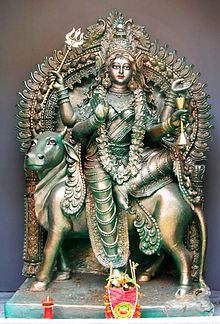
The name comes directly from the Sanskrit word meaning “fair; light-skinned; white; brilliant.” In Hinduism, this is an epithet for the goddess Parvati in her Mahagauri form.
The Kannada and Tamil form is Gowri கௌரி (Tamil) & ಗೌರಿ (Kannada).
Gauri can also be a Finnish male form of the name Gabriel.
Sources

The name can have a few origins and meanings. It is primarily an Indian name that comes from the Sanskrit हंस (hamsa), which originally referred to an aquatic bird of passage. The hamsa is described as a mythical bird with knowledge in the Rig Veda and also as the main means of transport for the gods Brahma, Gayatri, Saraswati, and Vishvakarma in Hinduism. In the Ramayana, the hamsa was the bird that carried love letters between Damayanti and Nala. According to Indian legend, arayanna (heavenly hamsa swans) are said to live in the Himalayas where they eat pearls and are able to separate milk from water.
The hamsa bird is also associated with the concept of soham (that I am), as when it is said fast, hamsa starts to resemble soham. The latter is linked with the Brahman, and thus the bird is often associated with the cycle of samsara.
The hamsa bird has also been a popular motif in Indian art for centuries.
Over the centuries, it has interchangeably been translated as a swan, flamingo, goose or duck. It is ultimately from the Proto-Indo-European root word *ǵʰh₂éns, which is also the progenitor of the English word goose, German gans (goose), and the Latin anser (goose).
In India, as a given-name, it is used among all languages groups. The name is primarily used on females but has occasionally been given to males.
The name is also German and Scandinavian female name, being a contracted form of Johanna. Other forms are Hansina and Hansine.
Sources

Latif is a masculine given-name which comes directly from the Arabic word لَطِيف (gentle; kind; benevolent). In Islam, Al-Latif لطيف, (the Kind; the Benevolent) is one of the 99 names of Allah (God). It’s feminine form is Latifa.
Latif & Latifa are commonly used throughout the Islamic world.
A notable American bearer is actress & singer, Queen Latifah.
Other forms include:
Sources

Mahvash is a Persian name meaning “beautiful like the moon” or “moon-like.” It’s Urdu offshoot is Mehwish and its Turkish form is Mehveş.
Though it is a pre-Islamic Persian name, it is a popular name used among Muslims in India and is also used in Pakistan.
Mahvash was the stage name of a renowned Persian entertainer from the 1950s.
Mahvash Disease is the name of a type of an autosomal recessive, hereditary pancreatic neuroendocrine tumor syndrome. However, I could not find the reason why it is specifically called Mahvash disease.
Mehwish is borne by Pakistani actress, Mehwish Hayat (b. 1983).
Sources
The name is derived from the Sanskrit प्रीति (prīti), which means, “love; joy; kindness; pleasure; favor; affection; sweetheart.” Another form is Pritika.
It is sometimes transliterations as Preeti & Preetika.
A notable bearer is British Secretary of State for the Home Department, Priti Patel (b. 1972).
Sources
The name comes directly from the Arabic word for heart. It is used equally among Arab- Muslims & Christians. Among Christians, particularly Palestinians, Chaldeans and Lebanese Christians who profess Roman Catholicism, it is used in reference to the Sacred Heart of Jesus or the Immaculate Heart of Mary, in the same way the Spanish name Corazón is used in the Spanish-speaking world, though in the Arabic case, the name is strictly masculine.
Among Muslims, the term fu’ad is used at least 5 times in the Quran. The name is used throughout the Islamic world.
It is even used among Non-Arab groups in the Middle East, such as Mizrachi Jews.
The name was borne by two Egyptian kings.
Other forms include:
A feminine form is Fuada(h).
Sources

