Adrian

Gender: Masculine
Origin: Latin
Meaning: “from Hadria”

The name is derived from the Latin Hadrianus, a Roman cognomen meaning, “from Hadria.” Hadria was a small town in the North of Italy. It gave its name to the Adriatic Sea.
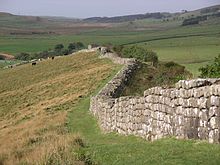
The name was borne by Publius Aelius Hadrianus (76-138 CE), known in the modern world as Emperor Hadrian, he is most famous for the wall he built across Great Britain, known as Hadrian’s Wall.
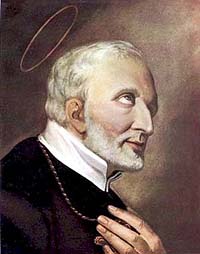
The name remained common throughout Europe, and is fairly popular across the Western World till this day. It was borne by several saints and popes, including the first and only English pope, Adrian IV, as well as the only Dutch pope, Adrian VI.
Currently, Adrian is the 6th most popular male name in Spain, (2010) and the 7th most popular in Norway, (2010). His rankings in other countries are as follows:
  • # 29 (Catalonia, 2009)
  • # 33 (Poland, 2010)
  • # 43 (Germany, 2011)
  • # 48 (Austria, 2010)
  • # 49 (Croatia, 2010)
  • # 51 (France, Adrien, 2010)
  • # 56 (United States, 2010)
  • # 60 (Sweden, 2010)
  • # 63 (Hungary, 2010)
  • # 81 (Belgium, Adrien, 2009)
  • # 455 (France, Adrian, 2009)

Other forms of the name include:

  • Ad (Afrikaans/Limbergish)
  • Adriaan (Afrikaans/Dutch)
  • Adrianus (Afrikaans/Latin)
  • Arrie (Afrikaans)
  • At (Afrikaans)
  • Daan (Afrikaans)
  • Jaans (Afrikaans)
  • Adrian Адриан (Albanian/Bulgarian/Croatian/Dutch/English/Finnish/Polish/Romanian/Russian/Scandinavian/Ukrainian)
  • Ardian (Albanian)
  • Adrianu (Asturian/Corsican/Sicilian)
  • Adiran (Basque)
  • Adrijan (Bosnian/Croatian/Serbian/Slovene)
  • Hadrijan (Bosnian)
  • Adrià (Catalan)
  • Jadran(ko) (Croatian)
  • Adrián (Czech/Hungarian/Slovak/Spanish)
  • Arie (Dutch)
  • Arjan (Dutch)
  • Hadrian(us) (Dutch/German/Latin)
  • Adrien (French)
  • Hadrien (French)
  • Aidrean (Gaelic)
  • Adrán (Galician)
  • Adrao (Galician)
  • Hadrán (Galician)
  • Hadrao (Galician)
  • Hádrian (Galician)
  • Adrianos Αδριανός (Greek)
  • Adorján (Hungarian)
  • Adrían (Icelandic)
  • Adriano (Italian/Portuguese)
  • Adrio (Italian)
  • Adriāns (Latvian)
  • Adrianas (Lithuanian)
  • Adrijonas (Lithuanian)
  • Adrião (Portuguese)
  • Adriànu (Sardinian)

Feminine forms include:

  • Adriana  (Albanian/Bulgarian/Catalan/Czech/Galician/German/Greek/Italian/Latin/Lithuanian/Polish/Romanian/Russian/Slovak/Spanish)
  • Adrijana (Bosnian/Croatian/Serbian)
  • Hadrijana (Bosnian/Croatian/Serbian)
  • Jadranka (Croatian)
  • Adriána (Czech/Hungarian/Slovak)
  • Ariane (Dutch)
  • Hadriana (Galician/Latin)
  • Adria (German/Italian)
  • Adriane (German)
  • Adrienne (French)
  • Adrienn (Hungarian)
  • Adrianna (Polish)
  • Drina (Spanish)

Polish feminine diminutives are Ada and Adi.

Malena

Gender: Feminine
Origin: Croatian/Bosnian/Czech/Italian/Serbian/Spanish/Swedish
(mah-LAY-nah)

The name is an abstract form of Maria Magdalena, Mahulena and Magdalena.

As of 2009, Malena was the 19th most popular female name in Argentina. Its popularity in Argentina may be due to a famous tango song, Malena, by Homero Manzi and Lucio Demarre.

In the former Yugoslavia, it is the name of a title song by Videosex and Idoli.

Recently the name was brought to the public attention by the 2000 academy award winning Italian film starring Monica Belucci.

The name is borne by Swedish pop star, Malena Ernman (b.1970).

Another form is the Danish and Norwegian, Malene.

Sol

Gender: Feminine
Origin: Old Norse/Latin/Spanish
Meaning: “sun”

The name is believed to be of ancient Indo-European roots and in Norse Mythology, she is the personification of the sun. Sól appears in Old Nordic literature, such as, the Prose Edda, where she is attested as being the sister of the Moon (Máni) and the daughter of Mundilfari. It is foretold that in the coming days of Ragnarók, she shall be devoured by the Fenris wolf, but beforehand, she shall give birth to a daughter who will take her place after the great battle.

Many scholars have theorized that the goddess may be an extension of a proto-European bronze age goddess and may be related to the Sanskrit Surya. This theory is supported by the fact that similar attestations and names appear in other Pre-Christian European religions, such as the Lithuanian Saulė, the Gaulic Saulis and the Slavic Solnitse. In Roman mythology, Sol was personified as a man.

In modern Spanish, Swedish and Norwegian, it is the word for sun and is occasionally bestowed as a female given name. It has recently become more common in Latin America, where it was originally used as a short form of Marisol, but is now more often used as an independent given name.

Currently, Sol is the 27th most popular female name in Argentina, (2009).


Leander

Gender: Masculine
Origin: Greek
Meaning: “lion man.”
(lee-AN-der)

The name is from the Greek, Leandros (Λεανδρος), which is composed of the elements, leon (lion) and andros (man).

The name is found in the Byzantine romance Hero & Leander which recounts the star crossed tale of two early Greek lovers. Hero was a priestess of Aphrodite who lived in a tower in the European side of the Dardanelles, while Leander lived just across the strait in Abydos. The two fell in love and Leander would swim his way across the Hellespont just to be with Hero. One night, a horrible storm struck the sea and Leander perished. In grief, Hero threw herself from the tower and died.

The name was also borne by a 6th-century Spanish bishop and saint.

Currently, Leander is the 39th most popular male name in Norway, (2010). His popularity in other countries are as follows:

  • # 44 (Argentina, Leandro, 2009)
  • # 149 (Germany, 2011)
  • # 169 (France, Léandre, 2009)
  • # 256 (France, Leandro, 2009)
  • # 447 (the Netherlands, 2010)
  • # 808 (United States, Leandro, 2010)

Other forms of the name include:

  • Leandre (Catalan)
  • Leander еандер ( Dutch/English/Finnish/German/Hungarian/Polish/Russian/Scandinavian/Slovene)
  • Léandre (French)
  • Leandros Λεανδρος (Greek)
  • Leandro (Italian/Portuguese/Spanish)
  • Leandrosz (Hungarian)

A feminine version is Leandra, used in Greece, German-speaking countries, Spanish-speaking countries and Portuguese-speaking countries.

Pia

Gender: Feminine
Origin: Latin
Meaning: “pious; dutiful; devoted.”
(PEE-ah)

The name is a feminine form of the Late Latin male name Pius which means exactly what it says! Its masculine form was mainly used as a religious name, taken by priests, monks and popes (twelve of whom bore the name).

The name may have been used in reference to a line in a prayer to the Virgin Mary (Salve Regina)

O clemens, O pia, O dulcis Virgo Maria

It was also borne by a 3rd-century Carthaginian Christian saint and martyr.

It was a very popular name in Scandinavia, particularly in Sweden at the beginning of the 20th-century all the way up until the 1960s. The earliest records for the name Pia in Sweden go as far back as 1848.

Currently Pia is the 22nd most popular female name in Slovenia (2010) and the 28th most popular in Chile, (2010). Her rankings in other countries are as follows:

  • # 25 (Germany, 2011)
  • # 40 (Austria, 2010)
Other forms of the name include:
  • Piia (Finnish/Estonian)
  • Pía (Spanish)
Masculine forms include:
  • Pius (German/Latin)
  • Pio (Italian)
  • Pío (Spanish/Portuguese)


Marius, Mario

Gender: Masculine
Origin: Latin
Meaning: debated
Eng (muh-RYE-us)

There are several different theories as to the name’s etymology, it is derived from the Roman gens name of supposed Oscan origin (an extinct language spoken by the ancient Sabines). It has been suggested that the root of the name may actually be from the Latin words mas or maris (male) or it could be from the Latin mare (sea), the plural of which is Maria. It has also been suggested to be related to the name Mars. By Christian times the name was used as a syncretized form of the Biblical Hebrew, Miriam, bestowed as a masculine form. It’s etymology has been assumed to be a masculine form of Mary or Maria since, and was bestowed as such, especially in Southern European countries in the form of Mario.

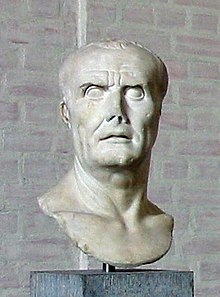
In France, the name is traditionally used in the region of Provence, where the famous Roman general, Gaius Marius (b. 2nd-century BCE) is still considered a hero for crushing the Teutonic forces near Mount Saint-Victoire.

Currently, Marius is the 22nd most popular name in Norway, (2010). His rankings in other countries are as follows:

  • # 40 (Denmark, 2010)
  • # 83 (France, 2009)

Its Southern European form of Mario is currently the 10th most popular male name in Spain, (2010). His rankings in other countries are as follows:

  • # 41 (Croatia, 2010)
  • # 44 (Catalonia, 2010)
  • # 91 (Chile, 2010)
  • # 207 (United States, 2010)

Other forms of the name include:

  • Marijo (Croatian)
  • Mario (Croatian/Italian/Spanish)
  • Márius (Czech/Slovak)
  • Marius (Dutch/French/German/Romanian/Scandinavian)
  • Marios Μαριος (Greek: modern)
  • Máriusz (Hungarian. MAHR-yoos)
  • Marijus (Lithuanian)
  • Mariusz (Polish. MAR-ee-OOSH)
  • Mário (Portuguese/Hungarian)
  • Marij Ма́риус (Russian)
  • Màriu (Tuscan)

Alphonse, Alonso

Gender: Masculine
Origin: German
Meaning: “noble and ready.”

The name is believed to be derived from a Visigothic male name Adalfuns which is composed of the elements adal (noble) and funs (ready). It has also been associated with another Visigothic name Hildefuns meaning (battle ready). The name has always been popular in its various forms throughout Southern Europe, especially in the Iberian Peninsula where it was borne by several kings.

In its French form of Alphonse, it is the name the title character in Alexander Dumas’ 1873 book Monsieur Alphonse, which recounts the exploits of a pimp. Due to this literary association the name has come to mean “pimp” in several languages, most notably in Danish and in Polish.

Its Spanish form of Alonso, however, remains a very common name throughout the Spanish-speaking world. It is currently the 16th most popular male name in Chile (2010). It is also the 84th most popular in Spain (2010) and the 637th most popular in the United States (2010).

The more archaic Italian and Spanish form of Alfonso appears in the U.S. top 1000, coming in as the 742nd most popular male name (2010).

The name was most famously borne by St. Alphonsus Liguori, an Italian saint who founded the order of the Redemptorists and is considered a Doctor of the Church by the Catholic Church.

Other forms of the name include:

  • Adalfuns (German: archaic)
  • Alifonso (Aragonese)
  • Alfonsu (Asturian/Sardinian/Sicilian)
  • Fonsu (Cantabrian)
  • Alfontso (Basque)
  • Alfoñs (Breton)
  • Alfons (Catalan/Czech/Dutch/Finnish/German/Maltese/Polish/Romanian/Scandinavian: also the word for pimp in Polish and Danish)
  • Fons (Dutch)
  • Funs (Dutch)
  • Alfo (Finnish)
  • Alhvo (Finnish)
  • Altto (Finnish)
  • Alphonse (French)
  • Afonso (Galician/Portuguese)
  • Alphons (German)
  • Alfonz (Hungarian)
  • Alfonzino (Italian)
  • Alfonso (Italian/Portuguese/Spanish)
  • Alfonzo (Italian)
  • Alonzo (Italian)
  • Alphonsus (Late Latin)
  • Alfonss (Latvian)
  • Funske (Limbergish)
  • Alfonsas (Lithuanian)
  • Alonso (Portuguese/Spanish)
  • Affonzu (Sicilian)
  • Arfansu/Arfanzu (Sicilian)
  • Alfonz (Slovak/Slovene)

Feminine forms include:

  • Alphonsine (French)
  • Alfonza (Hungarian)
  • Alfonzin (Hungarian) 
  • Alfonzina (Hungarian)
  • Alfonsa (Italian/Portuguese/Spanish)
  • Alfonsina (Italian/Portuguese/Spanish)
  • Alfonza (Italian)
  • Alfonzina (Italian)

Hector

Gender: Masculine
Origin: Greek
Meaning: “to have; to hold.”
Eng (HEK-ter); Sp (EK-tor)

The name is found in Greek mythology as the name of the son of Priam and Hecuba, a Trojan prince and a renowned warrior of Troy. After slaying Patroclus, Achilles murdered Hector and then dragged his body from his chariot for days.

In Ancient Greece and even in Medieval Europe, Hector was considered one of the greatest warriors to have ever lived. The Greek Armed Forces attribute their motto to him:

 “One omen is best: defending the fatherland”

The name is believed to be derived from the Greek verb ékhein meaning “to have, to hold.” In Aeolic poetry, Ékhtor was used as an epithet for Zeus, implying that he is the holder of all things.

The name is also found in Arthurian legend as the name of the foster father of King Arthur.

The name was fairly common in Europe during the Middle Ages, and among the Scottish Highlanders, it was traditionally used as an anglicized form of Eachann.

The name is currently very popular in Spanish-speaking countries, in Spain, he was the 31st most popular male name, (2010). His rankings in other countries are as follows:

  • # 38 (Catalonia, 2010)
  • # 79 (Chile, 2010)
  • # 226 (United States, 2010)
  • # 317 (France, 2009)

Other forms of the name include:

  • Etor (Basque)
  • Hektor Хектор (Bulgarian/Croatian/Dutch/Finnish/German/Hungarian/Polish/Scandinavian/Serbian/Slovene)
  • Hèctor (Catalan)
  • Hektór (Czech)
  • Hector (English/French/Latin/Romanian)
  • Hekhtori ჰექტორი (Georgian)
  • Hector (German)
  • Héktôr Ἕκτωρ (Greek: modern)
  • Eachtar (Irish)
  • Ettore (Italian/Maltese)
  • Hektors (Latvian)
  • Hektoras (Lithuanian)
  • Ektor (Polish)
  • Jaktor (Polish)
  • Jektor (Polish)
  • Heitor (Portuguese)
  • Gektor Гектор (Russian/Ukrainian)
  • Héctor (Spanish)
A popular Scots pet form is Heckie and an obscure Scottish feminine form is Hectorina. Italian female form is Ettorina.
Polish diminutive forms are Jaktorek and Jaktorko.

Joachim, Joaquin

Gender: Masculine
Origin: Hebrew
Meaning: “Yahweh has established.”
Eng (JOKE-im); Sp (wah-KEEN)

The name is possibly derived from the Biblical Hebrew male name, Jehoiachin, which is found in the Old Testament as the name of king of Judah imprisoned during the Babylonian exile.

Joachim appears in the apocryphal Gospel of James as the name of the husband of St. Anne and the father of the Virgin Mary. In the Qu’ran the father of Mary is named Imran, though Joachim and Imran are not etymological related. The Catholic Church, Eastern Orthodox Churches and the Anglican Church has traditionally revered this legendary character as a saint and as a result, the name became extremely popular across Europe, especially in Catholic countries.

The name was never very common in the English-speaking world but was occasionally used by Irish-Catholics and American-Catholics.

Currently Joachim is the 319th most popular male name in France, (2009) and the 496th most popular in the Netherlands (2010). Its Spanish form of Joaquin, however, ranks even higher in a couple of countries. His rankings are as follows:

  • # 5 (Chile, 2010)
  • # 99 (Spain, 2010)
  • # 306 (United States, 2010).

Other forms of the name include:

  • Iyakem (Amharic/Ethiopian)
  • Chuaquín (Aragonese)
  • Xuaco/Xuacu (Aragonese)
  • Jokin (Basque)
  • Chaosum (Breton)
  • Joasim (Breton)
  • Jechim (Breton)
  • Joasin (Breton)
  • Jaouas (Breton)
  • Yoakim Йоаким (Bulgarian)
  • Yakim Яким (Bulgarian)
  • Yokim Йоким (Bulgarian)
  • Joaquim (Catalan/Portuguese)
  • Quim (Catalan/Portuguese)
  • Ximo (Catalan/Valencian)
  • Youakim (Coptic/Syrian)
  • Jáchym (Czech)
  • Jokum (Danish)
  • Jochem (Dutch/German)
  • Aki (Finnish)
  • Jaakkima (Finnish)
  • Joachim (English/French/German/Hungarian/Polish)
  • Kim (Finnish/Scandinavian)
  • Kimi (Finnish)
  • Xaquín (Galician)
  • Xoaquin (Galician)
  • Xocas (Galician)
  • Ioa’kime იოაკიმე (Georgian)
  • Achim (German)
  • Jochen (German)
  • Jochim (German)
  • Jóakim (Icelandic)
  • Gioacchino/Gioachino (Italian)
  • Giovacchino (Italian)
  • Yoakima (Lingala)
  • Joakim Јоаким (Macedonian/Serbian/Scandinavian) 
  • Akimka (Maldovan)
  • Iacin (Murcian)
  • Juaqui (Murcian)
  • Quino (Murcian)
  • Ioachim (Romanian)
  • Giuachin (Romansch)
  • Akim АкимЯким (Russian)
  • Yakim (Russian)
  • Joaquín (Spanish)
  • Joakym Йоаким (Ukrainian)

Feminine forms include:

  • Gioacchina (Italian)
  • Gioachina (Italian)
  • Giovacchina (Italian)
  • Joachima (Polish)


Kevin

Gender: Masculine
Origin: Irish-Gaelic
Meaning: “kind, handsome, gentle; birth
Eng (KEV-in); Germ/Fre (keh-VEEN)

The name is an anglicization of the Irish Gaelic Caoimhín, which is derived from the Gaelic elements, cóem, meaning “kind, gentle, handsome” and gein meaning, “birth.”

In Ireland, the name was always popular due to the cult of an Irish Catholic saint of the same name. St. Kevin is attributed to establishing a monastery in Glendalough in the 6th-century and is considered the patron saint of Dublin.

The name was introduced into the English speaking world via Irish immigrants, starting in the 19th-century, however its usage outside the Irish community did not occur until well into the mid 20th-century.

Due to several famous American and British celebrities who have borne the name, it has become extremely popular in other countries. His rankings are as follows:

  • # 33 (Mexico, 2010)
  • # 35 (Hungary, 2009)
  • # 43 (Sweden, 2010)
  • # 51 (Chile, 2010)
  • # 58 (United States, 2010)
  • # 65 (Norway, 2010)
  • # 67 (Ireland, 2010)
  • # 79 (Catalonia, Spain, 2009)
  • # 97 (Canada, BC, 2010)
  • # 100 (France, 2009)
  • # 115 (the Netherlands, 2010)

Other forms of the name include:

  • Caoimhín (Irish-Gaelic)
  • Coemgenus (Late Latin)
  • Cóemgein (Old Irish)
  • Kewin (Polish)
  • Cefin (Welsh)

The designated name-day is June 3.

Notable bearers include: American actors, Kevin Bacon, Kevin Costner, Kevin Kline, Kevin Nealon, Kevin Sorbo and Kevin Spacey.

An obscure Scots feminization is Kevina.

Sources

  1. http://www.behindthename.com/php/find.php?name=kevin
  2. http://www.askoxford.com/firstnames/kevin?view=uk
  3. http://www.beliebte-vornamen.de/2009
  4. http://www.cso.ie/releasespublications/documents/births_d_m/current/babynames.pdf
  5. http://www.ine.es/en/daco/daco42/nombyapel/nombyapel_en.htm
  6. Barrow, Lennox. Glendalough and Saint Kevin. Dundalk: Dundalgan Press, 1972.
  7. http://www.newadvent.org/cathen/04092c.htm
  8. http://orthodoxwiki.org/Kevin_of_Glendalough
  9. http://saints.sqpn.com/saint-kevin-of-glendalough/