Tobias

Gender: Masculine
Origin: Hebrew
Meaning: “Yahweh is good.”
Eng (toh-BYE-us)

The name is a Greek form of the Hebrew male name, Toviyyah טוֹבִיָּה, which appears in the Old Testament as the name of an Ammonite. It is borne by several other minor characters in the Old Testament. In earlier versions of the New Testament, it is the name of Tobit in the Book of Tobit.

The name gained popularity in England after the Reformation and is often shortened to Toby. It is currently the 2nd most popular male name in Austria and his rankings in other countries are as follows:

  • # 11 (Norway, 2010)
  • # 20 (Denmark, 2010)
  • # 95 (Netherlands, 2010)
  • # 519 (United States, 2010)

Other forms of the name include:

  • Tobias (Dutch/English/German/Scandinavian)
  • Tobiáš (Czech)
  • Topias (Finnish)
  • Topi (Finnish)
  • Tobie (French)
  • Tuvya טוּבִיָה (Hebrew)
  • Tóbiás (Hungarian)
  • Tobia (Italian)
  • Tobasz (Polish)
  • Tobiasz (Polish)
  • Tobijasz (Polish)
  • Tovija Товия (Russian)
  • Tovij Товий (Russian) 
  • Tevye (Yiddish)

Elijah, Elias

Gender: Masculine
Origin: Hebrew
Meaning: “Yahweh is God.”
Eng (ee-LIE-jah ; e-LIE-jah)
Eng (ee-LIE-us; eh-LIE-us)

The name is derived from the Biblical Hebrew, אֱלִיָּהוּ, (Eliyyahu), meaning, “Yahweh is God.”

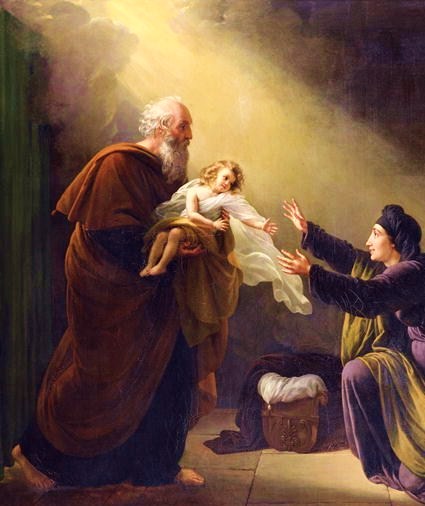
The name is borne in the Old Testament by an extremely important prophet who is speculated to have been alive around the 9th-century C.E.

Many miraculous occurrences were attributed to him, the most spectacular being that he could raise the dead, invoke fire from the sky and it is also believed that he ascended into heaven, (body and soul), via a chariot of fire flanked by cherubs.

He is an extremely popular figure in both Judaism and Christianity.

In the New Testament, it is believed that Elijah appeared with Moses during the Transfiguration of Christ.

Elijah has always been revered as a great saint by the Eastern Orthodox Churches, and in Russia and other Slavo-Orthodox nations, Elijah has been equated as a sort of folk character: he is responsible for bad weather if angered.

In Judaism, Elijah is invoked during the weekly Havdalah, the Passover seder and during the ritual circumcision.

In the the Church of Jesus Christ of Latter-Day Saints, it is believed that Elijah visited Joseph Smith and Oliver Cowdery in 1836.

Unlike other Old Testament names, Elijah has had a longer usage among Christians, going as far back as the Middle Ages. However, in Medieval England, the Middle English form of Elis, was more widely used.

In addition to the prophet Elijah, the name was also borne by at least two Catholic/Orthodox Saints.

Currently, Elijah is the 18th most popular male name in the United States, (2010). So far, this is the highest he has ranked in U.S. naming history. His rankings in other countries are as follows:

  • # 45 (Australia, 2010)
  • # 78 (Canada, B.C., 2010)
  • # 311 (the Netherlands, 2010)
  • # 427 (France, 2009)

His Hellenized counterpart of Elias, is also an up-and-comer, he is currently the # 141st most popular male name in the United States, (2010) and his rankings in other countries are as follows:

  • # 4 (Sweden, 2010)
  • # 9 (Austria, 2010)
  • # 10 (Norway, 2010)
  • # 13 (Germany, 2011)
  • # 18 (Denmark, 2010)
  • # 44 (Belgium, 2009)
  • # 119 (France, 2009)
  • # 225 (the Netherlands, 2010)

Other forms of the name include:

  • Ilyas إلياس (Arabic)
  • Ilia/Ilya Илья (Bulgarian/Old Church Slavonic/Russian)
  • Ilija Илија (Bulgarian/Croatian/Macedonian/Serbian)
  • Elies (Catalan)
  • Elijáš (Czech)
  • Elia (Dutch/Finnish/Georgian/Italian/Norwegian)
  • Eliah (English)
  • Eelis (Finnish)
  • Eljas (Finnish)
  • Élie (French)
  • Elias Ηλιας (English/Estonian/Finnish/German/Greek/Portuguese/Scandinavian)
  • Ellis/Elis (English)
  • Elija (German)
  • Elise ელისე (Georgian)
  • Eliou Ηλιου (Greek)
  • Eliyyahu/Eliyahu אֱלִיָּהוּ (Hebrew)
  • Éliás (Hungarian)
  • Illés (Hungarian)
  • Elías (Icelandic/Spanish)
  • Illyas (Indonesian)
  • Oillil (Irish-Gaelic)
  • Eliya (Kiswahili)
  • Helias (Latin: Biblical)
  • Habacus (Latin: Vulgate)
  • Elijas (Lithuanian)
  • Eliasz (Polish)
  • Ilie (Romanian)
  • Eliáš (Slovakian)
  • İlyas (Turkish)

A Romanian feminine form is Ilinca, (ee-LEEN-kah).

The name is borne by American actor, Elijah Wood (b. 1981)

The designated name days are March 24, July 20 and August 2nd.

Felix

Gender: Masculine
Origin: Latin
Meaning: “happy; lucky.”
Eng (FEE-liks); Germ (FEH-leeks)

Felix is derived from an Old Roman agnomen, (nickname), which describes one who is happy or lucky.

In ancient History, it was bestowed as a descriptive nick name upon the Roman dictator, Lucius Cornelius Sulla, (c.138 B.C.E-78 B.C.E), it was also borne by a few other Roman officials.

The name also makes an appearance in the New Testament.

The name was borne by at least 15 saints and 5 popes, rendering the name extremely popular in Medieval Continental Europe.

The name was also in usage in Medieval England, but seems to have gone out of style after the Protestant Reformation, being revived again in the 19th-century.

Currently, Felix is the 9th most popular male name in Germany (2011), in the United States, however, he only ranked in as the 3331st most popular male name, (2010). The highest he has ever ranked in U.S. naming history was in 1884, coming in as the 137th most popular male name.

In the English speaking world, Felix is usually associated with the Cartoon character, Felix the Cat.

His rankings in other countries are as follows:

  • # 14 (Austria, 2010)
  • # 38 (Denmark, 2010)
  • # 50 (Sweden, 2010)
  • # 83 (Norway, 2010)
  • # 177 (France, 2009)
  • # 201 (the Netherlands, 2010)

A list of all the variations are as follows:

  • Feliu (Catalan)
  • Felix Феликс (Croatian/Czech/Dutch/English/Finnish/German/Romanian/Russian/Scandinavian/Serbian)
  • Feliks (Croatian/Polish/Croatian/Serbian/Slovene)
  • Feeliks (Finnish)
  • Feliksas (Finnish)
  • Félix (French/Hungarian/Portuguese/Slovakian/Spanish)
  • Feliksz (Hungarian)
  • Felice (Italian)
  • Felicetto (Italian)
  • Felicino (Italian)
  • Felicio (Italian)
  • Feluccio (Italian)
  • Felicius (Latin)
  • Szczęsny (Polish:a vernacular form of Felix, this form is archaic and has been replaced in usage by Felix)
  • Felici (Romansch)
  • Srečko (Slovene; Croatian: direct translation, literally meaning “happy, lucky” in Southern Slavic languages)

Another offshoot is the Latin Felician, which literally means “the happy one” or “the lucky one.”

Derivatives are:

  • Felician (English)
  • Félicien (French)
  • Feliciano (Italian/Portuguese/Spanish)
  • Feliziano (Italian)
  • Liciano (Italian)
  • Felicianus (Latin)
  • Felicjan (Polish: fe-LEET-syahn)
  • Felicián (Slovak)

Its feminine form of Felicia has been in usage in England since the Middle Ages, currently, she does not appear in the U.S. top 1000, she was last seen in 2005 coming in as 993rd most popular female name. The highest she ever ranked in U.S. naming history was in 1986 coming in as the 90th most popular female name.

She is currently the 251st most popular female name in the Netherlands (2008) and the 15th most popular in Sweden (2007).

Variations are:

  • Felicia (English/Italian/Romanian: feh-LEE-shah Eng; fay-LEE-chah Italian)
  • Félicie (French: fay-lee-SEE)
  • Félicienne (French)
  • Felicie (German: fe-LEE-tsee-e)
  • Felícia (Hungarian/Portuguese)
  • Felicetta (Italian: obscure)
  • Feliciana (Italian/Latin/Spanish)
  • Felicina (Italian: obscure)
  • Felicja (Polish: Felcia, Felka, Fila and Filka are the diminutives. fe-LEET-syah)
  • Felina (Polish)
  • Feliksa (Polish)
  • Szczęsna (Polish)
  • Srečka (Slovene/Croatian)

The name was borne by German composer, Felix Mendelssohn (1809-1847).

The designated name-days are January 14 (Sweden), February 12 (France), May 30 (Germany), June 9 (Hungary), November 1st (Czech Republic), November 20 (Slovakia).

Deborah

Gender: Feminine
Origin: Biblical Hebrew
Meaning: “bee.”
דְּבוֹרָה
Eng (DEB-uh-ruh); Eng (deh-BORE-uh)

In the Old Testament, the name is found in the Book of Judges as the name of a prophetess and female judge who led a defeat against the Canaanites.

It was also borne by a nurse of Rebecca.

The name has always been a common Jewish name, but did not catch on with Christians until after the Protestant Reformation, when the name became especially prevalent among the Puritans.

Deborah experienced a sharp vogue in the mid 20th century when, in 1955, she ranked in as the 2nd most popular female name in the United States. Deborah remained in the top 10 between 1950 and 1962. As of 2010, Deborah only ranked in as the 776th most popular female name.

Currently, its Portuguese form of Débora is the 88th most popular female name in Brazil, (2011). Her rankings in other countries are as follows:

  • # 328 (France, 2009)
  • # 491 (the Netherlands, 2010)

Other forms of the name include:

  • Deborha (Amharic)
  • Diba دیبا (Arabic)
  • Debara Дэбара (Belarusian)
  • Dihya (Berber)
  • Debora დებორა Девора (Bulgarian/Czech/Dutch/Finnish/Georgian/German/Italian/Polish/Russian/Scandinavian)
  • Devora Девора (Bulgarian)
  • Dèbora(Catalan)
  • Debra (English)
  • Deboora (Estonian)
  • Débora (French/Portuguese/Spanish)
  • Debbora Δεββωρα (Greek: Biblical)
  • Devorah דְּבוֹרָה (Hebrew: Biblical)
  • Dvora/Dvorit דְּבוֹרָה (Hebrew: Modern)
  • Debóra (Icelandic)
  • Deborra (Late Latin)
  • Depke (Plattdeutsch)


Common Nicknames include:

Deb, Debbie (English)
Debbos, Debo, Deby (German)

Other notable bearers include: British actress, Deborah Kerr (1921-2007); American pop singer, Deborah “Blondie” Harry (b.1945); American Singer, Debbie Gibson (b.1970); Italian actress, Debora Caprogli0 (b.1968); Estonian poet and translator, Debora Varaandi (1916-2007); Polish philsopher and poet, Debora Vogel (1900-1942); Belgian actress, Déborah François (b.1987).

The designated name-days are: April 24 (Poland); September 21 (France); November 4 (Poland).

Sources

  1. http://www.behindthename.com/php/find.php?name=deborah
  2. http://www.jewishencyclopedia.com/view.jsp?artid=689&letter=J&search=Judges
  3. http://www.newadvent.org/cathen/04663a.htm
  4. http://www.houseofdavid.ca/anc_heb.htm
  5. http://www.houseofdavid.ca/anc_heb_6.htm#Deborah

Melissa

Gender: Feminine
Origin: Greek Μέλισσα
Meaning: “honey-bee.”
Eng (meh-LIS-sah)

The name comes directly from the Greek word μέλισσα (melissa) which shares a root with the Greek word for honey μέλι (meli). In fact, the Hititte word, melit (honey) shares the same etymological root.

The name is borne in Greek mythology by a nymph who taught mankind how to harvest honey, it is believed that this same nymph also nursed the god Zeus. It is actually borne by several characters in Greek mythology, including a priestess of Demeter who was murdered when she refused to release the secrets of initiation rights of Demeter.

It seems the name was common in ancient Greece, as it was also borne by a female Pythagorean philosopher (6th-century, CE).

The Italian poet Ludovico Ariosto used it as a name for the good witch who helps Ruggiero escape from the evil Alcina in Orlando Furioso (1516).

Melissa is also the scientific name of the lemon balm plant.

In the English-speaking world, the name caught on during the 18th-century and remained a common name since. The highest she ranked in U.S. naming history was between 1977 and 1979 when it was the 2nd most popular female name. Currently, she is the 157th most popular female name in the United States, (2010).

In Brazil, she is the 37th most popular female name, (2011). Her rankings in other countries are as follows:

  • # 49 (France, 2009)
  • # 74 (Germany, 2011)
  • # 80 (Sweden, 2010)
  • # 97 (Scotland, 2010)
  • # 142 (the Netherlands, 2010)

Other forms of the name include:

  • Melisa (Albanian/Kurdish/Polish/Spanish/Turkish)
  • Melissa ميليسا (Catalan/Dutch/English/French/German/Greek/Italian/Lebanese/Portuguese/Scandinavian/Slovak)
  • Mélissa (French)
  • Melitta (German/Greek)
  • Melika (Hawaiian)
A common English diminutive is Missy, in Polish is it Melcia or Meliska.


Bettina

Gender: Feminine
Origin: Italian

The name is from a Medieval Italian diminutive form of either Elisabetta or Benedetta. One of its earliest attestations is that of Bettina d’Andrea (d.1335) a famous Italian legal scholar of Medieval Italy.

The name was later introduced to Germany via Elisabeth Catharina Ludovica Magdalena Brentano (1785-1859), a German countess of Italian descent who was a prolific writer, novelist and one of the pioneers of German romanticism, her pen name was Bettina von Arnim.

The name has also been used in Hungary, the English-speaking world, the Netherlands and Scandinavia. Currently, Betina is the 98th most popular female name in Brazil. Another German form is Bettine.

Julian

Gender: Masculine
Origin: Latin

The name is an anglicized form of the French male name, Julien, which is derived from the Latin Julianus (See Julius).

In history, the name was borne by the last non-Christian Roman emperor, Julian the Apostate (4th-century CE). It was also borne by a very popular French saint, Julien the Hospitaller.

In Medieval Englian, Julian was a female name and the traditional masculine cognate was Jolyon. Both names went out of usage by the Renaissance and neither were revived until the 19th-century.

Currently, Julian is the 12th most popular male name in Austria, (2010). His rankings in other countries are as follows:

  • # 15 (Germany, 2011)
  • # 17 (the Netherlands, 2010)
  • # 32 (Norway, 2010)
  • # 53 (United States, 2010)
  • # 59 (France, Julien, 2009)
  • # 66 (Belgium, Julien, 2009)
  • # 98 (Sweden, 2010)
  • # 147 (France, Julian, 2009)
  • # 561 (United States, Julien, 2010)

Other forms of the name include:

  • Juljan (Albanian)
  • Julen (Basque)
  • Juluan (Breton)
  • Yulian Юлиан (Bulgarian/Russian/Ukrainian)
  • Julià (Catalan)
  • Julijan (Croatian/Macedonian/Serbian/Slovene)
  • Julian (Dutch/English/German/Occitanian/Polish/Scandinavian)
  • Jolyon (English)
  • Julien (French)
  • Xulián (Galician)
  • Ioulianos Ιουλιανός (Greek)
  • Giuliano (Italian)
  • Iulianus (Latin)
  • Julijonas (Lithuanian)
  • Juliano (Portuguese/Spanish)
  • Julião (Portuguese)
  • Iulian (Romanian)
  • Julián (Spanish)
  • Turiano (Tahitian)

For feminine forms (see Juliana)

Clement

Gender: Masculine
Origin: Latin
Meaning: “merciful, mild.”

The name is an anglicized form of the Late Latin, Clemens, which is derived from Clementius, meaning, “merciful; gentle.”

The name was extremely popular throughout Medieval Europe as it was borne by several saints and Popes, most notably St. Clement I, the third Pope and St. Clement of Alexandria, an Eastern Christian theologian who reconciled Christian and Platonic philosophies.

In England, the name fell out of usage after the Protestant Reformation, but was revived in the 19th-century.

Currently, Clement is the 20th most popular male name in Belgium, (2009) and the 40th most popular in France, (2009).

Its Latin form of Clemens is the 45th most popular male name in Austria, (2010).

Other forms of the name include:

  • Kelmen (Basque)
  • Klemañs (Breton)
  • Kliment Климентკლემენტ Κλήμης (Bulgarian/Czech/Georgian/Greek/Macedonian/Russian/Serbian/Slovak)
  • Climent (Catalan)
  • Klement (Croatian/Czech/German/Slovak)
  • Clement (English/Romanian)
  • Klemens (Finnish/German/Polish/Scandinavian)
  • Clément (French)
  • Clemens (German)
  • Klemenz (German)
  • Kelemen (Hungarian)
  • Kelen (Hungarian)
  • Clemente (Italian/Spanish)
  • Clementino (Italian)
  • Clemenzio (Italian)
  • Clementius (Late Latin)
  • Klements (Latvian)
  • Klemensas (Lithuanian)
  • Clementi (Sardinian)
  • Klemen (Slovene)
  • Klimant (Sorbian)

Feminine forms include:

  • Clementine (English)
  • Clemence (English)
  • Clemency (English)
  • Clémence (French)
  • Clémentine (French)
  • Klemencia (Hungarian)
  • Clementa (Italian)
  • Clementina (Italian/Portuguese/Spanish)
  • Clemenza (Italian)
  • Clemenzia (Italian)
  • Mentina (Italian)
  • Clementia (Latin)
  • Klimentina Климентина (Macedonian)
  • Klemencja (Polish)
  • Klementyna (Polish)
  • Klementina (Slovene)


Valentine

Origin: Latin
Meaning: “strong; vigorous; healthy.”
(Eng masc: val-en-TINE; Fre fem: vah-lown-TEEN)

The name is derived from the Roman family name, Valentinus, which is derived from the Latin, valens, meaning: “strong, vigourous; healthy.”

In the modern world, the name is mostly associated with the holiday, it was borne by several early Christian martyrs, one of whom whose feast day happened to coincide with the ancient Roman festival of Lupercalia.

The anglicized form of Valentine is masculine, while in French, Valentine is feminine. This is a natural evolution, as Valentine is actually the feminine form of the French masculine,Valentin.

Valentine does not rank in the U.S. top 1000, but Valentine and Valentin are fairly common names in French-speaking countries.

Currently, Valentin is the 36th most popular male name in Austria, (2010). His rankings in other countries are as follows:

  • # 12 (Hungary, Bálint, 2010)
  • # 40 (France, Valentin, 2009)
  • # 106 (the Netherlands, Valentijn, 2010)
  • # 792 (United States, Valentin, 2010)

Other forms of the masculine include:

  • Valentini (Albanian)
  • Balendin (Basque)
  • Vàledin Валедин (Bulgarian)
  • Valentin Валентин (Bulgarian/Croatian/Czech/Estonian/French/German/Scandinavian/Slovene/Romanian/Russian)
  • Valentí (Catalan)
  • Valentyn (Czech)
  • Valentijn (Dutch: same pronunciation as in English)
  • Valentine (English)
  • Valjo/Valju (Estonian: has a different etymology but has been traditionally used as a cognate for Valentinus)
  • Balantin (Extramadurian)
  • Bálint (Hungarian)
  • Valente (Italian)
  • Valentiniano (Italian)
  • Valentino (Italian)
  • Valento (Italian)
  • Valenzano (Italian)
  • Valenzo (Italian)
  • Valentinus (Latin)
  • Valentins (Latvian)
  • Valentinas (Lithuanian)
  • Walentyn (Polish)
  • Walenty (Polish)
  • Valentim (Portuguese)
  • Ualan (Scottish)
  • Valintinu (Sicilian)
  • Valentín (Slovak/Spanish)
  • Folant (Welsh)

Valentina is currently the 19th most popular female name in Austria, (2010), her rankings in other countries are as follows:

  • # 28 (Italy, 2009)
  • # 47 (Croatia, 2010)
  • # 61 (Slovenia, 2010)
  • # 71 (France, Valentine, 2009)
  • # 81 (Catelonia, 2009)
  • # 91 (Belgium, Valentine, 2009)
  • # 92 (Spain, 2010)
  • # 97 (Germany, 2011)
  • # 152 (United States, 2010)
  • # 444 (the Netherlands 2010)

Other forms include:

  • Valentina Валентина (Catalan/Croatian/German/Hungarian/Italian/Romanian/Russian/Slovene/Spanish)
  • Valentine (French)
  • Valentína (Icelandic/Slovak)
  • Valenta (Italian)
  • Valenzia (Italian)
  • Walentyna (Polish)
  • Valentyna Валентина (Ukrainian)

The designated name-day is of course, February 14.

Sources

  1. Calendarium Romanum (Libreria Editrice Vatican, 1969), p. 117
  2. http://www.behindthename.com/php/search.php?nmd=n&terms=Valentine
  3. http://www.askoxford.com/firstnames/valentine?view=uk
  4. http://saints.sqpn.com/saint-valentine-of-rome/
  5. http://ocafs.oca.org/FeastSaintsLife.asp?FSID=101926
  6. http://www.newadvent.org/cathen/15254a.htm

Constantine

Gender: Masculine
Origin: Latin

The name was originally a diminutive form of the Latin male name Constans, but due to the fame and notoriety of Constantine the Great, the name exclusively became an independent given name in the beginning of the Middle Ages.

Currently, its German form of Konstantin is the 39th most popular male name in Austria, (2010) and the 60th most popular in Germany, (2011).

Other forms of the name include:

  • Kosta (Albanian)
  • Kostandin (Albanian/Basque)
  • Kostandini (Albanian)
  • Kostandianos Կոստանդիանոս (Armenian)
  • Kustentin (Breton)
  • Konstantin Константин (Bulgarian/Croatian/Czech/Finnish/German/Hungarian/Macedonian/Plattdeutsch/Russian/Scandinavian/Serbian/Slovene)
  • Constantí (Catalan)
  • Constantijn (Dutch)
  • Stijn (Dutch)
  • Constantine (English)
  • Kuestantinos (Ethiopian)
  • Konsta (Finnish)
  • Constantin (French/German/Romanian)
  • Konstantine კონსტანტინე (Georgian)
  • Constantinos Κωνσταντινος (Greek)
  • Costas Κώστας (Greek)
  • Dinos Ντίνος (Greek)
  • Konstantínus (Icelandic)
  • Costantino (Italian)
  • Costanzo (Italian)
  • Konstantīns (Latvian)
  • Konstantinas (Lithuanian)
  • Konstantyn (Polish)
  • Konstanty (Polish)
  • Constantim (Portuguese)
  • Constantino (Portuguese/Spanish)
  • Costel (Romanian)
  • Costin (Romanian)
  • Dinu (Romanian)
  • Kuonstantėns (Saimogaitian)
  • Antine (Sardinian)
  • Costantìnu (Sardinian)
  • Custantino (Sicilian)
  • Konštantín (Slovakian)
  • Kostyantyn остянтин (Ukrainian)
  • Cystennin (Welsh)
Common Russian diminutives are Kosta and Kostya.

Feminine forms include:

  • Konstandina (Albanian/Greek/Slovene)
  • Konstantina Константина Κωνσταντίνα (Bulgarian/Croatian/Czech/Greek/Macedonian/Hungarian/Russian/Serbian/Slovene)
  • Dina (Greek)
  • Konstantyna (Polish)
  • Costantina (Italian)
  • Constantina (Latin/Portuguese/Romanian/Spanish)
  • Costela (Romanian)