Annemarie

Gender: Feminine
Origin: French

The name is a compound of Anne and Marie. Originally, the name was used by Catholic families, usually in honour of the Virgin Mary and her legendary mother St. Anne. Its usage spread to German-speaking countries and became especially common in Bavaria.

Currently, Annemarie is the 361st most popular female name in Germany, (2011). Its South Slavic form of Anamarija is currently the 48th most popular female name in Croatia (2010) and the 79th most popular in Slovenia, (2010).

  • Anamarija Анамарија (Croatian/Macedonian)
  • Annemarie (Dutch/English/French/German/Limburgish/Scandinavian)
  • Amrei (Bavarian/Swiss-German)
  • Annamirl (Bavarian)
  • Annamaria (Italian)
  • Anna Maria (Polish/Romansch)
  • Ana María (Spanish)

Malina

The name could be of several different sources and etymologies depending on the bearer of the name.

It could be from the name of a Greenlandic solar diety and according to legend, she is constantly fleeing from her brother Annigan (the moon god) due to an old disagreement. The reason behind their fight varies from legend to legend.

It could also be Scottish, a feminine form of Malcolm.

In Polish, it is from the word for raspberry and is occasionally used as a given name. It received a negative opinion from the Polish Language Council, but this has not banned the name from usage. It was the pseudonym of a few famous Polish women, one being Malina Michalska (b.1916 née Maria Michalska) a famous dancer and Polish-German actress, Malina Ebert (b.1976) née Monika. It is the word for raspberry in several other Slavic languages, such as Czech, Slovak and Bulgarian.

Mălina is Romanian name derived from the Romanian word mălin meaning bird cherry tree. The name was borne by Romanian singer, Mălina Olinescu (1974-2011).

In addition, the name could also be Scandinavian, an elaborated form of Malin.

Currently, Malina is the 272nd most popular female name in Germany, (2011).

Inga

Gender: Feminine
Origin: Old Norse/Germanic
(IN-ga)

The name is a feminine form of Inge or Ing, which is an Old Germanic name of uncertain meaning. It was the name of an ancient Germanic god of which very little is known.

In addition to Scandinavia, Inga has experienced prevalent usage in other countries, such as Germany, the Netherlands and Russia.

Currently, Inga is the 341st most popular female name in Germany, (2011).

Other forms of the name include:

  • Inga Инга (Belarusian/Bosnian/Croatian/Dutch/Estonian/Faroese/Georgian/German/Icelandic/Latvian/Lithuanian/Polish/Russian/Scandinavian/Serbian/Slovene)
  • Inge (Danish/Dutch)
  • Inia (Danish)
  • Inka (Finnish)
  • Inken (Frisian)
  • Iηgá (Sami)
  • Ingara (Norwegian: archaic)

Inge is rarely ever used as a masculine form and is occasionally used as a female form in Scandinavia, pronounced (IN-ge).

Common male forms are Ingi and Ingo.

In Sweden, Inga’s designated name-day is October 25. In Norway it is December 17 and in the Swedo-Finnish calendar it is June 20.

Inga is also the name of a genus of tropical trees and shrubs.

The name was and is borne by Swedish stage actress and opera singer, Inga Åberg (1773-1837); Swedish actress Inga Tidblad (1901-1975); Swedish actress Inga Landgré (b.1927); American actress Inga Swenson (b. 1932); American femininist author Inga Muscio (b.1966); Russian Olympic Speed-Skater Inga Artamonova (1936-1966); Bosnian-Australian politician Inga  nee Dosen Peulich (b.1964); Australian anthropologist, author and historian Inga Clendinnen (b.1934) and Danish Opera Soprano Singer Inga Nielsen (1946-2008)

Kalle

Gender: Masculine
Origin: Swedish
(KAHL-leh)

The name is a Swedish and Norwegian diminutive form of Karl, but has been used as an independent given name in Scandinavia and Germany.

In Swedish, Donald Duck is Kalle Anka.

Kalle Blomqvist is a fictional character created by Astrid Lindgren known in English as Bill Bergson.

Currently, Kalle is the 370th most popular male name in Germany, (2011).

Ansgar

Gender: Masculine
Origin: German
Meaning: “God’s spear.”
(AHNS-gahr)

The name is composed of the Germanic elements, ans (god) and gari (spear). Ansgar is believed to be the progenitor of the name Oscar.

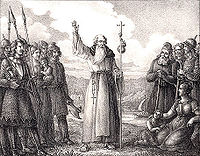
The name was borne by St. Ansgar of Bremen (801-864), an early German saint who is most famous for trying to convert the Danes and Swedes.

Currently the the name is the 408th most popular male name in Germany, (2011).

Other forms of the name include:

  • Anschar (Bavarian)
  • Anscari (Catalan)
  • Anschaire (French)
  • Anskar (Frisian/German)
  • Ansgar (Icelandic/German/Scandinavian)
  • Anscario/Ansgario (Italian)

Wiebke, Viveka

Gender: Feminine
Origin: Frisian
Meaning: “war.”
Germ (VEEP-ke); Swe (VEE-vek-kah)

The name is derived from a Germanic element, wig, meaning, “war.” It was especially popular in Germany during the 1940s and became dated by the 1970s. It is currently experience a slight revival, coming in as the 470th most popular female name in Germany, (2011).

Its Swedish version of Viveka, (sometimes spelled Veveca, Vivica), gained attention in the English-speaking world through American actress, Vivica A. Fox (b.1964).

Other forms of the name include:

  • Vibe (Danish)
  • Vibeke (Danish/Norwegian)
  • Viben (Danish)
  • Vibeka (Faroese)
  • Wibke (German)
  • Viveka (Norwegian/Swedish)
  • Vivikka (Norwegian)
  • Wubbeke (Plattdeutsch)
  • Wübbecke (Plattdeutsch)

Masculine forms include Wiebe (the 496th most popular male name in the Netherlands) and Wiebo.

Lena

Eng (LEE-nuh; LAY-nuh); Germ (LEH-nah)

The name is currently very popular in German-speaking countries and the most popular consensus is that it is a contraction of Magdalena or Helena.

It also happens to be the name of a river in Siberia, of which, Lenin took his name. Lena’s usage in Russia may be in reference to the river, but I have been unable to confirm if this is so.

In Poland, its usage as an independent given name is recorded as early as 1418, though the name did not become popular in Poland until the last 10 years.

It was also very in vogue at the turn of the 20th-century in the United States.

It is currently the 3rd most popular female name in Austria, (2010) and her rankings in other countries are as follows:

  • # 9 (Poland, 2010)
  • # 10 (Germany, 2011)
  • # 16 (France, 2009)
  • # 44 (Belgium, 2009)
  • # 47 (Hungary, 2010)
  • # 68 (Croatian, 2010)
  • # 83 (Ireland, 2010)
  • # 94 (Slovenia, 2010)
  • # 121 (Netherlands, 2010)
  • # 382 (United States, 2010)

Other forms of the name include:

  • Lena Лена (Croatian/Dutch/English/French/German/Hungarian/Italian/Polish/Russian/Scandinavian/Slovene/Ukrainian)
  • Lenka Ленка (Czech/Slovak/Slovene/Serbian/Sorbian)
  • Lene (Danish/German/Norwegian)
  • Leni (Danish/German)
  • Lenette (Danish)
  • Lenna (Estonian)
  • Leena (Finnish)
  • Leeni (Finnish)
  • Lenke (Hungarian)
  • Lejna (Sorbian)
  • Leńka (Sorbian)
The name was borne by singer, actress and civil rights activist, Lena Horne (1917-2010). It is also borne by Swedish actress, Lena Olin (b.1955) and Swedish pop singer, Lena Philipsson (b.1966)

Annika

Gender: Feminine
Origin: Swedish
Eng/Swe: (AHN-nik-kah)

The name is believed to be derived from a low German diminutive form of Anna and was popularized in Sweden via a character in Astrid Lingren’s Pippi Longstockings.

The name has experienced usage in surrounding Northern European countries, such as Estonia, Norway and Finland, and has become very popular in German-speaking countries. It is currently the 49th most popular female name in Austria, (2010). Her rankings in other countries are as follows:

  • # 52 (Germany, 2011)
  • # 379 (Netherlands, 2010)
  • # 466 (United States, 2010).

Other forms of the name include:

  • Anika (Danish/Polish/Slovene)
  • Annika (Danish/Dutch/Estonian/Faroese/Finnish/German/Icelandic/Norwegian/Swedish)
  • Anneke (Dutch)
  • Anneken (Dutch)
  • Annikka (Finnish)
  • Annikki (Finnish)
  • Annukka (Finnish)
  • Anniken (Norwegian)
  • Annica (Swedish)

Marlene

Gender: Feminine
Origin: German
Eng (mar-LEEN); Germ (mahr-LEH-neh)

The name is a blend of Maria and Magdalena, originally, it was usually bestowed in honour of St. Mary Magdalen by German-Catholic parents.

The name experienced a surge in popularity in Germany during WWII due to a popular song, Lili Marleen.

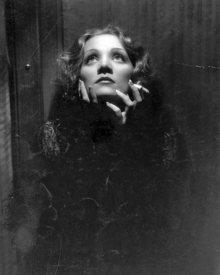
In the United States, the name was introduced by German actress, Marlene Dietrich (1901-1992), who was born Maria Magdalena von Losch.

Currently, in German-speaking countries, the name is experiencing a revival, it is the 29th most popular female name in Austria, (2010) and the 41st most popular in Germany. In the United States, she stands at # 902, (2010)

Other forms of the name include:

  • Marleen (Dutch/German)
  • Marla (English/German)
  • Marlene (English/German/Scandinavian)
  • Marlène (French)
  • Marlen (German)
  • Marilena (Italian)
  • Marlena (Polish/Slovene)

Simeon, Simon

Gender: Masculine
Origin: Biblical, Hebrew
Meaning: “he has heard.”
Eng (SIE-mun)

Simeon first appears in the Old Testament as a patriach of the Simeonite tribe and one of the 12 sons of Jacob.

The name origins are debated. The Torah claims that the name is in reference to Leah’s cry of anguish to God over her husband’s deference to her. Being a derivative of the Hebrew shama’on meaning “he has heard my suffering.” In this case, the name would share the same etymology as the name Ishmael (God has heard).

In some classical Rabbinical texts the name is sometimes translated to mean “he who listens to the words of God.” It has even been suggested that it is derived from the Hebrew sham’in meaning “there is sin” which is in reference to Zimri, an ancestor of Simeon’s, who committed the sin of having a relationship with a Midianite woman.

The name was borne by several other characters in the Old and New Testament, in the forms of Simeon and Simon. Simon later became associated with St. Peter. During the early Christian era, the Greek world took the name to mean “snub nosed” due to its similarity in sound to the Greek word σιμοσ (simos).

Simon has always been prevalent in the Western World, it is currently very trendy in continental Europe. The rankings of popularity in various countries are as follows:

  • # 3 (Poland, Szymon, 2010)
  • # 7 (Austria, 2010)
  • # 10 (Belgium, 2009)
  • # 12 (Italy, Simone, 2008)
  • # 26 (Germany, 2011)
  • # 32 (Denmark, 2010)
  • # 37 (Sweden, 2010)
  • # 49 (France, 2009)
  • # 56 (the Netherlands, Siem, 2010)
  • # 60 (Croatian, Šimun, 2010)
  • # 60 (Norway, Simen, 2010)
  • # 64 (Norway, 2010)
  • # 71 (Croatia, Šime, 2010)
  • # 75 (the Netherlands, 2010)
  • # 91 (Hungary, 2010)

Other forms of the name include (divided alphabetically by origin)

  • Simeon Սիմէօն (Albanian/Armenian/Bulgarian)
  • Simon Симон Սիմոն (Albanian/Armenian/English/Finnish/German/Hungarian/Macedonian/Malayalan/Norwegian/Occitanian/Slovenian/Swedish/ Romanian)
  • Samān (Arabic)
  • Shamo (Assyrian)
  • Shamun ܫܡܥܘܢ (Assyrian)
  • Şımon (Azeri)
  • Ximun (Basque)
  • Shyman Шыман (Belarusian)
  • Symon Сымон (Belarusian)
  • Simó (Catalan)
  • Simone (Corsican/Italian)
  • Šime (Croatian)
  • Šimo (Croatian)
  • Šimun (Croatian)
  • Šimon (Czech/Prekmurian/Slovak)
  • Simion (Danish/Romanian)
  • Simoen (Danish)
  • Siemen (Dutch/Frisian)
  • Siem (Dutch)
  • Siimon (Estonian/Finnish)
  • Smeon ስምዖን, (Ethiopian)
  • Símeon /Símun (Faroese)
  • Sema (Finnish)
  • Semen (Finnish/Gascon)
  • Semjon (Finnish)
  • Semoi (Finnish)
  • Siim (Finnish)
  • Siimoni (Finnish)
  • Simeoni (Finnish)
  • Simo (Finnish/Serbian)
  • Symeon Συμεών (Greek)
  • Symeonos Συμεώνος (Greek)
  • Siimuut (Greenlandic)
  • Shimon שמעון (Hebrew)
  • Símon (Icelandic)
  • Síomón (Irish)
  • Sshimeoni (Kosovar)
  • Sīmanis (Latvian) 
  • Sīmans (Latvian)
  • Simons (Latvian)
  • Saimonas (Lithuanian)
  • Saimontas (Lithuanian)
  • Simanas (Lithuanian)
  • Simas (Lithuanian)
  • Simeonas (Lithuanian)
  • Simonas(Lithuanian)
  • Sime Симе (Macedonian)
  • Shimon (Malayalam)
  • Simen/Simian (Norwegian)
  • Simå (Norwegian dialectical form: Norrland & Østerdalen)
  • Sømjo (Norwegian dialectical form: Rogaland)
  • Simonu/Symeonu (Old Church Slavonic)
  • Symeon (Polish)
  • Szymon (Polish: Szymek and Szymuś are diminutives)
  • Simão (Portuguese)
  • Simeão (Portuguese)
  • Simun (Quecha)
  • Schimun (Romansch)
  • Semyon Семён (Russian)
  • Sim (Scottish)
  • Šimej (Slovene)
  • Simón (Spanish)
  • Jimeno (Spanish)
  • Ximeno (Spanish)
  • Simoni (Swahili)
  • Shemod (Syrian)
  • Shimeon (Syrian)
  • Semen/Symon Симон (Ukrainian)
  • Mişon (Turkish)
  • Seimon (Welsh)
  • Simwnt (Welsh)
  • Shimmel (Yiddish)

Feminine forms include:

  • Simona (Czech/Italian/Portuguese/Romanian/Slovak/Slovenian)
  • Simonia/Simonie (Danish)
  • Simoona (Finnish)
  • Simone (French)
  • Simonette (French)
  • Szimóna (Hungarian)
  • Szimonetta (Hungarian)
  • Símonía (Icelandic)
  • Simonetta (Italian)
  • Sima (Lithuanian)
  • Simonė (Lithuanian)
  • Szymona (Polish)
  • Simoneta (Portuguese)
  • Ximena (Portuguese/Spanish)
  • Simoneta/Šimona (Slovak)
  • Simeona (Slovene)
  • Jimena (Spanish)

The designated name-day is October 28, and October 30 in Slovakia.