Henning

Gender: Masculine
Origin: German
Germ/Swe (HEN-ning)

The name is from a Northern German diminutive form of Henrik or Johannes and has been used as an indepedent given name in both Germany and Scandinavia since at least the 19th-century. It seems to have been the popular nickname of choice for Johannes in Medieval Pomerania, Silesia and Holstein, appearing several times in documents from the 13th-century onward.

It is currently 239th most popular male name in Germany, (2011).

Other older forms are the Silesian and Sorbian Hannig and Hennig.

Hans

Gender: Masculine
Origin: German
Dan/Germ/Swe/Nor (HAHNZ)

The name is a household German favorite and in the English-speaking world, is often used to designate an average German male.

It is from a diminutive form of Johannes, but has exclusively been used as an independent given name in German-speaking countries and in Scandinavia since at least the 19th-century.

The name would roughly be the German cognate of Jack.

Up until the 1950s, Hans was among the 10 most popular male names in Germany, in recent years, it has been viewed as a dated name, but like other vintage names, seems to be catching on again. It is currently the 245th most popular male name in Germany, (2011).

Another form is Hansel.

A Danish feminine form is Hansine.


Tore

Gender: Masculine
Origin: Old Norse
Meaning: “warrior of Thor.”
Germ/Nor/Swe (TOR-reh)

The name is believed to be a contracted form of the Old Norse, Þórir, which is composed of the elements, Þór (Thor) and verr (warrior; man). It has also been suggested that the latter element may actually be from *wihar (priest), hence it may actually mean “priest of Thor.”

The name can be traced all the way back to a 10th-century Rune of Uppland, Sweden. Inscribed is the following epithet to a man named Tore:

“Ingrid and Ingegerd erected this stone in memory of Tore, their father.” (Uppland, 996 CE).

Currently, Tore is the 252nd most popular male name in Germany, (2011). Another spelling is Thore.

Fenja

Gender: Feminine
Origin: Old Norse
Meaning: unknown
(FEN-yah)

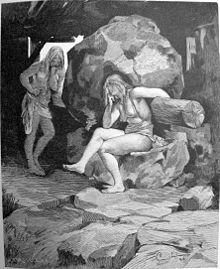
The name is found in the Old Norse poem, the Song of Grótti (Grottasöngr) and in Snorri Sturlesson’s Prose Edda as the name of one of two sister giantesses, Fenja and Menja.

According to the Song of Grótti, both sisters are enslaved to the Danish king Frodi, forced to grind out wealth from a magical stone and to sing for the king. They sing of the king’s benevolence and wealth, but as they become overworked, the king refuses to hear their pleas until they start to sing a warning that the king shall soon be destroyed by an army, which they eventually create from the magical grindstone.

Fenja is of Old Norse origins, but its etymology has been lost. Both sisters supposedly inspired the names of the Danish Islands, Fanø and Mandø.

Currently, Fenja is the 181st most popular female name in Germany, (2011).

It is also borne by German actress, Fenja Rühl (b.1963)

Ina

Gender: Feminine
Origin: English/German/Scandinavian
Germ (EE-nah); Eng (I-nah)

The name is a contracted form of any female given name ending in -ina.

In the United States, the name was fairly prevalent at the beginning of the 20th-century, the highest she ever ranked was in 1881 coming in as the 151st most popular female name.

Currently, Ina is the 192nd most popular female name in Germany, (2011).

Coincidentally, the name could also be an Anglo-Saxon male name meaning, “fire.” It was borne by an 8th-century Anglo-Saxon king.

Common German double names include Ina-Maria and Ina-Alice.

Soren, Sören

Gender: Masculine
Origin: Danish
Eng (SORE-en); Germ (ZUU-ren); Dan (SUR-en); Nor (SIR-en); Swe (SUYR-en)

Søren, is the Danish form of Severin.

The name was popularized outside of Denmark by the 19th-century Danish philosopher, Søren Aabye Kierkegaard. It has enjoyed prevalent usage in the United States, particularly among Scandinavian-Americans.

Currently, Sören is the 280th most popular male name in Germany, (2011). His rankings in other countries are as follows:

  • #346 (France, 2009)
  • #726 (United States, 2010)

Other forms include:

  • Søren (Danish/Norwegian)
  • Soren (English)
  • Sören (German/Swedish)


Annelie

Gender: Feminine
Origin: German
(AHN-neh-lee)

The name could either be from a Bavarian diminutive form of Anne or be a Swedish compound of Anne and Louise.

Currently, Annelie is the 270th most popular female name in Germany, (2011).

Other spellings include: Anelie (German); Anneli (Finnish/Scandinavian).

Edda

The name could either be from the Italian form of Hedda, or from the name of a compilation of Medieval poetry written in 13th-century Iceland. Its usage in Northern Europe is most likely in reference to the latter.

The Poetic Edda and Prose Edda are a compilation of poetry and prose written in Medieval Icelandic, many of its stories are taken from much older sources going all the way back to the beginning of the Viking age.

The origin of the name is debated, it has been suggested to be from an Old Norse source meaning “great-grandmother” or that it is related to the Norse, óðr  (poetry). A most likely etymology is that is it a Norse corruption of the Latin, credo (creed).

The eddas are considered Iceland’s oldest piece of literature.

Currently, Edda is the 326th most popular female name in Germany, (2011).

Sonja

Gender: Feminine
Origin: Russian
Eng (SONE-yah); Germ (ZONE-yah)

The name is from a Russian diminutive form of Sophia. Among Russian-Jews, the name was often used as a Russian cognate for the Yiddish, Shayndel, though the two names are not etymologically related.

Sonia could also be from the Hindi word sona सोना  meaning “gold.”

In South Eastern Europe and Northern Europe, the name has been used as an independent given name since at least the turn of the 20th-century.

In the English-speaking world, the name was popularized by a 1917 eponymous novel by Stephen McKenna.

Currently, Sonja is the 297th most popular female name in Germany, (2011)

Other forms of the name include:

  • Soňa (Czech/Slovak)
  • Sonia (English/Italian/Portuguese/Romanian/Spanish)
  • Sonya (English/Russian)
  • Sonja Соња (Croatian/Dutch/Estonian/Finnish/German/Icelandic/Macedonia/Polish/Scandinavian/Serbian/Slovene)
  • Sonje (German)
  • Szonja (Hungarian)

The name is borne by Norwegian figure skater and actress, Sonja Henie (1916-1969).