Julian

Gender: Masculine
Origin: Latin

The name is an anglicized form of the French male name, Julien, which is derived from the Latin Julianus (See Julius).

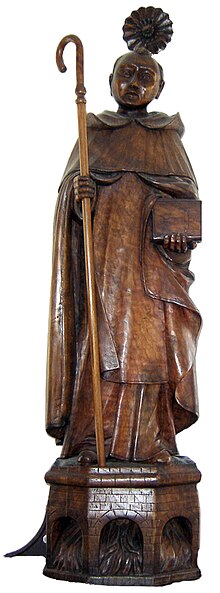
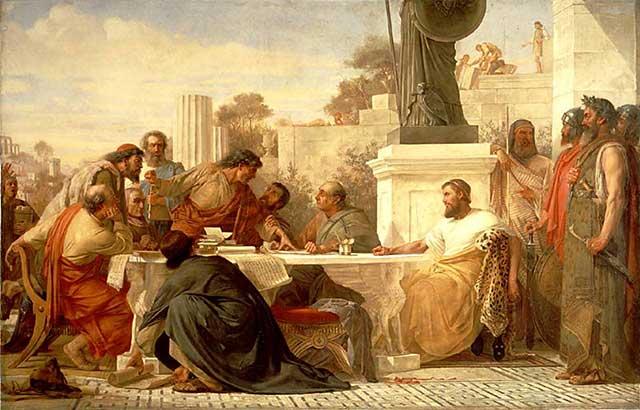
In history, the name was borne by the last non-Christian Roman emperor, Julian the Apostate (4th-century CE). It was also borne by a very popular French saint, Julien the Hospitaller.

In Medieval Englian, Julian was a female name and the traditional masculine cognate was Jolyon. Both names went out of usage by the Renaissance and neither were revived until the 19th-century.

Currently, Julian is the 12th most popular male name in Austria, (2010). His rankings in other countries are as follows:

  • # 15 (Germany, 2011)
  • # 17 (the Netherlands, 2010)
  • # 32 (Norway, 2010)
  • # 53 (United States, 2010)
  • # 59 (France, Julien, 2009)
  • # 66 (Belgium, Julien, 2009)
  • # 98 (Sweden, 2010)
  • # 147 (France, Julian, 2009)
  • # 561 (United States, Julien, 2010)

Other forms of the name include:

  • Juljan (Albanian)
  • Julen (Basque)
  • Juluan (Breton)
  • Yulian Юлиан (Bulgarian/Russian/Ukrainian)
  • Julià (Catalan)
  • Julijan (Croatian/Macedonian/Serbian/Slovene)
  • Julian (Dutch/English/German/Occitanian/Polish/Scandinavian)
  • Jolyon (English)
  • Julien (French)
  • Xulián (Galician)
  • Ioulianos Ιουλιανός (Greek)
  • Giuliano (Italian)
  • Iulianus (Latin)
  • Julijonas (Lithuanian)
  • Juliano (Portuguese/Spanish)
  • Julião (Portuguese)
  • Iulian (Romanian)
  • Julián (Spanish)
  • Turiano (Tahitian)

For feminine forms (see Juliana)

Clement

Gender: Masculine
Origin: Latin
Meaning: “merciful, mild.”

The name is an anglicized form of the Late Latin, Clemens, which is derived from Clementius, meaning, “merciful; gentle.”

The name was extremely popular throughout Medieval Europe as it was borne by several saints and Popes, most notably St. Clement I, the third Pope and St. Clement of Alexandria, an Eastern Christian theologian who reconciled Christian and Platonic philosophies.

In England, the name fell out of usage after the Protestant Reformation, but was revived in the 19th-century.

Currently, Clement is the 20th most popular male name in Belgium, (2009) and the 40th most popular in France, (2009).

Its Latin form of Clemens is the 45th most popular male name in Austria, (2010).

Other forms of the name include:

  • Kelmen (Basque)
  • Klemañs (Breton)
  • Kliment Климентკლემენტ Κλήμης (Bulgarian/Czech/Georgian/Greek/Macedonian/Russian/Serbian/Slovak)
  • Climent (Catalan)
  • Klement (Croatian/Czech/German/Slovak)
  • Clement (English/Romanian)
  • Klemens (Finnish/German/Polish/Scandinavian)
  • Clément (French)
  • Clemens (German)
  • Klemenz (German)
  • Kelemen (Hungarian)
  • Kelen (Hungarian)
  • Clemente (Italian/Spanish)
  • Clementino (Italian)
  • Clemenzio (Italian)
  • Clementius (Late Latin)
  • Klements (Latvian)
  • Klemensas (Lithuanian)
  • Clementi (Sardinian)
  • Klemen (Slovene)
  • Klimant (Sorbian)

Feminine forms include:

  • Clementine (English)
  • Clemence (English)
  • Clemency (English)
  • Clémence (French)
  • Clémentine (French)
  • Klemencia (Hungarian)
  • Clementa (Italian)
  • Clementina (Italian/Portuguese/Spanish)
  • Clemenza (Italian)
  • Clemenzia (Italian)
  • Mentina (Italian)
  • Clementia (Latin)
  • Klimentina Климентина (Macedonian)
  • Klemencja (Polish)
  • Klementyna (Polish)
  • Klementina (Slovene)


Constantine

Gender: Masculine
Origin: Latin

The name was originally a diminutive form of the Latin male name Constans, but due to the fame and notoriety of Constantine the Great, the name exclusively became an independent given name in the beginning of the Middle Ages.

Currently, its German form of Konstantin is the 39th most popular male name in Austria, (2010) and the 60th most popular in Germany, (2011).

Other forms of the name include:

  • Kosta (Albanian)
  • Kostandin (Albanian/Basque)
  • Kostandini (Albanian)
  • Kostandianos Կոստանդիանոս (Armenian)
  • Kustentin (Breton)
  • Konstantin Константин (Bulgarian/Croatian/Czech/Finnish/German/Hungarian/Macedonian/Plattdeutsch/Russian/Scandinavian/Serbian/Slovene)
  • Constantí (Catalan)
  • Constantijn (Dutch)
  • Stijn (Dutch)
  • Constantine (English)
  • Kuestantinos (Ethiopian)
  • Konsta (Finnish)
  • Constantin (French/German/Romanian)
  • Konstantine კონსტანტინე (Georgian)
  • Constantinos Κωνσταντινος (Greek)
  • Costas Κώστας (Greek)
  • Dinos Ντίνος (Greek)
  • Konstantínus (Icelandic)
  • Costantino (Italian)
  • Costanzo (Italian)
  • Konstantīns (Latvian)
  • Konstantinas (Lithuanian)
  • Konstantyn (Polish)
  • Konstanty (Polish)
  • Constantim (Portuguese)
  • Constantino (Portuguese/Spanish)
  • Costel (Romanian)
  • Costin (Romanian)
  • Dinu (Romanian)
  • Kuonstantėns (Saimogaitian)
  • Antine (Sardinian)
  • Costantìnu (Sardinian)
  • Custantino (Sicilian)
  • Konštantín (Slovakian)
  • Kostyantyn остянтин (Ukrainian)
  • Cystennin (Welsh)
Common Russian diminutives are Kosta and Kostya.

Feminine forms include:

  • Konstandina (Albanian/Greek/Slovene)
  • Konstantina Константина Κωνσταντίνα (Bulgarian/Croatian/Czech/Greek/Macedonian/Hungarian/Russian/Serbian/Slovene)
  • Dina (Greek)
  • Konstantyna (Polish)
  • Costantina (Italian)
  • Constantina (Latin/Portuguese/Romanian/Spanish)
  • Costela (Romanian)

Adrian

Gender: Masculine
Origin: Latin
Meaning: “from Hadria”

The name is derived from the Latin Hadrianus, a Roman cognomen meaning, “from Hadria.” Hadria was a small town in the North of Italy. It gave its name to the Adriatic Sea.
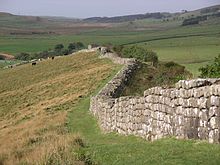
The name was borne by Publius Aelius Hadrianus (76-138 CE), known in the modern world as Emperor Hadrian, he is most famous for the wall he built across Great Britain, known as Hadrian’s Wall.
The name remained common throughout Europe, and is fairly popular across the Western World till this day. It was borne by several saints and popes, including the first and only English pope, Adrian IV, as well as the only Dutch pope, Adrian VI.
Currently, Adrian is the 6th most popular male name in Spain, (2010) and the 7th most popular in Norway, (2010). His rankings in other countries are as follows:
  • # 29 (Catalonia, 2009)
  • # 33 (Poland, 2010)
  • # 43 (Germany, 2011)
  • # 48 (Austria, 2010)
  • # 49 (Croatia, 2010)
  • # 51 (France, Adrien, 2010)
  • # 56 (United States, 2010)
  • # 60 (Sweden, 2010)
  • # 63 (Hungary, 2010)
  • # 81 (Belgium, Adrien, 2009)
  • # 455 (France, Adrian, 2009)

Other forms of the name include:

  • Ad (Afrikaans/Limbergish)
  • Adriaan (Afrikaans/Dutch)
  • Adrianus (Afrikaans/Latin)
  • Arrie (Afrikaans)
  • At (Afrikaans)
  • Daan (Afrikaans)
  • Jaans (Afrikaans)
  • Adrian Адриан (Albanian/Bulgarian/Croatian/Dutch/English/Finnish/Polish/Romanian/Russian/Scandinavian/Ukrainian)
  • Ardian (Albanian)
  • Adrianu (Asturian/Corsican/Sicilian)
  • Adiran (Basque)
  • Adrijan (Bosnian/Croatian/Serbian/Slovene)
  • Hadrijan (Bosnian)
  • Adrià (Catalan)
  • Jadran(ko) (Croatian)
  • Adrián (Czech/Hungarian/Slovak/Spanish)
  • Arie (Dutch)
  • Arjan (Dutch)
  • Hadrian(us) (Dutch/German/Latin)
  • Adrien (French)
  • Hadrien (French)
  • Aidrean (Gaelic)
  • Adrán (Galician)
  • Adrao (Galician)
  • Hadrán (Galician)
  • Hadrao (Galician)
  • Hádrian (Galician)
  • Adrianos Αδριανός (Greek)
  • Adorján (Hungarian)
  • Adrían (Icelandic)
  • Adriano (Italian/Portuguese)
  • Adrio (Italian)
  • Adriāns (Latvian)
  • Adrianas (Lithuanian)
  • Adrijonas (Lithuanian)
  • Adrião (Portuguese)
  • Adriànu (Sardinian)

Feminine forms include:

  • Adriana  (Albanian/Bulgarian/Catalan/Czech/Galician/German/Greek/Italian/Latin/Lithuanian/Polish/Romanian/Russian/Slovak/Spanish)
  • Adrijana (Bosnian/Croatian/Serbian)
  • Hadrijana (Bosnian/Croatian/Serbian)
  • Jadranka (Croatian)
  • Adriána (Czech/Hungarian/Slovak)
  • Ariane (Dutch)
  • Hadriana (Galician/Latin)
  • Adria (German/Italian)
  • Adriane (German)
  • Adrienne (French)
  • Adrienn (Hungarian)
  • Adrianna (Polish)
  • Drina (Spanish)

Polish feminine diminutives are Ada and Adi.

Cillian, Killian

Gender: Masculine
Origin: Gaelic
Meaning: debated
(KILL-yen); (KIL-lee-en)

The name is either derived from the Gaelic, keallach, meaning, “strife,” or the word, ceall meaning, “church; monastery.”

Killian is usually the anglicized version and its one of the few Irish names used outside the English speaking world. It has been in usage in Germany, Poland and France, no doubt, due to the associations with the saint.

It was borne by Saint Killian, the author of the Life of St. Bridget, he was also a missionary to Artois and Franconia and is considered the patron saint of Franconia.

In modern day Bavaria, the name is still quite popular, often rendered as Kilian.

The name is also borne by actor Cillian Murphy.

Kelly is occasionally used as a nickname.

The feast day of St. Killian is July 8.

Currently, Cillian is the 21st most popular male name in Ireland, (2010). His rankings in other countries are as follows:

  • # 43 (Austria, Kilian, 2010)
  • # 62 (Northern Ireland, Cillian, 2010)
  • # 62 (Ireland, Killian, 2010)
  • # 88 (Germany, Kilian, 2011)
  • # 110 (France, Killian, 2009)
  • # 173 (France, Kilian, 2009)
  • # 763 (United States, Killian, 2010)

Other forms include:

  • Quilià (Catalan)
  • Killianus (Dutch/Latin)
  • Killian (English)
  • Kelian (French)
  • Kilien (French)
  • Kilian (German/French/Polish/Romanian)
  • Cillín (Irish-Gaelic)
  • Chiliano (Italian)

Obscure feminine forms include:

  • Kiliane (French)
  • Kiliana (Polish)

Juliana, Gillian

Gender: Feminine
Origin: Latin
Eng (JOO-lee-AH-nah); (JILL-yen; JILL-ee-EN)

The name is a feminine form of the Roman male name Iulianus, which is intern derived from Julius. Today, Julian is considered the English masculine cognate, but was used as a feminine name in Medieval England, as in the case of St. Julian of Norwich (1346-1416), an English mystic who is considered to be the first woman to have ever published a book. Though Julian remained a popular saint even after the Reformation, the name fell out of usage and was not revived until the 19th-century: as a male name. It was thereafter that Gillian and Juliana were used as the official feminine forms in the English-speaking world. Juliana has been the name of several other saints throughout Europe, and was most recently borne by Queen Juliana of the Netherlands (1909-2004).

Its Italian form of Giuliana is currently the 39th most popular female name in Argentina, (2009) and the 376th most popular in the United States, (2010). While its Central European form of Julianna is currently the 176th most popular female name in the United States, (2010).

Other forms of the name include:

  • Yuliana Юлиана (Bulgarian/Russian)
  • Julijana Јулијана (Croatian/Macedonian/Slovene)
  • Juliana (Dutch/English/Polish/Portuguese/Slovenian/Spanish)
  • Gillian (English)
  • Juliane (French/German)
  • Julienne (French)
  • Julianna (Hungarian/Polish)
  • Giuliana (Italian)
  • Giulianella (Italian)
  • Iuliana (Romanian)
  • Uliana Ульяна (Russian/Ukrainian)

Facundo

Gender: Masculine
Origin: Spanish
Meaning: “eloquent.”

The name is derived from a Latin element meaning, “eloquent.”

It was borne by an early Spanish saint and martyr and was a fairly common name in the region of Castille during the Middle Ages but is now a rather obsolete name in Spain.

It is, however, a very popular name in Argentina. This is most likely due to the fame of Colonal Facundo Quiroga (1788-1835). Quiroga was a supporter and promoter of federalism during the formation of Argentina.

The name is borne by several other famous Argentines, including Facundo Arana (b.1971) and Facundo Cabral (1937-2011).

Currently, Facundo is the 10th most popular male name in Argentina, (2009).

Gonzalo

Gender: Masculine
Origin: Spanish
Spanish (gon-THAH-lo); Latin American Spanish (gon-SAH-lo)

The name is derived from a Visigothic name Gundisalvus which is composed of the elements gund (war) and salv which is of uncertain meaning.

Gonzalo is the root of the common Spanish patronymic Gonzalez.

The name was borne by several Iberian saints, the most notable being Blessed Gonzalo of Amarante (1187-1259), whose devoted has been popular throughout Spain and Portugal, no doubt, leading to the name’s popularity throughout the Spanish and Portuguese-speaking world.

Currently, Gozalo is the 18th most popular male name in Argentina, (2009) and the 27th most popular in Spain, (2010).

Other forms of the name include:

  • Gontzal (Basque)
  • Gonçal (Catalan)
  • Gonsalve (French)
  • Concalvo (Italian)
  • Gonçalo (Portuguese)

Oriana

Gender: Feminine
Origin: Latin
Meaning: debated
(oh-ree-AH-nah)

The name’s origin and etymology seems to be a mystery, it appears in the medieval Spanish epic romance, Amadís of Gaul and Oriana is the name of the queen of England and the lady love of Amadís.

The name appeared in Medieval Spain and Portugal in the forms of Oroana, and Ouroana. However, the name seems to have been more common in Italy, especially in Tuscany. It is currently the 45th most popular female name in Argentina, (2009) which hosts one of the larger Italian immigrant communities.

Oriana possibly derived from the Latin, aurum, meaning “gold.” It has also been linked with a Latin source meaning “east” or “sunrise.”

In Renaissance England, the name was used by Magrigals as an epithet for Queen Elizabeth I.

It is also the subject of a 19th-century play by James Albery.

Other forms of the name include:

Oriane/Orianne (French)
Oriette (French)
Oriána (Hungarian)
Oriana/Orianna (Italian/Polish)
Ouroana (Portuguese: archaic)
Oroana (Spanish: archaic)

Obscure masculine forms include:

Orian (French)
Oriando(Italian)
Oriano/Orianno (Italian)
Orio(Italian)

The name was borne by Italian journalist, author and former partisan during WWII, Oriana Fallaci (1929-2006).

The designated name-day in France is October 4, in Italy, it is June 25.

Source

  1. http://www.behindthename.com/name/oriana

Marius, Mario

Gender: Masculine
Origin: Latin
Meaning: debated
Eng (muh-RYE-us)

There are several different theories as to the name’s etymology, it is derived from the Roman gens name of supposed Oscan origin (an extinct language spoken by the ancient Sabines). It has been suggested that the root of the name may actually be from the Latin words mas or maris (male) or it could be from the Latin mare (sea), the plural of which is Maria. It has also been suggested to be related to the name Mars. By Christian times the name was used as a syncretized form of the Biblical Hebrew, Miriam, bestowed as a masculine form. It’s etymology has been assumed to be a masculine form of Mary or Maria since, and was bestowed as such, especially in Southern European countries in the form of Mario.

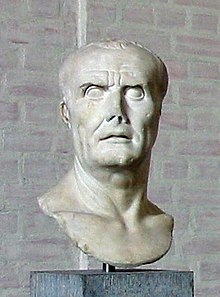
In France, the name is traditionally used in the region of Provence, where the famous Roman general, Gaius Marius (b. 2nd-century BCE) is still considered a hero for crushing the Teutonic forces near Mount Saint-Victoire.

Currently, Marius is the 22nd most popular name in Norway, (2010). His rankings in other countries are as follows:

  • # 40 (Denmark, 2010)
  • # 83 (France, 2009)

Its Southern European form of Mario is currently the 10th most popular male name in Spain, (2010). His rankings in other countries are as follows:

  • # 41 (Croatia, 2010)
  • # 44 (Catalonia, 2010)
  • # 91 (Chile, 2010)
  • # 207 (United States, 2010)

Other forms of the name include:

  • Marijo (Croatian)
  • Mario (Croatian/Italian/Spanish)
  • Márius (Czech/Slovak)
  • Marius (Dutch/French/German/Romanian/Scandinavian)
  • Marios Μαριος (Greek: modern)
  • Máriusz (Hungarian. MAHR-yoos)
  • Marijus (Lithuanian)
  • Mariusz (Polish. MAR-ee-OOSH)
  • Mário (Portuguese/Hungarian)
  • Marij Ма́риус (Russian)
  • Màriu (Tuscan)