Santiago

Gender: Masculine
Origin: Spanish
Meaning: “saint James.”

The name is composed of the Spanish words santo (saint) and Iago (the Medieval Spanish form of Jacob).

The name was originally used in honour of St. James the Apostle. Tradition has it that St. James the Apostle travelled to the Iberian peninsula after the death of Christ and it is said that he is buried under the church of Santiago de Compestela in Galicia, Spain.

Santiago was also used as a battle cry by Spanish Christians during the Reconquisition from the Moors.

He is currently a very popular name throughout the Spanish-speaking world. In Mexico he is the most popular male name (2010). In other countries his rankings are as follows:

  • # 36 (Chile, 2010)
  • # 70 (Spain, 2010)
  • # 99 (Catalonia, 2010)
  • # 133 (United States, 2010)

His offshoot of Diego has been argued to be a form of the Greek didache (teaching) but was originally bestowed in honour of St. James the Apostle.

Diego does not lag that far behind his more elaborate counterpart. He is currently the 3rd most popular male name in Mexico, (2010) while in other Spanish-speaking countries he ranks in at:

  • # 9 (Spain, 2010)
  • # 11 (Chile, 2010)
  • # 57 (Belgium, 2008)
  • # 74 (France, 2008)
  • # 85 (United States, 2010)
  • # 303 (the Netherlands, 2010)

Other forms of the name Diego include:

  • Xanti (Basque)
  • Dídac (Catalan)
  • Didacus (Late Latin/Medieval Spanish)
  • Diogo (Portuguese)
  • Tiago (Portuguese)
  • Thiago (Portuguese: Brazilian)

Its Portuguese form of Tiago is the 5th most popular male name in Portugal (2008) and the 95th most popular male name in France, (2008). While Diogo is the 4th most popular male name in Portugual, (2008). And according to Babycenter Brasil, Tiago is the 34th most popular male name among registered users.

Both Diego and Santiago have been used as place names throughout the New World.
Alphonse, Alonso

Gender: Masculine
Origin: German
Meaning: “noble and ready.”

The name is believed to be derived from a Visigothic male name Adalfuns which is composed of the elements adal (noble) and funs (ready). It has also been associated with another Visigothic name Hildefuns meaning (battle ready). The name has always been popular in its various forms throughout Southern Europe, especially in the Iberian Peninsula where it was borne by several kings.

In its French form of Alphonse, it is the name the title character in Alexander Dumas’ 1873 book Monsieur Alphonse, which recounts the exploits of a pimp. Due to this literary association the name has come to mean “pimp” in several languages, most notably in Danish and in Polish.

Its Spanish form of Alonso, however, remains a very common name throughout the Spanish-speaking world. It is currently the 16th most popular male name in Chile (2010). It is also the 84th most popular in Spain (2010) and the 637th most popular in the United States (2010).

The more archaic Italian and Spanish form of Alfonso appears in the U.S. top 1000, coming in as the 742nd most popular male name (2010).

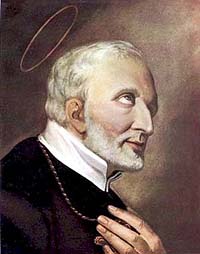
The name was most famously borne by St. Alphonsus Liguori, an Italian saint who founded the order of the Redemptorists and is considered a Doctor of the Church by the Catholic Church.

Other forms of the name include:

  • Adalfuns (German: archaic)
  • Alifonso (Aragonese)
  • Alfonsu (Asturian/Sardinian/Sicilian)
  • Fonsu (Cantabrian)
  • Alfontso (Basque)
  • Alfoñs (Breton)
  • Alfons (Catalan/Czech/Dutch/Finnish/German/Maltese/Polish/Romanian/Scandinavian: also the word for pimp in Polish and Danish)
  • Fons (Dutch)
  • Funs (Dutch)
  • Alfo (Finnish)
  • Alhvo (Finnish)
  • Altto (Finnish)
  • Alphonse (French)
  • Afonso (Galician/Portuguese)
  • Alphons (German)
  • Alfonz (Hungarian)
  • Alfonzino (Italian)
  • Alfonso (Italian/Portuguese/Spanish)
  • Alfonzo (Italian)
  • Alonzo (Italian)
  • Alphonsus (Late Latin)
  • Alfonss (Latvian)
  • Funske (Limbergish)
  • Alfonsas (Lithuanian)
  • Alonso (Portuguese/Spanish)
  • Affonzu (Sicilian)
  • Arfansu/Arfanzu (Sicilian)
  • Alfonz (Slovak/Slovene)

Feminine forms include:

  • Alphonsine (French)
  • Alfonza (Hungarian)
  • Alfonzin (Hungarian) 
  • Alfonzina (Hungarian)
  • Alfonsa (Italian/Portuguese/Spanish)
  • Alfonsina (Italian/Portuguese/Spanish)
  • Alfonza (Italian)
  • Alfonzina (Italian)

Lionel

Gender: Masculine
Origin: French
Meaning: “lion”
Eng (LIE-e-NEL); Fre (LEE-oh-NEL)

Perhaps originally an old French diminutive form of Léon, the name is found in Arthurian legend as the name of one of the Knights of the Round Table.  Lionel is the son of King Bors and the brother of Evaine. When king Claudas kills Bors, Lionel and his brother are rescued by the Lady of the Lake and raised in her underwater kingdom.

Currently, Lionel is the 899th most popular male name in the United States, (2010).

Another form of the name is the Croatian and Spanish, Leonel. As of 2009 Leonel was the 55th most popular male name in Argentina.

The name is borne by Lionel Richie (b.1949)


Hector

Gender: Masculine
Origin: Greek
Meaning: “to have; to hold.”
Eng (HEK-ter); Sp (EK-tor)

The name is found in Greek mythology as the name of the son of Priam and Hecuba, a Trojan prince and a renowned warrior of Troy. After slaying Patroclus, Achilles murdered Hector and then dragged his body from his chariot for days.

In Ancient Greece and even in Medieval Europe, Hector was considered one of the greatest warriors to have ever lived. The Greek Armed Forces attribute their motto to him:

 “One omen is best: defending the fatherland”

The name is believed to be derived from the Greek verb ékhein meaning “to have, to hold.” In Aeolic poetry, Ékhtor was used as an epithet for Zeus, implying that he is the holder of all things.

The name is also found in Arthurian legend as the name of the foster father of King Arthur.

The name was fairly common in Europe during the Middle Ages, and among the Scottish Highlanders, it was traditionally used as an anglicized form of Eachann.

The name is currently very popular in Spanish-speaking countries, in Spain, he was the 31st most popular male name, (2010). His rankings in other countries are as follows:

  • # 38 (Catalonia, 2010)
  • # 79 (Chile, 2010)
  • # 226 (United States, 2010)
  • # 317 (France, 2009)

Other forms of the name include:

  • Etor (Basque)
  • Hektor Хектор (Bulgarian/Croatian/Dutch/Finnish/German/Hungarian/Polish/Scandinavian/Serbian/Slovene)
  • Hèctor (Catalan)
  • Hektór (Czech)
  • Hector (English/French/Latin/Romanian)
  • Hekhtori ჰექტორი (Georgian)
  • Hector (German)
  • Héktôr Ἕκτωρ (Greek: modern)
  • Eachtar (Irish)
  • Ettore (Italian/Maltese)
  • Hektors (Latvian)
  • Hektoras (Lithuanian)
  • Ektor (Polish)
  • Jaktor (Polish)
  • Jektor (Polish)
  • Heitor (Portuguese)
  • Gektor Гектор (Russian/Ukrainian)
  • Héctor (Spanish)
A popular Scots pet form is Heckie and an obscure Scottish feminine form is Hectorina. Italian female form is Ettorina.
Polish diminutive forms are Jaktorek and Jaktorko.

Joachim, Joaquin

Gender: Masculine
Origin: Hebrew
Meaning: “Yahweh has established.”
Eng (JOKE-im); Sp (wah-KEEN)

The name is possibly derived from the Biblical Hebrew male name, Jehoiachin, which is found in the Old Testament as the name of king of Judah imprisoned during the Babylonian exile.

Joachim appears in the apocryphal Gospel of James as the name of the husband of St. Anne and the father of the Virgin Mary. In the Qu’ran the father of Mary is named Imran, though Joachim and Imran are not etymological related. The Catholic Church, Eastern Orthodox Churches and the Anglican Church has traditionally revered this legendary character as a saint and as a result, the name became extremely popular across Europe, especially in Catholic countries.

The name was never very common in the English-speaking world but was occasionally used by Irish-Catholics and American-Catholics.

Currently Joachim is the 319th most popular male name in France, (2009) and the 496th most popular in the Netherlands (2010). Its Spanish form of Joaquin, however, ranks even higher in a couple of countries. His rankings are as follows:

  • # 5 (Chile, 2010)
  • # 99 (Spain, 2010)
  • # 306 (United States, 2010).

Other forms of the name include:

  • Iyakem (Amharic/Ethiopian)
  • Chuaquín (Aragonese)
  • Xuaco/Xuacu (Aragonese)
  • Jokin (Basque)
  • Chaosum (Breton)
  • Joasim (Breton)
  • Jechim (Breton)
  • Joasin (Breton)
  • Jaouas (Breton)
  • Yoakim Йоаким (Bulgarian)
  • Yakim Яким (Bulgarian)
  • Yokim Йоким (Bulgarian)
  • Joaquim (Catalan/Portuguese)
  • Quim (Catalan/Portuguese)
  • Ximo (Catalan/Valencian)
  • Youakim (Coptic/Syrian)
  • Jáchym (Czech)
  • Jokum (Danish)
  • Jochem (Dutch/German)
  • Aki (Finnish)
  • Jaakkima (Finnish)
  • Joachim (English/French/German/Hungarian/Polish)
  • Kim (Finnish/Scandinavian)
  • Kimi (Finnish)
  • Xaquín (Galician)
  • Xoaquin (Galician)
  • Xocas (Galician)
  • Ioa’kime იოაკიმე (Georgian)
  • Achim (German)
  • Jochen (German)
  • Jochim (German)
  • Jóakim (Icelandic)
  • Gioacchino/Gioachino (Italian)
  • Giovacchino (Italian)
  • Yoakima (Lingala)
  • Joakim Јоаким (Macedonian/Serbian/Scandinavian) 
  • Akimka (Maldovan)
  • Iacin (Murcian)
  • Juaqui (Murcian)
  • Quino (Murcian)
  • Ioachim (Romanian)
  • Giuachin (Romansch)
  • Akim АкимЯким (Russian)
  • Yakim (Russian)
  • Joaquín (Spanish)
  • Joakym Йоаким (Ukrainian)

Feminine forms include:

  • Gioacchina (Italian)
  • Gioachina (Italian)
  • Giovacchina (Italian)
  • Joachima (Polish)


Constance

Gender: Feminine
Origin: Latin
Meaning: “constant; steadfast.”
Eng (KAHN-stənts); Fre (kawn-STAWNS)

The name is an anglicized form of the Late Latin female name Constantia which is a feminine form of Constantius derived from the Latin constans meaning “steadfast; constant.”

The name was very common throughout Medieval Europe and was borne by several European royals. In the English-speaking world it was notably the daughter of William the Conqueror who actually introduced the name to England.

Its Spanish form of Constanza is currently the 11th most popular female name in Chile, (2010), while Constance was the 131st most popular female name in France, (2009).

Other forms of the name include:

  • Konstantza (Basque)
  • Constança (Catalan/Occitanian/Portuguese)
  • Konstanca (Croatian)
  • Konstance (Czech)
  • Konstancie (Czech)
  • Constance (Dutch/English/French)
  • Constanze (German)
  • Konstanze (German)
  • Konstancia (Hungarian)
  • Costanza (Italian)
  • Constantia (Latin)
  • Konstanse (Norwegian)
  • Constància (Occitanian)
  • Konstancja (Polish)
  • Constanta (Romanian)
  • Konstantia (Scandinavian)
  • Constanza (Spanish)
  • Konstans (Turkish: obscure)
  • Konstancija Констанція (Ukrainian)

Diminutives include:

  • Kony (Czech)
  • Stanka (Czech)
  • Connie (English/German)
  • Stanzi (German)

Masculine forms include:

  • Constant (English)
  • Costanzo (Italian)
  • Costante (Italian)
  • Constans (Latin)
  • Constantius (Latin)


Jimena, Ximena

Gender: Feminine
Origin: Spanish
Meaning: debated
Ximena Sp/Cat (shee-MEH-nah); South Am. Sp (hee-MEH-nah)
Jimena (hee-MEH-nah)

There are two general theories as to the origins of this name, one is that it is a feminine form of Simon another is that it is derived from the Basque word seme meaning “son.” In either case, it seems to have been a very popular female name in Medieval Spain.

It was borne by Ximena Díaz (1054-1115) the wife of El Cid and who also eventually became his successor to the Valencian throne. It was also borne by an even earlier Spanish noblewoman, Jimena of Asturias (b.900).

Currently Jimena and Ximena both appear in the Mexican top 100. Its Catalan form of Ximena is the 2nd most popular female name in Mexico while its Spanish derivative of Jimena ranked in at # 13.

Her rankings in other countries are as follows:

  • # 42 (Spain, 2010 Jimena)
  • # 272 (United States, 2010 Ximena)
  • # 400 (United States, 2010 Jimena)

Other forms of the name include:

  • Ximena (Catalan/Ladino/Portuguese)
  • Chimène (French. shee-MEN)
  • Ximene (French. zee-MEN)
  • Jimena (Galician/Spanish)
  • Gimena (Medieval Spanish)
Obscure masculine forms are Jimeno and Ximeno.
Sources

Arnold

Gender: Masculine
Origin: German
Meaning: “eagle power.”

The name is composed of the Germanic elements arn (eagle) and wald (power). In pre-Norman England it appeared in the Anglo-Saxon form of Earnwald it was subsequently replaced with the more Norman Arnold and fell out of usage by the Renaissance being revived once again in the 19th-century.

The name is borne by several saints, including an 11th-century French bishop who is venerated as the patron saint of brewers.

Its French form of Arnaud is currently 71st most popular male name in Quebec, Canada (2010).

Other forms of the name include:

  • Earnwald (Anglo-Saxon)
  • Arnald (Catalan)
  • Arnau (Catalan)
  • Arnold (Czech/English/German/Hungarian/Polish/Scandinavian/Slovak/Slovene)
  • Aart (Dutch)
  • Arend (Dutch)
  • Arnoud (Dutch)
  • Arnout (Dutch)
  • Aarno/Arno (Finnish)
  • Arnaud (French)
  • Arnault (French)
  • Arendt (German)
  • Arndt (German)
  • Arne (German)
  • Arnót (Hungarian)
  • Arnaldur (Icelandic)
  • Arnaldo (Italian/Portuguese/Spanish)
  • Nöl (Limburgish)
  • Nölke (Limburgish)
  • Arnoldas (Lithuanian)
  • Arnwald (Old German)
  • Arnaldr (Old Norse)
  • Arnado (Spanish)

Obscure feminine forms include the German Arnoldine, the French Arnaude and the Southern European Arnalda.

The name is borne by actor and form California governor Arnold Schwarzenegger  (b.1947).

A common English short form is Arnie.

Sources

  1. http://www.behindthename.com/name/arnold


Clovis

Gender: Masculine
Origin: Frankish
Meaning: “praised fighter.”

The name is derived from the old Frankish name Chlodevich which is composed of the elements, chlod (praise) and vech (fighter).

It is believed that Clovis is the proto-name of Louis.

The name was borne by Clovis I (466-511), the first king to unite all the Frankish tribes under one ruler. Three other Frankish kings bore the name after him.

Currently, Clovis is the 157th most popular male name in Quebec, Canada (2010) and the 223rd most popular in France, (2009).

Other forms of the name include:

  • Clodeveu (Aragonese/Catalan)
  • Klovis (Basque/Frisian)
  • C’hlodwig (Breton)
  • Hlodwig (Breton)
  • Klodvig (Croatian/Hungarian)
  • Chlodvík (Czech)
  • Clovis (Dutch/English/French)
  • Klodvig (Finnish/Norwegian)
  • Chlodwig (German/Polish)
  • Clodoveo (Italian/Spanish)
  • Chlodovechus (Latin)
  • Chlodvigas (Lithuanian)
  • Clodovèu (Occitanian)
  • Clóvis (Portuguese)
  • Klodevig (Scandinavian)
  • Cluduveu (Sicilian)
Sources

Fernanda and Ferdinand

Origin: German
Meaning: “brave journey”

Ferdinand is composed of the Germanic elements, farði (journey) and nanð (brave; courageous).

The name was first introduced into Iberian Peninsula by the Visigoths and from there it entered into the Spanish royal lines. Interestingly enough, it did not become common in Germanic countries until the 16th-century, when the Habsburg gained control over Spain. The name was very popular among Spanish royalty and later with the Hapsburgs.

Ferdinand is the progenitor of the common Spanish surnames Fernandez and Hernandez.

Its feminine form of Fernanda is currently the 10th most popular female name in Chile, the 15th most popular in Mexico and the 341st most popular in the United States, (2010). While its contracted Hungarian form of Nándor is currently the 67th most popular male name in Hungary, (2010).

Other feminine forms include:

  • Fernande (French)
  • Ferdinanda (German)
  • Ferdinande (German)
  • Ferdinandine (German)
  • Fernandia (German)
  • Ferdinanda (Italian)
  • Fernanda (Italian/Portuguese/Spanish)
  • Winanda (Polish)
  • Hernanda (Spanish)

Masculine forms include:

  • Fernandu (Asturian)
  • Hernandu (Asturian)
  • Erlantz (Basque)
  • Errando (Basque)
  • Pernando (Basque)
  • Perrando (Basque)
  • Ferrà (Catalan)
  • Ferran (Catalan)
  • Ferdinand (Czech/French/German)
  • Veeti (Finnish)
  • Veerti (Finnish)
  • Veertinantti (Finnish) 
  • Fernand (French)
  • Fernandel (French: obsolete)
  • Ferrand (French: obsolete)
  • Fernán (Galician)
  • Fridunanth (Gothic)
  • Fernandó (Guarani)
  • Fernandío (Guarani)
  • Ferdinánd (Hungarian)
  • Nándor (Hungarian)
  • Ferdinando (Italian)
  • Fernando (Italian/Spanish)
  • Nando (Italian)
  • Fernandu (Leonese)
  • Nandu (Leonese)
  • Ferdinandas (Lithuanian)
  • Fridenand (Old High German)
  • Ferdynand (Polish)
  • Winand (Polish)
  • Fernão (Portuguese)
  • Hernando (Spanish)
  • Hernán (Spanish)
A common German short form is Ferdy.