Hagen

Gender: Masculine
Origin: German
Meaning: debated
Eng (HAY-gen); Germ (HAH-gen)

The name could be of three possible etymologies, it could be a borrowing from the Danish form of Håkon. Other sources have suggested that it comes directly from the Old High German meaning, “grove; enclosure.” In the case of the German city, this is the most likely etymology. Another possibility is that it is the German form of the Old Norse Högni (protection).

In the Medieval German epic, The Song of the Nibelungs, it is the name of Hagen of Tronje, the slayer of Siegfried and the thief of Nibelungs’ treasure. According to legend, he is half elf and has one eye. He appears in several other German folktales in which he is sometimes portrayed as the hero or the antagonist.

Currently, Hagen is the 430th most popular male name in Germany, (2011).

Another form of the name is Hagano.


Orlando

Gender: Masculine
Origin: Italian/Spanish

The name is an Italian form of the Germanic, Roland, meaning “famous land.” Orlando has been in usage in the English-speaking world since at least the 16th-century, most likely due to the character in Shakespeares As You Like It (1599). It also the name of the eponymous character of the Italian epic Orlando Furioso (circ. 1520).

The name has been borne by English composer, Orlando Gibbons (1582-1625), American general, Orlando Ward (1891-1972) and British actor, Orlando Bloom (b.1977).

It is also the name of a city in Florida, which, according to legend may have been named for the Shakespeare character or it could have been named for an American sentinel Orlando Reeves who was killed during the Seminole warrior.

Actor Orlando Bloom was named for Orlando Gibbons.

Currently, Orlando is the 425th most popular male name in Germany, (2011) and the 435th most popular in the United States, (2010).

A feminine form is Orlanda.

Ansgar

Gender: Masculine
Origin: German
Meaning: “God’s spear.”
(AHNS-gahr)

The name is composed of the Germanic elements, ans (god) and gari (spear). Ansgar is believed to be the progenitor of the name Oscar.

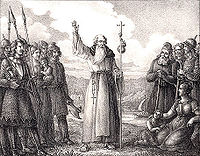
The name was borne by St. Ansgar of Bremen (801-864), an early German saint who is most famous for trying to convert the Danes and Swedes.

Currently the the name is the 408th most popular male name in Germany, (2011).

Other forms of the name include:

  • Anschar (Bavarian)
  • Anscari (Catalan)
  • Anschaire (French)
  • Anskar (Frisian/German)
  • Ansgar (Icelandic/German/Scandinavian)
  • Anscario/Ansgario (Italian)

Shirin

Gender: Feminine
Origin: Persian
Meaning: “sweet.” شیرین
(SHEE-reen)

The name is from the Persian meaning, “sweet” and is a fairly classic female name in Iran. The name is found in an 800 year old epic romantic poem, Khosrow & Shirin, which recounts the exploits of an Armenian princess and her royal Persian lover. Her story may have been based on the eponymous favorite wife of the Sassanid King Khosrow II (c.628 CE).

Currently, Shirin is the 455th most popular female name in Germany.

The name is also used throughout Central Asia, including Afghanistan, Pakistan and Armenia.

Other forms of the name include:

  • Şirin (Azeri/Kurdish/Turkish)

Angelina

Gender: Feminine
Origin: Greek/Italian
Eng (AN-je-LEE-nah); It (ahn-jay-LEE-nah)

The name is often listed as an Italian diminutive form of Angela, but seems to have a much longer history as an independent given name stretching all the way back to the Byzantine Empire.

The name seems to have been used as a feminine form of Angelos for the female offspring of the Angelos family. The Angelos family was the ruling dynasty of the Byzantine Empire during the 12th-century, it is believed that their name was either derived from the traditional Angelos or may have been from a toponym (Agel), a district near Amida.

As a result, the name became fairly common among South Eastern European royalty of the Middle Ages, one of whom, St. Angelina of Serbia (15th-century, CE), is revered as a saint in the Serbian Orthodox Church.

Theodora Angelina, Duchess of Austria (d.1246), the wife of Leopold VI of Austria, was from the Angelos family. As a result, the name has had some usage in German-speaking countries, but really exploded in popularity during the last decade, perhaps more to due to the fame of actress, Angelina Jolie (b.1975).

Angelina also seems to have been a common name in 18th and 19th-century America. It was borne by Angelina Eberly (1798-1860) a famous innkeeper during the Texas Archives War. In addition, it was borne by early suffragette and abolitionist activist, Angelina Grimké (1805-1879) as well as Angelina Weld Grimké, (1880-1958), a poet and writer.

The name is currently experiencing a sharp rise in popularity. It is the 59th most popular female name in Austria, (2010) and her rankings in other countries are as follows:

  • # 84 (Germany, 2011)
  • # 86 (Australia, 2010)
  • # 93 (United States, 2010)
  • # 107 (France, 2009)
  • # 224 (Netherlands, 2010)

Other forms of the name include:

  • Angjelina (Albanian)
  • Angelina Ангелина Անգելինա (Armenian/Bulgarian/Croatian/Dutch/English/German/Greek/Hungarian/Italian/Macedonian/Polish/Russian/Serbian/Slovene/Spanish)
  • Angéline (French)
  • Andżelina (Polish)


Letitia

Gender: Feminine
Origin: Latin
Meaning: “happiness; joy.”
Eng (luh-TISH-ah)

The name is an English form of the Latin female name, Laetitia, which is derived from laeta meaning, “joy; happiness.”

The name was popularized by an early Christian Spanish saint. In Medieval England, the name was used in the form of Lettice, (sounds like lettuce). After the Reformation, it went out of usage but was revived in the 18th-century in the more elaborate incarnation of Letitia. It remained a very popular name in England and the United States between the 18th-century and the 19th-century, leading to the diminutive offshoot of Lettie, which also appears as an an independent given name in records of the same period.

In Rome, it was the name of a minor goddess of gaiety. In modern Italian, the word survives in the form of letizia (joy) and is also used as a given name. Letizia was also the name of Napoleon Bonaparte’s mother.

Currently, its Portuguese form of Letícia is the 20th most popular female name in Brazil, (2011). Her rankings in other countries are as follows:

  • #320 (France, Laëtitia, 2009)
The name is currently borne by Letizia Ortiz Rocasolano (b.1972), the wife of Crown Prince Felipe of Spain.

Other forms of the name include:

  • Levenez (Breton)
  • Letícia (Catalan/Hungarian/Portuguese)
  • Letizia (Corsican/Italian)
  • Lettice (English)
  • Letitia (English)
  • Laëtitia (French)
  • Laetitia (German)
  • Letiţia (Moldovan/Romanian)
  • Letycja (Polish)
  • Leticia (Spanish)
  • Leta (Swiss-German)


Elijah, Elias

Gender: Masculine
Origin: Hebrew
Meaning: “Yahweh is God.”
Eng (ee-LIE-jah ; e-LIE-jah)
Eng (ee-LIE-us; eh-LIE-us)

The name is derived from the Biblical Hebrew, אֱלִיָּהוּ, (Eliyyahu), meaning, “Yahweh is God.”

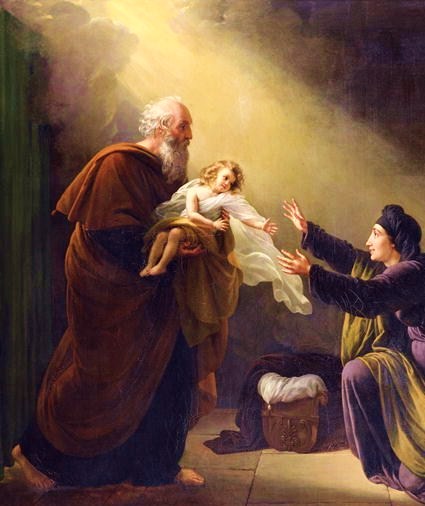
The name is borne in the Old Testament by an extremely important prophet who is speculated to have been alive around the 9th-century C.E.

Many miraculous occurrences were attributed to him, the most spectacular being that he could raise the dead, invoke fire from the sky and it is also believed that he ascended into heaven, (body and soul), via a chariot of fire flanked by cherubs.

He is an extremely popular figure in both Judaism and Christianity.

In the New Testament, it is believed that Elijah appeared with Moses during the Transfiguration of Christ.

Elijah has always been revered as a great saint by the Eastern Orthodox Churches, and in Russia and other Slavo-Orthodox nations, Elijah has been equated as a sort of folk character: he is responsible for bad weather if angered.

In Judaism, Elijah is invoked during the weekly Havdalah, the Passover seder and during the ritual circumcision.

In the the Church of Jesus Christ of Latter-Day Saints, it is believed that Elijah visited Joseph Smith and Oliver Cowdery in 1836.

Unlike other Old Testament names, Elijah has had a longer usage among Christians, going as far back as the Middle Ages. However, in Medieval England, the Middle English form of Elis, was more widely used.

In addition to the prophet Elijah, the name was also borne by at least two Catholic/Orthodox Saints.

Currently, Elijah is the 18th most popular male name in the United States, (2010). So far, this is the highest he has ranked in U.S. naming history. His rankings in other countries are as follows:

  • # 45 (Australia, 2010)
  • # 78 (Canada, B.C., 2010)
  • # 311 (the Netherlands, 2010)
  • # 427 (France, 2009)

His Hellenized counterpart of Elias, is also an up-and-comer, he is currently the # 141st most popular male name in the United States, (2010) and his rankings in other countries are as follows:

  • # 4 (Sweden, 2010)
  • # 9 (Austria, 2010)
  • # 10 (Norway, 2010)
  • # 13 (Germany, 2011)
  • # 18 (Denmark, 2010)
  • # 44 (Belgium, 2009)
  • # 119 (France, 2009)
  • # 225 (the Netherlands, 2010)

Other forms of the name include:

  • Ilyas إلياس (Arabic)
  • Ilia/Ilya Илья (Bulgarian/Old Church Slavonic/Russian)
  • Ilija Илија (Bulgarian/Croatian/Macedonian/Serbian)
  • Elies (Catalan)
  • Elijáš (Czech)
  • Elia (Dutch/Finnish/Georgian/Italian/Norwegian)
  • Eliah (English)
  • Eelis (Finnish)
  • Eljas (Finnish)
  • Élie (French)
  • Elias Ηλιας (English/Estonian/Finnish/German/Greek/Portuguese/Scandinavian)
  • Ellis/Elis (English)
  • Elija (German)
  • Elise ელისე (Georgian)
  • Eliou Ηλιου (Greek)
  • Eliyyahu/Eliyahu אֱלִיָּהוּ (Hebrew)
  • Éliás (Hungarian)
  • Illés (Hungarian)
  • Elías (Icelandic/Spanish)
  • Illyas (Indonesian)
  • Oillil (Irish-Gaelic)
  • Eliya (Kiswahili)
  • Helias (Latin: Biblical)
  • Habacus (Latin: Vulgate)
  • Elijas (Lithuanian)
  • Eliasz (Polish)
  • Ilie (Romanian)
  • Eliáš (Slovakian)
  • İlyas (Turkish)

A Romanian feminine form is Ilinca, (ee-LEEN-kah).

The name is borne by American actor, Elijah Wood (b. 1981)

The designated name days are March 24, July 20 and August 2nd.

Felix

Gender: Masculine
Origin: Latin
Meaning: “happy; lucky.”
Eng (FEE-liks); Germ (FEH-leeks)

Felix is derived from an Old Roman agnomen, (nickname), which describes one who is happy or lucky.

In ancient History, it was bestowed as a descriptive nick name upon the Roman dictator, Lucius Cornelius Sulla, (c.138 B.C.E-78 B.C.E), it was also borne by a few other Roman officials.

The name also makes an appearance in the New Testament.

The name was borne by at least 15 saints and 5 popes, rendering the name extremely popular in Medieval Continental Europe.

The name was also in usage in Medieval England, but seems to have gone out of style after the Protestant Reformation, being revived again in the 19th-century.

Currently, Felix is the 9th most popular male name in Germany (2011), in the United States, however, he only ranked in as the 3331st most popular male name, (2010). The highest he has ever ranked in U.S. naming history was in 1884, coming in as the 137th most popular male name.

In the English speaking world, Felix is usually associated with the Cartoon character, Felix the Cat.

His rankings in other countries are as follows:

  • # 14 (Austria, 2010)
  • # 38 (Denmark, 2010)
  • # 50 (Sweden, 2010)
  • # 83 (Norway, 2010)
  • # 177 (France, 2009)
  • # 201 (the Netherlands, 2010)

A list of all the variations are as follows:

  • Feliu (Catalan)
  • Felix Феликс (Croatian/Czech/Dutch/English/Finnish/German/Romanian/Russian/Scandinavian/Serbian)
  • Feliks (Croatian/Polish/Croatian/Serbian/Slovene)
  • Feeliks (Finnish)
  • Feliksas (Finnish)
  • Félix (French/Hungarian/Portuguese/Slovakian/Spanish)
  • Feliksz (Hungarian)
  • Felice (Italian)
  • Felicetto (Italian)
  • Felicino (Italian)
  • Felicio (Italian)
  • Feluccio (Italian)
  • Felicius (Latin)
  • Szczęsny (Polish:a vernacular form of Felix, this form is archaic and has been replaced in usage by Felix)
  • Felici (Romansch)
  • Srečko (Slovene; Croatian: direct translation, literally meaning “happy, lucky” in Southern Slavic languages)

Another offshoot is the Latin Felician, which literally means “the happy one” or “the lucky one.”

Derivatives are:

  • Felician (English)
  • Félicien (French)
  • Feliciano (Italian/Portuguese/Spanish)
  • Feliziano (Italian)
  • Liciano (Italian)
  • Felicianus (Latin)
  • Felicjan (Polish: fe-LEET-syahn)
  • Felicián (Slovak)

Its feminine form of Felicia has been in usage in England since the Middle Ages, currently, she does not appear in the U.S. top 1000, she was last seen in 2005 coming in as 993rd most popular female name. The highest she ever ranked in U.S. naming history was in 1986 coming in as the 90th most popular female name.

She is currently the 251st most popular female name in the Netherlands (2008) and the 15th most popular in Sweden (2007).

Variations are:

  • Felicia (English/Italian/Romanian: feh-LEE-shah Eng; fay-LEE-chah Italian)
  • Félicie (French: fay-lee-SEE)
  • Félicienne (French)
  • Felicie (German: fe-LEE-tsee-e)
  • Felícia (Hungarian/Portuguese)
  • Felicetta (Italian: obscure)
  • Feliciana (Italian/Latin/Spanish)
  • Felicina (Italian: obscure)
  • Felicja (Polish: Felcia, Felka, Fila and Filka are the diminutives. fe-LEET-syah)
  • Felina (Polish)
  • Feliksa (Polish)
  • Szczęsna (Polish)
  • Srečka (Slovene/Croatian)

The name was borne by German composer, Felix Mendelssohn (1809-1847).

The designated name-days are January 14 (Sweden), February 12 (France), May 30 (Germany), June 9 (Hungary), November 1st (Czech Republic), November 20 (Slovakia).

Eloise

Gender: Feminine
Origin: French
Meaning: “wide and healthy.”
Eng (EL-o-eez, el-o-EEZ )

The name is an anglicized form of the Old French, Héloïse which is derived from the Germanic name Helewidis, composed of the elements heil (healthy) and wide (wide). The meaning of the name is probably in reference of the parents wishing for an overweight child. In the early Medieval world, being overweight was a sign of wealth and health, especially in the harsh climes of Northern Europe.

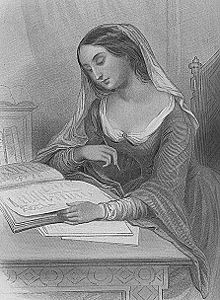
The name was borne by a Medieval French philosopher, writer, nun, scholar and abbess, Héloïse d’Argenteuil (1101-1164). She and her lover Abelard are the source of many medieval romances. According to the story, Héloïse became a nun after her jealous uncle castrated her lover, who she was legally yet secretly married to at the time.

The name was also borne by a few early French saints.

In England, the name has been in usage since at least after the Norman Conquest. The common Medieval English form was Helewis, which died off and was later replaced by Eloise in the 19th-century.

Eloise is also the name of a series of childrens’ books written by Kay Thompson in the 1950s.

Currently, its Portuguese form of Heloisa is the 35th most popular female name in Brazil, (2011). Her rankings in other countries are as follows:

  • # 61 (France, Éloïse, 2009)
  • # 93 (France, Héloïse, 2009)
  • # 530 (United States, 2010)

Other forms of the name include:

  • Eloiza (Azeri)
  • Heloïsa (Catalan)
  • Eloise (English/Swedish)
  • Helewis (English)
  • Éloïse (French)
  • Héloïse (French)
  • Helewidis (German)
  • Heloisa (German)
  • Eloisa (Italian)
  • Eloisia (Italian)
  • Heloiza (Polish)
  • Heloísa (Portuguese)
  • Jeloíza Элои́за (Russian)
  • Eloísa (Spanish)


Bettina

Gender: Feminine
Origin: Italian

The name is from a Medieval Italian diminutive form of either Elisabetta or Benedetta. One of its earliest attestations is that of Bettina d’Andrea (d.1335) a famous Italian legal scholar of Medieval Italy.

The name was later introduced to Germany via Elisabeth Catharina Ludovica Magdalena Brentano (1785-1859), a German countess of Italian descent who was a prolific writer, novelist and one of the pioneers of German romanticism, her pen name was Bettina von Arnim.

The name has also been used in Hungary, the English-speaking world, the Netherlands and Scandinavia. Currently, Betina is the 98th most popular female name in Brazil. Another German form is Bettine.