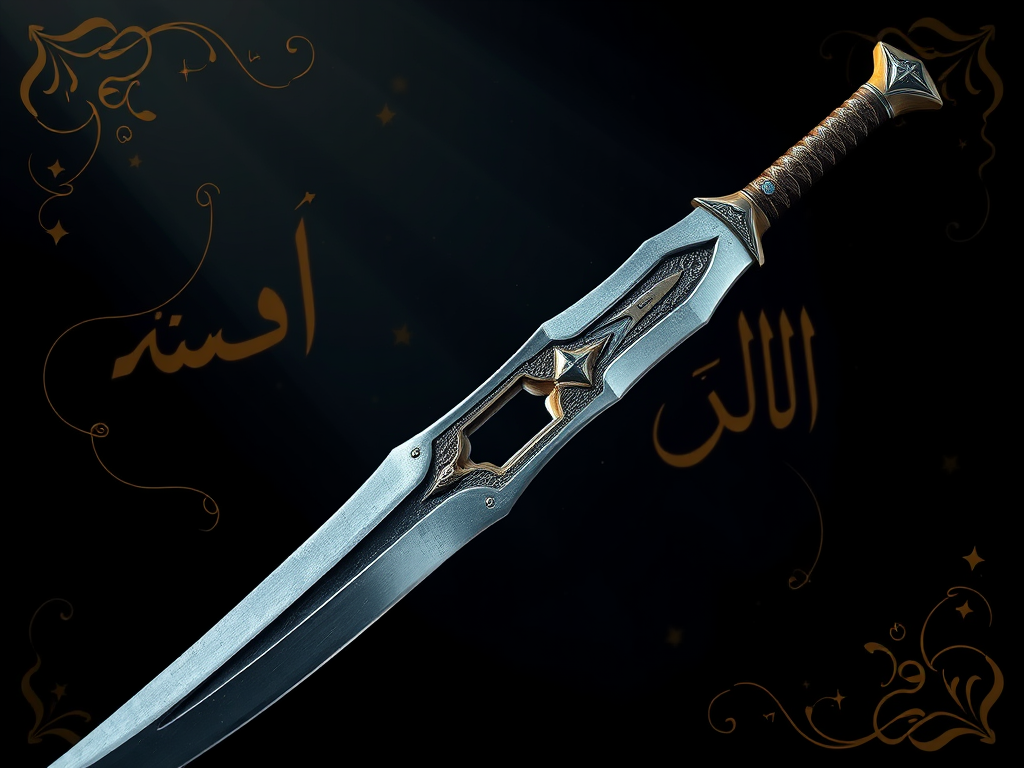
Mizan

  • Origin: Arabic موازين‎; Ethiopic ሚዛን
  • Meaning: “balance; scales.”
  • Gender: Male

The name comes from the ancient Semitic root √W-Z-N / √ʾ-Z-N, meaning “to weigh, measure, or balance.”

Its Arabic use is from mīzān (ميزان) → “balance, scales,” appearing throughout the Qur’an as the mīzān al-ʿadl — the scales of divine justice and its Geʽez / Amharic use comes from mäzan / mizan (መዛን), meaning “measure, equilibrium, fairness.”

Compare to Hebrew moznaim (מאזניים) “the balances,” also symbolizing moral and cosmic fairness and the name of the astrological sign of Libra, though it is not used as a given-name.

In the Islamic world, Mizan represents the moral equilibrium of the universe — the balance by which every soul’s deeds are weighed.

In Ethiopian usage, Mizan retains the literal sense of “measure” but has become a spiritual and philosophical name, expressing inner balance and moral clarity. It’s also a familiar place name — as in Mizan Teferi, “Prince of Balance,” a town in southwest Ethiopia.

A Kurdish form is Mîzan.

Mizani is the Swahili form and is a unisex name.

Sources

Mardiyyah

  • Origin: Arabic مَرضِيَّة
  • Meaning: “pleasing; satisfactory.”
  • Variant transcription: Marziyyah, Mardhiyah
  • Gender: Female

The name is derived from the Arabic root ر ض ي (r-ḍ-y), meaning “to be pleased, content, or satisfied.” The form mardiyyah is the feminine passive participle.

It is a Qurʾānic name, appearing in Sūrat al-Fajr (89:28–30).

International Variations include:

  • Mərziyə (Azeri)
  • Mardhiah, Mardiah (Malay, Indonesian)
  • Marzieh, Marziyeh مرضیه (Persian)
  • Märziya Мәрзия (Tatar)

Sources

Muizz

  • Origin: Arabic معِزّ
  • Meaning: “to give honour; to empower.”
  • Variant transcription: Muiz.
  • Gender: Male

An Arabic male name derived from the verb ʿazza (عزّ) meaning “to be mighty, strong, honored.”

In Islam, al-Muʿizz (ٱلْمُعِزّ) — “The Bestower of Honor” — is one of the 99 Names of Allah.

The most notable bearer is al-Muʿizz li-Dīn Allāh (953 – 975 CE), the fourth Fatimid caliph, renowned for founding the city of Cairo (al-Qāhira) in 969 CE.

It is used throughout the Islamic world, but is particularly common among Muslims in Nigeria.

Sources

Zulfiqar

  • Origin: Arabic ذو الفقار
  • Meaning: debated
  • Gender: Male
  • Pron: ZOOL-fee-KAR

In Islamic tradition it specifically refers to a sword with a split or notched blade—the legendary weapon given by the Prophet Muhammad to his cousin and son-in-law ʿAlī ibn Abī Ṭālib.

It possibly comes from classical Arabic compound dhū / dhu (ذو) (possessor of; one who has), and fiqār / fiqar (فقار) (spine; vertebrae). Other sources suggest the second element may relate to the stars of Orion’s belt.

The phrase literally means “the one with the notches” or “owner of the notched spine.”

International Variations

  • Zylfikari, Zilfikari (Albanian)
  • Zupulkar Зулпукъар (Avar)
  • Zülfüqar (Azeri)
  • Zulfikar (Bosnian, Indonesian)
  • Zulfakar Зульфакъар (Chechen)
  • Zülpykar Зұлпықар (Kazakh)
  • Zilfiqar (Kurdish)
  • Zulfaqar (Malay)
  • Zolfeghar ذوالفقار (Persian)
  • Zulfikor (Tajik/Uzbek)
  • Zülfikar (Turkish)

Sources

Rubab

  • Origin: Arabic رباب
  • Gender: Female

The name comes directly from the Arabic word رباب for a type of stringed instrument.

It was also the name of Rubāb bint Imraʾ al-Qays (b. 7th-century C.E). The wife of Husayn ibn Ali.

It is borne by Pakistani Olympic Swimmer, Rubab Raza (b. 1991).

Another transciption is Rabab.

Other forms include:

  • Rübabə (Azeri)
  • Robabeh ربابه (Persian)
  • Robab رباب (Persian)
  • Rübab (Turkish)

The name is used throughout the Islamic World.

Sources

Zubaidah, Zubayda

Photo by Sena on Pexels.com
  • Origin: Arabic زُبَيْدَة (Arabic)
  • Usage: Arabic-speaking world, most of the Islamic world
  • Gender: Female
  • Meaning: “little butterball.”

The name is derived from the Arabic rootز-ب- د (z-b-d), which pertains to “cream, foam, butter,” along with the Arabic feminine diminutive suffix, roughly translating to “little cream” or “little butter,” having the same sense as “cream of the crop.”

This was the sobriquet of Zubaidah bint Ja’far (766–831), the wife of Harun al-Rashid. Borne as Sukhainah or Amat al-‘Aziz, she was known for her construction of wells and reservoirs along the pilgramage routes to Mecca and is featured in The Thousand and One Nights. Her life was later the inspiration behind the character of Zobeide in the German opera Abu Hassan by Carl Maria von Weber.

The Turkish form of the name, Zübeyde, was borne by an Ottoman princess, the daughter of Sultan Ahmed II, who lived from 1728 to 1756. It was also carried by Zübeyde Hanım (1856–1923), the mother of Mustafa Kemal Atatürk. The name appeared in the Top 100 most popular female names in Turkey between 1980 and 1986, peaking at #70 in 1981

It is also the name of an asteroid.

Other forms include

  • Zübeydə (Azeri)
  • Zubejda (Bosnian)
  • Zobeide (German, literary)
  • Zoubida (Maghrebi Arabic)
  • Zubaida Зөбаида (Tatar)
  • Zübeyde (Turkish)
  • Zubayda (Uzbek)

Sources

Nuralain, Noorulain

  • Origin: Arabic نور العين
  • Meaning: “light of the eye.”
  • Gender: feminine
  • Arab pron (NOO-roo-LINE); Urdu pron (NOO-rul-en)

The name is composed of the Arabic words, nur نُور (light), ul-Ain عَين (the eye; spring, fountain), hence it could also take on the meaning of “light of the spring or fountain.”

Noorulain or Noor-ul-Ain is a common name among Indian Muslims and Pakistanis, though it is not necessarily a name with strong religious connotations in the Arabic-speaking world itself.

It is the name of the female protagonist in a popular Pakistani romantic drama series of the same name (2018).

The Noor-ul-Ain is the name of one of the largest pink diamonds in the world and the tiara it is mounted in, which was made for Empress Farah Pahlavi’s wedding in 1958.

Other forms include the Malay and Indonesian, Norain, Nurain and Noorain.

Its Maghrebi forms are Noorelein, Noureleine, Noraleine, Nureleine & Nurelène which are sometime mistranslated by onomasticians as modern French or Flemish combinations of Nora & Madeleine, which may be the case in some instances.

Other transliterations include: Noor Alain, Nur Alain, Noor-ul-Ain, Nur-ul-Ain, Noraline, Noralin, Noralyn, Nour Elain, Nurelein, Nuraline, Nurelen, Nurelayne & Nuralyn.

Sources

Safin, Safana, Safina

Safin سَفِين is an Arabic male name that derives from the Arabic root, S-F-N س ف ن meaning, “ship.” Safin itself is the plural form and therefore means “ships.” The singular form of Safina سَفِينة (ship) is used as a female given-name. Another feminine form, which is Safana سَفّانة, literally meaning “boatwright” in modern Arabic derives from the same root but may have had a connotation of a precious gem or pearl in old Arabic and was also used as a term of endearment for a daughter.

The name is used in reference to “سفينة نوح” (safinat Nuh), which is Arabic for Noah’s ark.

Other forms include: Safeen (masculine), Saffanah (feminine), Safanah (feminine) & Safinah (feminine).

A Tatar form is Сәфинә” (Säfinä).

Safina is used throughout the Islamic world.

Sources

Ramz, Ramzi, Ramza, Ramzia

  • Origin: Arabic
  • Meaning: “code, sign, mark.”

Ramiz رامز , Ramz رَمْز & Ramzi رمزي are Arabic masculine names which come directly from the Arabic word (ramz) رَمْز , meaning, “code, sign, mark, symbol, gesture.” It is ultimately derived from R-M-Z root in Arabic.

Ramzi appeared in the U.S. Top 1000 Most popular male names between 1973-1990 and peaked at #320 in 1982. It’s usage in the United States may have been influenced by immigrant groups who use the name (Southeastern European Muslims, Arab immigrants & Southeastern Asian Muslims immigrants), mixed with Anglophone parents who were probably using it as an alternate spelling for the English surname/place-name, Ramsey, which means “wild garlic island.” It should also be noted that during this time period, the use of Arabic names became especially popular among African-Americans.

The name is sometimes transliteration as Ramzy and I suppose in the English-speaking world it could also be transliterated as Ramsey.

The feminine forms are Ramza and Ramzia, spelled Ramziya Рәмзия in Central Asian & Turkic languages (Bashkir, Chechen, Tatar).

Other forms include:

Male

  • Remzi Ремзи (Albanian, Bosnian, Crimean Tatar, Turkish)

Female

  • Remzije (Albanian, Bosnian)
  • Remziye (Turkish)

Sources

Dhyana, Dhyani, Dhyan

Dhyana & Dhyani are unisex (pronounced TAH-nah & TAH-nee), ultimately derived from the Sanskrit ध्यान and meaning “meditation; attention.” Both concepts are applied in Buddhism and Hinduism.

An exclusive masculine form is Dhyan.

Sources