Edward

Gender: Masculine
Origin: Anglo-Saxon
Meaning: “wealthy guardian.”
Eng (ED-werd; ED-word)

The name is composed of the Anglo-Saxon elements, ead (rich; waelthy) and weard (guard). Due to the popularity of St. Edward the Confessor, the name was one of the few Anglo-Saxon names to have survived the Norman Conquest and to have spread to non-Anglo-Saxon countries.

The name has remained common in the British Royal Family.

As of 2010, Edward was the 43rd most popular male name in England/Wales. His rankings in other countries, in his various forms, are as follows:

  • # 3 (Eetu, Finland, 2011)
  • # 20 (Duarte, Portugal, 2010)
  • # 21 (Eduard, Romania, 2009)
  • # 28 (Edoardo, Italy, 2010)
  • # 61 (Australia, NSW, 2010)
  • # 72 (New Zealand, 2010)
  • # 79 (Eduardo, Spain, 2010)
  • # 94 (Eduard, Catalonia, 2010)
  • # 97 (Edvard, Norway, 2010)
  • # 136 (United States, 2010)
  • # 153 (Eduardo, United States, 2010)
  • # 169 (Scotland, 2010)
  • # 226 (Édouard, France, 2009)

Other forms of the name include:

  • Eduard Էդվարդ Эдуард ედუარდ Эдуард Едуард (Afrikaans/Albanian/Armenian/Belarusian/Bosnian/Catalan/Croatian/Czech/Dutch/Estonian/Georgian/German/Romanian/Romansch/Russian/Slovak/Ukrainian)
  • Ēadƿeard (Anglo-Saxon)
  • Idward إدوارد (Arabic: used primarily among Christians)
  • Edorta (Basque)
  • Edvard Эдвард Эдвард Едвард (Belarusian/Czech/Faroese/Finnish/Russian/Scandinavian/Serbian/Slovene)
  • Edouarzh (Breton)
  • Eduardu (Corsican/Sardinian)
  • Edward (English/German/Polish)
  • Eetu (Finnish)
  • Eetvartti (Finnish)
  • Etuate (Fijian)
  • Édouard (French)
  • Edo (Frisian)
  • Edzard (Frisian)
  • Eide (Frisian/Plattdeutsch)
  • Eido (Frisian)
  • Eduardos Εδουάρδος (Greek)
  • Ekewaka (Hawaiian)
  • Eduárd (Hungarian)
  • Edvárd (Hungarian)
  • Eðvarð(ur) (Icelandic)
  • Játvarður (Icelandic)
  • Éadbhard (Irish)
  • Éamonn (Irish)
  • Edoardo (Italian)
  • Eduardo (Italian/Spanish/Portuguese)
  • Odoardo (Italian: Tuscan)
  • Eduards (Latvian)
  • Edvards (Latvian)
  • Eduardas (Lithuanian)
  • Edvardas (Lithuanian)
  • Eruera (Maori)
  • Dwardu (Maltese)
  • Duarte (Portuguese)
  • Eideard (Scottish)
  • Eudard (Scottish)
Common diminutives include:
  • Edi (Albanian/Bosnian/Croatian/Slovene/Spanish)
  • Ed (Dutch/English/German/Scandinavian)
  • Eddie (English/German/Scandinavian)
  • Ned (English)
  • Ted (English)
  • Teddy (English)
  • Edek (Polish)
  • Dadu (Portuguese)
  • Du (Portuguese)
  • Edu (Portuguese)
  • Lalo (Spanish)
In recent years, especially in the United States, the name has possibly risen in popularity due to the Twilight Series, in which one of the protagonists is named Edward.
There are a few feminine forms, namely the Spanish and Italian, Eduarda, which I shall save for another post.

Ilona

Gender: Feminine
Origin: Hungarian/Finnish Илона
Hung (EE-loh-naw); Fin (EE-loh-nah); Germ/Pol (ee-LOH-nah)

The name was initially a Hungarian form of Helen, but its usage has spread throughout Eastern Europe and as even appeared north as Finland.

In Finland and Estonian, its etymology has often been traced to the Finnish ilona, the essive of the word, ilo, meaning, “joy.”

In Hungarian, it is a translation of Helen, via the Slavic, Jelena, in Old Hungarian it was Jelona. However, it has been suggested that it may be derived from an old Magyar source of uncertain etymology. The name appears quite often in Hungarian folklore.

Ilona is one of the few Hungarian names that has made a name for itself in other cultures, (no pun intended). It is a common female name in Albania, Belarus, the Czech Republic, Germany, Finland, France, Estonia, Latvia, Lithuania, the Netherlands, Poland, Romania, Russia, Slovakia, Slovenia, the Ukraine, the former Yugoslavian Republics and it is occasionally used in some Spanish-speaking countries.

As of 2011, Ilona was the 37th most popular female name in Finland. Her rankings in other countries are as follows:

  • # 178 (France, 2009)
  • # 478 (the Netherlands, 2010)

A few notable bearers include Ilona Zrinyi (1643-1703), a national heroine in both Hungary and Croatia, a representative of national freedom for both nations. She is famous for opposing the advances of the Habsburg takeover.

A common Hungarian diminutive is Ilonka.

Gertrude

James C. Christensen

Gender: Feminine
Origin: German
Meaning: “spear strength.”
Eng (GER-trood); Ger (ger-TROO-də)

She has adorable nickname options; Trudy, among others. She has a similar feel to other current vintage trend-setters such as Matilda and Eleanor, yet Gertrude, for the most part remains unloved. Like Hildegard and Brynhild, this is one of those names where I often ask myself: why not?

She is strong, vintagy and no-frills, as mentioned before, she has tons of adorable nickname options. Is she really anymore grandmotherly or old sounding than Emma, Eleanor, Matilda or even Abigail? We have gotten used to hearing these names but I remember a time when the above names were considered “too old” until it took one famous person to use them and voila, they are automatically endearing and trendy.

Ok, I’ll get off my high horse and get onto the what the name is really all about.

Portrait of Gurtruydt van Leyden.
by James C. Christensen via http://www.greenwichworkshop.com/saintsandangels/17.htm

Gertrude is composed of the Germanic roots, ger (spear) and þruþ (strength).

The name was borne by several illustrious medieval women, two of whom are saints. Gertrude of Nivelles (626-659) is revered as the patron saint of cats! I am not quite sure how she came to be known as a feline patron, but she was the daughter of Pepin I and was supposed to be married off at the age of ten, but steadfastly refused, insisting that she would only marry Christ. After the death of her father, her wealthy mother constructed Gertrude her very own convent, making her the abbess. She is also invoked against mice and rat infestations.

Another Gertrude is Gertrude the Great (1256-1302) a German nun, mystic and great theologian of her time.

The name has been borne by German and Dutch royalty alike.

Gertrude is pretty well-known in the English-speaking world, but actually never experienced much usage. It was introduced into England in the 15th-century by Dutch settlers, where it was ocassionally used. It appears in Shakespeare’s Hamlet (1600) as the name of the hero’s mother.  It was used sparingly in the United States at the beginning of the 20th-century, possibly being introduced by German immigrants. The highest it ever ranked was in 1898 coming in as the 573rd most popular female name.

In the United States, its most famous bearer is Gertrude Stein (1874-1946), famous writer and poet.

As of 2011, her Finnish form of Kerttu was the 20th most popular female name in Finland and Geertruida came in as the 491st most popular female name in the Netherlands, (2010). Meanwhile, its Dutch diminutive offshoot of Geertje is the 368th most popular female name in the Netherlands, (2010).

Other forms of the name include:

  • Gartred (Cornish)
  • Gertruda (Croatian/Czech/Lithuanian/Polish/Romansch/Slovene)
  • Geerdina (Dutch)
  • Geertje (Dutch)
  • Ge(e)rtruida (Dutch)
  • Geertrui (Dutch)
  • Gertrude (Dutch/English/French/German/Italian/Platdeutch)
  • Trudy (Dutch/English/German)
  • Truus (Dutch)
  • Kelli (Estonian)
  • Kertu (Estonian)
  • Kärt (Estonian)
  • Ge(i)rtrúð (Faroese)
  • Gortra (Faroese)
  • Jertru (Finnish)
  • Jerttu (Finnish)
  • Järtty (Finnish)
  • Kerttu (Finnish)
  • Kerttuli (Finnish)
  • Gesa (Frisian)
  • Gesche (Frisian/Platdeutsch)
  • Geesche (Frisian)
  • Gesina (Frisian)
  • Gerta (German)
  • Gertraud (German)
  • Gertrud (German/Scandinavian/Romansch)
  • Gertrúd (Hungarian)
  • Jerta (Hungarian)
  • Geirþrúður (Icelandic)
  • Jarþrúður (Icelandic)
  • Geltrude (Italian)
  • Gertrūda (Latvian)
  • Gjertrud (Norwegian)
  • Jartrud (Norwegian)
  • Geretrudis (Old High German)
  • Geirþrúðr (Old Norse)
  • Jarþrúðr (Old Norse)
  • Gertrudes (Portuguese)
  • Gearte (Sami)
  • Kearte (Sami)
  • Gertrúda (Slovak)
  • Trudla (Sorbian)
  • Gertrudis (Spanish)
  • Gardrud (Swedish)
  • Gertru(n) (Swedish)
  • Hjertrud (Swedish)

Common German and English short forms are Gertie and Trudi/Trudy.

Artwork

Vera

Gender: Feminine
Origin: Slavic Вера
Meaning: “faith.”
Eng (VARE-uh; VEER-uh); Rus (VYEH-rah)

The name is most likely a borrowing from the Russian female name, Vera, which comes directly from the Slavic meaning, “faith.” Initially, it was a Russian-Orthodox cognate of the Greek female name, Pistis (Faith), the name of an early Christian saint and martyr.

The name has been used outside of Eastern Europe since at least the 19th-century. It is unclear how the name caught on in the English-speaking world, but by the time of its popularity the name was usually associated with the Latin, verus, (true), verses, the Slavic, (hope).

Its usage in Albania may also be connected with the Albanian word, verë, (Summer).

The name is borne by several famous Russian women, including silent film actress, Vera Kholodnaya (1893-1919) and theatre actress, Vera Komissarzhevskaya (1864-1910); Chemist, Vera Popova (1867-1896).

Other notable bearers include: English writer and feminist, Vera Brittain (1893-1970); Ukrainian-American actress, Vera Farmiga (b.1973); American actress, Vera Miles (b.1929); American fashion designer, Vera Neumann (b.1907) and American fashion designer, Vera Wang (b.1949).

The highest the name ranked in the United States was in 1919 when she came in as the 65th most popular female name; its popularity may have had something to do with Vera Kholodnaya who died the same year, but this is only my personal conjecture.

As of 2010, Vera is the 675th most popular female name in the United States. Her rankings in other countries are as follows:

  • # 13 (Veera, Finland, 2011)
  • # 39 (Sweden, 2010)
  • # 45 (the Netherlands)

Other forms of the name include:

  • Vera Вера (Albanian/Bulgarian/Croatian/Dutch/English/Faroese/German/Hungarian/Icelandic/Italian/Latvian/Lithuanian/Macedonian/Portuguese/Russian/Scandinavian/Serbian/Slovene)
  • Věra (Czech)
  • Veera (Estonian/Finnish)
  • Véra (French)
  • Verina (Italian)
  • Verutė (Lithuanian)
  • Wiara (Polish)
  • Wiera (Polish)
  • Verá (Sami)
  • Viera (Slovak)
  • Wera (Swedish)
  • Vira Віра (Ukrainian)

Diminutive forms include:

  • Verica (Czech/Serbian)
  • Verika (Czech)
  • Verochka (Russian)
  • Verunka (Czech)
  • Verusha (Russian)
  • Vierunka (Czech)
  • Vieruška (Czech)
  • Věrka (Czech)
  • Věruna (Czech)
An obscure Latin masculine form is Verus.

Ada(h)

Ada is sweet, vintagy and classy, with her two syllable Victoriana quality, ending and beginning in a vowel, Ada(h) may just be the next Ava. The Finns have already beaten us, as she is currently the 3rd most popular female name in Finland, (Aada, 2011).

In English, she is usually pronounced like (AY-duh), but in the rest of the world, she is (AH-dah).

Her origins are various; in the form of Adah, she can be traced to the Hebrew Bible, being a relative of the modern Hebrew unisex name, Adi, meaning (jewel), in ancient Hebrew her meaning is more around the lines of “a piece of jewelry; adornment or; ornament.”

In the Bible, Adah appears twice as the name of a wife of Lemech and again as the name of the wife Esau.

Ada without the H is usually traced to the Germanic element, adal, meaning, “noble,” making her a relative of Adela, Adelaide and Adeline. Among royalty and nobility alike, she was a popular choice across Medieval Europe, being borne by St. Ada, a 7th-century Abbess; Ada of Atholl (d.1264); Ada, Countess of Holland, (1188-1223) and; Ada de Warenne, mother of two Scottish kings and the wife of Henry of Scotland, (1120-1178).
In more contemporary times, Ada is usually associated with Ada Lovelace (née Augusta Ada Byron 1815-1852), the daughter of Lord Byron and a renowned Mathematician, she is often credited by modern scientists as being the first Computer Engineer.

The name could also be of Turkic or Greek origins, but its meaning is lost. It was borne by a female governor of Caria (377-326 B.C.E.) a loyal ally of Alexander the Great.

In the United States, Ada was quite popular around the turn of the 19th-century. The highest she ranked in U.S. naming history was in 1880, coming in as the 33rd most popular female name. By 1985, she completely fell off the charts and reappeared in the top 1000 in 2005. As of 2010, she currently ranks in as the 552nd most popular female name in the United States, (2010). Her rankings in other countries are as follows:

  • # 3 (Aada, Finland, 2011)
  • # 72 (Ada, Norway, 2010)

Other forms of the name include:

  • Ada (Dutch/Estonian/Faroese/Finnish/French/Frisian/German/Greek/Hungarian/Icelandic/Italian/Latvian/Lithuanian/Polish/Plattdeutsch/Scandinavian/Slovene)
  • Aada (Estonian/Finnish)
  • Ade (Estonian)
  • Aata (Finnish)
  • Aatukka (Finnish)
  • Ata (Finnish)
  • Adina (Italian)
  • Ádá (Sami)
  • Adica (Slovene)

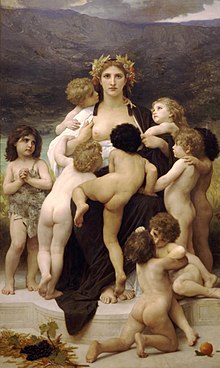
Alma

The name has several different origins and meanings. Its usage as a name in Britain skyrocketed around 1854, after the victorious Battle of Alma, which took place near the Alma River in the Crimea.

In this case, the name is derived from the Tatar word for, “apple.” It is interesting to note that Alma, till this day, is a traditional and common female name across Central Asia, especially among Russian-Tatars, Kazakhs and Uzbeks. In Uzbek, it appears in the form of Olma. Alma is also the word for apple in Hungarian, where it is also occasionally used as a female given name.

The name also appears in Edmund Spenser’s The Faerie Queen as the name of a minor character, the head of the House of Temperance in Book 2. In this case, the name is most likely taken from the Portuguese and Spanish word for “soul.”

Alma appears sparingly as a female given name in Renaissance Italy, in this case, it is most likely derived from the Latin, almus, meaning, “nourishing”; hence the term, alma mater (fostering mother). This usage of the name also appears as an epithet for a few Roman goddess, particularly Venus and Ceres.

It is the name of a book in The Book of Mormon, but in this case, it is masculine, being the name of two prophets, a father and son; Alma the Younger being the Chief Judge among the Nephites.

Other etymologies which have been suggested, include:

  • It is from the Greek, αλμη (salt water)
  • It is from an Arabic source, al-ma, meaning, (the water).
  • It is a contracted form of Amalia and Amalberga.

The name is used in virtually every European country, including Scandinavia, where it is currently very trendy.

As of 2010, Alma was the 8th most popular female in the Faroe Islands. Her rankings in other countries are as follows:

  • # 23 (Sweden, 2010)
  • # 24 (Denmark, 2010)
  • # 48 (Norway, 2010)
  • # 49 (Bosnia & Herzegovina, 2010)
  • # 80 (Spain, 2010)
  • # 849 (United States, 2010)


Rebecca

Gender: Feminine
Origin: debated
Meaning: debated
Eng (re-BEK-ka)

Rebecca is the English form of the Biblical Hebrew רִבְקָה (Rivqah), which possibly means “snare” or “noose” possibly referring to captivation or beauty, but may also be of an unknown Aramaic source.

The name is borne in the Bible by the Aramean wife of Isaac and the mother of Jacob and Esau. She is considered a Jewish matriarch.

In the English speaking world, the name was seldom used until the Protestant Reformation, where it became an exceedingly popular name. Pocahantas even took this as her Christian name upon her baptism.

Currently, Rebekka is the 3rd most popular female name in Faroe Islands, (2010). Her rankings in other countries are as follows:

  • # 20 (Rebecca, Italy, 2010)
  • # 24 (Rebeka, Hungary, 2010)
  • # 37 (Rebecca, Northern Ireland, 2010)
  • # 38 (Rebecca, Scotland, 2010)
  • # 48 (Rebecca, Ireland, 2010)
  • # 75 (Rebeka, Slovenia, 2010)
  • # 75 (Rebecca, Sweden, 2010)
  • # 82 (Rebecca, England/Wales, 2010)
  • # 137 (Rebecca, United States, 2010)
  • # 290 (Rebecca, Netherlands, 2010)
  • # 304 (Rebecca, France, 2009)
  • # 404 (Rebekah, United States, 2010)

Other forms of the name include:

  • Rafqa ﻪﻔﻴﻓﺍﺭ (Arabic/Syriac)
  • Rebeka Ребека (Bosnian/Bulgarian/Czech/Hungarian/Lithuanian/Polish/Slovak/Slovene)
  • Rebeca (Catalan/Ladino/Portuguese/Romanian/Spanish)
  • Rebekka (Dutch/Ethiopian/Finnish/German/Scandinavian)
  • Rebecca (English/Italian/Scandinavian)
  • Becca (English)
  • Reba (English)
  • Rebekah (English)
  • Rébecca (French)
  • Rebèque (French)
  • Rebekah (Greek: Biblical)
  • Revekka Ρεβέκκα (Greek: Modern)
  • Rifqa (Hebrew: Biblical)
  • Riva/Rivka רִבְקָה, רבקה אמנו (Hebrew: Modern)
  • Réba (Hungarian)
  • Ribka (Indonesian)
  • Ryfka (Polish-Yiddish)
  • Rebecke (Plattdeutsch)
  • Revekka Реве́кка (Russian)
  • Reveka (Serbian)
  • Rebecka (Swedish)
  • Rifka/Riwka (Yiddish)

The name was the subject of the 1938 British novel of the same name, written by Daphne du Maurier. It is also borne by a 19th-century Lebanese Christian saint. The designated name-day is March 23 (France).

Common English diminutive forms include: Becca, Beck, Becky, Bex, Reba and Rebi.

Sources

  1. Genesis 22:20-23
  2. http://www.ou.org/torah/ti/5764/toldot64.htm
  3. http://www.behindthename.com/name/rebecca
  4. http://www.askoxford.com/firstnames/rebecca?view=uk

Eva, Eve

Gender: Feminine
Origin: Hebrew
Meaning: “life.”
Eng (EEV); (EE-vuh); Germ/Sp/Pol (EV-ah)

The name is borne in the Bible and in the Quran by the first woman created by God. She and her husband were expelled from the Garden of Eden after eating from the Tree of Knowledge.

The name is believed to be derived from the Hebrew roots חַוָּה, Ḥavvāh, from the Hebrew root ḥāyâ meaning “life” and the Semitic element, ḥyw “to live.” Both the Hebrew word chavah meaning “to live” and chayah meaning “to breath” share the same root.

Despite Eve’s fall from Grace in the Bible, the name was always in usage among Jewish, Christian and Muslim communities. In England, its usage can be traced back to the 12th-century. Its Latinate form of Eva, has always been a classic in continental Europe, especially in Germany, Poland, Slovakia and the Czech Republic.

As of 2010, Eva was the most popular female name in the Faroe Islanda and in Slovenia. Eve, Eva and all her various forms’ rankings in other countries are as follows:

  • # 3 (Iceland, 2010)
  • # 4 (French-speaking, Switzerland, 2010)
  • # 5 (Netherlands, 2010)
  • # 7 (Ieva, Lithuania, 2010)
  • # 10 (Armenia, 2010)
  • # 10 (Evie, England/Wales, 2010)
  • # 14 (Northern Ireland, 2010)
  • # 15 (France, 2009)
  • # 17 (Scotland, 2010)
  • # 20 (Belgium, 2009)
  • # 24 (New Zealand, 2010)
  • # 26 (Australia, NSW, 2010)
  • # 29 (Croatia, 2010)
  • # 31 (Evie, Scotland, 2010)
  • # 33 (Evie, Australia, NSW, 2010)
  • # 37 (England/Wales, 2010)
  • # 44 (Eevi, Finland among Finnish-speakers, 2010)
  • # 44 (Ireland, 2010)
  • # 46 (Austria, 2010)
  • # 47 (Canada, BC, 2010)
  • # 48 (Spain, 2010)
  • # 55 (Catalonia, 2010)
  • # 55 (Éabha, Ireland, 2010)
  • # 56 (Eve, Northern Ireland, 2010)
  • # 59 (Eve, Ireland, 2010)
  • # 86 (Norway, 2010)
  • # 91 (United States, 2010)
  • # 92 (Eve, England/Wales, 2010)
  • # 99 (Eve, Australia, NSW, 2010)
  • # 201 (Eve, France, 2009)
  • # 589 (Eve, United States, 2010)
  • # 705 (Evie, United States, 2010)

Other forms of the name include:

  • Eva Ева ევა
    (Afrikaans/Albanian/Armenian/Basque/Belarusian/Bosnian/Catalan/Croatian/Czech/Dutch/Faroese/French/Frisian/Galician/Georgian/German/Icelandic/Italian/Portuguese/Romansch/Spanish/Scandinavian)
  • Evis (Albanian)
  • Mahalet/Mahlet (Amharic)
  • Hawa حواء Хауа (Arabic)
  • Yeva (Armenian)
  • Həvva (Azeri)
  • Yeva Ева Эва (Belarusian/Russian/Ukrainian)
  • Yevga Евга (Belarusian)
  • Hava (Bosnian)
  • Evy (Danish/Norwegian/Swedish: initially a diminutive form, occasionally used as an independent given name)
  • Eveke (Dutch: initially a diminutive form, used as an independent given name, EV-eh-ke)
  • Eve (English/Estonian/Walon)
  • Evie (English)
  • Hawat/Hewa (Egyptian/Coptic)
  • Eeva (Estonian/Finnish)
  • Eevi (Estonian/Finnish)
  • Evi (Estonian)
  • Ivi/Iivi (Estonian)
  • Iivika (Estonian)
  • Ève (French)
  • Eefje, Eefke (Frisian)
  • Hawwa ሕይዋን (Ge-ez)
  • Eua Ευα (Greek)
  • Chava חַוָה (Hebrew: Modern: KHAH-vah, gutteral CH sound)
  • Éva (Hungarian: AY-vaw, diminutive form is Évike)
  • Hawa (Indonesian/Malayalam)
  • Éabha (Irish-Gaelic)
  • Ieva (Latvian/Lithuanian: YEH-vah)
  • Evuzus (Malaysian)
  • Aaue (Manx)
  • Èva (Occitanian)
  • Ewa (Polish: EH-vah, diminutive forms are Ewka, Ewunia and Ewusia)
  • Evá (Sami)
  • Evelia (Spanish)
  • Evita (Spanish)
  • Eba (Tagalog)
  • Havva (Turkish)
  • Efa (Welsh)

Italian masculine form is Evo.

Traditionally, in most European countries, the name-day for Adam and Eve is December 24.

Frederick

Gender: Masculine
Origin: German
Meaning: “peaceful ruler.”
Eng (FRED-eh-rick; FRED-rick)

The name is composed of the Germanic elements, frid (peace) and rich (ruler). The name has been popular in the Germanic world since the 10th century. It was borne by three dukes of Austria, including Frederick the Fair (1289-1330), the first king of Austria. It was extremely popular among minor German royalty and was eventually borne by Frederick II, King of Prussia, also known as Frederick the Great (1712-1786)

Among Danish Royalty, it has been tradition to alternate naming the eldest son either Christian or Frederick each generation. Frederick, so far, has been borne by nine Danish kings and is currently borne by the Danish Crown Prince (b.1968).

In the Middle Ages, it was borne by three Holy Roman Emperors, including the illustrious Crusader, Frederick I Barberossa (the Red Beard).

The name was introduced into England by the Normans, but became popular in the 18th-century when the German Hanovers inherited the British Throne, which has issued at least one Frederick thus far: Frederick, Prince of Wales (1707–1751), eldest son of King George II of England.

As of 2010, its Danish form of Frederik was the 7th most popular male name in Denmark. His rankings in other countries are as follows:

  • # 11 (Federico, Italy, 2010)
  • # 16 (Federico, Argentina, 2009)
  • # 35 (Fredrik, Norway, 2010)
  • # 95 (England/Wales, 2010)
  • # 393 (Frederik, Netherlands, 2010)
  • # 496 (United States, 2010)

Other forms of the name include:

  • Ferry (Alsatian)
  • Frederig (Breton)
  • Frederic (Catalan)
  • Bedřich (Czech)
  • Frederick (English)
  • Fríðrikur (Faroese)
  • Fredrik (Finnish/Scandinavian)
  • Frédéric (French)
  • Freark (Frisian)
  • Fridric (Frisian)
  • Frerich (German)
  • Friedrich (German)
  • Frigyes (Hungarian)
  • Friðrik (Icelandic)
  • Feardorcha (Irish)
  • Federico (Italian/Spanish)
  • Federigo (Italian)
  • Fredo (Italian)
  • Fricis (Latvian)
  • Frīdrihs (Latvian)
  • Frydrichas (Lithuanian)
  • Friduric (Old High German)
  • Friðrikr (Old Norse)
  • Freerk (Plattdeustch)
  • Fryderyk (Polish)
  • Frédéri (Poitvin)
  • Frederico (Portuguese)
  • Frederi (Provançal)
  • Fadri (Romansch)
  • Frideric (Romansch)
  • Riet (Romansch)
  • Riget (Romansch)
  • Friderik (Slovene)
Common diminutives include:
  • Bedřišek (Czech)
  • Béďa (Czech)
  • Béďánek (Czech)
  • Bédísek (Czech)
  • Fedder (Danish)
  • Fred (English/Scandinavian)
  • Freddy (English/Scandinavian)
  • Frits (Faroese)
  • Fiete (Frisian)
  • Fiddy (German)
  • Freidi (German)
  • Freidl (German)
  • Fre(r)k (German)
  • Fritz (German)
Its feminine form of Federica is currently the 21st most popular female name in Italy, (2009), while Frederikke is currently the 38th most popular female name in Denmark, (2010) and Frédérique is the 150th most popular female name in the Netherlands, (2010).
Other feminine forms include:
  • Bedřiška (Czech)
  • Frederikke (Danish/Norwegian)
  • Frédérique (Dutch/French)
  • Frederica (English/Portuguese)
  • Friðrika (Faroese/Icelandic)
  • Fredrika (Finnish/Swedish)
  • Friederike (German)
  • Federica (Italian)
  • Fryderyka (Polish)
  • Fadrica (Romansch)
  • Fadrina (Romansch)

Waldemar

Gender: Masculine
Origin: German
Meaning: “famous ruler.”
(VAHL-deh-mahr)

The name is supposedly a direct translation of the Slavic male name, Vladimir, the former being composed of the Germanic elements, wald (ruler) and meri (famous).

The name was introduced into the Germanic world by the 12-century Danish King Valdemar, who was named for a Ukrainian ancestor. The name was subsequently borne by several Danish kings and has been found among German and Swedish royalty.

As of 2010, Valdemar was the 33rd most popular male name in Denmark.

Other forms of the name include:

  • Waldemar (Dutch/Czech/German/Polish/Scandinavian)
  • Valdemar (Finnish/Scandinavian)
  • Valdemár (Hungarian)
  • Valdemaro (Italian)
  • Voldemārs (Latvian)
  • Valdis (Latvian)
  • Valdemaras (Lithuanian)
  • Voldemaras (Lithuanian)
  • Valdas (Lithuanian)
  • Waldomar (Old High German)
  • Valdimárr (Old Norse)

Polish diminutives are: Waldek and Walduś