- Origin: Lithuanian
- Meaning: “chestnut.”
- Gender: Male
- KAHSH-to-nahs
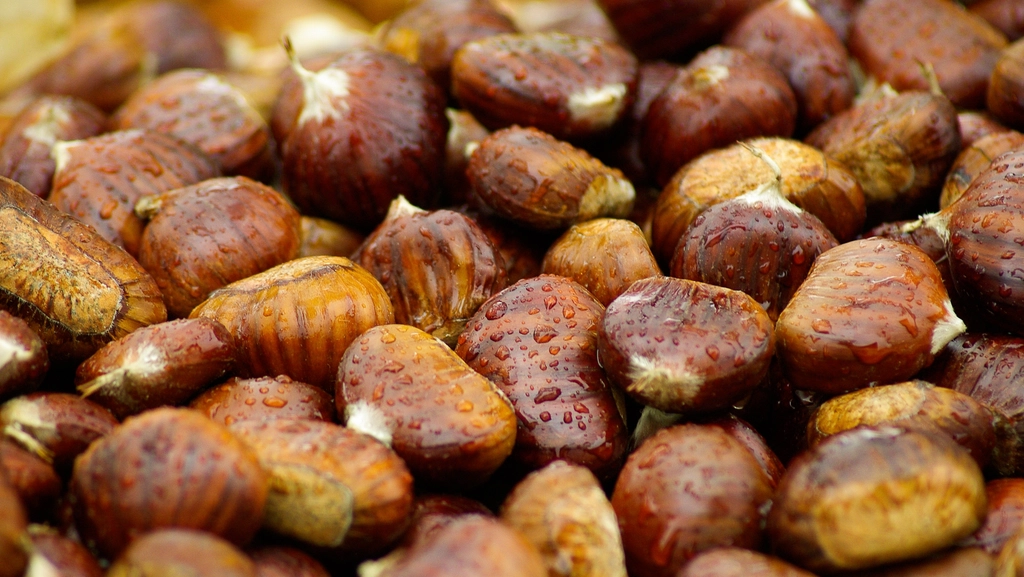
It comes directly from the Lithuanian noun kaštonas, which refers both to the chestnut tree (Aesculus hippocastanum) and its rich, glossy brown nuts.
Source
It comes directly from the Lithuanian noun kaštonas, which refers both to the chestnut tree (Aesculus hippocastanum) and its rich, glossy brown nuts.
Source

Milvydas is an ancient Baltic male name constructed from the elements, mīlas or mielas, meaning, “dear; kind; beloved,” and vydėti, “to see, to perceive,” or vydas “vision; sight.” Another form is Milvidas.
Male diminutive forms are: Milas, Milius, Vidas, Vidis, and Vydas.
The feminine counterparts are Milvida, Milvyda and Milvydė.
The designated name-day for Milvydė is November 11th.
Female diminutive forms are: Mila, Milė, Milva, Vyda, and Vydė.
Source

Svirbutas is an ancient Lithuanian male name, attested in historical sources from the 13th–15th centuries. It belongs to the older layer of Baltic personal names that predate Christianization, often formed from archaic roots with meanings now obscure or lost.
It likely derives from the Lithuanian elements svir (to swing, to sway; to be of importance) and but (to be; to exist).
The designated name-day is November 8th.
A potential Lithuanian female form is Svirbutė.
Sources
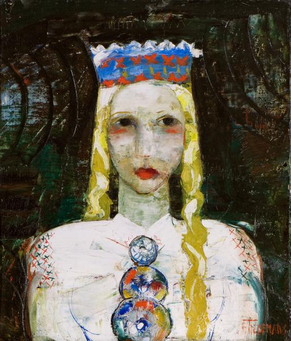
Jānis Tīdemanis (1930)Derived from the Latvian poetic word daile, meaning, “beauty, grace, or artistic refinement.”
The noun daile itself was standardized by linguist and writer Atis Kronvalds in 1868, who likely modeled it on Lithuanian dailė (“art, artistic creation”). Both words share the Baltic root dail-, conveying ideas of beauty, craftsmanship, and aesthetic harmony.
As a personal name, Daila and its variant Daile first appeared in Latvian name calendars in the late 19th century, but did not come into regular use until the 1920s, during the national revival when many symbolic native words were adopted as given names.
Regional and Linguistic Variants
The designated name-day for Daila is February 4th (Latvia); and December 3 for Daile (Latvia).
Sources

A 19th-century gem and late 20th-century vampiric monikor, the name is of uncertain meaning but has its origins in Medieval Spain. It is likely of Visigothic origins, possibly derived from Gailawera or Geloyra, which stem from gails (happy) or (spear); and wers (friendly, agreeable, true).
It should be noted that Elvira (Latin: Iliberri or Iliberis) was an ancient Iberian and later Roman city located near present-day Granada, in Andalusia, southern Spain. However, in this case, it is likely derived from an Iberian source, meaning “new town.”
It was a popular female name among the royal family of Castille & León, producing two queens who bore this name, Elvira of Castile, Queen of León (965–1017) and Elvira of Castile, Queen of Sicily (c. 1100–1135).
It was later used in Mozart’s 1787 opera Don Giovanni (libretto by Lorenzo Da Ponte), in which Donna Elvira is one of Don Giovanni’s former lovers. This likely popularized the name outside of the Iberian peninsula.
By the turn of the 20th-century, Elvira was not unknown in the United States, though never overly popular, it peaked at #254 in 1914, but fell out the Top 1000 by 1981, the same year Elvira, Mistress of the Dark came on the scene.
The real Halloween link began in 1981, when actress Cassandra Peterson created the camp-horror TV hostess Elvira, Mistress of the Dark for a Los Angeles late-night show (Movie Macabre).
Dressed in a plunging black gown with a beehive of jet hair, Elvira presented old horror movies with sardonic humor — blending Gothic sex appeal, irony, and B-movie kitsch.
The character became a pop-culture icon: Halloween TV specials, films, pinball machines, comic books, and even perfume lines immortalized her as the Queen of Halloween.
Outside the United States, this name does not have such associations. In Sweden, it has been among the top 100 girls’ since 1998 and peaked at #25 in 2014. As of 2024, it came in at #40.
It’s a popular name in the Balkans, even spinning off a male form of Elvir (Bosnian and Albanian).
Other forms include:
Obscure Lithuanian male forms are the Lithuanian, Elvyras; the Polish, Elwir(o), and the Italian Elviro.
Name days: August 25 (Austria), July 16 (Croatia), February 10 (Hungary), January 25 (Spain), March 1 (Sweden), November 21 (Slovakia), August 13 (Latvia).
Sources

Derived from the ancient Greek male name Πτολεμαῖος (Ptolemaios), which in turn comes from πτόλεμος (ptólemos), meaning “war” or “battle.”
The word ptólemos is an older Aeolic dialectal form of πόλεμος (pólemos), the standard Classical Greek word for “war,” sharing the same root with the English word, “polemic.”
Ptolemy I Soter (367–283 BCE) was a general of Alexander the Great and later became Pharaoh of Egypt, founding the Ptolemaic Dynasty (323–30 BCE). This dynasty ruled Egypt for nearly three centuries and ended with Cleopatra VII, the most famous bearer of the family’s legacy.
Claudius Ptolemaeus (Ptolemy) (2nd century CE) was the famed Greek astronomer, mathematician, and geographer of Alexandria, whose Almagest shaped Western astronomy for over a millennium.
According to the Book of 1 Maccabees (135/4 BC), Ptolemy of Jericho betrayed his father-in-law, Simon the High Priest, by murdering him and his two sons while they slept as guests under his roof. This act of treachery is used in Dante Alighieri’s The Inferno, in which the ninth circle of Hell is called Ptolomea after him, a frozen realm reserved for those who betray their guests.
Ptolomy is also the name of an early Christian saint.
In the English-speaking world, Ptolomy has been used on and off since the 18th-century. It appeared in the U.K’s top 500 boys’ names in 2004, ranking in at #906.
A modern bearer is American author, Ptolemy Tompkins. Celebrity couple Gretchen Mol and Tod Williams bestowed this on their son in 2007.
Common English short forms include: Tollie, Tolly, and Tal.
International Variations
Female forms include the sensual Ptolemaïs (Πτολεμαΐς) and the Italian, Tolomea.
Sources
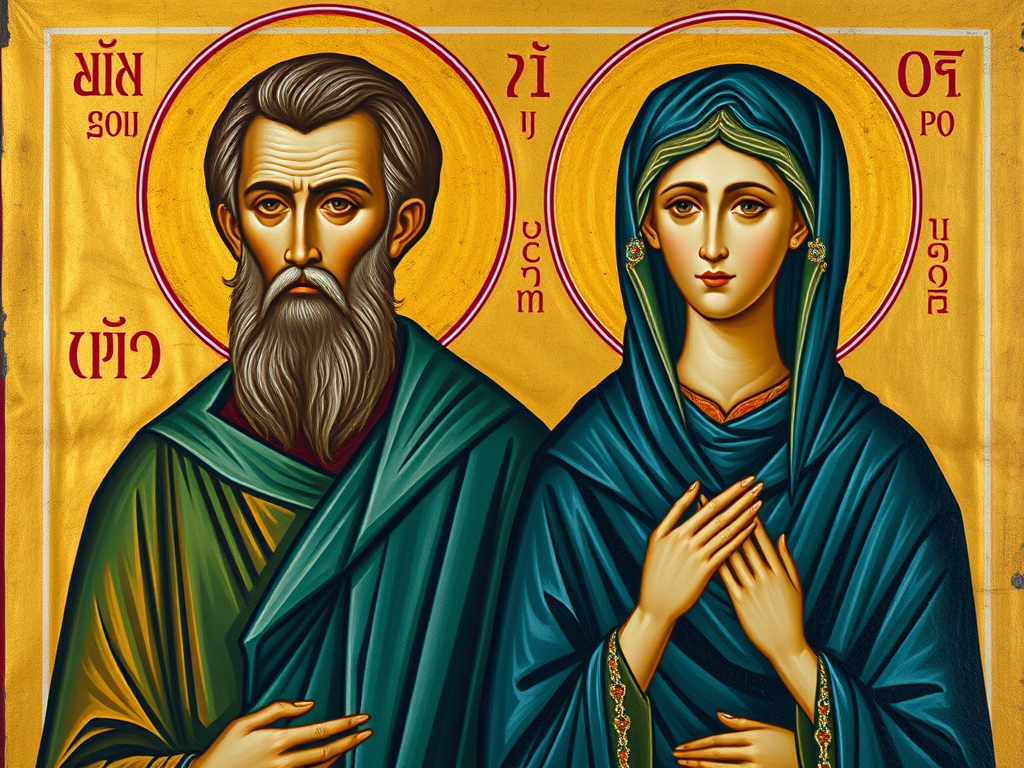
Chariton is an ancient Greek masculine name derived from χάρις (charis), meaning “grace, kindness, favor.”
The name was borne by Saint Chariton the Confessor (4th century), a revered Christian monk and founder of several monasteries in the Judaean Desert. His feast day is observed in the Eastern Orthodox Church on September 28.
Chariton also appears in classical Greek literature as a personal name. It was the name of a 1st-century Greek writer.
International Variations
Charitine, Charitina
The feminine form of Charitine (Χαριτίνη) is the feminine counterpart, and it was latinized as Charitina. An English pronuncitation would be KARE-e-TEE-nee (Grk), and KARE-e-TEE-nah or KARE-e-TIE-nuh).
Saint Charitine of Rome (also known as Charitina, 4th century) is a virgin martyr honored in the Eastern Orthodox Church and Catholic Churches. The feast day and designated name-day is October 8th.
Charitina was later borne by a Medieval Russian Orthodox saint of Lithuania. Very little is known of her hagiography other than her being an indigenous Lithuanian woman who was born pagan but later converted to Christianity.
Female International Variations
Sources

Tarquin is the English form of Tarquinius, the Latin family name of a powerful Etruscan dynasty that ruled early Rome. The name’s exact Etruscan root is uncertain, but it may derive from the ancient city of Tarquinii (modern Tarquinia) in central Italy, itself probably from an older Etruscan personal or place name.
Two Roman kings bore this name: Lucius Tarquinius Priscus, the fifth king of Rome, and Lucius Tarquinius Superbus, the seventh and last king, whose overthrow in 509 BCE led to the founding of the Roman Republic.
While rare, Tarquin appears in English records from the Renaissance onward, often chosen for its aristocratic and classical resonance. Italian retains Tarquino as a given name. The name has also been used in literature and drama —Shakespeare famously tells the story of “The Rape of Lucrece” by Tarquin. It was recently used as the name of Tarquin Blackwood in Anne Rice’s The Vampire Chronicles.
Modern bearers include British journalist Tarquin Hall (b. 1969), the middle name of American actor, Timothy Tarquin Hutton (b. 1960).
Today Tarquin feels distinctive and slightly theatrical, blending ancient Roman history with a sleek, modern sound. If you are looking for a fuller name for Quinn, this may be the perfect choice for you.
International variations include:
Female Forms
Its Italian feminine form of Tarquinia was borne by Italian Renaissance singer, Tarquinia Molza (1542-1617). This would also make a fabulous fuller version for the nickname Quinn. Another Italian female form is Tarquina.
Sources
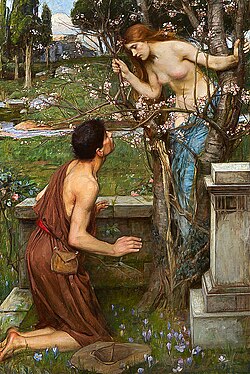
The name appears in Greek mythology. It is connected to a woman who killed herself when her love for Demophon was not returned. She was transformed into an almond or hazelnut tree, depending on the legend. It comes directly from the Greek word, Φυλλίς, meaning, “leaves, foliage,” which shares a root with the words chlorophyll and phyllotaxis. Its Turkish form of Filiz comes from the same root but the meaning slightly changes to “sprout; root.”
It also appears as the name of a minor river god of Bithynia.
It came into widespread use in England in the 16th-century and later spread to the rest of the Anglosphere.
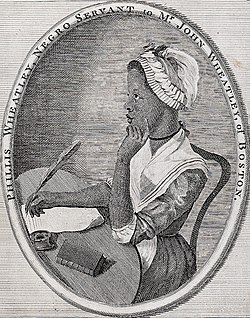
Early Puritan records occasionally include Phyllis/Phillis, reflecting classical learning even among settlers. Phillis Wheatley (1753-1784), the first published African-American female poet, is a striking historical bearer.
An 18th-century English short form was Lissie or Lissy.
It frequently appears in Elizabethan and Restoration poetry and drama. Poets such as Ben Jonson and Andrew Marvell used “Phyllis” as a stock name for a beloved in pastoral verse. Later modernists like Ezra Pound continued this tradition. This usage helped keep it familiar to English speakers for centuries.
It marked its presence in baroque operas (e.g., Handel’s Acis and Galatea includes a character named Phyllis) and in folk songs of the British Isles.
Victorian painters of the Pre-Raphaelite school sometimes chose the Phyllis and Demophon story for mythological canvases.
In the United States, it appeared in the Top 100 Female Names between 1915-1958, peaking at #24 in 1929. In the U.K., it came in at #14 in 1914, #4 in New Zealand in 1911, and #29 in 1922 in Canada.
Its Turkish offshoot of Filiz appeared in the Turkish Top 100 between 1980-1996, peaking at #11 between 1980-1982.
Today, the name is considered dated in the English-speaking world.
Phillyda, pronounced /ˈfɪl.ɪ.də/ in English is an alternate form.
Other forms include:
Sources

The name comes directly from the Lithuanian word ašara (tear). Compare to the Sanskrit, Sanskrit अश्रु (aśru), also meaning, “tear.”
The name is rare in Lithuania, it has only been recorded two times since 1889.
Sources