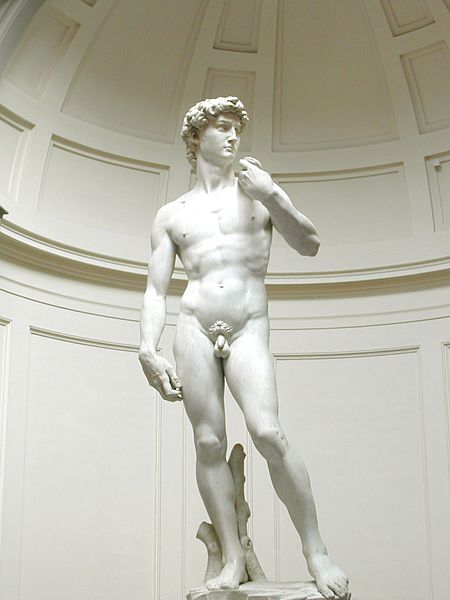
David

Gender: Masculine
Origin: Hebrew
Meaning: “beloved.”

The name is derived from the Hebrew דָּוִד (Dawid), which is derived from the Hebrew word דוד (dwd) meaning “beloved.”

The name is borne in the Old Testament by King David, he is considered to be the greatest Jewish king in history, he is famous for defeating the evil Philistine, Goliath and several other endeavors mentioned in the Bible. He also plays a part in the Qu’ran and in Christian tradition, is considered an ancestor of Jesus.

In the English speaking world, the name has been in usage since the Middle Ages, it was borne by two Scottish Kings and St. Dewi (known as St. David in English) is considered the patron saint of Wales.

In the United States, the name currently ranks in as the 14th most popular male name, actually, David has been in the U.S. top 20 since 1880, and he peaked in 1960, coming in at # 1. In other countries, his popularity is as follows:

  • # 2 Davit (Armenia, 2008)
  • # 74 (Australia, 2007)
  • # 6 (Austria, 2008)
  • # 7 (Catalonia, Spain, 2008)
  • # 87 (Belgium, 2006)
  • # 53 (Canada, B.C. 2008)
  • # 31 (Chile, 2006)
  • # 64 (England/Wales, 2008)
  • # 1 (Faroe Islands, 2008)
  • # 96 (France, 2006)
  • # 6 (Hungary, 2008)
  • # 16 (Ireland, 2007)
  • # 4 (Israel, among Jewish boys, 2008)
  • #  9 Davide (Italy, 2007)
  • # 1 (Liechtenstein)
  • # 4 Dovydas (Lithuanian)
  • # 41 (the Netherlands, 2008)
  • # 51 (Norway, 2007)
  • # 8 Dawid (Poland, 2008)
  • # 4 (Romania, 2008)
  • # 27 (Scotland, 2008)
  • # 9 (Slovenia, 2005)
  • # 4 (Spain, 2008)
  • # 40 (Sweden 2007)
  • # 4 (Switzerland, among German-speakers, 2008)
  • # 6 (Switzerland, among French-speakers, 2008)
  • # 5 Davide (Switzerland, among Italian-speakers, 2008)

The David form is used in Albanian, Catalan, Croatian, Czech, Danish, Dutch, French, Galician, German, Norwegian, Portuguese, Romanian, Spanish and Swedish.

Other forms of the name are:

  • Davidi (Albanian)
  • Da’ud/Da’oud/Da’wud/Da’wood داؤود (Arabic)
  • Davit Դավիթ (Armenian)
  • Davud (Azeri)
  • Davud/Daud/Daut (Bosnian)
  • Daveth (Cornish)
  • Taavet/Taave/Taavi/Taavo/Tavo (Estonian)
  • Daavid (Finnish)
  • Taavetti/Taavi (Finnish)
  • Dáibhead/Dáibheid/Daithí/Davy (Gaelic/Irish)
  • Dawit/Dato დავით (Georgian)
  • David Δαβίδ (Greek)
  • Dávid (Hungarian/Faroese/Slovak)
  • Davíð (Icelandic)
  • Daud (Indonesian)
  • Davide (Italian: Davidino and Daviduccio are obscure diminutive forms that were occasionally used as independent given names)
  • Daudi (Kiswahili)
  • Dawid (Kurdish)
  • Dāvids/Dāvis (Latvian)
  • Dovydas (Lithuanian)
  • Davidu Давідъ(Old Church Slavonic)
  • Davud داوود (Persian)
  • Dawid (Polish: DAH-veed)
  • David Давид (Russian/Belarusian)
  • Davíd (Spanish)
  • Dàibheid/Dàibhidh/Daividh (Scottish)
  • Davud/Dâvud (Turkish)
  • Davyd (Ukrainian)
  • Dai (Welsh: a Welsh diminutive form of David, occasionally used as an independent given name)
  • Dafydd/Dewi (Welsh)
  • Dewydd (Welsh: archaic)
  • Dovid (Yiddish)
  • Dudel (Yiddish)
  • Tavel (Yiddish)

Feminine forms are:

  • Davida (English/Scottish)
  • Davina/Davinia (English/Scottish)

Designated name-days are December 29 and December 30.
Judah/Jude/Judith

Origin: Biblical Hebrew
Meaning: “celebrated; praise.”

Judah is a Greek form of the Hebrew name, Yehuda יְהוּדָה, which is the name of several characters in the Old Testament and at least two figures in the New Testament. In the Old Testament, the original Judah was said to be the fourth son of Leah and Jacob, the progenitor of the Judah tribe, and he is also traditionally believed to be a direct ancestor of Jesus. In Biblical Greek, Judah, Judas and Jude were all interchangeable, since in Greek, Yehudah was translated as Ioudas, but for convenience sake, especially in English, Judas is usually used to refer to the ex Apostle, Judas Iscariot, who is known for his betrayal of Christ, and due to these associations, this form of the name has extremely dubious connotations, especially among Christians. However, Jude is used in reference to another apostle, known as St. Jude Thaddeus, who is a very popular saint among Roman Catholics.

In Jewish circles, Judah is usually used in reference to the tribe, or in reference to Judah, the fourth son of Leah and Jacob. It is sometimes bestowed upon boys born around the festival of Hanukkah, which is used in honour of Judah Maccabeus, who is considered to be one of the greatest warriors in Jewish history. He was the son of Mattathias, a Cohen, and was known for his uprising against the Seleucid Empire in 167 BCE-160 BCE. The Jewish feast and holiday, known as Hanukkah, (Hebrew for “dedication”), commemorates the restoration of the temple in Jerusalem after Judah Maccabeus removed Pagan statuary from the Temple.

The name Jude has increased in popularity the last 10 years, as of 2008, he ranked in as the # 224th most popular male name in the United States.

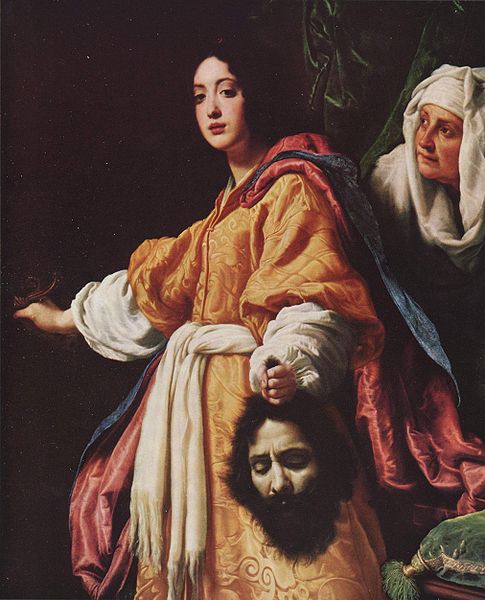
Its feminine form of Judith, Hebrew יְהוּדִית Yehudit, was borne in the Old Testament by a wife of Esau, but is probably most closely associated with the protagonist found in the Book of Judith, which is a deuterocanonical book, included in the Septuagint and in the Roman Catholic and Eastern Orthodox Christian Old Testament of the Bible. The book is rejected by Protestant Christians and Jews since it is mostly apocryphal and believed to be more of a morality tale versus anything based on historical fact, however, though the book is not considered historically accurate by Jews, Judith remained a popular Jewish heroine and symbol. In fact, the name’s popularity among Jews is probably more in association with her than of the wife of Esau. Judith is known for her beheading of the evil, Assyrian invader, Holofernes. She was a popular subject of artists for centuries.

The name experienced some usage in Catholic Europe during the Middle Ages, since Judith was considered as much a heroine among Christians as she was among Jews. The highest Judith ranked in the U.S. popularity charts, was at # 4 in 1940. As of 2008, she ranks in at a measly # 713. In 2006, she was the 6oth most popular female name in Spain.

Other forms of Judah and Jude include:

  • Chudas (Aragonese)
  • Judes (Catalan)
  • Judas (Danish/Dutch/German/Lithuanian/Norwegian/Portuguese/Spanish/Swedish: Portuguese ZHOO-dazh)
  • Jude (English/French)
  • Juudas (Finnish)
  • Juda (German/Czech/Croatian/Slovene)
  • Ioudas Ιουδας (Greek: Modern/Biblical)
  • Yehudah יְהוּדָה (Hebrew)
  • Júdás (Hungarian)
  • Yudas (Indonesian)
  • Iúdás (Irish)
  • Giuda (Italian)
  • Yuda (Kiswahili)
  • Iudas (Late Latin)
  • Juda/Judasz (Polish)
  • Júda (Slovakian)
  • Judá (Spanish/Portuguese: Spanish hoo-DAH, Portuguese zhoo-DAH)
  • Hudas (Tagalog/Filipino)
  • Yudel/Yidel (Yiddish)

Other forms of Judith include:

  • Ioudith Ιουδιθ (Biblical Greek)
  • Iudith (Biblical Latin)
  • Jitka (Czech: originally a diminutive form, now used as an independent given name YEET-kah).
  • Judita (Czech/Romansch/Slovak/Slovene)
  • Júdit (Czech)
  • Judit (Danish/Catalan/Hungarian/Norwegian/Spanish/Swedish)
  • Jytte (Danish)
  • Jutka (Dutch/Hungarian: originally diminutive forms, used as independent given names)
  • Juut (Dutch)
  • Judith (English/Dutch/Icelandic: English nickname is usually Judy)
  • Juudit/Juta (Estonian)
  • Judith/Judithe (French: diminutive is Juju)
  • Xudit (Galician)
  • Juditha (German: Jüdie is a diminutive form)
  • Jutta/Jutte (German/Dutch/Polish: originally a diminutive form, used as an independent given name, now considered dated)
  • Yehudit יְהוּדִית (Hebrew)
  • Yudit (Indonesian)
  • Giuditta (Italian: joo-DEET-tah)
  • Yuditi (Kiswahili)
  • Ita (Polish)
  • Judyta (Polish: yoo-DIH-tah)
  • Judite (Portuguese/Latvian: Portuguese pronunciation: zhoo-DEET, Brazilian Portuguese zhoo-JEE-che )
  • Juditta (Romansch)
  • Yudif/Yudita (Russian)
  • Judetta/Judina (Spanish)
  • Hudes (Yiddish)
  • Yutke (Yiddish)

Other notable bearers of the name include Judah Benjamin (1811-1884), former Attorney General of the Confederacy and the first Jewish American to be seriously considered for the Supreme Court and the first Jewish American to serve as a U.S. Senator. It is also borne by British actor, Jude Law (b.1972).

Notable Judiths include:

Judge Judith Scheindlin (b. 1942) an American judge, TV personality and author, and Judy Jetson of the 1950s cartoon series, The Jetsons.

Designated name-days are: October 28 (France: for Jude), May 5 (France: Judith), December 5th (Czech Republic), December 10 (Estonia, Hungary and Latvia).

Ignatius

Gender: Masculine
Origin: Latin
Meaning: unknown.
Eng (ig-NAY-shus).

This solid masculine name may sound too much like a hospital or church for some parents; the fact that it has some great associations, however, should not be overlooked.

The name is derived from an old Roman family name of uncertain origins and meaning. Originally spelled Egnatius, it was borne by an early Christian martyr of Antioch. The meaning of the name has often been associated with the Latin word, ignis, meaning, “fire.”

The name was later borne by another Saint, Ignatius Loyola, founder of the Jesuit order. Of Basque extraction, his real name Iñigo, a Basque name of obscure origins, however, in contemporary Spain, Iñigo is often hispanicized to Ignacio.

Another interesting side note is that Inigo was in usage in Renaissance England, it was borne by Inigo Jones, a famous architect and stage designer.

Ignatius itself never really caught on in the English speaking world, though among some devout Roman Catholic families, the name has been used, and even then, it is rarely ever heard other than as a confirmation name or as a religious name. He currently does not rank in the U.S. top 1000.

The name has enjoyed considerable usage in Latin America and in Spain as Ignacio, which is often shortened to Nacho.

Potential English nickname options could be:  Iggy, Nash, and Nacho. Nameday is July 31.

Other forms include

  • Injaci (Albanian)
  • Iñaki (Basque)
  • Iñigo (Basque)
  • Ignasi (Catalan)
  • Ignac (Croatian/Slovene)
  • Ignacije (Croatian)
  • Ignác (Czech/Hungarian)
  • Ignaas (Dutch)
  • Inigo (English: obscure)
  • Ignatios (Estonian/Finnish)
  • Ignace (French)
  • Ignatz (German)
  • Ignazio (Italian)
  • Ignas (Kiswahili)
  • Ignacy (Polish)
  • Inácio (Portuguese)
  • Ignatziu (Sardinian)
  • Ignacij (Slovene)
  • Ignacio (Spanish)

Feminine forms include the Polish Ignacja and the Spanish Ignacia.

Abigail

Gender: Feminine
Origin: Biblical/Hebrew
Meaning: “her father’s joy” or “fountain of joy.”
(AB-ih-GALE)

In the Old Testament, the name is borne by the wife of King David and the mother of Amasa. The name sometimes appears in the Bible as Abagal and in, modern Hebrew, the name is rendered as Avigáyil (אֲבִיגַיִל)

Abigail did not become popular in the English speaking world til after the Reformation. It was a very popular choice among Puritans and early Americans. It was borne by the second First Lady of the United States, Abigail Adams (1744-1818), wife of President John Adams. It was also borne by their daughter who was known as Nabby Adams Smith (1765-1813).

In the 16th century, Abigail became a generic term for a servant woman or maid, thanks, in part, to Beaumont and Fletcher’s The Scornful Maid (1616). The name was ironically borne by the lady in waiting to Queen Anne, who was born quite a few years after the name was used to describe a servant woman (b. 1670).

In modern American culture, the name has become extremely popular for newborns. It started rising up the charts in the late 90s making it all the way up to # 4 by 2005. In 2008, it dropped back down to # 8.

Popular English nicknames include Abby, Nabby, & Gail.

Other forms of the name include:

  • Abigaïl (Dutch)
  • Abigaël/Abigaïl (French)
  • Abigaia Αβιγαια (Greek: Biblical)
  • Apikalia (Hawaiian)
  • Abigél (Hungarian)
  • Abigaille (Italian: very rare, pronounced, ah-bee-GUILE-ley)
  • Abigaili (Kiswahili)
  • Abigaíl (Spanish)