Fuad

  • Origin: Arabic فُؤاد
  • Meaning: “heart.”
  • Gender: masculine
  • Pronunciation: foo-AD

The name comes directly from the Arabic word for heart. It is used equally among Arab- Muslims & Christians. Among Christians, particularly Palestinians, Chaldeans and Lebanese Christians who profess Roman Catholicism, it is used in reference to the Sacred Heart of Jesus or the Immaculate Heart of Mary, in the same way the Spanish name Corazón is used in the Spanish-speaking world, though in the Arabic case, the name is strictly masculine.

Among Muslims, the term fu’ad is used at least 5 times in the Quran. The name is used throughout the Islamic world.

It is even used among Non-Arab groups in the Middle East, such as Mizrachi Jews.

The name was borne by two Egyptian kings.

Other forms include:

  • Fuad (Amharic, Azeri, Bosnian, Indonesian)
  • Fouad (Maghrebi)
  • Fuat (Turkish)
  • Fawad (Urdu)

A feminine form is Fuada(h).

Sources

Dhruv, Dhruva

Vishnu appears before Dhruva – A painting by Raja Ravi Varma.
  • Origin: Sanskrit
  • Meaning: “constant, immovable, fixed; polar star.”
  • Gender: masculine
  • Pronunciation: DROOV; DROO-vah

The name is derived from the Sanskrit word dhruva, meaning, “constant; immovable, fixed” and is also synonymous with the polar star.

Dhruva appears in the Hindu text, Vishnu Parana as the name of the son of Uttānapāda’s second and less favored wife. Dhruva wants to sit on his father’s lap like his older brother, but is thrown off as he is the son of a second wife. Dhruva is heartbroken and is consoled by his mother to contemplate his fate in life and advises him to work hard for what he wants. Dhruva goes into the woods and prays to Vishnu, who eventually transform him into the polar star.

Other forms include:

  • Druwa (Indonesian/Javanese)

Dhruv entered the U.S. Top 1000 Male Names in 2019 and ranks in at #997

Sources

Adhan, Azaan

429px-Jean-Léon_Gérôme_010


The name is derived from the Arabic root ʾadhina أَذِنَ meaning “to listen, to hear, be informed about,” or ʾudhun (أُذُن), meaning “ear.” The Adhan, sometimes romanized as Azaan, is the name of the Islamic call to prayer, which is rung 5 time a day.

Currently, Azaan is the 406th Most Popular Male Name in England & Wales, (2018). Other transliterated forms include: Adaan, Adan, Adhaan, Athan, Edan & Edhaan.

Other forms include:

  • Ezani (Albanian)
  • Ezan Езан (Albanian, Bosnian, Bulgarian, Kurdish, Turkish)
  • Azan Азан (Azeri, Kazakh, Kyrgyz, Malay, Tatar)
  • Azán Аза́н (Chechen)
  • Adan (Javanese)
  • Aadaan (Somali)
  • Azon Азон (Tajik)
  • Ezane (Zazaki)

Sources

Hashim

The name is most likely derived from the Arabic root H26-SH-M  meaning “breaker or pulverizer.” This was a sobriquet for Hāshim ibn ‘Abd Manāf (circ. 5th-century C.E.) who was the great-grandfather of the Prophet Muhammad and found of the Banu Hashim tribe. Borne ‘Amr al-‘Ulā, ot is said he took this name because he used to break up his bread to share in a broth among pilgrims to Mecca and he is also said to have saved the poeple of Mecca from a famine by breaking up his bread into tiny crumbs.

Another transliteration is Hasheem

Currently, Hashim is the 436th Most Popular Male Name in England & Wales (2018).

Other forms include:

  • HIashim ХӀашим (Chechen)
  • Haysim (Indonesian)
  • Hashem هاشم (Persian)
  • Haşim (Turkish)

Sources

Nora, Nour

1024px-Dawn._Buryatia,_Russia


This multicultural name has recently experienced a revival. In European countries, the name stems from any name ending in the -nora element, such as Honora & Eleanora. In Arabic, Nora is a variant transliteration of Nurah, which is a strictly feminine version of the unisex Arabic name, Nur (light). Nur is used as one of the 99 attributes of Allah, al-Nur (the light).

The name was used by Henrik Ibsen for his main character in his play, A Doll’s House (1878).

Outside of East Asia, there isn’t a counry where Nora is unhead of or is not in use. Nora has been in out of the U.S. Top 100 since 1880! She currently ranks in as the 30th Most Popular Female Name in the United States. Her rankings in other countries are as follows:

  • #2 (Norway, 2018)
  • #10 (Netherlands, 2018)
  • #11 (Hungary, 2018)
  • #14 (Switzerland, 2018)
  • #15 (Denmark, 2018)
  • #20 (Belgium, 2018)
  • #23 (Austria, 2018)
  • #26 (Catalonia, Spain, 2018)
  • #28 (Sweden, 2018)
  • #38 (Canada, BC, 2018)
  • #47 (Spain, 2018)
  • #64 (Norah, Netherlands, 2018)
  • #79 (Bosnia & Herzegovina, 2018)
  • #84 (Norah, Canada, BC, 2018)
  • #85 (Italy, 2018)
  • #119 (France, 2018)
  • #140 (Norah, United States, 2018)
  • #184 (Norah, France, 2018)
  • #197 (England & Wales, 2018)
  • #283 (Norah, England & Wales, 2018)

Its Dutch version of Noor also ranks high in several popularity charts. This name is also used by Muslim families as a variation of Nur. Her rankings in other countries are as follows:

  • #10 (Netherlands, 2018)
  • #25 (Belgium, 2018)
  • #279 (England & Wales, 2018)
  • #311 (France, 2018)

Noortje is another Dutch version which currently ranks in as the 203rd Most Popular Female Name in the Netherlands.

Other forms of its European version include:

  • Nora Нора Νόρα (Bulgarian, Greek)
  • Noera (Dutch)
  • Noor (Dutch)
  • Noortje (Dutch)
  • Norah (Dutch, English, French)
  • Nonie (English)
  • Noreen (English, Irish)
  • Noora (Estonian, Finnish)
  • Nóra Но́ра (Faroese, Hungarian, Irish, Russian)
  • Nuura (Finnish, Scandinavian)
  • Nóirín (Gaelic)
  • Norina (Italian, Provençal, Romansch)
  • Norá (Sami)
  • Norea (Scandinavian)
  • Norena (Scandinavian)
  • Noria (Scandinavian)
  • Norita (Spanish, Scandinavian)

The Arabic Nur is traditionally a unisex name which is popularly used in many Islamic countries. Its Maghrebi form of Nour currently ranks in the following popularity charts for girls:

  • #40 (Belgium, 2018)
  • #48 (Catalonia, Spain, 2018)
  • #48 (France, 2018)
  • #76 (Spain, 2018)
  • #137 (Italy, 2018)
  • #197 (Netherlands, 2018)

Nur is currently the 87th Most Popular Female Name in Bosnia & Herzegovina (2018).

Other forms of the Arabic version include:

  • Noora, Nura (Arabic, strictly feminine)
  • Noura (Maghrebi Arabic, strictly feminine)
  • Núria (Catalan)
  • Nor (Malay, unisex)
  • Nuru (Swahili, strictly feminine)

Sources

Andrew

Gender: Masculine
Origin: Greek
Meaning: “of man, belonging to man.”

The name is derived from the Greek Ανδρεασ (Andreas), which is derived from the Greek word, ανδροσ (andros), a genitive form of the word, ανηρ (aner), meaning, “man.” Hence, it would rougly translate to mean “belonging to man” or “of man.”

It was popularized by one of the twelve Apostles, who is now considered a popular Christian saint. It is suggested that Andreas was a nickname given to him, or possibly just a direct Greek translation of a Hebrew name that had a similar meaning, now lost to history.

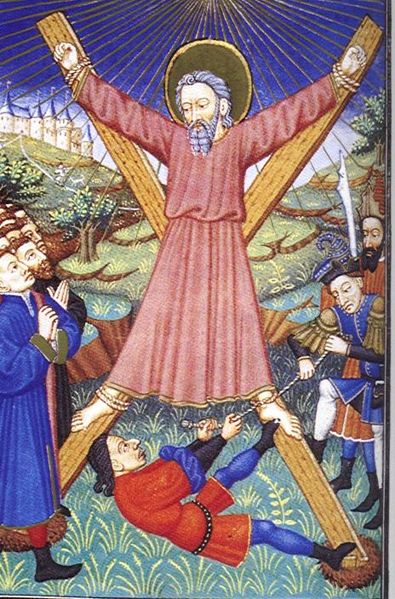
Saint Andrew is considered the patron saint of Scotland, Russia, Greece and Romania. According to legend, he was martyred around the Black sea on an X shaped cross. His designated name-day is November 30.

The name has remained a staple in the U.S. top 100. As of 2011, he was the 16th most popular male name. His rankings and his various incarnations in other countries are as follows:

  • # 1 (Andrei, Romania, 2009)
  • # 3 (Andrea, Italy, 2010)
  • # 3 (Andrea, Italian-speaking, Switzerland, 2010)
  • # 6 (Andreas, Estonia, 2011)
  • # 8 (Andria, Georgia, 2011)
  • # 8 (Andrej, Serbia, 2011)
  • # 9 (Andrey, Russia BabyCenter, 2011)
  • # 10 (Ondřej, Czech Republic, 2011)
  • # 10 (Andre/Andrew/Andrea/Andrei, Malta, 2011)
  • # 12 (Andreas, Norway, 2011)
  • # 25 (András, Hungary, 2011)
  • # 28 (Andreas, Denmark, 2011)
  • # 35 (Scotland, 2010)
  • # 38 (Canada, BC, 2010)
  • # 39 (Andrej, Croatia, 2009)
  • # 41 (Andraž, Slovenia, 2010)
  • # 46 (Andreas, Austria, 2010)
  • # 57 (Andrija, Croatia, 2009)
  • # 58 (Ireland, 2010)
  • # 61 (Andres, Spain, 2010)
  • # 68 (Australia, NSW, 2011)
  • # 70 (Northern Ireland, 2010)
  • # 92 (Andrej, Slovenia, 2010)
  • # 98 (Andro, Croatia, 2009)
  • # 98 (Anders, Norway, 2011)
  • # 176 (Andres, United States, 2011)
  • # 241 (André, United States, 2011)
  • # 244 (Andrea, France, 2010)
  • # 388 (Andreas, France, 2010)
  • # 950 (Anders, United States, 2011)

Other forms are as follows (listed alphabetically by linguistic origin).

  • Andrees/Andries (Afrikaans/Old Dutch)
  • Andrea (Albanian/Italian)
  • Ndreu (Albanian)
  • Andreyas (Amharic)
  • Andraws/Andraous اندراوس (Arabic/Coptic/Lebanese/Syriac)
  • Andreas (Armenian/Czech/Estonian/German/Greek/Hungarian/Slovak/Scandinavian)
  • Andresu (Asturian)
  • Ander (Basque)
  • Anderl (Baverian)
  • Andrièu (Bearnais/Occitanian/Provencal)
  • Andrivet (Bearnais)
  • Andrej Андрэй (Belarusian)
  • Andreo/Andrev (Breton)
  • Andrei/Andrey Андрей (Bulgarian/Old Church Slavonic/Romanian/Russian/)
  • Andrejko (Bulgarian)
  • Andreu (Catalan/Aragonese)
  • Andria ანდრია (Corsican/Georgian/Sardinian)
  • Andrej (Croatian/Czech/Slovak/Slovene)
  • Andrija (Croatian/Serbian)
  • Andro/Jandre (Croatian)
  • Ondřej (Czech)
  • Anders (Danish/Norwegian/Swedish)
  • Dres/Dreves/Drevs (Danish)
  • Andries/Adrees (Dutch)
  • Andres (Estonian)
  • Ando/Andre/Andro/Andrus/Andu/Andi/Anti (Estonian)
  • Andras/Andrias (Faroese)
  • Andriou (Fijian)
  • Antero/Tero (Finnish)
  • Antti (Finnish)
  • Andris/Driess (Frisian)
  • André (French/Galician/Ladino/Portuguese)
  • Dria (Genevoese: Dialectical Italian form)
  • Anda (German: dialectical form, Northern Austria)
  • Anekelea (Hawaiian)
  • Andor/András/Endre (Hungarian)
  • Andris (Hungarian/Latvian)
  • Andrés (Icelandic/Spanish)
  • Aindréas/Aindriú (Irish)
  • Andrejs (Latvian)
  • Andriejus/Andrius (Lithuanian)
  • Andrija/Indri (Maltese)
  • Anaru (Maori)
  • Dreesi (Old Swiss German: Basel dialect)
  • Andrzej/Jędrzej (Polish: latter is a very old form)
  • Drewes (Plattdeutsch)
  • Andrea/Andreia/Andri/Andrin/Andriu (Romansch)
  • Ándá/Ándaras/Ándde/Ánde (Saami)
  • Aindrea/Aindreas/Anndra (Scottish)
  • Ondrej (Slovak)
  • Andraž (Slovene)
  • Handrij (Sorbian)
  • Andalea (Swahili)
  • Andriy Андрiй (Ukrainian)
  • Andras (Welsh)

Belorusian diminutives are: Andros, Andruk and Andrus. Czech masculine diminutive forms are Andy, Ondra, Ondrášek, Ondrejko, Ondrík, Ondřejek and Ondříček. French diminutive forms are: Dédé, Ti-Dré, Andi, DéaAndy. A German diminutive form is Andy/Andi and English are Andi, Andie, Andy, Dre and Drew. A Hungarian diminutive is Bandi and Polish diminutive forms are Andrzejek, Jędrek and Jędruś. Scotch diminutive form is Dand.

Note: Andrea is a common feminine form in most European countries outside of Italy and Albania, particularly in Germany and the Anglo-phone world. Whether this is a borrowing from the Italian and was changed, or a coincidental evolution, is unknown. What is known is that Andrea has been used in England as a feminine form since the 17th-century.

Feminine forms are (listed alphabetically by linguistic origin)

  • Andere (Basque)
  • Andrea (Basque/Breton/English/German/Spanish)
  • Andriva/Andriveta (Bearnais/Occitanian)
  • Andersine (Danish)
  • Andrine (Danish/Norwegian)
  • Drine (Danish)
  • Dreesje (Dutch)
  • Andrée (French)
  • Aanasi/Aanarsi/Aanta/Aantariarsi (Greenlandic)
  • Andreina (Italian)
  • Andzeja/Ondzeja (Polish: obscure)
  • Andréia (Portuguese: Brazilian)
  • Andreia (Portuguese: European)
  • Andriano (Provencal)
  • Andreea (Romanian)
  • Andrina (Romansch)
  • Andrijana (Serbo-Croatian)
  • Andreja (Slovene)
  • Andrietta/Andriette (Swedish/Danish: very rare)

Czech diminutive forms are: Adrejka, Andruška, Andra, Rea. English diminutive forms are Andi, Andy, Annie and Drea.


Gabriel, Gabriella

Origin: Hebrew גַבְרִיאֵל  Γαβριηλ
Meaning: “strong man of God.”
Eng (GABE-ree-el); (gah-bree-EL-ah); Fre (gah-bree-EL); Germ (GAHP-ree-el); Pol (GAHP-ryel)

The name is derived from the Biblical Hebrew, גַבְרִיאֵל (Gavri-el) meaning, “strong man of God.”

In Judeo-Christian religions, it is the name of a powerful archangel, who is often viewed as a messenger of God. He appears several times in the Old and New Testaments.

Among Christians, one of his most important messages was relayed to the Virgin Mary that she would be the mother of Jesus. Islamic tradition also believes the same, and in Islam, it was the angel Gabriel who revealed the Qu’ran, (through God), to Mohammed.

In Mormon theology, Gabriel is believed to be the embodiment of Noah in the afterlife.

Gabriel is a fairly common name among Christians, Jews and Muslims, making him an extremely cross-cultural portable name.

Currently, in the United States, his popularity has been rising. He is the 24th most popular male name, (2011). In other countries, his rankings in all his various forms are as follows:

  • # 2 (Gabriel(e), Liechtenstein, 2010)
  • # 3 (Brazil, 2011)
  • # 4 (Romania, 2009)
  • # 6 (Gabriele, Italy, 2009)
  • # 7 (France, 2010)
  • # 9 (Quebec, Canada, 2011)
  • # 19 (Croatia, 2009)
  • # 26 (Belgium, 2008)
  • # 28 (Canada, BC, 2010)
  • # 28 (Mexico, 2010)
  • # 29 (Austria, 2010)
  • # 35 (Spain, 2010)
  • # 40 (Poland, 2009)
  • # 47 (Sweden, 2011)
  • # 48 (Norway, 2011)
  • # 52 (Catalonia, 2010)
  • # 78 (England/Wales, 2010)
  • # 95 (Australia, NSW, 2011)
  • # 124 (Scotland, 2010)
  • # 189 (Djibril, France, 2010)
  • # 313 (Jibril, France, 2010)

Other forms of the name include:

  • Jibrail/Jibrīl جبرائيل ጂብሪል (Arabic/Ethiopian)
  • Gabriel გაბრიელი ገብርኤል
    (Armenian/Catalan/Coptic/Czech/Danish/English/Ethiopian/Finnish/French/Georgian/German/Norwegian/Polish/Portuguese/Romanian/Romansch/Spanish/Swedish)
  • Gavrik (Armenian)
  • Cəbrayıl/Cibril (Azeri)
  • Gawryil Гаўрыіл (Belarusian)
  • Džibril/Džebrail (Bosnian)
  • Gavrail Гавраил (Bulgarian)
  • Zheberejil Жәбірейіл (Central Asian)
  • Gabrijel (Croatian/Maltese/Serbian)
  • Gabriël (Dutch)
  • Gaabriel (Estonian)
  • Gabrel (Ethiopian)
  • Kaapo/Kaapro (Finnish)
  • Gabriél Γαβριήλ (Greek)
  • Gavril Γαβριηλ (Greek)
  • Gavriel גַּבְרִיאֵל (Hebrew)
  • Gábriel (Hungarian)
  • Gábor (Hungarian)
  • Gabríel (Icelandic)
  • Jibril (Indonesian)
  • Gaibriéil (Irish-Gaelic)
  • Gabo/Gabbo (Italian)
  • Gabriele (Italian: more common form)
  • Gabriellino (Italian)
  • Gabriello (Italian)
  • Gabrio (Italian)
  • Cibrayîl (Kurdish)
  • Gabrielus (Latin)
  • Gabriels (Latvian)
  • Gabrielius (Lithuanian)
  • Jibrail (Malaysian)
  • Gavriilu Гаврїилъ (Old Church Slavonic)
  • Khabbriele (Puglian)
  • Gabin (Provençal)
  • Gavril Гавриил (Romanian/Russian)
  • Crabiele/Gabilele/Gabriello (Sardinian)
  • Cabbrieli (Sicilian)
  • Gabri’el ܠܒܪܝܐܝܠ (Syrian)
  • Gebrael (Syrian)
  • Cebrâîl (Turkish)
  • Gavrel גַאבְֿרֶעל (Yiddish)

English short form is Gabe.

Its feminine form of Gabriella/Gabriela is also rising in popularity. Currently, Gabriella is the 34th most popular female name in the United States, (2011). Her rankings in other countries are as follows:

  • # 3 (Gabriela, Bulgaria, 2009)
  • # 5 (Gabrielė, Lithuania, 2011)
  • # 5 (Gabrielle, Philippines, 2011)
  • # 7 (Gabriela, Columbia, 2011)
  • # 8 (Gabriela, Romania, 2009)
  • # 9 (Gabriela, Puerto Rico, 2011)
  • # 10 (Gabriela, Brazil, 2010)
  • # 13 (Gabriela, Poland, Warsaw, 2010)
  • # 19 (Gabriela, Poland, 2009)
  • # 28 (Gabrijela, Croatia, 2009)
  • # 30 (Gabriela, Mexico, 2010)
  • # 30 (Gabrielly, Brazil, 2010)
  • # 36 (Gabriela, Croatia, 2009)
  • # 38 (Gabriela, Chile, 2010)
  • # 64 (Australia, NSW, 2011)
  • # 64 (Gabriela, Spain, 2010)
  • # 67 (Gabrielle, France, 2010)
  • # 72 (Canada, BC, 2010)
  • # 94 (Gabrielle, Canada, BC, 2010)
  • # 119 (Gabrielle, United States, 2011)
  • # 466 (France, 2010)

Other feminine forms include:

  • Gebre’elwa ገብርኤሏ (Amharic/Ethiopian)
  • Gabriela (Bulgarian/Croatian/Czech/German/Polish/Portuguese/Romanian/Scandinavian/Slovak/Spanish)
  • Brielle (Cajun: abbreviated form of Gabrielle)
  • Gabrijela (Croatian/Serbian)
  • Gabriëlle (Dutch)
  • Briella/Briela (English)
  • Gabrielle (French/English)
  • Gabria (Italian)
  • Gabrielina (Italian)
  • Gabriella (Italian/English/Hungarian/Scandinavian: more common form in Italy)
  • Gabrielė (Lithuanian)
  • Gavriila Гавриила (Russian)

Czech diminutives are: Gába, Gabika, Gábina, Gabrina and Gabby.

A Polish diminutive is Gabrysia (gah-BRIH-shah).

English short forms are: Gabby and Ella.

Designated name-days are: February 10/27 (Poland), February 19 (Sweden), March 24 (Czech/Finland/Poland/Slovakia/Sweden), September 29 (France/Germany), December 12 (Hungary)

Raphael

Gender: Masculine
Origin: Hebrew רָפָאֵל Ραφαηλ
Meaning: “God is healer.”
Fre (ra-fa-EL); Eng (RAF-ee-el; RAY-fee-əl)

The name is found in Judeo-Christian and Islamic legend as the name of a major archangel. In the Bible, he is mentioned in the Book of Tobit, which is considered canonical in the Roman Catholic, Orthodox and Anglican tradition. Due to Raphael’s deliverance of Sarah from the demon Asmodeus (who killed every husband she married before consumation), Raphael has been invoked as a matchmaker by Catholics.

Raphael also appears in the non-canonical Book of Enoch in which he is responsible for binding the fallen angel Azazel

In Islamic tradition, he is known as Israfel/Israfil and it is believed that he will blow the trumpet on Judgement Day.

It is interesting to note that the modern Hebrew word for a medical doctor is  דוֹקטוֹר (rophe), compare to the first element of Raphael.

Raphael is currently a trend across Europe, in France, Raphaël is the 11th most popular male name, (2010). His rankings in his various forms are as follows:

  • # 3 (Liechtenstein, 2010)
  • # 11 (Rafael, Brazil, 2010)
  • # 17 (Austria, 2010)
  • # 40 (Rafał, Warsaw, Poland, 2010)
  • # 48 (Rafał, Poland, 2009)
  • # 50 (German-speaking, Switzerland, 2010)
  • # 54 (Raphaël, Belgium, 2008)
  • # 55 (Rafael, Spain, 2010)
  • # 56 (Rafael, Croatia, 2009)
  • # 63 (Rafael, France, 2010)
  • # 189 (Rafaël, Netherlands, 2011)
  • # 274 (Rafael, United States, 2011)
  • # 668 (United States, 2011)

Its feminine form of Rafaela is currently the 8th most popular female name in Brazil, (2010), while the French form of Raphaëlle ranked in as the 273rd most popular female name in France, (2010).

Other forms of the masculine include:

  • Rafael (Albanian/Armenian/Catalan/Croatian/Czech/Finnish/Hungarian/Portuguese/Romanian/Romansch/Scandinavian/Slovene/Spanish)
  • Raphel ሩፋኤል (Amharic/Ethiopian)
  • Rupha(e)l ራፋኤል (Amharic/Ethiopian)
  • Israfil اسرافيل, Исрафил (Arabic/Central Asian: used among Muslims)
  • Rapael რაფაელ (Armenian/Georgian)
  • Rafail Рафаил Ραφαήλ (Bulgarian/Greek/Macedonian/RomanianRussian/Serbian)
  • Rafel (Catalan)
  • Raphael (Coptic/English/German)
  • Rafaël (Dutch)
  • Raafael (Estonian)
  • Raphaël (French)
  • Raiféal (Gaelic)
  • Raffaele (Italian)
  • Raffaello (Italian)
  • Raffaelino (Italian)
  • Îsrafîl (Kurdish)
  • Rafla (Lebanese/Syrian: used among Christians)
  • Rafaelis (Lithuanian)
  • Rapolas (Lithuanian)
  • Rafel (Maltese)
  • Rafał (Polish)
  • Arrafieli (Sardinian)
  • Rafiele (Sardinian)
  • İsrafil (Turkish)
  • Rafayil Рафаї́л (Ukrainian)
Common diminiutives are: Raf (Dutch); Rafe (English); Ralph (English); Rafinha (Brazilian-Portuguese); Rafa (Spanish).
Feminine forms include:
  • Rafaela (Croatian/Macedonian/Portuguese/Romansch/Slovene/Spanish)
  • Raphaëlle (French)
  • Raphaela (German)
  • Raphaele (German)
  • Raffaella (Italian)
  • Raffaellina (Italian)
The name was also notably borne by Raphael, or Raffaello Sanzio (1483–1520), an Italian master painter.

Yusra

Gender: Feminine
Origin: Arabic يسرى
Meaning: “wealth”
(YOOS-rah)

The name is derived from the Arabic, يسار (yesar), meaning, “wealth”.

As of 2010, its Maghrebin form of Yousra was the 254th most popular female name in France.

A masculine form is Yusri.

Safiyya

Gender: Feminine
Origin: Arabic صفيّة
Meaning: “pure.”
(sah-FEE-yah)

The name is derived from the Arabic word, saf صاف (pure).

The name was borne by Safiyya Bint Huyayy, a Jewish-Bedouin woman who converted to Islam and became one of the Prophet Mohammed’s wives. It was also borne by Safiyya bint ‘Abd al-Muttalib, a Sahaba of Mohammed.

As of 2010, its Maghrebin form of Safia was the 293rd most popular female name in France. Her variant forms appear throughout the French top 500; their rankings are as follows:

  • # 297 (Safa)
  • # 466 (Safiya)
Safiyyah was the 10th most popular female name in Malaysia (2011)

Other forms of Safiya include:

  • Safija Сафия (Albanian/Bosnian/Bulgarian/Central Asian)
  • Safia (Algerian/Berber/Moroccan/Tunisian)
  • Safa (Arabic)
  • Saffiya (Arabic)
  • Safiye (Azeri/Kurdish/Turkish)
  • Shafiyah (Indonesian)
  • Safiyyah (Malaysian)
  • Safiya صفیه (Persian)