Penelope

Gender: Feminine
Origin: Greek
Eng (pen-NEL-uh-PEE)

The name is of uncertain origins, many scholars believe that the name is pre-Hellenistic and is related to an ancient word, penelops (πηνελοψ), which means “duck,” others argue that the name is Greek compound name composed of the elements, pene (πηνη) meaning “threads.”  Many scholars feel that the latter is the most appropriate since it was the name of Odysseus wife who kept her suitors at bay by pretending to weave.

The name appears in Greek mythology as the name of a wood nymph who was speculated to be the mother of the god Pan.

The name is occasionally used in German, Italian,

Other forms of the name include:

  • Penèlope (Catalan)
  • Penelopa (Croatian/Polish/Romanian/Serbian: Pela, Pelka and Pelcia are the Polish diminutives)
  • Pénélope (French)
  • Penelópē Πηνελόπεια/Πηνελόπη (Greek)
  • Pénelopé (Hungarian)
  • Penelopė (Lithuanian)
  • Penelopeia (Norwegian/Danish/Swedish)
  • Penélope (Spanish/Portuguese)

The name is currenly borne by Spanish actress Penelope Cruz.

Possible English nickname options, include, Penny, Poppy, Lola, and Nell.

Galatea

Gender: Feminine
Origin: Greek
Meaning: “milky white.”
Pronunciation (gah-lah-TAY-ah)

The name is found in Greek mythology. It borne by a wood nymph who lived on the Isle of Sicily; she was pursued by the giant, Polyphemos, but rejected his advances and fell in love with a local mortal by the name of Acis. In his jealousy, Polyphemos bashed Acis’ skull with a rock. Grief-stricken, Galatea transformed Acis into a stream.

Another Galatea was the object of Pygmalion’s affection. He carved a beautiful statue and fell in love with it, after praying to Aphrodite, the statue came to life and was named Galatea, due to the milky white texture of her skin.

Possible nickname options include Gala & Tea.

The name is used in Spanish and Italian.

Other forms include:

  • Galateja (Bosnian/Croatian/Serbian)
  • Galateia (Czech/Portuguese/Slovak)
  • Galatée (French)
  • Galatėja (Lithuanian)

Sophia, Sophie, Sofia

Gender: Female
Origin: Greek
Meaning: “wisdom.”
(so-FEE-yuh); (so-FYE-uh)

A long time Greek classic, the name suddenly appeared in the U.S top 100 circa 2000, and budged itself into the # 6 spot in 2007.

Sophia comes directly from the Greek, and was often used as a personification for Wisdom in philosophical, Christian, Jewish and Gnostic texts.

In Christian lore, Saint Sophia was the mother of three Christian martyrs, Hope (Elpida), Faith (Pisti) and Charity (Agapi). She supposedly died from grief after the death of her daughters, and is now one of the most revered saints of the Eastern Christian churches, making the name a longstanding classic throughout Eastern Europe and modern Greece.

Sophia is the Greek spelling, which seems to be the most worn form in the Western World. However, Sofia is the variation often used in continental Europe.

Sophia was not introduced into the English-speaking world until the 18-century, when it was introduced into the British Family Tree by the German Hanovers, from whose line the names Sophie and Sophia often appear.

In English, the pronunciation of so-FEE-yah, and so-FYE-uh are interchangeable. The former is more of a modern import, and the most popular. The latter is the older English pronunciation of the name, which is seldom heard in the States but is occasionally heard in Britain.

Other forms the name include:
  • Zofiya (Amharic/Ethiopian)
  • Soffi/Soffiya (Armenian)
  • Sachveja/Sofiya (Belorusian: Zosja is a diminutive form)
  • Sofija София (Bulgarian)
  • Sofia (Catalan/Finnish/German/Italian/Norwegian/Occitanian/Portuguese/Romanian/Slovak/Swedish: in 2007, this was the 59th most popular female name in Norway and the 44th most popular in Sweden)
  • Sònia (Catalan)
  • Sofija (Croatian/Serbian)
  • Sofie (Czech: SOFE-yeh)
  • Soňa (Czech/Slovak: a translation of the Russian diminutive form, Sonya)
  • Žofia/Žofie (Czech/Slovak: ZHOFE-yah, and ZHOFE-yeh. Diminutive forms are: Žofka and Žofa.)
  • Såffi (Danish: an old Danish form of Sophia)
  • Sofie (Danish/Dutch/German/Norwegian/Swedish: so-FEE Scand; zo-FEE German. In 2008, she was the 35th most popular female name in the Netherlands, and in 2007, she was the 10th most popular female name in Norway and the 85th most popular in Sweden)
  • Fie (Dutch: originally a diminutive form, now used as an independent given name, FEE-e)
  • Soovi (Estonian)
  • Sohvi (Finnish)
  • Sophie (French/English/German/Dutch. In 2008, this was the 74th most popular female name in the United States, the 12th most popular in Canada, the 7th most popular in England and Wales and the most popular female name in the Netherlands and Scotland. In 2007, it was the 8th most popular female name in Australia)
  • Sonja (German/Estonian/Finnish/Polish/Scandinavian/Serbian/Slovene/Sorbian: a translation of the Russian diminutive form, Sonya).
  • Sonje (German: ZONE-yeh)
  • Sophia Σοφία (Greek Modern/English/Estonian/Italian)
  • Suffi/Suffia (Greenlandic)
  • Szonja (Hungarian)
  • Zsófia (Hungarian: ZHOH-fee-aw. In 2005, this was the 5th most popular female name in Hungary. A common diminutive form is Zsófika)
  • Soffía (Icelandic)
  • Sonia (Italian/Romanian)
  • Sofija/Sofja (Latvian)
  • Sofija/Zofija/Zopija (Lithuanian)
  • Sofija/Sofijana (Macedonian: Sofa is a diminutive form)
  • Sofija (Maltese)
  • Sophi (Persian)
  • Sofi (Plattdeutsch)
  • Zofia (Polish: diminutive forms are: Sonka, Zochna, Zocha, Zofka, Zońka, Zosia, Zośka, Zosieńka, and Zosia (ZOH-shah)
  • Sónia (Portuguese-European)
  • Sônia (Portuguese-Brazilian)
  • Sofiya/Sofya София (Russian/Ukrainian: Russian diminutives include Sonya, which is used as an independent given name in other European countries, but seldom in Russia)
  • Zofija (Slovene)
  • Sofía (Spanish/Galician/Faroese, in 2006, she was the 17th most popular female name in Spain and the 5th most popular in Chile. Spanish diminutives include Chofa, Fifi, SoficitaSofí and Sofita)
  • Sofya (Turkish)
  • Tzofiya (Yiddish)
Masculine forms include Sofko (Bulgarian), Sofus/Sophus (Danish/Norwegian/Swedish) and Sofio (Italian).

The designated name-days are: May 15 (Austria/Germany), May 25 (France), September 17 (Greece), September 30 (Lithuania/Spain),

Palatine, Palatyne, Palestine, Kestenn

Gender: Female
Origin: French/Celtic
Meaning: debated
Pronunciation French (pah-lah-TEEN); English (pal-uh-TINE)

The name is found in French folklore as the name of the daughter of Pressyne and Elynas, and the sister of Mélusine.

Palatine was cursed by her mother to be locked in the Aragonese mountains with her father’s treasures, accompanied by a bear and serpent. Only a knight could free her and save her, on the condition that he be of the same bloodline as her father’s.

Throughout the years, many knights did just that, but had failed. However, a knight of King Arthur’s court, and the relative of Tristan, decided to climb the mountain and free the princess. He had to scale a mountain covered in venemous snakes, and then face the bear that guarded the entrance to the cave, all of which he killed. Finally he was able to enter the cave, but within the first chamber was a large serpent with one eye. The snake swallowed him up, and the knight was defeated in his quest, because, as it turned out, he was not of the right lineage.

Years later, Geoffrey-with-the-great-tooth, the nephew of Palatyne, had spent his life saving time, money and energy to rescue his aunt. However, he grew old, and died before he was able to commence his quest, and it is said that till this day, Palatyne still awaits within her mountain top for the right knight of the right lineage to free her. http://www.encylopediamythica.com

This is also the name of one of the 7 hills of Rome, a location which has its own legends.

In Ancient Roman folklore, the Palatine is where the Lupercal cave is to be found, the cave where Romulus and Remus were rescued and milked by a wolf. Another legend holds that Hercules defeated the monster Cacus, on the same hill.

The etymology of the name is debated, whether the fairy Palatyne and the name of the hill are related is not proven, but very possible. The fact that both legends contain a mountain top or hill top as their focal point makes it plausible.

According to the Roman historian Livy (59 BC-Ad 17), the hill got its name from the Arcadian settlement of pallatium, which is derived from the Latin palatum meaning “palate.” According to another ancient source, Ennius, the name is derived from an Etruscan word meaning “sky” or “heavens.” The term palace gets its name from the Palatine hill.

Other sources point its etymology to a Breton source, it is suggested that Palatine, (or Palestine in some instances), is a medieval French corruption of the Breton Bac’h C’hesten, bac’h means “cell; unit” and c’hesten means “hive; beehive.” Hence “hive pupa.” This is supported by the fact that in the legend, Palatine is an enclosed in a cell in the mountains like a bee in a beehive.

The name was borne by an early Christian martyr, Saint Palatino, and its masculine form is still in usage in Italy today. There is also a more obscure feminine version of Palatina.

Another French form is Palestine (pah-le-STEEN), and a possible Breton form is Kestenn.

Lothaire

Gender: Male
Origin: French
Meaning: “famous army.”
Pronunciation (loh-TARE)

The name is comprised of the Germano-Franco elements hlud meaning “fame,” and heri meaning “army.”

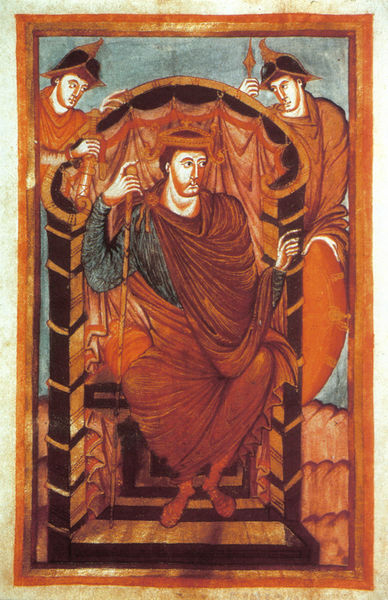
The name was borne by a two famous kings. King Lothair I of Hebaye, was crowned as Emperor of the Holy Roman Empire in the 9th-century. He was the son of Louis I also known as Louis the Pious.

Other forms of the name include:

  • Lothair (English)
  • Chlodochar/Chlothar (Frankish: obscure)
  • Lothar (German)
  • Lotario (Italian/Spanish)
  • Lotário (Portuguese)

Tiburtius

Gender: Male
Origin: Latin
Meaning: “from the Tibur”

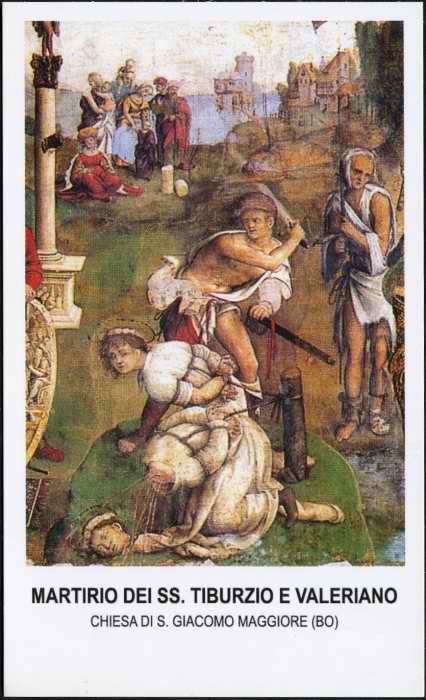
Derived from the Roman cognomen, Tiburtius, meaning “from Tibur.” Tibur is the old Latin name for Tivoli Italy. This was the name of a very late 3rd-century saint who was martyred under Diocletian. Nicknames include Tib, Tibby and Burt.

Other forms include  include:

  • Tibor (Czech/Slovak/Hungarian)
  • Tiburt (English)
  • Tiburce (French)
  • Tiborc (Hungarian)
  • Tiburzio (Italian)
  • Tiburcy (Polish)
  • Tiburcio (Spanish/Portuguese)

Pomeline, Poméline

Gender: Feminine
Origin: French
Meaning: “apple”
Pronunciation (POM-eh-LEEN; po-MAY-leen)

September and October are apple season. Hence is why I decided to revisit this post.

An obscure French name that had made it to the limelight thanks to Charlotte Casiraghi, the daughter of Princess Caroline of Monaco. Charlotte was supposedly named after a distance ancestor from the Middle Ages, a minor Italian or Genovese princess by the name of Pomellina. The name is thought to be derived from the Italian word pomella which is derived from the Italian word poma meaning “apple.” The name was also borne by


  • Pomellina Adorno, the daughter of the duc of Genoa (1355-1410)
  • Pomellina Amandola ( circ. 15th-16th cent)
  • Pomellina Campo Fregoso (1387/88-1462/68), the wife of John I Grimaldi and mother of Catalan Grimaldi the ancestor of Princess Charlotte of Monaco.

The name was adapted into the French Pomelline and evolved into the more modern form of Poméline.

Another French form is Pommeline.

There is also the obscure French name of Pomme, which is also the French word for apple. Pomme was borne by an early French saint, originally spelled Pome.

This is a far less risky choice than the name Apple.

Nicknames include: Apple, Pomme (PUM), Plum and Poppy, Melli, or even Pomé (poe-MAY).

Parthenope

Gender: Feminine
Origin: Greek
Meaning: “maiden voice”
Pronunciation (par-THEN-uh-PEE)
Παρθενόπη

In Greek mythology, it is the name of a nymph who seduced Odysseus, as well as the daughter of King Ancaeus of Samos. It is also the name of an Ancient Greek settlement in Naples

It was borne by Frances Parthenope Verney (1819-1890), writer, journalist and elder sister of Florence Nightengale.

Other unusual forms include:

  • Parthénope/Parthénopé (French)
  • Partenope (Serbo-Croatian/Italian)
  • Parténope (Portuguese: very obscure)

Plautius, Plautia

Origin: Latin
Meaning: derived from the Latin word plaustrum meaning “wagon” or “cart.”
Pronunciation: (Plow-shus); PLOW-see-oos)

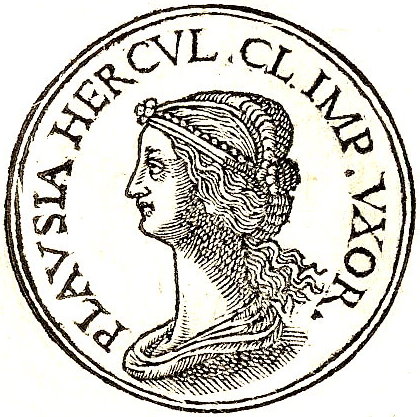
Plautius was a common Roman praenomen. It was borne by the consul Aulus Plautius and the first wife of Emperor Claudius, Plautia Urganilla.

Plautilla is a dimuntive form of the feminine Plautia.

Other forms include:

  • Plauzio (Italian)
  • Plaucjusz (Polish)
  • Plaucio (Spanish)

Feminine forms

  • Plauzia (Italian)
  • Plaucja (Polish)
  • Plaucia (Spanish)

Xanthe

Gender: Feminine
Origin: Greek
Meaning: “blonde; yellow; yellow-brown.”
Pronunciation: (ZAN-thee)
Ξανθη

This was the name of one of the daughters of the minor Greek god, Oceanus. She was a nephalai nymph who was responsible for yellow tinged clouds. It was also the name of an Amazon and it was borne by the wife of Aesclepius.

In Classical Greece, the name was most likely bestowed upon fair haired girls or used as a sort of nickname for blondes, the equivalent of the English nickname, Blondie, and of the Latin Flavia.

Blonde hair was considered an exotic trait, and was therefore a rarity, yet pertained much admiration. The Greeks considered it as a sign of divinity, in fact, the Greeks liked to believe that the Gods all had blonde hair, especially Aphrodite.

If the idea of an X name is too much to fathom on a child, then you might prefer the slightly more tamed and Italianate Flavia or Flaviana. Xan would make an incredibly spunky nickname option.

Another form is Xanthia and the masculine form is Xanthos (Ξανθος)