Berthold, Bertil, Bertille

Origin: French
Meaning: “bright ruler.”
(bare-TEEL); (bare-TEEY)

Bertil is an old French form of Berthold which is of Germanic origins and is composed of the elements beraht meaning “bright” and wald meaning “ruler.” The French feminine form is Bertille and was borne by two early medieval French saints. Bertille’s designated name-day in France is November 6.

Bertil is also used in Scandinavia. Other forms of the name include:

  • Berthoald (Ancient Germanic)
  • Bertaud (French)
  • Bertoldo (Italian)
  • Bertholdus (Late Latin)
  • Bertoldas (Lithuanian)
  • Bertold (Polish/English/Czech)
  • Bertol’d (Russian/Ukrainian)

Other feminine forms:

  • Bertola/Bertolda (Italian)
  • Bertilla (Italian/Romansch)

Martin, Martina

Origin: Latin
Meaning: “belonging to the god Mars.”

This popular pan-European name is derived from Latin name Martinus, a derivative of the Latin genitive Martis, used in reference to the Roman god Mars. The usage of the genitive case would reflect possession, therefore the name would roughly translate as meaning “belonging to Mars” or “possessed by Mars.”

The name was popularized by a 4th-century bishop and saint, (the patron saint of France), known as Martin of Tours. According to legend, he came upon a beggar in the middle of a harsh and cold winter, Martin cut his only cloak in half and gave it to the beggar, later that night, he had a dream of Christ appearing before him, wearing the other half of his cloak. Saint Martin of Tours was not only a popular devotional saint in France, but in the rest of Europe as well. Today, the surname of Martin is the most common in France, originally the surname was taken in honour of the saint.

Another popular saint who bears the name is St. Martin de Porres, attributed as the first African-American saint, he was born in Peru in the 1500s. He was the son of a Spanish nobleman and an African slave woman. He later became a Dominican and was known for his charity and mystical powers. In Spanish-speaking countries, the name Martin is mostly given in commemoration of him.

The name became popular among protestants, particularly adherents of the Lutheran faith, due to its associations with the German Reformer Martin Luther (1483-1546). It was also borne by Civil Rights Activist Martin Luther King Jr. 1929-1968).

In Europe today, Martin is still a fairly common choice. Its rankings are as follows:

  • #55 (Belgium 2006)
  • #56 (France 2006)
  • #20 (Hungary 2005)
  • #73 (Ireland 2007)
  • # 72 (Northern Ireland 2007)
  • # 8 (Norway 2007)
  • #32 (Slovenia 2005)
  • #59 (Spain 2006)
  • # 79 (Sweden 2007)

In Chile, he was the 4th most popular male name in 2006, while in the United States he comes in at a meagre # 221. The perfect classic male name for someone looking for something not too odd yet not too popular.

Other forms of the name include (divided alphabetically by origin)

  • Mardig (Armenian)
  • Mattin (Basque: diminutive form is Matxin)
  • Marzhin/Marzin (Breton)
  • Martí (Catalan: 77th most popular male name in Spain in 2006)
  • Martinu (Corsican)
  • Morten (Danish/Norwegian)
  • Maarten/Marten/Martijn (Dutch Pronunciation for the latter: http://www.forvo.com/search/Martijn/)
  • Ties (Dutch: originally a diminutive form, used as an independent given name)
  • Tinus (Dutch: originally a diminutive form of Martinus, now used as an independent given name)
  • Tijn (Dutch: originally a diminutive, now used as an independent given name. It was the 28th most popular male name in the Netherlands in 2008)
  • Madro/Mardi/Mardu/Mart/Märten/Märtin/Märt (Estonian)
  • Martti (Finnish)
  • Merten (Frisian)
  • Marti/Martinni (Greenlandic)
  • Márton (Hungarian: Pronunciation: http://www.forvo.com/search/Marton/ 31st most popular male name in Hungary 2005. Diminutive is Mártos)
  • Marteinn/Martin (Icelandic)
  • Mairtín (Irish Gaelic)
  • Martiniano (Italian: obscure)
  • Martino (Italian)
  • Martianus (Latin/Dutch)
  • Martinus (Latin/Dutch)
  • Marcis/Martins/Martiņš/Mārtiņš/Marts/Mārts (Latvian)
  • Martynas (Lithuanian)
  • Marcin (Polish. Pronunciation:http://www.forvo.com/search/Marcin/pl/. Diminutive is Marcinek)
  • Martim/Martinho (Portuguese)
  • Martinián (Slovakian)
  • Tinek (Slovenian: initially a diminutive form, now used as an independent given name)
  • Tine (Slovenian: originally a diminutive form, now a popular independent given name ranking in as the 59th most popular male name in Slovenia as of 2008. The final e is pronounced)
  • Martín (Spanish)
  • Mårten (Swedish)
  • Martyn (Welsh/Ukrainian)

Martin is not only used in English, but is also used in Croatian, Estonian, French, German, Maltese, Scandinavian, Romanian, Russian, Czech, Slovenian, Hungarian and Bulgarian languages as well. German nicknames include Marte, Mart,  Marti or Marty. Maroš is the Czech and Slovakian pet form and Marty is the common English nickname.

The name-days are:

  • March 1 (Bulgaria)
  • November 11 (Czech Republic/France/Germany/Poland/Lithuania/Slovakia)
  • November 10 (Sweden/Estonia/Latvia)

    Dutch children celebrating St. Martin's Day

    In some parts of Holland,  Belgium, Germany, Austria and Switzerland, children celebrate St. Maarten’s Day (November 11) by carrying lanterns from door-to-door and getting sweets in exchange for song. The same holiday is observed under the name of Mardispäev in Estonia, Jum San Martin in Malta and to a lesser extent, the holiday is celebrated in the greater region of Poland, particularly in Poznan. Only on this day, instead of it being a children’s holiday, it is more of a day to get a traditional poppy-filled croissant sold by bakers just on that one day of the year, occasionally there are concerts held in the city.

    The most common feminine form is usually Martina, which has experienced wide usage in Bulgaria, Croatia, Czech Republic, Dutch-speaking countries, Estonia, Faroe Islands, German-speaking countries, Italy, Portuguese-speaking countries, Romania, Scandinavia, Serbia, Slovakia and Spanish-speaking countries. It was borne by a 3rd-century Roman saint and martyr as well as a 6th-century Byzantine empress.

    Martinitsa

    It is interesting to note that in Bulgaria, the designated name-day is March 1, and Martin, as well as Martina, have historically been connected to the Bulgarian word mart (meaning March). In this case, the names are sometimes bestowed upon a March baby or children born on March 1. The Holiday of Baba Marta (meaning “grandmother March.”) is a traditional Bulgarian festival that celebrates the arrival of spring and the end of winter, Baba Marta is the harbinger of good weather and if she is displeased, she will continue to bring stormy weather. Baba Marta is considered a moody and fickle old woman, so one must always be careful not to displease her, one way of doing this is the exchange of martenitsi, (white and red tassles which are pinned to clothing), this is used as a way to ask Baba Marta for mercy. A martinitsa is worn either till the end of March or until the wearer spots a stork or a blooming tree, with this, the bearer knows that Baba Marta is pleased, afterwards, they are hung on trees in order to transfer luck onto the tree. The martenitsa symbolizes new life, fertility and spring.

    The rankings of Martinas popularity from country to country are as follows:

    • # 1 (Chile, 2006)
    • # 2 (Malta, 2007)
    • # 76 (Slovenia, 2005)
    • # 34 (Spain, 2006)

    Other feminine forms are:

    • Marzhina (Breton)
    • Maatje/Maartje/Martien/Martijntje (Dutch)
    • Tieneke/Tineke/Tine/Tini (Dutch diminutive forms, used as an independent given names)
    • Martine (French/Estonian/Norwegian/Danish: an obscure French feminine diminutive form is Martinette, the name is very popular in Norway coming in as the 28th most popular female name in 2007, in the Danish/Norwegian case, the final e is pronounced).
    • Martinka (Hungarian: initially used as a diminutive, occassionally used as an independent given name)
    • Martína (Icelandic)
    • Martana (Italian: obscure)
    • Martinella (Italian: obscure)
    • Marcina (Polish: the original Polish feminine form, this form has always been unusual and its latinized counterpart of Martyna has recently enjoyed popularity)
    • Martyna (Polish: popularized by a popular French children series known as Martine in French and Martynka in Polish written by Belgian authors Marcel Marlier and Gilbert Delahaye, published (1954). In Polish Martyna is pronounced (mahr-TIH-nah) the Y is akin to the i sound in pig, but not exactly so. Martyna is also the Ukrainian and Lithuanian version, but in those cases, it is pronounced with the long i sound (mahr-TEE-nah).\
    • Martinha (Portuguese)

    Other famous bearers of the name include: Martina von Trapp (1921-1951) is immortalized in the Sound of Music as Gretl von Trapp, she was named for the manor house she was born in, Martinschlössel (Martin’s Castle in English). Czech-American tennis player, Martina Návratilová (b.1956). American country-Western singer Martina McBride (b.1966). Italian actress, Martina Stella (b.1984).

    The name-days are:

    • March 1 (Bulgaria)
    • July 17 (Czech Republic)
    • January 30 (Germany/Hungary)
    • September 9 (Slovakia)
    • November 10 (Sweden)

    Renata, Renatus, René, Renée

    Origin: Latin
    Meaning: “rebirth.”

    The origins of René and Renée can be traced back to the Late Latin male name Renatus, meaning “rebirth; born again.” The name is borne by several saints in both its Latin masculine form and feminine Latin form. The French forms have experienced usage in the Netherlands, Slovenia, Slovakia, the Czech Republic as well as Anglo-phone countries.

    Renée enjoyed a short spout of popularity in the United States during the late 60s and early 70s, the highest it peaked was in 1967 coming in at # 62. As of 2008, she came in at # 734. Surprisingly, its masculine version ranked in higher in the top 1000, coming in as the 561st most popular male name in 2008. René is still somewhat prevalent among the Cajun and Creole communities of Louisiana.

    In 2005, he was the 57th most popular male name in Slovenia.

    Renata has experienced usage from South America to Eastern Europe, she is a common choice in Poland, Germany, Italy and Brazil. In 2006, she was the 34th most popular female name in Chile and the 68th most popular female name in Hungary.

    Other forms of the name include:

    • Renata (Czech, Croatian, German, Italian, Lithuanian, Polish, Portuguese, Spanish. Polish diminutive forms are: Rena, Renatka and Renia. Spanish diminutive form is Renita, often used as an independent given name)
    • Renate (Dutch/German)
    • Renáta (Hungarian/Czech/Slovak)

    Masculine forms include:

    • René (French, Czech, Dutch, German, Hungarian, Slovakian, Slovenian)
    • Renát (Hungarian/Slovakian)
    • Röné (Hungarian)
    • Renato (Italian/Spanish)
    • Renatus (Late Latin)
    • Renáto (Slovakian)
    • Renátus (Slovakian)

    The designated name-day is November 6 in Slovakia, October 19 in France, November 12 in Poland and Lithuania, November 28 in the Czech Republic (Renata is October 13); October 6 in Hungary and January 23 in Estonia.

    The name is borne by French mathematician and philosopher René Descartes and French painter René Magritte and American actress Renée Zellweger.

    Wolfgang

    Gender: Masculine
    Origin: German
    Meaning: “wolf path; wolf strife.”

    The name is composed of the Old Germanic elements wolf meaning “wolf” and gang meaning “strife” or “walk.” The name was borne by a a medieval German saint, known as Wolfgang of Regensburg (934-944) and is considered one of the three great German saints of the 10th-century.

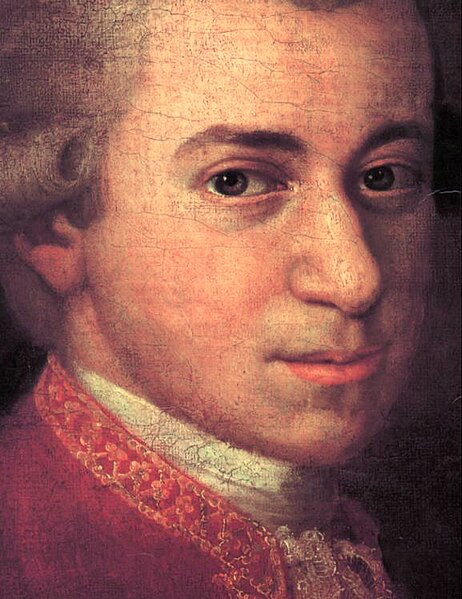
    The name is also borne by Austrian composer, Wolfgang Amadeus Mozart (1756-1791) and German novelist and poet Johann Wolfgang von Goethe. Popular German diminutives are Wolf and Wolfie. In recent years, the name has been considered dated in German speaking countries. The designated name-day is October 31.

    Other forms of the name include:

    • Volfgangu
    • Volfgang (Croatian/Slovakian)
    • Vuk (Croatian)
    • Farkas (Hungarian)
    • Volfgango (Italian)
    • Volfgangs (Latvian)
    • Volfas/Volfgangas (Lithuanian)

    Viola, Violet

    Gender: Feminine
    Origin: Latin
    Botanical Name
    Eng: VIE-lət, VIE-ə-lət. vaɪˈoʊlə, VIE-oh-LUH

    One of the very few floral name to have been in usage since the Middle Ages, Violet is the English form of the French Violette, which was introduced to the English speaking world via the Normans. In England, Violet wasn’t very common till the 19th-century, it has been in prevalent usage in Scotland since the 15oos.Viola is a latinate form that was common in the Middle Ages and appears in Shakespeare’s Twelfth Night.

    Violette was derived from the Old French Violaine which was from the Latin Viola which in itself is derived from the Greek ion and viera meaning “weaving; flexible; sinous.” Violet is also synonymous with the colour purple in most languages and is a shade of purple in English.

    Both names have been in and out of vogue in the United States since the 1880s, its peak year was 1910 where it came in at # 79. The name fell out of the top 1000 by the 1960s. In recent years, the name has become more and more fashionable, as of last year, she stands as the 184th most popular female name, meanwhile in Canada, she comes in even higher at # 71.

    Ben Affleck and Jennifer Garner named their eldest daughter Violet.

    Usually the designated name-day is October 30. The violet is an autumnal flower, depending on the species.

    Other forms of the name include:

    • Vjollca (Albanian)
    • Violeta (Bulgarian, German, Lithuanian, Romanian, Portuguese, Spanish)
    • Viola (Czech, English, German, Hungarian, Italian, Latin, Spanish, Swedish)
    • Jolana (Czech/Slovak)
    • Viol (Danish)
    • Jolanda (Slovene/Dutch)
    • Fjóla (Faroese/Icelandic)
    • Viula (Finnish)
    • Violette (French)
    • Iolana (Hawaiian)
    • Jola/Jolán/Jolánta (Hungarian)
    • Viole (Italian)
    • Violetta (Italian)
    • Violanta (Latin/Italian)
    • Violė/Vijolė (Lithuanian)
    • Iolanda/Violante (Medieval Spanish/Portuguese forms)
    • Violaine/Yolande (Old French)
    • Jolanta (Polish: Jola is the diminutive)
    • Wiola/Wioleta/Wioletta (Polish)
    • Vióla/Violétta (Russian/Ukrainian/Icelandic)
    • Vijoleta (Slovenian)
    • Yolanda (Spanish)

    There are two Italian male forms: Violo and Violetto

    Severin, Soren

    Soren Kierkegaard

    Soren Kierkegaard

    Gender: Masculine
    Origin: Latin
    Meaning: “stern”
    Eng(SEV-rin); Germ(Ze-ve-reen)

    The name is derived from an old Roman family name which was derived from the Latin name Severus meaning “stern.” The name was borne by several saints, including a pope and a Roman theologian put to death under Theodoric 1.

    The name is also borne by Danish philosopher Søren Kierkegaard (1813-1855), Søren is a fairly popular form throughout Scandinavia, especially Denmark and is even in usage in Germany.

    The designated name-day is October 23.

    Other forms of the name include:

    • Søren/Sørinus/Sørn (Danish/Norwegian)
    • Servin/Sevrin/Sørin (Faroese)
    • Severi (Finnish: diminutive forms include Seeve and Sever, Veeri)
    • Sévère (French)
    • Séverin (French)
    • Severin (German/Romansch)
    • Severinus (German/Latin)
    • Szevér/Szeverin (Hungarian)
    • Szörény (Hungarian)
    • Severino (Italian, Spanish, Portuguese)
    • Severo (Italian, Spanish)
    • Severus (Latin)
    • Severins (Latvian)
    • Severas/Severinas (Lithuanian)
    • Sevre/Sevri/Sevrin (Norwegian)
    • Söffren/Söfring/Sövrin (Old Swedish: out of usage)
    • Sewer/Seweryn (Polish)
    • Suulut (Saami)
    • Sören (Swedish)
    • Severián (Ukrainian)

    Female forms include:

    • Sørina/Sørine (Danish/Norwegian)
    • Severiina (Finnish)
    • Séverine (French)
    • Severina (German, Italian, Lithuanian, Portuguese, Spanish)
    • Szörénke (Hungarian)
    • Sevrina/Sevrine/Søverine/Søvrina/Søvrine (Norwegian)
    • Sewera/Seweryna (Polish)
    • Severyna (Ukrainian)

    Blandina, Blandine

    St. Blandine

    St. Blandine

    Gender: Feminine
    Origin: Latin
    Meaning: “charming; flattering; friendly”

    Both names come from an early Roman name, a feminine form of Blandinus, which is a derivative of the cognomen, Blandus, meaning “charming; flattering” or “friendly” in Latin.

    The name was popularized, in France, in the form of Blandine.

    It was the name of an early Christian martyr who had been killed in Lyons in the first-century C.E.

    According to legend, she was a slave and Christian of frail health and when an edict against Christians in the area was produced, she and her master were tried and executed.

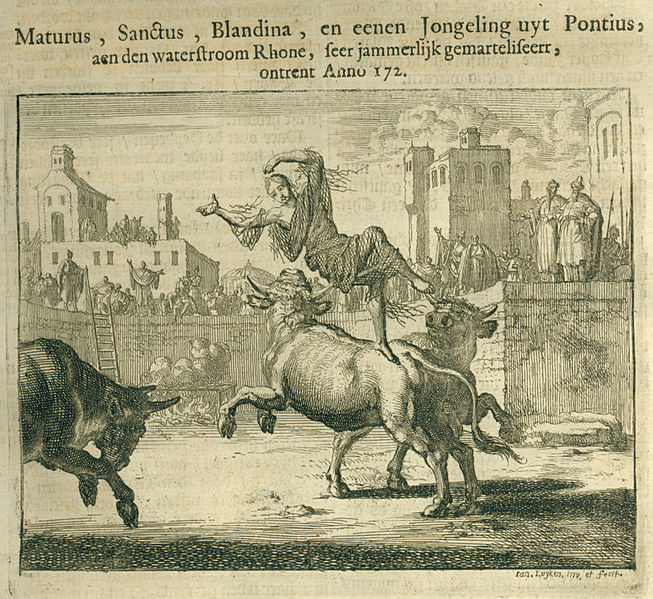
    Allegedly, Blandina was tied to a stake in the local arena where wild animals were set loose upon her, the animals did not harm her, afterwards, she was scourged, placed on a burning grate and then thrown before a wild bull. She still didn’t die. She was finally executed with a dagger.

    In France the name-day is June 2nd, while in Germany it is October 22.

    The name has also had some usage in Italy , Spanish-speaking countries and in the Romantsch speaking cantons of Switzerland.

    The Polish forms are Blandyna and the masculine, but very unusual form, of Blandyn.

    Salome

    407px-GustavemoreauGender: Feminine
    Origin: Aramaic
    Meaning: “peace.”
    (SAH-loh-MAY)

    The name is derived from the Greek Σαλωμη which is from an Aramaic name that was related to the Hebrew word שָׁלוֹם (shalom). The name is associated with the notorious daughter of Herodias who danced for King Herod and was rewarded by dancing with the head of John the Baptist on a platter. Though it was the name of a Herodias’ daughter, the name was used by Christians in reference to the handmaid of the Virgin Mary, (mentioned in the New Testament), who witnessed the Crucifixion, and is considered a saint by the Catholic Church and Orthodox Church. The name was also borne by Salome Alexandra (136-67 BCE) who was the only Jewish regnant queen in history. In Jewish sources she is known as Shalomzion שְׁלוֹמְצִיּוֹ. There are a few other characters in the New Testament mentioned with the name Salome, and it seems to have been common in the Jewish royal family. The name has experienced prevalent usage in Poland, Germany, France, Spain and Portugal.

    It was borne by Blessed Salomea (sometimes spelled Salomeja) also known as Salomea of Krakow and Błogosławiona Salomea in Polish, was a Polish princess (1211-1268) and upon being widowed entered the Poor Clares. She is up for canonization. In Polish literature it is the name of a character in Stefan Żeromski‘s 1912 classic the Faithful River (Wierna Rzeka). Polish diminutive forms are Meja, Salcia, Salka, Salomejcia and Salusia (thanks to Magdalena for contributing the latter two diminutive forms). The name is also borne by a famous Lithuanian poetess Salomėja Nėris (1904-1946) and a famous Ukrainian opera singer Salomiya Kruscelnytska (1872-1952).

    The designated name-day is October 22.

    Other forms of the name include:

    • Saloma (Croatian/Faroese)
    • Salome (Dutch/German/English/Latvian)
    • Saalome (Estonian)
    • Salomé (French/Portuguese/Spanish)
    • Salomi (Greek Modern)
    • Shlomtzion (Hebrew Modern)
    • Szalóme (Hungarian)
    • Salóme (Icelandic)
    • Salomè/Salomina (Italian: latter form was originally a diminutive form: thanks to Magdalena for contributing the info)
    • Salomėja (Lithuanian)
    • Salomea (Polish/Czech/Romanian/Romansch/Slovak)
    • Salomeja (Polish)
    • Saloména (Slovakian)
    • Solomia (Slovakian)
    • Salomiya (Ukrainian)
    • Saltscha (Yiddish)

    Adeline

    411px-Adelina_Patti_1863Gender: Feminine
    Origin: French
    Meaning: “noble”
    Eng (AD-eh-LINE); Fr (ah-de-LEEN)

    The name was a Medieval French diminutive form of Adéle which is from the Germanic Adela meaning “noble.” The name fell out of usage as a diminutive form and has been used as an independent given name in its own right since the late Middle Ages. The name enjoyed a trend in English speaking countries during the 18th and 19th-century. It has since then been creeping back into widespread usage. In 1999, Adeline stood at # 924 in the Top 1000 Female Names, it has risen all the way up to #361 in 2008. The name was borne by Blessed Adeline (b. 1125) a French nun known for her piety. It was also the nickname of Adelina Patti (born Adela Juana Maria Patti 1843). She was a famous opera singer of Italian descent. Other forms of the name excluding Adele are:

    • Aline (French: popularized by a 1950s French pop song sung by Christophe of the same name)
    • Alina (Polish/Russian/German/Finnish: diminutives in Polish include Alinka)
    • Adelina (Spanish/Italian/Romanian/Romansch/Portuguese/Finnish/Bulgarian)
    • Adelita (Spanish diminutive form, occasionally used as an independent given name, especially in Latin American Countries. It was popularized as an independent given name by a Mexican folk song of the same name)

    Popular English nicknames include: Addie, Adele, and Del. In France, the designated name-day is October 20.

    Céline

    celine-dionGender: Feminine
    Origin: French
    Meaning: “heaven.”
    Fr (SAY-leen); Eng (seh-LEEN).

    The name is a French feminine form of the Old Roman family name Caelinus which is related to the Latin Caelius meaning “heaven.” In this case the name Celia is related.

    It is also sometimes considered a contraction of Marcéline.

    The name has always been prevalent in French speaking countries and has become common in non Francophone countries as well.

    In Belgium it was the 99th most popular female name in 2003, in France she came in at # 97 in 2002. In the Netherlands she came in # 272 in 2008, while in Norway she came in at # 51 in 2007. In the United States she recently fell out of the top 1000, in 2007 she came in at # 995. The name is borne by Canadian singer Celine Dion. Other forms of the name include:

    • Caelina (Latin)
    • Celina (Italian: pronounced chay-LEE-nah. There is also a masculine form: Celino)
    • Celina/Celine (Norwegian: seh-LEE-nah; seh-LEE-nε).
    • Celina (Polish: pronounced tseh-LEE-nah)

    The designated name-day in France is October 21.