Albina

Gender: Feminine
Origin: Latin
Meaning: “white; bright.”
Eng (al-BYE-nah)

The name has very ancient roots as it was borne by the Etruscan goddess of the dawn, the name is linked to the Latin word albus meaning “white; bright” and it is also linked to the modern French word (aube)meaning “dawn” and Spanish word (alba) “dawn.” The Latin masculine version is Albinus. Interestingly enough, Albina also coincides with the Romanian word for “bee.”

Though it has Latin roots, the name seems to be especially common in Central Asian countries, such as Chechnya and Kyrgyzstan, and is common among the Tartar populations of Russia.

The name is also used in Hungary, Italy, Poland, Romania, Slovenia, in Spanish-speaking countries and in Portuguese speaking countries.

It is borne by Chechen Human Right’s Activist, Albina Digaeva (b.1978), it is also borne by Russian-Tartar olympic biathlete, Albina Akhatova (b.1976) and Tajik Olympic Archer, Albina Kamaletdinova (b.1969).

It was also borne by a 3rd century Christian martyr.

The designated name-day is usually December 15.

Other forms include:

  • Albína (Czech/Slovak)
  • Albina Альби́на (Russian)

A Russian diminutive form is Alya and Slovenian diminutives are Bina, Binca (BEENT-sah); Albinca.

Masculine forms are:

  • Albin (Czech/English/Polish/German/Norwegian/Swedish)
  • Aubin (French)
  • Albinus (Latin)
  • Albín (Slovakian)

Lucia, Lucille, Lucy, Lucian, Lucius

Origin: Latin
Meaning: “light.”

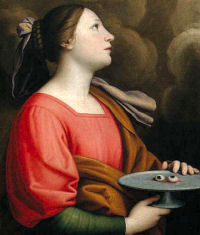
Today is December 13, said to be the darkest night of the year, and also the feast of St. Lucy, whose name appropriately means “light.” Contrary to popular belief, Lucy is the English form of Lucia, and is not a nickname that later became an independent given name, in fact, Lucy was fairly common in Medieval England, particularly after the Norman Conquest in 1066. The latinate form of Lucia, is a feminine version of the Latin, Lucius, which was a Roman praenomen derived from the Latin word lux meaning “light.”

The name was popularized by a 4th-century Sicilian martyr, who, according to legend, was a beautiful Christian woman of noble lineage. She was particularly known for her striking eyes, and when a local pagan suitor tried to force her to marry him, she spent the entire night gouging her own eyes out, presenting them on a platter to the lovelorn nobleman the next day, proclaiming that if he loved her eyes so much, he could marry them instead of her. St. Lucy was immediately tortured and put to death and as a result, she is considered the patron saint of the blind.

Her feast day in Sweden is an especially popular celebration. Each year a girl is chosen to represent the saint, while leading a procession of singing white clad men and women. In older traditions, it was usually the oldest girl in the household who was picked, but since becoming a school or city festival, the title is either given to the prettiest girl or the most popular girl, sometimes done by popular demand of the populace, or school, in which the procession is held. The Sankta Lucia wears a wreath of lit candles upon her head and a red sash around her waist, afterwards, glög and lussekatte, (a type of Saffron biscuit),are served. Its popularity in Scandinavia may be due to some ancient pre-Christian roots, in which the early Germanic tribes would fend off the dark wintery nights with a procession of candles, its true origins have been somewhat lost to history, but there is a Scandinavian legend that claims that Saint Lucy appeared to a band of lost vikings, and lead them back safely to shore. Thereafter, Lucy became a popular saint among the Scandinavians.

The holiday is also celebrated in some parts of the United States, especially in Minnesota, where there are large Scandinavian enclaves, as well as in Norway, and among the Swedish speaking populations of Finland and in Estonia and Latvia.

Lucille is a derivative of the Latin feminine name, Lucilla, which was an old Latin diminutive form of Lucia. It was popularized as an independent given name, early on, due to the popularity of a 3rd century Roman martyr.

A modern famous bearer was Lucille Ball (1911-1989), a famous American actress and comedienne, known for her popular sitcom, I Love Lucy.

Lucille currently ranks in as the 613th most popular female name in the United States, she did experience a peak in popularity a the beginning of the 20th century, ranking in the highest back in 1919, coming in as the 27th most popular female name.

Its masculine form of Lucius, was a fairly common Roman praenomen during the Roman Republic and Roman Empire. It was borne by two kings of Etruria, and it was also borne by the Roman statesman, orator and philosopher, Lucius Annaeus Seneca. Lucius is also found in the New Testament, the name of a minor character, an Antiochan Christian. In addition, it was borne by three popes and a 3rd century male saint.

Lucianus, another male praenomen, is related to Lucius, but with slightly different meaning, the meaning refers to one who carries or bears light.

As of 2008, Lucian was the 810th most popular male name in the United States.

Other forms of the names include:

Lucia

  • Drita (Albanian: literally means “light” in Albanian, it is sometimes used as an alternative for Lucia).
  • Luzía (Aragonese)
  • Lusia (Breton)
  • Llúcia (Catalan)
  • Lucija Луција (Croatian/Latvian/Serbian: loot-SEE-yah)
  • Jasna (Croatian/Serbian: literally means “light” occasionally used as an alternative for Lucy. YAHS-nah)
  • Lucie (Czech: LOOT-syeh)
  • Lucia (Danish/Dutch/Corsican/Estonian/Norwegian/Romanian/Slovakian/Slovene/Swedish)
  • Luus (Dutch/Limburgish)
  • Lucy/Lucia (English: older pronunciation of the latter is LOO-shah, and in modern times, often pronounced loo-SEE-ah)
  • Lusia (Faroese)
  • Lukki/Lukka (Finnish)
  • Luusi/Luusia (Finnish)
  • Luce/Lucie (French)
  • Lucette (French: initially a diminutive form, now used as an independent given name, though considered very dated)
  • Luzie (Fruilian)
  • Lucia/Luzei/Luzia/Luzie/Luzi (German)
  • Zeia (German: old Pet form of Luzei, very obscure)
  • Loukia Λουκία (Greek: Modern)
  • Luca/Lúcia (Hungarian: former is pronounced LOOT-sah)
  • Lúcía/Lúsía (Icelandic)
  • Luce (Italian: LOO-chay)
  • Lucetta/Lucietta (Italian: initially diminutive forms, now used as independent given names)
  • Lucia (Italian: loo-CHEE-ah)
  • Luciella (Italian: originally a diminutive form, now used as an independent given name)
  • Lux (Latin: directly from the Latin word for “light” it is occasionally used as a given name in the English speaking world, and it was further popularized by the Eugenides book The Virgin Suicides, in which the lead character is named Lux Lisbon).
  • Liucija (Lithuanian: lyoot-SEE-yah).
  • Luċija (Maltese: loo-CHEE-yah)
  • Ruhia/Ruihi/Ruruhi (Maori)
  • Løssi (Norwegian: dialectical form of Lucy, from the regions of Møre and Romsdal).
  • Lucja (Polish: LOOT-syah)
  • Łucja (Polish: WOOT-syah)
  • Lúcia (Portuguese: LOOS-yah)
  • Luzia (Portuguese: loo-ZEE-uh)
  • Luziya/Svetlana (Russian: the latter is from the Old Slavonic meaning “light” and is sometimes used as an alternative form Lucy)
  • Liùsaidh (Scottish)
  • Lucìa (Sicilian)
  • Lucía (Spanish/Galician: loo-THEE-ah in Iberian Spanish and loo-SEE-ah in Latin American Spanish)
  • Luz (Spanish/Portuguese: literally ” light” in Spanish and Portuguese, it has been used as a variation for the Latin Lucia. LOOTH-Iberian Spanish LOOS-Latin American Spanish, LOOZH-Portuguese)
  • Luci (Swedish/Norwegian)
  • Lussa (Swedish: very old and obscure form of Lucy)
  • Lukia/Lucia (Ukrainian)
  • Lùsia (Venetian)
  • Lleucu (Welsh)

Lucian

  • Luken (Basque)
  • Lukian (Breton/Danish/German/Norwegian/Polish)
  • Lusian (Breton)
  • Llucià (Catalan)
  • Lucian (English: LOO-shen)
  • Lukianos (Finnish)
  • Lucien (French)
  • Lukianosz (Hungarian)
  • Lúkíanos (Icelandic)
  • Luciano (Italian/Galician/Portuguese/Spanish: Italian diminutives are Ciano, Luci and Lucio)
  • Lucianus (Latin/Dutch)
  • Lukiāns (Latvian)
  • Lukianas (Lithuanian)
  • Lucjan/Łucjan (Polish)
  • Luchian/Lucian (Romanian)
  • Lukián/Lucián (Slovakian)

Feminine forms are:

  • Liczenn (Breton)
  • Lucienne (French: luy-SYEN)
  • Luciana (Italian/Latin/Portuguese/Romanian/Spanish: Italian loo-CHAH-nah, Latin loo-KYAH-nah, Portuguese loo-SYAH-nah, Spanish: loo-THYAH-nah or loo-SYAH-nah)
  • Luciane (Brazilian Portuguese: loo-SYAH-nay)

Lucilla

  • Lucille/Lucile (French; English)
  • Lucilla (Italian/Latin: loo-CHEEL-lah in Italian)
  • Lucélia (Portuguese)
  • Lucília (Portuguese)
  • Lucila (Spanish/Portuguese)

An Italian masculine form is Lucilio

Lucius

  • Lucius (English LOO-shus)
  • Luvcie (Estruscan)
  • Lucius/Luzius (German)
  • Lúciusz (Hungarian)
  • Lucietto (Italian: obscure)
  • Lucido/Lucidio (Italian: obscure)
  • Lucio (Italian: loo-CHEE-o)
  • Luciolo (Italian: obscure)
  • Lucione (Italian: obscure)
  • Lugh (Manx)
  • Ruhiu (Maori)
  • Lucjusz/Łucjusz (Polish: LOOT-syoosh)
  • Lúcio (Portuguese)
  • Luci (Romanian)
  • Luzi (Romansch)
  • Lucio (Spanish: loo-THEE-o, loo-SEE-o)

Judah/Jude/Judith

Origin: Biblical Hebrew
Meaning: “celebrated; praise.”

Judah is a Greek form of the Hebrew name, Yehuda יְהוּדָה, which is the name of several characters in the Old Testament and at least two figures in the New Testament. In the Old Testament, the original Judah was said to be the fourth son of Leah and Jacob, the progenitor of the Judah tribe, and he is also traditionally believed to be a direct ancestor of Jesus. In Biblical Greek, Judah, Judas and Jude were all interchangeable, since in Greek, Yehudah was translated as Ioudas, but for convenience sake, especially in English, Judas is usually used to refer to the ex Apostle, Judas Iscariot, who is known for his betrayal of Christ, and due to these associations, this form of the name has extremely dubious connotations, especially among Christians. However, Jude is used in reference to another apostle, known as St. Jude Thaddeus, who is a very popular saint among Roman Catholics.

In Jewish circles, Judah is usually used in reference to the tribe, or in reference to Judah, the fourth son of Leah and Jacob. It is sometimes bestowed upon boys born around the festival of Hanukkah, which is used in honour of Judah Maccabeus, who is considered to be one of the greatest warriors in Jewish history. He was the son of Mattathias, a Cohen, and was known for his uprising against the Seleucid Empire in 167 BCE-160 BCE. The Jewish feast and holiday, known as Hanukkah, (Hebrew for “dedication”), commemorates the restoration of the temple in Jerusalem after Judah Maccabeus removed Pagan statuary from the Temple.

The name Jude has increased in popularity the last 10 years, as of 2008, he ranked in as the # 224th most popular male name in the United States.

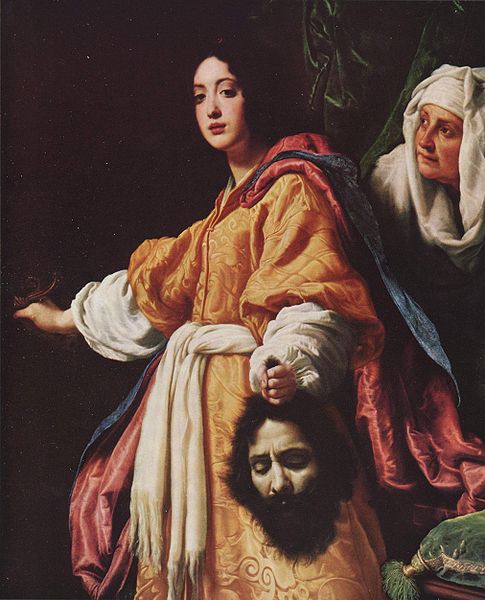
Its feminine form of Judith, Hebrew יְהוּדִית Yehudit, was borne in the Old Testament by a wife of Esau, but is probably most closely associated with the protagonist found in the Book of Judith, which is a deuterocanonical book, included in the Septuagint and in the Roman Catholic and Eastern Orthodox Christian Old Testament of the Bible. The book is rejected by Protestant Christians and Jews since it is mostly apocryphal and believed to be more of a morality tale versus anything based on historical fact, however, though the book is not considered historically accurate by Jews, Judith remained a popular Jewish heroine and symbol. In fact, the name’s popularity among Jews is probably more in association with her than of the wife of Esau. Judith is known for her beheading of the evil, Assyrian invader, Holofernes. She was a popular subject of artists for centuries.

The name experienced some usage in Catholic Europe during the Middle Ages, since Judith was considered as much a heroine among Christians as she was among Jews. The highest Judith ranked in the U.S. popularity charts, was at # 4 in 1940. As of 2008, she ranks in at a measly # 713. In 2006, she was the 6oth most popular female name in Spain.

Other forms of Judah and Jude include:

  • Chudas (Aragonese)
  • Judes (Catalan)
  • Judas (Danish/Dutch/German/Lithuanian/Norwegian/Portuguese/Spanish/Swedish: Portuguese ZHOO-dazh)
  • Jude (English/French)
  • Juudas (Finnish)
  • Juda (German/Czech/Croatian/Slovene)
  • Ioudas Ιουδας (Greek: Modern/Biblical)
  • Yehudah יְהוּדָה (Hebrew)
  • Júdás (Hungarian)
  • Yudas (Indonesian)
  • Iúdás (Irish)
  • Giuda (Italian)
  • Yuda (Kiswahili)
  • Iudas (Late Latin)
  • Juda/Judasz (Polish)
  • Júda (Slovakian)
  • Judá (Spanish/Portuguese: Spanish hoo-DAH, Portuguese zhoo-DAH)
  • Hudas (Tagalog/Filipino)
  • Yudel/Yidel (Yiddish)

Other forms of Judith include:

  • Ioudith Ιουδιθ (Biblical Greek)
  • Iudith (Biblical Latin)
  • Jitka (Czech: originally a diminutive form, now used as an independent given name YEET-kah).
  • Judita (Czech/Romansch/Slovak/Slovene)
  • Júdit (Czech)
  • Judit (Danish/Catalan/Hungarian/Norwegian/Spanish/Swedish)
  • Jytte (Danish)
  • Jutka (Dutch/Hungarian: originally diminutive forms, used as independent given names)
  • Juut (Dutch)
  • Judith (English/Dutch/Icelandic: English nickname is usually Judy)
  • Juudit/Juta (Estonian)
  • Judith/Judithe (French: diminutive is Juju)
  • Xudit (Galician)
  • Juditha (German: Jüdie is a diminutive form)
  • Jutta/Jutte (German/Dutch/Polish: originally a diminutive form, used as an independent given name, now considered dated)
  • Yehudit יְהוּדִית (Hebrew)
  • Yudit (Indonesian)
  • Giuditta (Italian: joo-DEET-tah)
  • Yuditi (Kiswahili)
  • Ita (Polish)
  • Judyta (Polish: yoo-DIH-tah)
  • Judite (Portuguese/Latvian: Portuguese pronunciation: zhoo-DEET, Brazilian Portuguese zhoo-JEE-che )
  • Juditta (Romansch)
  • Yudif/Yudita (Russian)
  • Judetta/Judina (Spanish)
  • Hudes (Yiddish)
  • Yutke (Yiddish)

Other notable bearers of the name include Judah Benjamin (1811-1884), former Attorney General of the Confederacy and the first Jewish American to be seriously considered for the Supreme Court and the first Jewish American to serve as a U.S. Senator. It is also borne by British actor, Jude Law (b.1972).

Notable Judiths include:

Judge Judith Scheindlin (b. 1942) an American judge, TV personality and author, and Judy Jetson of the 1950s cartoon series, The Jetsons.

Designated name-days are: October 28 (France: for Jude), May 5 (France: Judith), December 5th (Czech Republic), December 10 (Estonia, Hungary and Latvia).

Valeria, Valerie

Gender: Feminine
Origin: Latin
Meaning: “healthy.”
Eng (VAL-eh-REE); It (vah-LAY-ree-ah); Fre (VAH-lay-RHEE)

Valeria is the feminine form of the Latin Valerius, an ancient Roman clan name that indicated strength, boldness or health. The name was popularized in Europe via the cult of St. Valeria, a 2nd century Roman martyr, and the cult of St. Valérie of Limoges.

In the United States, Valerie currently ranks in as the 135th most popular female name (2008). The highest it ranked was in 1959 at # 60. In the Netherlands, she is the 136th most popular female name (2008). Its latinate form of Valeria currently stands as the 73rd most popular female name in the United States. In 2006, she was the 69th most popular female name in Chile and the 55th most popular in Spain.

Other forms of the name include:

  • Valeria (Albanian/Italian/Latin/Norwegian/Romanian/Spanish/Swedish)
  • Valèria (Catalan)
  • Valérie (Czech: vah-LEHR-yeh)
  • Valerie (Dutch/German/English/Swedish)
  • Valériane (French)
  • Valérie (French: VAH-lay-RHEE)
  • Valérine (French)
  • Valeska (German: an old diminutive form, short form is Leska, fairly common in Brazil, perhaps introduced via German immigrants).
  • Valéria (Hungarian/Portuguese/Slovak)
  • Valeriana (Latin/Italian/Spanish)
  • Waleria (Polish: vah-LEHR-yah)
  • Waleriana (Polish)
  • Valeriya Валерия (Russian)
  • Valerija (Slovene/Croatian/Latvian/Lithuanian/Serbian)
  • Valerijana (Slovene)
  • Valerina (Slovene/Italian)

A Slovakian diminutives is Valika, Russian diminutives are Valya and Lera, an English diminutive is Val, German diminutives are Vali and Lilli, Slovene diminutives are, Valči, Valčika andValčka. A French diminutives is Valé.

Masculine forms are

  • Valery (English)
  • Valerian (English)
  • Valère/Valérien/Valéry (French)
  • Vallier (French)
  • Valeriano (Italian/Spanish)
  • Valerino (Italian)
  • Valerio (Italian/Spanish)
  • Valiero (Italian)
  • Valerianus (Latin)
  • Walerian/Waleriusz/Walery (Polish)
  • Valeriu (Romanian)
  • Valeri Валерий (Russian)
  • Valerij/Valerijan/Valerijano/Valerijo/Valerin/Valerjan (Slovene)

A Romanian diminutive form is Vali.

The designated name-days are: April 18 (Czech Republic), April 28, (France, Hungary), June 20 (Slovakia), June 7 (Bulgaria), June 20 (Russia) and December 9 (Lithuania and Croatia).

Javier, Xavier

Gender: Masculine
Origin: Basque
Meaning: “the new house.”

The name is derived from a Basque surname Extaberri meaning “the new house” and has been in use as a given name for centuries. It was popularized by St. Francis Xavier (1506-1552), and was also the family name of the Lords of Javier. After the popularity of the saint, the name spread throughout the Spanish speaking world as a popular male given name, its usage was followed in due course by other Catholic countries.

The name has experienced a sudden surge of popularity in the United States, ranking in as the  71st most popular male name for 2008.

In Australia he ranks in at # 56 (2007), and # 90 in Spain for 2005. Its designated name-day is December 3rd.

Other forms of the name include:

  • Chabier (Aragonese)
  • Xabel (Asturian)
  • Xabier/Xabi (Basque)
  • Xavier (Catalan/French/Galician/Portuguese/Valencian: Catalan diminutives are Xavi and Xevi)
  • Saveriu (Corsican)
  • Xaver (German/Czech)
  • Savy (Irish)
  • Saverio/Zaverio (Italian)
  • Xaverius (Latin)
  • Xabiere (Leonese)
  • Xavêio (Piedmontese)
  • Ksawery/Xawery (Polish: latter form is archaic, diminutive form is Ksawerek)
  • Ksaber Ксавьер (Russian)
  • Xavér (Slovakian/Hungarian)
  • Javier (Spanish)

Feminine forms

  • Xavière (French)
  • Saveria/Saverina/Zaveria (Italian)
  • Ksawera/Ksaweryna (Polish: diminutive forms are Ksawerka or Ksawerynka)
  • Xavéria (Slovakian)
  • Javiera/Xaviera (Spanish)

A popular compound name, used among Catholics, is Francis Xavier (English: common in Ireland); Franz Xaver (German: used in the Catholic areas of German speaking countries); Francisco Xavier (Portuguese) Francisco Javier; (Spanish) and Francois-Xavier (French).

In Portugal, Xavier is sometimes used in conjunction with Maria or Francisca as a feminine name, but is never used on females as a stand alone name. Its conjunction with names like Maria or Francisca are usually used in a religious context, in reference to the saint.

Viviana, Vivienne, Bibiana

Origin: Latin
Meaning: “alive.”

For many, the name Vivian probably brings to mind the silverscreen and beautiful leading ladies like Vivien Leigh, however, both Vivian and Vivien are masculine forms, though they have not ranked in the U.S. top 1000 for males, for the policy of defining a legitimate name, I have decided to list both Vivian and Vivien as male forms, while Viviane and Vivienne are legitimate feminine forms. In fact, Vivien is still considered a male form in France. Currently, Vivian ranks in the U.S. top 1000 female names as the 207th most popular female name for 2008, with the rising popularity of such vintage names like Ava and Sophie, this one might rise, plus add to the mix that Angelina Jolie and Brad Pitt recently named a child Vivienne.

The name is derived from Vivianus, which is derived from the Latin word vivus meaning “alive.” The name was borne by two saints, one an early Christian martyr, known as St. Viviana or St. Bibiana, the other a French Bishop who was known for providing protection against the Visigothic invasion.

In addition, in some Arthurian legends, the Lady of the Lake is sometimes given the name Viviane.

The name-days are June 2nd (Estonia) and December 2nd.

Other forms of the name include: (divided alphabetically by linguistic origin):

  • Bibijana (Croatian)
  • Viivi (Finnish)
  • Bibiane/Bibienne (French)
  • Viviane/Vivienne (French: common diminutive form is Vienne)
  • Viviette (French: originally a diminutive form; used as an independent given name)
  • Bibiana (German/Italian/Spanish)
  • Bibbiana (Italian)
  • Viviana (Italian/Spanish)
  • Bibianna/Wiwianna (Polish: the latter form is more common and is currently rising in popularity)
  • Bibiána/Viviána (Slovakian/Hungarian: diminutive forms in Slovak are: Vivi, Vivianka, Via and Vianka)
  • Viviann/Vivianne/Vivan/Wivan (Swedish)

Masculine forms

  • Vivian (English)
  • Vivien (French/Hungarian)
  • Bibbiano/Bibiano (Italian)
  • Vivianus (Latin)
  • Bibian (Polish)
  • Vivián (Spanish)

Barbara

St. Barbara

Gender: Feminine
Origin: Greek
Meaning: “foreigner; barbarian”
Eng (BAR-bruh).

The name is derived from the Greek barbaros (βαρβαρος) meaning “foreign; barbarian.”

The name is borne by a 4th-century Christian martyr. St. Barbara was said to be so beautiful that her wealthy father had her locked away in a tower to protect her from disease and unwanted suitors, however, a Christian tutor of hers, had converted her to Christianity. When Barbara’s father found out, he beheaded her, but afterwards was struck by lightning, hence Barbara was considered the patron saint against lightning. She is also the patron saint of artillery, architecture, prisoners and, in Poland, she is considered the patron saint of miners. Its usage in Poland was originally delegated to miners’ daughters, but now it is widespread and popular among all classes.

Barbara currently ranks in the top 100 in Chile, Hungary, Poland and Slovenia. In the United States, however, she only ranks in at # 758, she did rank in at # 3rd back in 1933.

Other forms of the name include: (listed alphabetically by linguistic origin)

  • Rabab (Arabic)
  • Barbare (Basque/Georgian)
  • Bärbl (Bavarian)
  • Barba (Breton/Estonian/Latvian)
  • Bàrbara (Catalan)
  • Barbara (Croatian, Danish, Dutch, English, Finnish, French, German, Hungarian, Icelandic, Italian, Latvian, Norwegian, Polish, Ripoarisch, Romanian, Slovene)
  • Babeta (Czech/Slovak)
  • Bára (Czech: originally a diminutive form, now used as an independent given name)
  • Barbora (Czech, Lithuanian, Slovakian: 10th most popular female name in the Czech Republic for 2007)
  • Barbel (Danish)
  • Barbertje (Dutch: obscure, also a word for a kitchen rack in Dutch)
  • Parba (Estonian)
  • Varje/Varju/Varve (Estonian)
  • Barbe (French: obscure, not very popular due to it also being the French word for beard)
  • Barber/Berber (Frisian)
  • Babette/Barbette (French diminutive forms, used as independent given names, considered very dated)
  • Varvara Βαρβαρα (Greek Modern)
  • Borbála (Hungarian: 84th most popular female name in Hungary for 2005)
  • Báirbre (Irish)
  • Barbarella/Barbarina/Barberina/Barbera (Italian: obscure forms)
  • Berb (Limburgish)
  • Barbė (Lithuanian)
  • Bäerbel (Luxemburgish)
  • Barbo (Norwegian)
  • Bárbara (Portuguese/Spanish)
  • Barbla/Barla (Romansch)
  • Varvara Варвара (Russian/Bulgarian)
  • Barabal (Scottish)
  • Varjenka/Varja/Varvana (Slovene)
  • Borbora (Sorbian)
  • Barbro (Swedish/Danish/Norwegian)
  • Bäbi (Swiss German)

Popular English diminutive forms are Babbie, Babs, Barb, Barbie and sometimes Bobbie.

Popular Polish diminutives are Basia (BAH-shah) and Baska (BASH-kah).

Czech diminutives are Bára, Barca, Barča, Barka, Barborka and Baruška. Croatian diminutives are Bara and Barica (bah-REET-sah).

Russian and Bulgarian diminutives forms are Varenka, Varinka, Varya and Varyusha.

German diminutive forms are: Baba, Babe, Babi, Bäbs, Babschi, Babsi, Babsili, Babsl, Baby, Bar, Barb, Barbi, Bärbi, Bari, Bobbel, Bobbie, Bobsi, Wara, Wawi, Wetl and Wetty. Slovenian diminutives are: Bara, Barba, Barbi, Barca, Barica, Barbika, Barbina and Barbka.

There are Italian masculine versions, which are: Barbaro, Barbarino and Barberino.

The designated name-day is December 4.

Other notable bearers are Barbara of Celje (1390-1451) a Hungarian queen crowned Holy Roman Empress, known for creating the Order of the Dragon.

Former first lady Barbara Pierce Bush (b.1927), American actresses, Barbara Stanwyck (1907-1990) and Barbara Hershey (b.1948). Renowned journalist, Barbara Walters (b.1929) and singer, Barbra Streisand (b.1942).

Natalia, Natalie, Natasha

Gender: Feminine
Origin: Latin
Meaning: “Christmas day”

Natalia is a Late Latin given name which was derived from the Latin phrase natale domini, literally meaning (birth of the Lord), the phrase would correctly translate to “Christmas” or “Christmas Day.” The name is also related to the word for birth in Latin and could technically mean “birth”, but its usage as a given name started off in reference to a child born on or around Christmas.

Its popularity should be attributed to the wife of St. Adrian of Nicodemia, (both 4th-century Christian saints). She and her husband are particularly popular in the Eastern Orthodox Churches, hence is why Natalia has had a longer usage in Eastern Europe than in the rest of Europe.

The form of Natalie was popularized in the U.S. due to the fame of American actress Natalie Wood (nee Natalia Zarachenko, who was born to Russian immigrant parents). Natalie is currently the 13th most popular female name in the U.S. (2008).

In other countries, her rankings are as follows:

  • Australia # 55 (2008)
  • Canada # 37 (2007)
  • Norway # 84 (2007)
  • Sweden # 41 (2007)

Other forms of the name include:

  • Natalya (Armenian)
  • Natallja Наталля (Belorusian)
  • Natàlia (Catalan)
  • Natálie (Czech)
  • Natalie (Danish/Dutch/English/Estonian/German/Norwegian/Swedish)
  • Tasha (English: contraction of Natasha)
  • Neida (Estonian)
  • Taale/Taali (Estonian: originally diminutive forms, used as independent given names).
  • Nato (Georgian)
  • Nathalie (French)
  • Nathalène (French: obscure)
  • Natacha (French)
  • Natascha (German)
  • Natália (Hungarian/Portuguese/Slovak)
  • Natasa (Hungarian)
  • Natalia (Italian/Late Latin/Polish/Spanish)
  • Natala/Natalina/Natalizia (Italian: obscure forms, Natalia is the more common form)
  • Natalija (Latvian/Lithuanian/Serbo-Croatian/Slovene)
  • Natalena (Occitanian)
  • Natalena/Natalina/Natalisa (Polish: obscure)
  • Natasha (Russian/English: in Russia, exclusively a diminutive form of Natalia, in other countries, used as an independent given name, particularly in English speaking countries, German-speaking countries, France, Poland and the Balkans).
  • Natasza (Polish)
  • Nataša (Serbo-Croatian)
  • Nataliya Наталия (Russian/Ukrainian)

Russian diminutive forms are Nata, Natalka and Natasha. Czech/Slovak, Ukrainian and Polish diminutive is Natalka. An English diminutive form is either Nat or Nattie.

Masculine forms are:

  • Nadal (Catalan)
  • Natale (Italian)
  • Natalino/Natalizio (Italian: obscure forms)
  • Natalius (Late Latin)
  • Natalis (Polish: obscure)
  • Natalio (Spanish)

The designated name days are: July 27 (France), August 26 (Latvia/Bulgaria), August 28 (Greece), September 8 (Russia), October 6 (Slovakia), December 1 (Poland and Lithuania), December 9 (Hungary), 21 (Czech Republic), 25 (Estonia), and 29 (Sweden)

The designated name-days for Natasha/Natascha/Natacha are: May 18 (Czech Republic), August 28 (France), January 17 (Slovakia)

Elisabeth, Elizabeth

Gender: Feminine
Origin: Hebrew
Meaning: “God is my oath; God is abundance.”

The name is a transliterated form of the Biblical Greek Ελισβετ (Elisabet), which is a Hellenized version of the Biblical Hebrew feminine name, אֱלִישֶׁבַע‎ (Elisheva).

Elizabeth appears twice in the Bible, once in the Old Testament as the name of Aaron’s wife and once in the New Testament as the wife of Zachariah and the mother of John the Baptist.

Elizabeth has remained fairly consistent in the U.S top 100 for over a hundred years. She currently ranks in at # 9 and the lowest she has ever come in the U.S. charts was in 1945 at # 26.

In Australia she is the 37th most popular female name (2007), in Canada, she ranks in at # 20 (2008), in England/Wales she came in at # 40 (2008), in Ireland at # 63 (2007) and in Scotland at # 68 (2008).

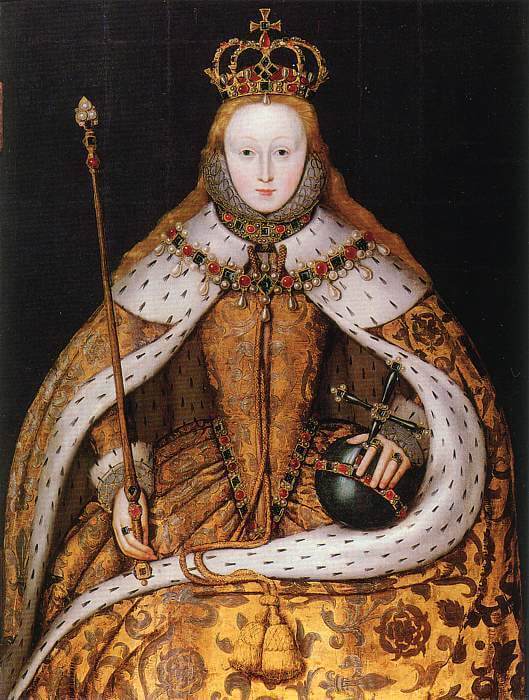
The name was borne by several saints and European royalty. Among the most notable bearers were, St. Elizabeth of Hungary, a 12th-century Hungarian princess who was known for her acts of kindness and charity toward the poor and Queen Elizabeth I of England, including the current reigning Queen, Elizabeth II.

The name Isabel/Isabella are relatives, but have becomes so far apart from its original source, that they often occur concurrently in many European countries with Elizabeth, hence is why I shall devote a different post to Isabel/Isabella, but I shall cite her several times in this article as a variation whenever needed.

I believe one of the reasons why Elizabeth has been a long time favorite, is because of her versatility. She can be shortened to a variety of different nicknames, especially in English. The most popular are: (I have cited the ones that have commonly been used as independent given name with a black club)

Bess, Bessie, Beth♣, Bets, Betsy, Bet, Bettie/Betty, Bezzy, Bit, Bitsy, Biz, Buffy, Elisa♣, Elise♣, Elle♣, Eliza♣, Ella♣, Ellie, Elsa♣, Elsie♣, Ibbie, Lib, Libby, Lilly, Lisa♣, Liz, Lizzie, Liza♣, Tetty, Tibby and Tizzy.

Other forms of the name include:

Latinate Forms
Forms found in Latinate/Romance languages

  • Sabela (Asturian)
  • Elisabèt, Lisabèt (Bearnais)
  • Elisabet (Catalan)
  • Babette (French: originally a diminutive form, used as independent given name, now considered extremely dated)
  • Élisabeth (French)
  • Élise (French)
  • Lise (French)
  • Lisette (French: originally a diminutive form but exclusively used as an independent given name)
  • Bettina (Italian)
  • Elisa (Italian/French/Portuguese: appears in Boccaccio’s Decameron as the name of one of the female story tellers).
  • Elisabella (Italian: obscure)
  • Elisabetta (Italian/Romansch)
  • Elisa (Italian/Sardinian/Spanish)
  • Elisanna/Elisena (Italian: obscure)
  • Elisetta (Italian)
  • Lelisa (Italian: obscure)
  • Lisa (Italian/Spanish)
  • Lisella (Italian: obscure)
  • Lisena (Italian: obscure)
  • Lisetta (Italian)
  • Lisina/Lisinda (Italian: obscure)
  • Lisanna (Italian)
  • Elisabetha (Late Latin)
  • Elizabetta (Liguru: a minor language spoken in Italy)
  • Elisabeta/Elisèu/Eliso (Occitanian)
  • Elisabete/Elisete/Elsa (Portuguese)
  • Babèu/Eisabèu/ Lisabèu (Provencal: Babeu is a diminutive)
  • Elisabeta (Romanian/Spanish)
  • Lisabetta (Romansch/Corsican)
  • Lisabbetta (Sicilian)
  • Isabel/Ysabel (Spanish/Aragonese/Catalan/Galician/Portuguese)

Germanic Forms
Forms used in Germanic languages

  • Elsabe (Afrikaans)
  • Liesel (Alsatian)
  • Elisabet (Danish/Faroese/Swedish/Norwegian)
  • Elsebeth (Danish)
  • Else (Danish)
  • Lise (Danish/German)
  • Lis (Danish/Norwegian/Swedish)
  • Lisbet (Danish/Norwegian/Swedish)
  • Lisbeth (Danish/German)
  • Els (Dutch: a diminutive form, occasionally used as an independent give name)
  • Elsa (Dutch/German/Swedish)
  • Liesbeth/Lijsbeth (Dutch)
  • Liesje (Dutch)
  • Eliza (English: originally a diminutive, exclusively used as an independent given name)
  • Elsba/Elsbet/Elsuba/Elusbet (Faroese)
  • Elspa (Faroese)
  • Lisabet/Lisbet (Faroese)
  • Elsebe/Elsche/Eske/Telsa (Frisian)
  • Bettina/Bettine (German: a borrowing from the Italian)
  • Elisa (German: a borrowing from Romance languages)
  • Elisabeth (German/Dutch)
  • Elise (German/Danish/Dutch/English/Norwegian: a borrowing from the French)
  • Elli (German: diminutive form, occasionally used as an independent given name)
  • Elsbeth (German/Swiss-German dialectical form)
  • Ilsa/Ilse (German/Dutch: initially a diminutive form, popularly bestowed as an independent given name, now considered dated. il-SEH)
  • Lies/Liesa/Liese (German/Dutch)
  • Liesel/Liesl (German: originally a diminutive form, used as an independent given name, now considered dated)
  • Lilli (German: originally a diminutive form, used as an independent given name due to its association with the flower)
  • Lisa/Lise (German/Dutch/English/Swedish/Danish/Norwegian)
  • Sabeth (German: obscure)
  • Aileisabaiþ (Gothic)
  • Elísabet (Icelandic)
  • Ellisif/Ellisiv (Norwegian)
  • Lieken, Lüke, Lücken (Plattdeutsch)
  • Bettan (Swedish: originally a diminutive form, occasionally used as an independent given name, but now considered dated)
  • Lisen (Swedish: originally a diminutive form, used as an independent given name)

German diminutive forms are Betti, Elis, Elli, Elschen, and Lieschen.

Slavic Forms
Forms used in Slavic speaking countries

  • Elisaveta Елисавета (Bulgarian)
  • Elizabeta (Croatian)
  • Alžběta (Czech: alzh-BYEH-tah)
  • Eliška (Czech: originally a diminutive form, used as an independent given. eh-LEESH-kah)
  • Elisabeti Елїсабеть (Old Church Slavonic)
  • Eliza (Polish: eh-LEE-zah)
  • Elżbieta (Polish: elsh-BYEH-tah)
  • Halszka (Polish: archaic. HAHLSH-kah)
  • Halżbieta (Polish: archaic. halsh-BYEH-tah)
  • Elizaveta/Yelizaveta Елизавета (Russian)
  • Jelisaveta (Serbian)
  • Alžbeta (Slovak)
  • Ažbeta (Slovene)
  • Betina (Slovene)
  • Elica (Slovene: originally a diminutive form, used as an independent given name. eh-LEET-sah)
  • Elisa/Elis (Slovene)
  • Elizabeta/Elizabet (Slovene)
  • Elza (Slovene)
  • Jelisava (Slovene)
  • Lizabeta (Slovene)
  • Špela (Slovene: originally a diminutive form, exclusively used as an independent given name. SHPEH-lah)
  • Hilža (Sorbian)
  • Lisaveta/Yelysaveta (Ukrainian)

Czech diminutive forms are Běta, Bětka, Bětuška, Betynka, Bětuše, Betyna, and Líza. Slovakian diminutives include: Beta, Betka, Betuška, Betinka, Betuša and Betina. Polish diminutive forms are Bieta, Ela (the most prevalent), Elka, Elunia and Elżunia. Slovene diminutives are: Beta, Beti, Betika, Ela, Eli, Elzi, Špelca, Špelica, Špelka, Jelica, Lili, and Lizika.

Baltic Forms
Forms used in the Baltic States

  • Eliisabet (Estonian)
  • Elts (Estonian)
  • Etti (Estonian)
  • Ilze (Estonian)
  • Liisa/Liisi/Liis (Estonian/Finnish)
  • Liisu (Estonian)
  • Eliisa (Finnish)
  • Elizabete (Latvian)
  • Līze/Lizina (Latvian)
  • Elžbieta (Lithuanian)
  • Eliissá/Liisá/Liissá (Saami)

Celtic Forms
Forms used in Celtic based languages

  • Elesbed (Breton)
  • Eilís (Irish: IE-leesh)
  • Ealisaid (Manx: ALE-is-sed)
  • Ealee (Manx)
  • Ealish (Manx)
  • Ealasaid (Scottish)
  • Elspeth (Scottish)
  • Bethan/Betsan (Welsh)

Other forms

  • Elizabeta (Albanian)
  • Ilizabith إليزابيث (Arabic)
  • Il-Shvai ܐܠܝܫܒܥ \ܐܠܝܫܒܚ (Aramaic)
  • Elsapet (Armenian)
  • Yeghisapet (Armenian)
  • Zabel (Armenian)
  • Elixabete/Elixabet/Elizabete (Basque: former are pronounced eh-LEE-sheh-BEH-tah and eh-LEE-shah-Bet)
  • Elixi (Basque: eh-LEE-shee)
  • Elisheba (Biblical Hebrew)
  • Eliso ელისო (Georgian)
  • Lizi (Georgian)
  • Elisavet Ελισαβετ(Greek: Modern)
  • Zeta (Greek: Modern)
  • Ilsipat (Greenlandic)
  • Elikapeka (Hawaiian)
  • Elisheva (Hebrew: see Hebrew script above)
  • Lizzamma (Hindi/Indian)
  • Erzsébet/Orzebet (Hungarian: ER-zhey-bet)
  • Aley/Aleyamma/Aleykutty (Malayalam)
  • Eli/Eliamma (Malayalam)
  • Elizabetta (Maltese)
  • Erihapeti (Maori)
  • Elizabet (Turkish)

Hungarian nicknames includes Bözsi, Erzsi (ER-zhee), and Zsóka (ZHO-kaw).

Medieval Forms
Forms no longer in usage from Medieval Europe

  • Ysabel/Ysabet (Catalan, Valencia, 16th-century)
  • Elisaued (Cornwall, England, 10th-century)
  • Elizabez (England, 13th-century)
  • Lylie/Lilion (England, 13th-century, possibly nicknames)
  • Elisota (England, 14th-century)
  • Elseby (Finland)
  • Isabelot (France, Paris, 13th-century)
  • Yzabé (France, Bordeaux, 15th-century)
  • Besina (14th-century Italy, Venice, possibly a diminutive form)
  • Isabetta (Italy, Florence 15th-century)
  • Bechte (Germany, 15th-century, most likely a diminutive form)
  • Beth (Germany, 15th-century, diminutive form)
  • Bettlin (Germany, 15th-century, probably a diminutive form)
  • Bytzel (Germany, 15th-century, diminutive form)
  • Els (Germany, 15th-century, diminutive form)
  • Elsslein (Germany, late 15th-century)
  • Elsslin (Germany, 15th-century, probably a diminutive form)
  • Eltzabet (Germany, late 15th-century)
  • Lyse (Germany, 15th-century, diminutive form)
  • Elsebeth (Germany, 15th-century)
  • Elzebeth (German, in Silesia, 14th-century)
  • Nele/Neleke (German, in Silesia, 14th-century, most likely than not, diminutive forms)
  • Elysant (Normandy, 1190)
  • Helisent (Normandy, 1221)
  • Isabellis (Normandy, 12th-century)
  • Ysabels/Yzabels/Yzabela (Occitan, Saint Flour, 14th-century)
  • Elitze (Sweden, 15th-century)
  • Elsika/Elsiko/Elzeke (Sweden, 15th-century)
  • Elsby/Elzeby (Sweden, 16th-century)
  • Aleseta (Switzerland, Sion, 14th-century)

Name-days are: November 17 and November 19.

Catherine/Katherine

Gender: Feminine
Origin: Debated
Meaning: Debated

Katherine and Catherine have to be one of the quintessential female classics of the Western World, according to the United States Social Security Administration’s popularity charts, Katherine has not fallen out of the top 100 for over a 100 years. She has remained a staple, bouncing the lowest to 105th position in 1938 and bouncing the highest to the 25th place in 1991. She currently ranks in as the 45th most popular female name in the United States (2008). Her elder English and French counterpart, Catherine, comes in slightly lower, but has remained fairly high in the American charts since 1880. Her highest position being at # 18 in 1914 and then again in 1917 and came in the lowest just this past year, ranking in at # 149.

In other countries, the rankings of Katherine are as follows:

# 78 (Canada-BC, 2008)
# 63 (Chile, 2006)

Her popularity in other incarnations are as follows: (divided alphabetically by cited country)

Katharina (# 8, Austria, 2008)
Catalina (# 3, Chile, 2006)
Kateřina (# 7, Czech Republic, 2008)
Katrin (# 6, Faroe Islands, 2008)
Aikaterini (# 3, Greece, 2004)
Katrín (# 4, Iceland, 2004-2007)
Katie (# 2, Ireland, 2008)
Kate (# 10, Ireland, 2008)
Karin (9th most popular female name among Palestinian Christians in Israel, 2004)
Katharina (# 5, Liechtenstein, 2008)
Katerina (# 10, Macedonia, 2006)
Katie (# 1, Northern Ireland, 2008)
Yekaterina (# 1, Russia-St. Petersburg, 2003)
Yekaterina (# 6, Russia-Moscow, 2007)
Katie (# 8, Scotland, 2008)
Katarina (# 7, Serbia, 2005)
Katarína (# 4, Slovakia, 2004)
Kaitlyn (# 10, United States-Combined Spellings, 2007)

As for the etymology of the name, it has always been popularly believed to mean “pure” but its history and origins are far more complicated and muddled. There are several theories as to its derivations and linguistic origins, the most popular are that it is either derived from the Greek  word, ΚαΘαροσ, (katharos), meaning, “pure”, or the Greek Εεκατερινε, (Hekaterine), a feminine form of the Greek, Hekáteros, meaning “each of the two; singly.” It has also been suggested that it is a form of the Greek goddess name, Hecate, which means “from a far”, or it is possibly from the Greek word, αικια (aikia) meaning, “torture; injurious treatment.” According to Behindthename, another theory suggests that it could be from a Coptic name meaning “my consecration of your name.”

The name was introduced into Western Europe after European Crusaders encountered the Christians of the Middle East, among them, the devotion of a popular 4th-century, Christian saint was discovered, St. Katherine of Alexandria. According to legend, the saint was spiked and tortured on a wheel after refusing to deny her Christian convictions and converting several members of the Alexandrian royal family to Christianity. Her cult was very popular among Christians in Syria, many centuries before her story even reached Europe. After its introduction, European Latin scholars assumed that the name was associated with the Greek Katharos meaning “pure.”

The name was first recorded in England in 1196. It was thereafter an extremely popular name in Christian Europe.

Catherine has several name-days, but the most popular, and the most widely celebrated during the Middle Ages, took place on November 25th. There is an old French celebration that took place on November 25th.  It was a day for unmarried women, twenty-five years and older, (labelled Catherinette’s in French). They would make caps, attend balls and crown the local St. Catherine of Alexandria statue with a custom hat. This was to ensure that the saint would provide the single ladies a partner by the end of the year. The term “capping st. Catherine” was used in reference to a single woman 25 years and up. This tradition died out somewhat, but remains a popular festivity among hat-makers and dress-makers even till today, particularly in the 2nd arrondisment of Paris. Any women who is single, working in the fashion industry, 25 years old and older, can attend a ball in a specially made hat, and go to the City Hall to present their creations for judging.

Though the term is a bit old fashioned, catherinette is a French word used to refer to a single women who is 25 years and older.

Other notable bearers, place and things include:

Catherine of Aragon

Catherina is the name of a crater on the moon, named for St. Catherine of Alexandria.

The Monastery of St. Catherine’s in Sinai Egypt, which is said to be the oldest Christian monastery and boasts one of the largest collections codices and manuscripts in the world.

St. Katherine Municipality lies in the North Sinai Governorate of Egypt, its city is St. Katherine’s.

Saint Catherine of Siena (1347-1380), a renowned Catholic saint, theologian, Doctor of the Church and tertiary of the Dominican order. She was known for her mystical experiences and her papal counseling.

St. Catherine of Bologna (1413-1463) another Italian saint, she is considered the patron saint of Bologna, artists and against temptations.

Catherine of Aragon (1485-1536) the first wife of Henry VII of England. Actually, Henry went on to marry two other Catherines, Catherine Howard and Catherine Parr.

St. Kateri Tekakwitha (1656-1680) was a Catholic Algonquin woman affectionately termed Lily of the Mohawks, she was also the daughter of a chief. At a young age she was ravished by the scars of small-pox and lived a life of devotion till she died at the age of 24.

Now to delve into her sundry variations.

Latinate Forms

Variations from various Romance based languages

  • Catèlena (Artapan)
  • Catin/Catineta/Catinon (Bearnais)
  • Caterina (Catalan/Italian/Spanish)
  • Catalina (Corsican/Gascon/Occitanian/Spanish)
  • Catherine (French)
  • Katia (Italian: a borrowing from the Russian but very popular in Italy)
  • Rina (Italian diminutive form, used as an independent given name)
  • Catharina (Late Latin)
  • Catarina (Portuguese/Occitanian/Galician/Romansch)
  • Cátia (Portuguese: originally a diminutive form or either a Portugeusized form of the Slavic Katya, particularly common in Brazil, where it was most likely introduced by Russian and Ukrainian immigrants)
  • Catarino (Provencal)
  • Ninoun (Provencal: originally a diminutive, now becoming more common as an independent given name)
  • Cătălina/Ecaterina (Romanian)
  • Catinca (Romanian: a romanianized form of the Russian diminutive, Katinka, used as an independent given name)
  • Catina (Romanian/Sicilian)
  • Catrina (Romanian)
  • Catrina/Chatrina (Romansch)
  • Caderina/Catellina (Sardinian)

Obscure French diminiutives are Catherinette, Trinette and Rinette.

Germanic Forms
Variation from various Germanic based languages

  • Caja (Danish)
  • Catharina/Cathrine/Katarina/Katherina (Danish/Norwegian/Swedish)
  • Karen (Danish)
  • Karin (Danish/Norwegian/Swedish)
  • Katharine (Danish)
  • Katrina/Katrine/Kathrina/Kathrin (Danish)
  • Trine (Danish)
  • Catharina (Dutch/Swedish)
  • Cato (Dutch)
  • Kaatje (Dutch)
  • Katelijne/Katelijn (Dutch)
  • Katrien (Dutch)
  • Katrijn (Dutch)
  • Nienke (Dutch)
  • Tineke (Dutch: originally a diminutive form, used as an independent given name)
  • Toos/Truus (Dutch: initially diminutive forms, used as independent given names)
  • Trijn/Trijntje (Dutch)
  • Kate/Katie (English: originally diminutive forms, now often used as independent given names in most English speaking countries)
  • Katherine/Karen (English)
  • Katarina/Katrin (Faroese/Danish)
  • Katrina (Faroese)
  • Kaja (Frisian)
  • Käthe/Caatje (Frisian)
  • Katryntje (Frisian)
  • Keetje (Frisian)
  • Nine/Nynke (Frisian)
  • Cathrin/Catrin/Kathrin (German)
  • Carin/Karin/Karina/Karine (German/Swedish/Norwegian/Danish)
  • Katarina/Katerine/Katharina (German)
  • Kathrein (German)
  • Katinka (German/Dutch: Germanized form of the Russian diminutive, Katenka)
  • Katja (German)
  • Trina (German)
  • Kaðlín (Icelandic: kahth-LEEN)
  • Karín (Icelandic)
  • Kata/Katarína/Katrín (Icelandic)
  • Kett (Lëtzebuergesch)
  • Kaia (Norwegian)
  • Kari (Norwegian)
  • Trina (Plauttdeutsch)
  • Cajsa/Kajsa (Swedish)
  • Katarina (Swedish)
  • Reina (Yiddish)

Obscure German diminutive forms are Käthchen and Trinchen. A Swiss German dialectical diminutive is Käti. English diminutive forms are Cat, Cathy, Kate, Kathy, Katie, Kay, Kiki, (also used in Sweden and Norway), Kit and Kitty.

Celtic Forms
Variations from various Celtic based languages

  • Katarin (Breton)
  • Katell/Kattelig (Breton: latter is pronounced kah-tel-LEEK)
  • Katik (Breton: kah-TEEK)
  • Katou (Breton: kah-TOO)
  • Cáit/Cáitín (Irish)
  • Catraoine/Caiterína (Irish)
  • Caitlín (Irish)
  • Caitria/Caitrín (Irish)
  • Caitríona (Irish)
  • Cathleen/Kathleen (Irish: anglicized form of Caitlin)
  • Catreena/Catreeney (Manx)
  • Catrìona (Scottish)
  • Cadi (Welsh)
  • Catrin (Welsh)

Slavic Forms
Variation used in Slavonic based languages

  • Kacjaryna (Belorusian: kahts-yah-REE-nah)
  • Ekaterina (Bulgarian/Macedonian/Russian)
  • Kateřina (Czech: kah-teh-ZHEE-nah)
  • Katarzyna (Polish: kah-tah-ZHIH-nah)
  • Jekaterina/Yekaterina (Russian)
  • Katarina (Serbo-Croatian/Slovenian)
  • Katarína (Slovakian)
  • Katica (Slovenian: originally a diminutive form, now used as an independent given name. kah-TEET-sah)
  • Katja (Slovenian: originally a diminutive form, now used as an independent given name. KAHT-yah)
  • Katherine/Kateryna (Ukrainian)

Russian Diminutives include: Katenka, Katiusha and Katya, Czech pet forms are,Káťa, Kačka, Káča, Kačí, Kačenka, Kača, Kačaba, Kačík, Kačuda, Kaťulka, Katerinka, Katica, Katja, Katka, Katla, Katuška and Rina. The most popular diminutive form in Poland is Kasia (KAH-shuh), but there is also Kachna, Kaśka, Kasienka and Kasiunia. Serbo-Croatian diminiutive forms are Kata, Kate (final E is pronounced), Katica, Katja, Katarincica and Rina. A Bulgarian diminutives is Katriška.Ukrainian diminutives are: Katrusya, Katya and Katerynka. Belorusian diminutive forms are Kasja and Katra.

Baltic Forms
Various forms used in the Baltic States

  • Kaarin (Estonian)
  • Kadi/Kadri/Kadrin (Estonian)
  • Kairi/Kari (Estonian)
  • Kaisa/Kaisu (Estonian/Finnish)
  • Katre/Katri/Katrin (Estonian)
  • Triina/Triin/Triinu (Estonian)
  • Kaija (Finnish)
  • Kata (Finnish)
  • Katariina (Finnish/Estonian)
  • Kati (Finnish)
  • Katja (Finnish)
  • Katri/Katriina (Finnish)
  • Riina (Finnish)
  • Jekaterina (Latvian)
  • Kate (Latvian: final E is pronounced)
  • Katrīna (Latvian)
  • Trine (Latvian: final E is pronounced)
  • Katerina/Katrina (Lithuanian)
  • Katrė (Lithuanian)
  • Katryna (Lithuanian)
  • Kotryna (Lithuanian)

Other Languages

  • Katarina/Katjusha/Katerina/Katha (Albanian)
  • Gadara/Gadarine/Kadara/Kadarine (Armenian)
  • Karine (Armenian)
  • Katalina (Basque)
  • Katalin (Basque/Hungarian)
  • Katarin (Basque)
  • Ekaterina (Georgian)
  • Kattak (Greenlandic)
  • Aikaterine/Aikaterini (Greek Modern)
  • Katerina (Greek Modern)
  • Katina (Greek Modern)
  • Kakalina/Kalena/Kalina (Hawaiian)
  • Kathani (Hindi/Arabic)
  • Katarina (Hungarian/Turkish)
  • Kasari (Japanese)
  • Katarina (Maltese)
  • Kataraina (Maori)
  • Kateri (Mohawk)
  • Gáddjá (Saami)
  • Gáhte (Saami)
  • Gáhteriinná/Káhtariinná (Saami)
  • Gáre/Káre (Saami)
  • Gáren (Saami)
  • Kasrin ܟܐܣܪܝܢ (Syriac/Assyrian)
  • Akaterina (Turkish)

Hungarian diminutive forms include Kata, Kati, Katica, Katinka, Kató, Katóka, Kitti and Koto.


Medieval Forms
Variations used in the Middle Ages and are most likely out of usage
  • Catelinòta (Bearnais)
  • Cathelinen (Dutch, 14th-century)
  • Verkateline (Dutch, 13th-14th centuries)
  • Catelina/Catelin/Catlin (English 12th-century)
  • Cattel/Cattle/Catin (English 12th-century)
  • Katelina/Kateline/Katelin/Katlin (English 12th-century)
  • Caterina/Katerina/Katerine (English 14th-century)
  • Kateryna/Kateryn (English 15th-century)
  • Catant (French, obscure medieval diminutive form)
  • Cateline/Catelot/Caterine (French in Paris, 13th-century, the final T on Catelot is silent).
  • Cathereau (French; obscure medieval form; KAH-teh-RO)
  • Kateline/Katerine (French, in Paris, 13th-century)
  • Ka(e)therlin/Ketlin/Keterlin/Ketterlin (German 15th-century)
  • Keth/Ketherlein (German 15th-century)
  • Katusch/Kethe/Keterlyn (German in Silesia, 13th-century)
  • Kaþareina (Gothic, extinct Germanic language)
  • Quataryna/Quatalina (Provencal, 16th-century)
  • Kaithren (Scottish, 15th-century)
  • Katrein (Scottish, 16th-17th-centuries)
  • Kadrin (Swedish 12th-century)
  • Karinae (Swedish 12th-15th centuries)
  • Katena (Swedish 14th-century)
  • Kättilö (Swedish 14th-century, though may also be a corruption of the Old Norse Katla)


There are a few masculine forms, the Italian Caterino, Catterino, Cattalino, Catinu (Sicilian dialectical form), and the Romanian Cătălin.