Joseph, Josephine

Gender: Masculine
Origin: Hebrew יוֹסֵף
Meaning: “He shall add; God shall add.”
Eng (JOH-sef)

The name is derived from the Biblical Hebrew male name, יוֹסֵף (Yosef).

In the Old Testament, the name is borne by the first son of Rachel and the eleventh son of Jacob. After being sold off as a slave by his brothers, Joseph ended up in Egypt, later becoming an important advisor to the pharoah.

In the New Testament, it is borne by the husband of the Virgin Mary. Known as St. Joseph among Catholics, he is a particularly revered saint among Italian Catholics, considered the patron saint of stepfathers and carpenters.

Another important character with this name in the New Testament, is Joseph of Arimathea, a disciple of Christ and also the man who provided a burial spot for Jesus after his death.

The name has always been very prevalent throughout Europe and the Middle East.

In the United States, its popularity can be due to several factors: it was common among both various Christian and Jewish immigrants. The name is even very common among Muslim families.

Currently, Joseph is the 20th most popular male name in the United States, (2010). In fact, Joseph has never ranked outside of the Top 20. Common English nicknames are Joe and Joey. His rankings in other countries are as follows:

  • # 1 (Yusif, Azerbaijan, 2012)
  • # 1 (Yusuf, Turkey, 2010)
  • # 2 (Yusuf, Tajikistan, 2009)
  • # 2 (Youssef, Tunisia)
  • # 3 (Yousef, Arab-World, 2011)
  • # 4 (José, Equitorial Guinea, 2011)
  • # 5 (Joosep, Estonia, 2011)
  • # 5 (Isle of Man, 2009)
  • # 5 (Yousouf, Israel, among Muslim and Christian boys, 2010)
  • # 5 (José, Philippines, 2011)
  • # 5 (Jose, Puerto Rico, 2010)
  • # 7 (Youssef, Morocco)
  • # 8 (Josip, Croatia, 2010)
  • # 8 (Yosef, Israel, among Druze boys, 2004)
  • # 9 (Yosef, Israel, among Jewish boys, 2010)
  • # 14 (Giuseppe, Italy, 2010)
  • # 15 (England/Wales, 2010)
  • # 16 (Joseph/Giuseppe, Malta, 2010)
  • # 29 (Northern Ireland, 2010)
  • # 36 (New Zealand, 2010)
  • # 37 (Ireland, 2010)
  • # 41 (Australia, NSW, 2010)
  • # 41 (József, Hungary, 2010)
  • # 43 (José, Spain, 2010)
  • # 44 (Scotland, 2010)
  • # 51 (José, United States, 2010)
  • # 62 (Josef, Sweden, 2010)
  • # 68 (Josip, Bosnia & Herzegovina, 2010)
  • # 68 (Josep, Catalonia, 2010)
  • # 71 (José, Catalonia, 2010)
  • # 74 (Canada, BC, 2010)
  • # 149 (France, 2009)

Other forms of the name include:

  • Josef (Afrikaans)
  • Isuf (Albanian)
  • Jozef/Jozif (Albanian: Zef is a diminutive form)
  • Sepp (Alsatian)
  • Hovsep Հովսեփ (Armenian)
  • Yūsuf/Youssef/Yussef يوسف, (Arabic)
  • Yusif/Yusuf/Usub (Azeri)
  • Joseba/Josepe (Basque)
  • Joseph ДЖО́ЗЕФ (Belarusian/English/German/French)
  • Josip (Bosnian/Croatian: Joso, Jozo and Joško are diminutive forms)
  • Jusuf (Bosnian)
  • Yosif Йосиф (Bulgarian)
  • Josep (Catalan, Pep is a common diminutive form)
  • Ghjaseppu (Corsican)
  • Jozèf (Creole/Haitian)
  • Josef (Czech)
  • Joep (Dutch: originally a diminutive form, now used as an independent given name)
  • Joop (Dutch: originally a diminutive form, used as an independent given name)
  • Joost (Dutch: originally a diminutive form, now used as an independent given name)
  • Jozef (Dutch)
  • Joseph (English/French/German)
  • Joséphin (French: obscure)
  • Joosep (Estonian)
  • Jósef (Faroese)
  • Jooseppi (Finnish)
  • Juuso (Finnish)
  • Bepùt/Bepi/Bepo (Fruilian)
  • Xosé (Galician)
  • Ioseb იოსებ (Georgian)
  • Ioses/Joses Ιωσης (Greek: Biblical)
  • Iōséph Ἰωσήφ/Iosepos, Iosipos Ιώσηπος (Greek: Modern)
  • Yosef יוסף (Hebrew)
  • Isuppu (Hindi)
  • József (Hungarian: Jóska is the diminutive form)
  • Yusuf/Yusup/Ucup (Indonesian)
  • Giuseppe (Italian: diminutive forms are Beppe, Peppe and Peppino)
  • Giuseppino (Italian)
  • Pino (Italian: diminutive form now used as an independent given name)
  • Seosamh (Irish-Gaelic)
  • Ujöp (Ladino)
  • Iosephus/Josephus (Latin)
  • Jāzeps (Latvian)
  • Gioxeppe (Ligurian)
  • Joep (Limburgish)
  • Juozapas (Lithuanian)
  • Juozas (Lithuanian)
  • Giüsèpp (Lombard: Pèpp and Bèpp are diminutive forms)
  • Ousep/Ousef/Yosef (Malayalam)
  • Ouseppachen/Kochaappu (Malayalam)
  • Ġużeppi (Maltese: Ġużi, Ġuż, Peppi, Pepp, Żeppi and Żepp are diminutives)
  • Hohepa (Maori)
  • Jupp (Moselfrench)
  • Josef (Norwegian)
  • Josèp (Occitanian)
  • Iosifu Іѡсифъ (Old Church Slavonic)
  • Yūsuf/Youssef/Yussef يوسف, (Persian)
  • Joosef (Plattdeutsch)
  • Józef (Polish)
  • Gèseppe (Puglian)
  • Jüppes/Jüppke (Ripoarisch)
  • Iosif (Romanian)
  • Gisep (Romansch)
  • Iosif/Osip Иосиф (Russian)
  • Jisepu (Sardinian)
  • Josif Јосиф (Serbian)
  • Seòsaidh (Scots-Gaelic)
  • Giuseppi (Sicilian)
  • U’Seppi (Sicilian)
  • Zefel/ Zeflik (Silesian)
  • Jozef (Slovakian)
  • Jožef/Jože (Slovene)
  • Sefer (Swabian)
  • José (Spanish/Portuguese: Pepe and Pepito are the diminutive forms)
  • Yusup/Usup/Ucup (Sudanese)
  • Yoseppu (Tamil)
  • Yusuf (Turkish)
  • Yosyp (Ukrainian)
  • Josep (Valencian)
  • Juxepe (Venetian: diminutives are Bepi and Bepin)
  • Joseff (Welsh)
  • Yissl/Jayzl/Yussel (Yiddish)

Bavarian diminutive forms are Pepi, Perperl, SeppSeppiSeppl and Söpp.

Other German diminutives include: Seb, Seffi and Beppal is a Swiss-German diminutive form.

A Rheinish diminutive is Jupp.

Czech diminutives are: Pepík, Pepek, Pepan and Pepin.

Dutch short forms are Jef, Zef and Jos.

A common Hebrew short form is Yosi.

Italian diminutives and its dialectical forms include: Scepp (Calabrian); Pepp’, Pè, Peppiniéllo, Peppì, Peppinié (Campanese); Gioxe, Bepi, Bepin (Ligurian); Gepe and Pinin (Piedmontese); Seppud, Bapèpp, Peppo, Peppin, G’sip, Giusè, Pinucc, Peppon, ‘Mbà Peppe and P’pen (Puglian); Peppe and Pippo (Sicilian); Bepi and Beppe (Tuscan) and  Bepìn and Bepo (Venetian).

Standard Italian diminutives are: Bepi, Beppe, Beppino, Geppetto, Geppino, Peppe, Peppenuzzo, Peppi, Peppino, Peppinello, Peppiniello, Peppinetto, Peppo, Peppuccio, Pino Pinello, Pinuccio, Peppone, Pippo Puccio and Seppe.

Portuguese diminutives include: Zé, Zézinho, Zéca and Zécinha.

Slovakian diminutives are: Jožko, Jojo and Dodo.

Slovene short forms are: Pepe, Pepi and Pepc.

A common Spanish compound name is José Maria

Its more common feminine form of Josephine became prevalent throughout Europe at the end of the 18th-century and at the beginning of the 19th-century, due to the popularity of Josephine Bonaparte, (1763-1814), the wife of Napoleon.

Originally, Joséphine was a French diminutive form of Josèphe. Joséphine became the standard form around the same time Josephine Bonaparte became famous and has remained the more common French feminine form of Joseph, since.

Currently, in the United States, she is the 186th most popular female name, (2010). In the Netherlands, she was the 153rd most popular female name, (2010).

Other feminine forms include:

  • Jozefina (Albanian)
  • Josepa (Catalan: diminutive is Pepa)
  • Josipa (Croatian)
  • Josefa (Czech/Portuguese/Spanish)
  • Josefina (Czech)
  • Jozefien (Dutch)
  • Joetta (English)
  • Josephina/Josephine (English)
  • Josefiina (Finnish)
  • Josée (French)
  • Josèphe (French)
  • Joséphine (French)
  • Josette (French)
  • Josefine (German/Danish)
  • Josepha (German)
  • Iosiphina Ιωσηφίνα (Greek: Modern)
  • Jozefa (Hungarian/Slovene)
  • Jósefína (Icelandic)
  • Seosaimhín (Irish-Gaelic)
  • Giosetta (Italian)
  • Giuseppa/Giuseppina (Italian)
  • Iosephina (Latin)
  • Ġużeppa (Maltese: Ġuża is the diminutive form)
  • Józefa (Polish)
  • Józefina (Polish)
  • Jožefina/Jožefa/Joža (Slovene)
  • Jožica (Slovene: originally a diminutive form, now used as an independent given name)
  • Josefa/Josefina (Spanish)
  • Josefin/Josefine (Swedish)
  • Yosipa/Osipa/Yuzefa (Ukrainian)

Croatian diminutive form is Pepica.

Czech diminutives are: Pepa, Pepca, Pepicka, Pepina, Pepka, Jóža, Jožka and Jóžin.

Common English short forms for Josephine include: Fifi, Jo, Jody, Jojo, Josie and Posey.

Common French diminutive forms are Fifi and Fifette.

German diminutives are Pepa.

Italian diminutives are: Giusy, Pina, Pinuccia, Pinella and Pippa.

Slovene diminutive form is Pepca

Marie-Josée is a common French compound form.

Designated name-days are March 19 and May 1.

Edward

Gender: Masculine
Origin: Anglo-Saxon
Meaning: “wealthy guardian.”
Eng (ED-werd; ED-word)

The name is composed of the Anglo-Saxon elements, ead (rich; waelthy) and weard (guard). Due to the popularity of St. Edward the Confessor, the name was one of the few Anglo-Saxon names to have survived the Norman Conquest and to have spread to non-Anglo-Saxon countries.

The name has remained common in the British Royal Family.

As of 2010, Edward was the 43rd most popular male name in England/Wales. His rankings in other countries, in his various forms, are as follows:

  • # 3 (Eetu, Finland, 2011)
  • # 20 (Duarte, Portugal, 2010)
  • # 21 (Eduard, Romania, 2009)
  • # 28 (Edoardo, Italy, 2010)
  • # 61 (Australia, NSW, 2010)
  • # 72 (New Zealand, 2010)
  • # 79 (Eduardo, Spain, 2010)
  • # 94 (Eduard, Catalonia, 2010)
  • # 97 (Edvard, Norway, 2010)
  • # 136 (United States, 2010)
  • # 153 (Eduardo, United States, 2010)
  • # 169 (Scotland, 2010)
  • # 226 (Édouard, France, 2009)

Other forms of the name include:

  • Eduard Էդվարդ Эдуард ედუარდ Эдуард Едуард (Afrikaans/Albanian/Armenian/Belarusian/Bosnian/Catalan/Croatian/Czech/Dutch/Estonian/Georgian/German/Romanian/Romansch/Russian/Slovak/Ukrainian)
  • Ēadƿeard (Anglo-Saxon)
  • Idward إدوارد (Arabic: used primarily among Christians)
  • Edorta (Basque)
  • Edvard Эдвард Эдвард Едвард (Belarusian/Czech/Faroese/Finnish/Russian/Scandinavian/Serbian/Slovene)
  • Edouarzh (Breton)
  • Eduardu (Corsican/Sardinian)
  • Edward (English/German/Polish)
  • Eetu (Finnish)
  • Eetvartti (Finnish)
  • Etuate (Fijian)
  • Édouard (French)
  • Edo (Frisian)
  • Edzard (Frisian)
  • Eide (Frisian/Plattdeutsch)
  • Eido (Frisian)
  • Eduardos Εδουάρδος (Greek)
  • Ekewaka (Hawaiian)
  • Eduárd (Hungarian)
  • Edvárd (Hungarian)
  • Eðvarð(ur) (Icelandic)
  • Játvarður (Icelandic)
  • Éadbhard (Irish)
  • Éamonn (Irish)
  • Edoardo (Italian)
  • Eduardo (Italian/Spanish/Portuguese)
  • Odoardo (Italian: Tuscan)
  • Eduards (Latvian)
  • Edvards (Latvian)
  • Eduardas (Lithuanian)
  • Edvardas (Lithuanian)
  • Eruera (Maori)
  • Dwardu (Maltese)
  • Duarte (Portuguese)
  • Eideard (Scottish)
  • Eudard (Scottish)
Common diminutives include:
  • Edi (Albanian/Bosnian/Croatian/Slovene/Spanish)
  • Ed (Dutch/English/German/Scandinavian)
  • Eddie (English/German/Scandinavian)
  • Ned (English)
  • Ted (English)
  • Teddy (English)
  • Edek (Polish)
  • Dadu (Portuguese)
  • Du (Portuguese)
  • Edu (Portuguese)
  • Lalo (Spanish)
In recent years, especially in the United States, the name has possibly risen in popularity due to the Twilight Series, in which one of the protagonists is named Edward.
There are a few feminine forms, namely the Spanish and Italian, Eduarda, which I shall save for another post.

Otto

Gender: Masculine
Origin: German
Meaning: “wealth; riches.”
(OT-to)

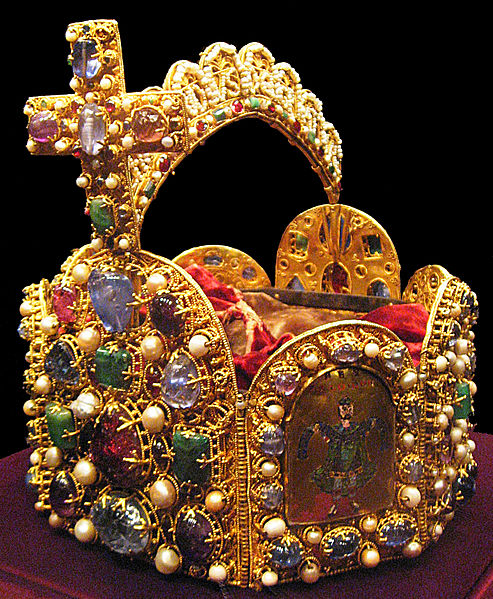
The name is derived from the early Germanic Audo. It seems like the quintessential German name, but has been out of favor in German speaking countries until recently, where it seems to be experiencing a revival. The name was borne by four Germanic kings. The first being Otto I, (also known as Otto the Great), the first Holy Roman Emperor. It was also borne by German Chancellor Otto von Bismarck (1815-1898).

To American ears, it might sound a bit quirky, but to hipsters, he might just make the perfect brother to little Gunnar or Atticus. Otto exhibits a certain quality of strength. It wouldn’t be bad to give him a chance, at least as a middle name. Otto has not ranked in the US top 1000 since 1974, when he came in at a measly #969. The highest he has seemed to rank in American history was in 1909, when he came in at a decently high #144. No doubt due to a large influx of German and Swedish immigrants at the time.

In Germany, he hasn’t made it to the top 500 as of yet, but I am happily able to report that, recently, while browing through some German birth announcement from Berlin, I was happy to see a few newborn Ottos, either as their first name or middle name.

Update: As of 2011, Otto was the 30th most popular male name in Finland and in 2010, he was the 92nd most popular male name in Sweden.

In Germany and Austria, his designated name day is September 7th. Similar variations include Otmar which means “possesing of fame” and Ottokar meaning “wealthy and vigilant.” If Otto feels too short for you, then you might want to consider Otmar or Ottokar as a formal version.

Other forms of the name include:

  • Ot (Catalan)
  • Ota (Czech)
  • Oto (Czech/Slovak)
  • Otto (Dutch/Estonian/Faroese/Finnish/Frisian/German/Polish/Romansch/Sami/Scandinavian)
  • Ode (English)
  • Eudes (French)
  • Odilon (French/Portuguese)
  • Odon (French/German)
  • Odo (German)
  • Udo (German)
  • Ortu (Greenlandic)
  • Ottó (Hungarian/Icelandic)
  • Oddo (Italian)
  • Ottone (Italian)
  • Ottorino (Italian)
  • Rino (Italian)
  • Audo (Old High German)
  • Odo (Old High German)
  • Otton (Polish)
  • Otte (Scandinavian)
  • Oton (Slovene/Spanish)

A common Czech diminutive form is Otik.

Feminine forms are so numerous that I shall save those for a separate entry, stay tuned 🙂

Amanda, Amandus

Origin: Latin
Meaning: “must be loved.”

If you are an 80s baby like myself, Amanda is just another run-of-the-mill, female name that was ever-present throughout high school and college.

Amanda is the name of your lab partner in chemistry, she is the head cheerleader, she might even be your best friend, or maybe its your own name.

In the United States, the name is ubiquitous among females between the ages of 35 and 16. Between 1976 and 1992, she ranked in the top 10. Today, her popularity has gone down to # 188, (2010). She is borne by a variety of young female celebrities. There is Mandy Moore (b.1984) and Amanda Bynes (b.1986) just to name a few. While I personally never got the chance to appreciate this name, I understand the appeal for the parent of the 1970s and 80s. She has a romantic quality about her, the same appeal as the Shakespearean Miranda, and while the latter often gets shortened to the tom-boyish Randy, Amanda is easily shortened to the more girlish Mandy. Poor Amanda has also spun off her own teasable play on words from “I need Amanda Love”  to “it’s a man, duh!”

Amanda is a Latin female gerundive verb meaning “to be loved”, the female form seems to have first appeared on a birth record from Warwickshire England in 1212.  Other than that, she was seldom heard of other than in plays and poems till the end of the 20th-century. It is the name of a character in Colley Cibber’s play Love’s Last Shift (1696).

There is a masculine form, Amandus, which is the name of two saints and is currently rising in popularity in Scandinavia. Amandus might make an interesting choice for the hipster parent looking to such names as Augustus and Atticus for inspiration.

As of 2011, Amanda was the 21st most popular female name in Finland. Her rankings in other countries are as follows:

  • # 18 (Chile, 2010)
  • # 25 (Sweden, 2010)
  • # 32 (Brazil, 2010)
  • # 52 (Norway, 2010)
  • # 53 (Hungary, 2010)

Other forms of the name include:

  • Amanta (Catalan)
  • Amandina (Corsican/Italian)
  • Amanda (Czech/Dutch/English/Estonian/Finnish/German/Hungarian/Icelandic/Italian/Latvian/Polish/Portuguese/Romanian/Scandinavian/Slovene/Spanish)
  • Manda (Estonian/Finnish/German/Hungarian/Scandinavian)
  • Mandy (English: occasionally used as an independent given name)
  • Manja (Finnish)
  • Manta (Finnish)
  • Amande (French: also the French word for almond)
  • Amandine (French)
  • Mendi (Hungarian)
  • Amândia (Portuguese: obscure)

Male forms are:

  • Amand (German/Czech/Polish/Slovak)
  • Amandino (Italian)
  • Amando (Spanish/Italian)
  • Amândio (Portuguese: obscure)

Its designated name day in most countries is October 26. Common English nickname is Mandy. The nickname has been the subject of such songs as Barry Manilow’s Mandy and the 1919 rag-time by Irving Berlin.

Czech diminutives forms are Ama, Amka and Amaduška.

Gertrude

James C. Christensen

Gender: Feminine
Origin: German
Meaning: “spear strength.”
Eng (GER-trood); Ger (ger-TROO-də)

She has adorable nickname options; Trudy, among others. She has a similar feel to other current vintage trend-setters such as Matilda and Eleanor, yet Gertrude, for the most part remains unloved. Like Hildegard and Brynhild, this is one of those names where I often ask myself: why not?

She is strong, vintagy and no-frills, as mentioned before, she has tons of adorable nickname options. Is she really anymore grandmotherly or old sounding than Emma, Eleanor, Matilda or even Abigail? We have gotten used to hearing these names but I remember a time when the above names were considered “too old” until it took one famous person to use them and voila, they are automatically endearing and trendy.

Ok, I’ll get off my high horse and get onto the what the name is really all about.

Portrait of Gurtruydt van Leyden.
by James C. Christensen via http://www.greenwichworkshop.com/saintsandangels/17.htm

Gertrude is composed of the Germanic roots, ger (spear) and þruþ (strength).

The name was borne by several illustrious medieval women, two of whom are saints. Gertrude of Nivelles (626-659) is revered as the patron saint of cats! I am not quite sure how she came to be known as a feline patron, but she was the daughter of Pepin I and was supposed to be married off at the age of ten, but steadfastly refused, insisting that she would only marry Christ. After the death of her father, her wealthy mother constructed Gertrude her very own convent, making her the abbess. She is also invoked against mice and rat infestations.

Another Gertrude is Gertrude the Great (1256-1302) a German nun, mystic and great theologian of her time.

The name has been borne by German and Dutch royalty alike.

Gertrude is pretty well-known in the English-speaking world, but actually never experienced much usage. It was introduced into England in the 15th-century by Dutch settlers, where it was ocassionally used. It appears in Shakespeare’s Hamlet (1600) as the name of the hero’s mother.  It was used sparingly in the United States at the beginning of the 20th-century, possibly being introduced by German immigrants. The highest it ever ranked was in 1898 coming in as the 573rd most popular female name.

In the United States, its most famous bearer is Gertrude Stein (1874-1946), famous writer and poet.

As of 2011, her Finnish form of Kerttu was the 20th most popular female name in Finland and Geertruida came in as the 491st most popular female name in the Netherlands, (2010). Meanwhile, its Dutch diminutive offshoot of Geertje is the 368th most popular female name in the Netherlands, (2010).

Other forms of the name include:

  • Gartred (Cornish)
  • Gertruda (Croatian/Czech/Lithuanian/Polish/Romansch/Slovene)
  • Geerdina (Dutch)
  • Geertje (Dutch)
  • Ge(e)rtruida (Dutch)
  • Geertrui (Dutch)
  • Gertrude (Dutch/English/French/German/Italian/Platdeutch)
  • Trudy (Dutch/English/German)
  • Truus (Dutch)
  • Kelli (Estonian)
  • Kertu (Estonian)
  • Kärt (Estonian)
  • Ge(i)rtrúð (Faroese)
  • Gortra (Faroese)
  • Jertru (Finnish)
  • Jerttu (Finnish)
  • Järtty (Finnish)
  • Kerttu (Finnish)
  • Kerttuli (Finnish)
  • Gesa (Frisian)
  • Gesche (Frisian/Platdeutsch)
  • Geesche (Frisian)
  • Gesina (Frisian)
  • Gerta (German)
  • Gertraud (German)
  • Gertrud (German/Scandinavian/Romansch)
  • Gertrúd (Hungarian)
  • Jerta (Hungarian)
  • Geirþrúður (Icelandic)
  • Jarþrúður (Icelandic)
  • Geltrude (Italian)
  • Gertrūda (Latvian)
  • Gjertrud (Norwegian)
  • Jartrud (Norwegian)
  • Geretrudis (Old High German)
  • Geirþrúðr (Old Norse)
  • Jarþrúðr (Old Norse)
  • Gertrudes (Portuguese)
  • Gearte (Sami)
  • Kearte (Sami)
  • Gertrúda (Slovak)
  • Trudla (Sorbian)
  • Gertrudis (Spanish)
  • Gardrud (Swedish)
  • Gertru(n) (Swedish)
  • Hjertrud (Swedish)

Common German and English short forms are Gertie and Trudi/Trudy.

Artwork

Vera

Gender: Feminine
Origin: Slavic Вера
Meaning: “faith.”
Eng (VARE-uh; VEER-uh); Rus (VYEH-rah)

The name is most likely a borrowing from the Russian female name, Vera, which comes directly from the Slavic meaning, “faith.” Initially, it was a Russian-Orthodox cognate of the Greek female name, Pistis (Faith), the name of an early Christian saint and martyr.

The name has been used outside of Eastern Europe since at least the 19th-century. It is unclear how the name caught on in the English-speaking world, but by the time of its popularity the name was usually associated with the Latin, verus, (true), verses, the Slavic, (hope).

Its usage in Albania may also be connected with the Albanian word, verë, (Summer).

The name is borne by several famous Russian women, including silent film actress, Vera Kholodnaya (1893-1919) and theatre actress, Vera Komissarzhevskaya (1864-1910); Chemist, Vera Popova (1867-1896).

Other notable bearers include: English writer and feminist, Vera Brittain (1893-1970); Ukrainian-American actress, Vera Farmiga (b.1973); American actress, Vera Miles (b.1929); American fashion designer, Vera Neumann (b.1907) and American fashion designer, Vera Wang (b.1949).

The highest the name ranked in the United States was in 1919 when she came in as the 65th most popular female name; its popularity may have had something to do with Vera Kholodnaya who died the same year, but this is only my personal conjecture.

As of 2010, Vera is the 675th most popular female name in the United States. Her rankings in other countries are as follows:

  • # 13 (Veera, Finland, 2011)
  • # 39 (Sweden, 2010)
  • # 45 (the Netherlands)

Other forms of the name include:

  • Vera Вера (Albanian/Bulgarian/Croatian/Dutch/English/Faroese/German/Hungarian/Icelandic/Italian/Latvian/Lithuanian/Macedonian/Portuguese/Russian/Scandinavian/Serbian/Slovene)
  • Věra (Czech)
  • Veera (Estonian/Finnish)
  • Véra (French)
  • Verina (Italian)
  • Verutė (Lithuanian)
  • Wiara (Polish)
  • Wiera (Polish)
  • Verá (Sami)
  • Viera (Slovak)
  • Wera (Swedish)
  • Vira Віра (Ukrainian)

Diminutive forms include:

  • Verica (Czech/Serbian)
  • Verika (Czech)
  • Verochka (Russian)
  • Verunka (Czech)
  • Verusha (Russian)
  • Vierunka (Czech)
  • Vieruška (Czech)
  • Věrka (Czech)
  • Věruna (Czech)
An obscure Latin masculine form is Verus.

Ada(h)

Ada is sweet, vintagy and classy, with her two syllable Victoriana quality, ending and beginning in a vowel, Ada(h) may just be the next Ava. The Finns have already beaten us, as she is currently the 3rd most popular female name in Finland, (Aada, 2011).

In English, she is usually pronounced like (AY-duh), but in the rest of the world, she is (AH-dah).

Her origins are various; in the form of Adah, she can be traced to the Hebrew Bible, being a relative of the modern Hebrew unisex name, Adi, meaning (jewel), in ancient Hebrew her meaning is more around the lines of “a piece of jewelry; adornment or; ornament.”

In the Bible, Adah appears twice as the name of a wife of Lemech and again as the name of the wife Esau.

Ada without the H is usually traced to the Germanic element, adal, meaning, “noble,” making her a relative of Adela, Adelaide and Adeline. Among royalty and nobility alike, she was a popular choice across Medieval Europe, being borne by St. Ada, a 7th-century Abbess; Ada of Atholl (d.1264); Ada, Countess of Holland, (1188-1223) and; Ada de Warenne, mother of two Scottish kings and the wife of Henry of Scotland, (1120-1178).

In more contemporary times, Ada is usually associated with Ada Lovelace (née Augusta Ada Byron 1815-1852), the daughter of Lord Byron and a renowned Mathematician, she is often credited by modern scientists as being the first Computer Engineer.

The name could also be of Turkic or Greek origins, but its meaning is lost. It was borne by a female governor of Caria (377-326 B.C.E.) a loyal ally of Alexander the Great.

In the United States, Ada was quite popular around the turn of the 19th-century. The highest she ranked in U.S. naming history was in 1880, coming in as the 33rd most popular female name. By 1985, she completely fell off the charts and reappeared in the top 1000 in 2005. As of 2010, she currently ranks in as the 552nd most popular female name in the United States, (2010). Her rankings in other countries are as follows:

  • # 3 (Aada, Finland, 2011)
  • # 72 (Ada, Norway, 2010)

Other forms of the name include:

  • Ada (Dutch/Estonian/Faroese/Finnish/French/Frisian/German/Greek/Hungarian/Icelandic/Italian/Latvian/Lithuanian/Polish/Plattdeutsch/Scandinavian/Slovene)
  • Aada (Estonian/Finnish)
  • Ade (Estonian)
  • Aata (Finnish)
  • Aatukka (Finnish)
  • Ata (Finnish)
  • Adina (Italian)
  • Ádá (Sami)
  • Adica (Slovene)

Sæbjørn

Gender: Masculine
Origin: Old Norse
Meaning: “sea-bear.”
(SYE-byern)

The name is composed of the Old Norse elements, saer (sea) and bjørn (bear).

As of 2010, Sæbjørn is the 8th most popular male name in the Faroe Islands.

Other forms of the name include:

  • Sæbjørn (Faroese/Norwegian/Old Norse)
  • Sæbjörn (Icelandic)
  • Sebjørn (Norwegian)
  • Sebjörn (Swedish)

Runar

Gender: Masculine
Origin: Old Norse
Meaning: “secret army.”
(ROO-nar)

The name is composed of the Old Norse elements, rún (secret; lore) and herr (army).

As of 2010, its Faroese and Icelandic form of Rúnar was the 8th most popular male name in the Faroe Islands.

Ryynari is the Finnish form.