Sarita

Gender: Feminine
Origin: Spanish; or Indian सरिता
Meaning: “river.”
Ind (SAH-ree-tuh); Sp (sah-REE-tah)

The name could either be an Indian female name, meaning, “river” or it could be a Spanish diminutive form of Sarah.

As of 2010, Sarita was the 7th most popular female name in the Faroe Islands.

Ida

Gender: Feminine
Origin: German
Meaning: “labour; work.”
Eng (I-dah); Germ/Swe (EE-da)

The name is derived from the Germanic element, id, meaning “work; labour.”

The name was introduced into England by the Normans and fell out of usage by the late Middle Ages. It experienced a revival during the 19th-century, possibly due to the heroin of the Lord Tennyson poem, The Princess (1847); which was later adapted into a play entitled Princess Ida.

The name could also, likewise, be related to the Greek female name, which is found in Greek Mythology as the name of a nymph who nursed Zeus. Mount Ida on Crete is supposedly named after her.

In Hinduism it is the name of an earth goddess.

The name does not appear in the U.S. top 1000, the highest she has ranked in U.S. naming history was between 1880-1882, where she consecutively came in as the 7th most popular female name. She is, however, the 2nd most popular female name in Denmark, (2010). Her rankings in other countries are as follows:

  • # 7 (Norway, 2010)
  • # 8 (Iida, Finland, 2010)
  • # 17 (Sweden, 2010)

The name was borne by St. Ida of Lorraine (1040-1115); Russian ballerina, Ida Rubenstein (1885-1960); First Lady Ida Saxton McKinley (1847-1907); African-American Journalist and Early Civil Rights Activist, Ida B. Wells (1862-1931).

Ida is used across Europe, and rarely deviates from the original form. In Finnish she is rendered as Iida, and there is a very archaic Polish form of Hida, no longer in usage.

The designated name-days are: February 16 (Slovakia); March 14 (Czech Republic); September 4 (Germany, Norway, Poland); September 14 (Finland/Sweden).

Source

  1. http://www.behindthename.com/name/ida

Tara

Gender: Feminine
Origin: Various
Eng (TAH-rah; TARE-uh)

The name can be of several different origins and meanings depending on the bearer of the name. It could be from the Sanskrit and Hindi तारा meaning, “star.”

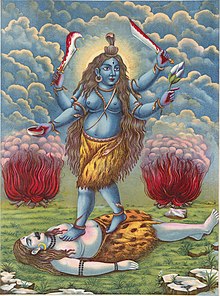
In Hinduisim, Tara (Devi), a Mahavidya of Mahadevi, Kali or Parvati is a star goddess, she is considered one of the Great Wisdom goddesses.

In Buddhism, Tara is the name of a tantric meditation goddess.

In the Hindu epic, the Ramayana, it is the name of the wife of the monkey king, Vali, who married the king’s brother, Sugriva, after Vali’s death.

Among the Irish Diaspora, the name was usually used in reference to the sacred hill, Tara, where the high kings were usually coronated. In this case, the name is an anglicized form of the Gaelic, Teamhair, meaning, “elevated place.”

It may have been further popularized in the English-speaking world by the 1936 Margaret Mitchell novel, Gone with the Wind, in which the plantation is called Tara, in honour of the hill in Ireland.

In South Slavic languages, it could either be a contracted form of Tamara, or it could be taken from the name of the river which runs through Montenegro and Bosnia and Herzegovina. It is also the name of a river in Russia.

As of 2009, Tara was the 30th most popular female name in Croatia. Her popularity in other countries are as follows:

  • # 50 (Slovenia, 2010)
  • # 62 (Ireland, 2010)
  • # 77 (Northern Ireland, 2010)
  • # 126 (Netherlands, 2010)
  • # 774 (United States, 2010)

It is also the name of a sea goddess in Polynesian Mythology.

Gita

Gender: Feminine
Origin: Hindi गीता
Meaning: “song.”
(GEE-tah)

The name comes directly from the Hindi word for song and is usually used in reference to the Sacred Hindu Text,  Bhagavad Gita.

The name could also be a Croatian, Hungarian, Slovakian and Slovenian short form of Margita.

As of 2009, Gita was the 94th most popular female name in Croatia.

Uma

The name could be of a few different etymologies depending on the bearer of the name.

In Hinduism, it is an epithet for the goddess, Parvati, said to be derived from the Sanskrit exclamation,  उ मा  (u ma) meaning, “oh don’t” a reprimand from the goddess’ mother from severe austerity.

It could also be a Hebrew name meaning, “nation.”

The name is currently very popular in Bosnia & Herzegovina, coming in as the 81st most popular female name, (2010). In this case, the name may be a borrowing from the Sanskrit or it could be a short form of the Bosnian female name, Umihana, which is a Bosnian form of the Islamic epithet, Umm-ul-Banin, meaning (mother of several sons). Umm-ul-Banin was the epithet of Fatimah, the second wife of Ali. Another Bosnian form is Umija.

The name was brought to the spotlight, in the Western World, via American actress, Uma Thurman (b.1970). In the actress’ case, she was named for the Tibetan Dbuma Chenpo, the db being silent.

Indira

Gender: Feminine
Origin: Sanskrit  इन्दिरा Индира
Meaning: “beauty.”
(IN-deer-uh)

The name comes from the Sanskrit element, Indu, meaning “beauty.” In Hinduism, it is one of the many names of the goddess Lakshmi.

The name was popularized outside of India via India’s first female Prime Minister, Indira Ghandi (1917-1984).

The name has become quite popular in Central Asia, particularly in the former Soviet Republics after Indira Ghandi had established close relations with the Soviet Union. The name is currently the 6th most popular female name in Tajikistan, (2010).

It is also occasionally used in Bosnia, Croatia and Serbia.

Sabina

Gender: Feminine
Origin: Latin Сабина
Meaning: “Sabine.”
Eng (suh-BEE-nah; suh-BYE-nah).

The name comes from a Roman cognomen, Sabinus, which was usually carried by people of Sabine origins. The Sabines were an ancient Italic people who lived in Central Italy and whose culture was eventually absorbed by the Romans.

The name was borne by an early Christian saint and martyr. It is also the name of a region in Italy which takes its name from the tribe.

It is also the name of a genus of tree, which has probably further popularized the name.

The name could also be from the Arabic, sometimes transliterated as Sabeen, meaning “follower of another religion” and was said to be a name given to the Prophet Mohammed by non-Muslims.

Currently, Sabina is the 13th most popular female name in Kazakhstan, (2010), while Sabine is the 392nd most popular in the Netherlands, (2010).

The name is used throughout Europe and Central Asia.

Other forms include:

  • Sabien (Dutch)
  • Sabine (German/French)
  • Szabina (Hungarian)
  • Sabeena (Indian)
  • Savina (Italian)

Masculine forms include:

  • Sabino (Italian)
  • Savino (Italian)
  • Sabinus (Latin)
  • Sabin (Romanian)

A Czech and Polish diminutive is Sabinka.

Tarana, Təranə

Gender: Feminine
Origin: Persian
Meaning: “melody; music.”
(tuh-RAH-nuh)

The name is derived from an Old Persian source meaning, “music; melody.”

As of 2010, it was the 10th most popular name among the general female population in Azerbaijan.

It is sometimes transliterated as Tarana and in this case is the name of a is a type of composition in Hindustani classical vocal music.

Paul

Gender: Masculine
Origin: Latin
Meaning: “short; small; humble; few.”
Eng (PAWL)

The name is derived from the Latin Roman family name, Paulus, which could translate as meaning, “small, short; humble; few.”

Paul and his various forms has to be one of the most common male names used throughout the Christian world. It has been used equally among Orthodox Christians, Roman Catholics and Protestants.

Its most famous bearer was Paul of Tarsus, whose real name was Saul. St. Paul, as referred to by the Roman Catholic and Eastern Orthodox Churches, is attributed as being the author of much of the New Testament.

The name was borne by several popes, royals and saints thereafter.

Currently, its Germanic form of Paul is the 8th most popular male name in Germany, (2011). His rankings in other countries are as follows:

  • # 13 (Austria, 2010)
  • # 22 (France, 2009)
  • # 41 (Romania, 2009)
  • # 90 (Ireland, 2010)
  • # 130 (Scotland, 2010)
  • # 178 (United States, 2010)
  • # 485 (Netherlands, 2010)
His foreign equivalents rankings are as follows:
  • # 3 (Pablo, Spain, 2010)
  • # 4 (Páll, Faroe Island, 2010)
  • # 4 (Pau, Catalonia, 2010)
  • # 17 (Paweł, Poland, 2010)
  • # 26 (Pablo, Chile, 2010)
  • # 29 (Pavel, Czech Republic, 2010)
  • # 31 (Pablo, Catalonia, 2010)
  • # 44 (Pau, Spain, 2010)
  • # 91 (Pál, Hungary, 2010)
  • # 144 (Pablo, France, 2009)
  • # 202 (Paolo, France, 2009)
  • # 361 (Pablo, United States, 2010)

Other forms of the name include:

  • Pali (Albanian)
  • Paulë (Albanian)
  • Boulos/Bulos بولس (Arabic)
  • Faulus (Aramaic)
  • Boghos Պողոս (Armenian)
  • Poghos Պողոս (Armenian)
  • Paul (Basque/Dutch/English/Estonian/German/French/Romanian/Scandinavian/Silesian)
  • Paweł Павeл (Belarusian/Polish)
  • Polus (Berber)
  • Paol (Breton)
  • Pavel Павел (Bulgarian/Czech/Russian/Slovene)
  • Pavolo (Calabrian)
  • Pavulu (Calabrian)
  • Pau (Catalan/Occitanian)
  • Pawl (Cornish/Welsh)
  • Paulu (Corsican/Sardinian/Sicilian)
  • Pavao (Croatian)
  • Pavle პავლე Павле (Croatian/Georgian/Macedonian/Serbian)
  • Pavo (Croatian)
  • Palle (Danish)
  • Poul (Danish)
  • Pauwel (Dutch)
  • Paavel (Estonian)
  • Paavo (Estonian/Finnish)
  • Páll (Faroese/Icelandic)
  • Paavali (Finnish)
  • Pauli (Finnish)
  • Pol (Flemmish/Romansch)
  • Paale (Frisian)
  • Pals (Frisian)
  • Paulus पौलुस (Frisian/Hindi/Latin)
  • Pay (Frisian)
  • Powles (Frisian)
  • Pouw (Frisian)
  • Pauli (Fruilian)
  • Pódhl (Gaelic)
  • Pól (Gaelic)
  • Paulo (Galician)
  • Pavlos Παυλος (Greek)
  • Pāl पॉल (Hindi)
  • Pál (Hungarian)
  • Pósa (Hungarian)
  • Paolo (Italian/Portuguese)
  • Paolino (Italian/Portuguese)
  • Paulinus (Latin)
  • Pāvils (Latvian)
  • Paulius (Lithuanian)
  • Povilas (Lithuanian)
  • Paol (Lombard)
  • Paulose (Malayalam)
  • Pawl (Maltese)
  • Pawlu (Maltese)
  • Payl (Manx)
  • Paora (Maori)
  • Pål (Norwegian/Swedish)
  • Pavel (Romanian)
  • Paulin (Romansch)
  • Polet (Romansch)
  • Polin (Romansch)
  • Pulegn (Romansch)
  • Pàl (Scots-Gaelic)
  • Pawůł (Silesian)
  • Pavol (Slovak)
  • Pawoł (Sorbian)
  • Pablo (Spanish)
  • Paoro (Tahitian)
  • Pàul (Tuscan)
  • Pavlo Павло (Ukrainian)

For a Reference a Female forms See Paula and Paulina (soon to come)

Lina

The name is of several different origins and meanings. It could be a German and Swedish short form of any name ending in –lina.

In Lithuanian, it is the feminine form of Linas, meaning, “flax.” It is also the Estonian and Finnish word for flax, and is used as a given name in both countries.

It could also be from the Arabic لينا meaning “palm tree” or “tender.”

In Sanskrit लीना it means “absorbed; united.”

The name is also used in Chinese, being a composition of the words 丽 (Li) meaning “pretty” and 娜 (Na), meaning “elegant.”

Currently, Lina is the 7th most popular female name in Germany, (2011). Her rankings in other countries are as follows:

  • # 15 (German-speaking, Switzerland, 2010)
  • # 19 (France, 2009)
  • # 20 (Slovenia, 2010)
  • # 25 (Belgium, 2009)
  • # 36 (Austria, 2010)
  • # 61 (Netherlands, 2010)
  • # 84 (Norway, 2010)
  • # 91 (Sweden, 2010)
  • # 848 (United States, 2010)