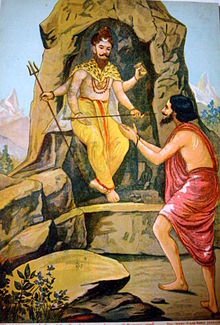
Mara

The name could be of several different origins and meanings depending on the bearer of the name. Generally, the name is mostly used in reference to its Biblical origins, when Naomi takes the name of Mara(h) (Ruth 1:20), (which in Hebrew means “bitter”) as a way to express her grief over losing her husband and sons. The same name also appears in the Exodus as the name of one of the locations which the Torah identifies as having been travelled through by the Israelites.

It could also be from Latvian mythology, spelled Māra, being the name of the supreme goddess who was associated with all feminine aspects of life. She is sometimes believed to be one and the same as Laima.

The name also appears in Slavic mythology as another name of the goddess Marzanna, the goddess of death and winter. Interestingly, it is also the name of the goddess of death in Hinduism. The two deities may have a distant connection.

In German the name is ultimately derived from a proto-Indo European source meaning “to harm” or “to rub away.” In folklore, mara were wraiths who pressed on the chests of sleeping victims, this is where the word nightmare is believed to have derived.

It is interesting to note that the name appears in the top 100 most popular female names in Germany, where it is currently the 55th most popular female name, (2011). It is doubtful, however, that the name is used in reference to its Germanic folklore origins, but is more likely used in reference to its Biblical connections.

The name could also be from the Syriac and modern Maltese meaning, “woman.”

In Hungarian and Croatian, it is used as a form of Marija.

Her rankings in other countries are as follows:

  • #79 (Croatia, 2010)
  • # 93 (Spain, 2010)
  • # 128 (Netherlands, 2010)
  • # 869 (United States, 2010)


Sonja

Gender: Feminine
Origin: Russian
Eng (SONE-yah); Germ (ZONE-yah)

The name is from a Russian diminutive form of Sophia. Among Russian-Jews, the name was often used as a Russian cognate for the Yiddish, Shayndel, though the two names are not etymologically related.

Sonia could also be from the Hindi word sona सोना  meaning “gold.”

In South Eastern Europe and Northern Europe, the name has been used as an independent given name since at least the turn of the 20th-century.

In the English-speaking world, the name was popularized by a 1917 eponymous novel by Stephen McKenna.

Currently, Sonja is the 297th most popular female name in Germany, (2011)

Other forms of the name include:

  • Soňa (Czech/Slovak)
  • Sonia (English/Italian/Portuguese/Romanian/Spanish)
  • Sonya (English/Russian)
  • Sonja Соња (Croatian/Dutch/Estonian/Finnish/German/Icelandic/Macedonia/Polish/Scandinavian/Serbian/Slovene)
  • Sonje (German)
  • Szonja (Hungarian)

The name is borne by Norwegian figure skater and actress, Sonja Henie (1916-1969).

Rohan

Gender: Masculine
Origin: Indian रोहण
Meaning: “to ascend”
(ROW-ahn)

The name is derived from the Sanskrit word, रोहण  (rohana) describing the act of ascending, mounting, riding, standing, or sitting on. It can be used to describe the act of coming into being, production or healing of a wound and it is the name of a medicinal herb.  It is also the name of a mountain in Ceylon known in English as Adam’s Peak.

Coincidentally, the name appears in J.R.R. Tolkien’s Lord of the Rings where it is the name of a place in Middle Earth meaning “horse country” in Sindarin.

It is also the name of a place in Brittany and in Malta.

Currently, Rohan is the 434th most popular male name in the Netherlands and the 536th most popular in the United States, (2010).

The feminine form is Rohana.

Sources

  1. http://www.behindthename.com/name/rohan-1
  2. http://dsal.uchicago.edu/cgi-bin/romadict.pl?query=rohana&display=simple&table=macdonell

Kali

Gender: Feminine
Origin: Indian काली
Meaning: “black; time.”
(KAH-lee)

The name comes from the Sanskrit काली (Kālī), which means “black” and is also associated with the  Sanskrit word काल (Kāla) denoting a fixed point in time.

In Hinduism, the name is borne by the goddess and destructive consort of Shiva. She is usually depicted with dark blue skin, four arms and holding a severed head.

Currently, Kali ranked in as the 535th most popular female name in the United States, (2010).

Source

  1. http://www.behindthename.com/name/kali


Arjun

Gender: Masculine
Origin: Indian अर्जुन
Meaning: “white; shining; silver.”
(AR-jun)

The name is a modern transcription of the male Indian name, Arjuna अर्जुन, which is derived from the Sanskrit meaning “white; shining; silver.” It is a cognate with the Latin word argentum.

In Hinduism, it was borne by the greatest warrior and archer on earth, the son of the god Indra and the mortal woman Kunti. His story is reminiscent of the Greek legend of Hercules.

Currently, Arjun is the 639th most popular male name in the United States, (2010).

Other forms of the name include:

Harjuna/Harjuno/Herjuno (Indonesian/Javanese)
Ranjuna (Malay)
Arjuna अर्जुन (Sanskrit)
Aruccunan அருச்சுனன் (Tamil)
Orachun อรชุน (Thai)

Source

  1. http://www.behindthename.com/name/arjuna

Mina

The name has several origins, meanings and derivatives depending on where in the world you find the bearer of the name. In the Western world, it is a female name, a contracted form of Wilhelmina and Hermina. It was always common in Germanic and Scandinavian countries, but was first introduced into the English-speaking world through Bram Stoker’s Dracula (1897).

It is also an Indian name, derived from the Sanskrit word for fish मीना , it is sometimes transliterated as Meena. In Hinduism, it is the name of the daughter of the Goddess Usha and the God Kubera.

It is also a common Persian female name, being derived from the Farsi word for “blue glass; enamel; lapis lazuli.” It also coincides with the name of a valley near Mecca, and is therefore found as feminine given name in the Arabic-speaking world. In Arabic it means “port; harbor.”

Among Coptic Christians, it is a very popular male name. It is borne by a renowned early Christian Egyptian martyr and saint, known in the Western world as St. Menas. Mīna  مينا‎‎ is its original Coptic version and according to legend, the saint’s mother heard a voice saying “amen” while praying for a pregnancy.

Currently, Mina is 41st most popular female name in Norway (2010), the 314th most popular in France (2009) and the 961st most popular in the United States (2010).

The designated name-days are: November 24 (Poland) and December 23 (Lithuania/Poland).

Other forms its masculine Egyptian counterpart include:

Menna (Catalan)
Ménas (French)
Menas (Greek)
Mena (Italian: RARE)

Source

  1. http://www.behindthename.com/name/mina-1
  2. http://www.behindthename.com/name/mina-2


Aditya

Gender: Masculine
Origin: Sanskrit, Hindi आदित्य
Meaning: “belonging to Aditi.”
(AH-deet-yah)

The name is from the Sanskrit meaning “belonging to Aditi.” In Hinduism, this term is used to describe the 7 sons of the goddess Aditi. In the singular, it is also used to describe the sun.

The name is currently the 810th most popular male name in the United States, 2010.

Source

  1. http://www.behindthename.com/name/aditya

Pranav

Gender: Masculine
Origin: Hindi प्रणव
Meaning: “to sound out loudly”

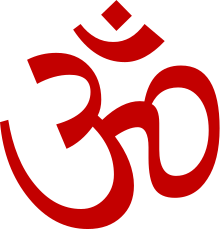
The name comes from the word for the sacred Hindu syllable (om).

The om is a common symbol used to represent Hinduism, its philosophy and its theology. It represents the name of God and the vibration of the Supreme.

Currently, Pranav is the 956th most popular male name in the United States, (2010).

Source

  1. http://www.behindthename.com/name/pranav

Sharada

Gender: Feminine
Origin: Sanskrit
Meaning: “autumnal.”
शारद
(SHUH-ruh-duh)

The name is from the Sanskrit, śārada (शारद), meaning “autumnal.”

In Hinduism, the name is used as an epithet for the goddess, Sarasvati, as autumn is her preferred season.

Other notable bearers include: South Indian actress, Sharada (b.1945); Indian playback singer, Sharda; religious Bengali figure, Sarada Devi (1853-1920) known affectionately as the Holy Mother among her adherents.

It is also the name of a temple in Kashmir, dedicated to Sarasvati (Sharda), and was once a place of great learning. This is where the Sharada script was developed and got its name.

Other transcriptions of the name include: Sharda and Sarada.

Sources

  1. http://sanskritdocuments.org/dict/
  2. http://en.wikipedia.org/wiki/Sharada_script

Rashmi

Gender: Feminine
Origin: Sanskrit
Meaning: rope; sunbeam; sunlight.”
(RUSH-mee)

रश्मी

The name is derived from the Sanskrit either meaning “rope” or “sunlight” “sunbeam.”

Sources

  1. http://www.behindthename.com/name/rashmi
  2. http://spokensanskrit.de/index.php?script=HK&tinput=rashmi&country_ID=&trans=Translate&direction=SE