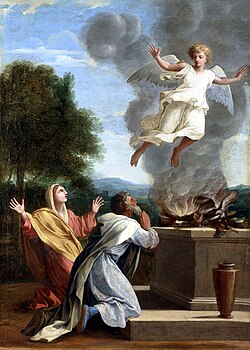
Manoah appears in Judges 13, described as a man from Zorah of the tribe of Dan. His wife is unnamed, but together they become the parents of Samson after an angelic visitation.
The name itself is derived from the Hebrew root נוּחַ (nuach) meaning “to rest, to settle, to repose, to be at ease.”
Between the 18th-century to early 20th-century, Manoah experienced some use in the U.S. and England. Common short forms were Manny, Menno and Noah.
In 2023, it appeared in the Netherlands charts for the most popular male names, though it did not rank in very high, coming in at #422.
A name forever haunted by legend and scripture, Ichabod carries an aura of solemnity and old-world eeriness. Though seldom used today, its deep Biblical roots and literary afterlife make it a quintessential Halloween name with legitimate historical pedigree.
The name appears in the Old Testament (Hebrew: אִי־כָבוֹד, ’I-Kavod), meaning “no glory” or “the glory has departed.” It is first recorded in 1 Samuel 4:21, where Phinehas’s wife, upon hearing of the Ark of the Covenant’s capture and her husband’s death, names her newborn son Ichabod to mark Israel’s loss of divine favor.
In the English-speaking world, the name came into use in the 17th-century, mainly among Puritan families.
In colonial America, one of the best-known bearers was Reverend Ichabod Wiswall (1637–1700) of Massachusetts.
The name’s haunting reputation was sealed by Washington Irving’s 1820 short story “The Legend of Sleepy Hollow.” Its lanky, superstitious schoolmaster, Ichabod Crane, pursued by the Headless Horseman, transformed the Biblical lament into a symbol of American Gothic folklore.
Irving is believed to have drawn the name from a real historical figure, Colonel Ichabod Bennett Crane (1787–1857), an officer in the U.S. Marine Corps whom the author reportedly met while stationed at Fort Pike, New York. The coincidence of name and temperament lent the fictional character an extra layer of realism — and ensured that Ichabod would forever echo through ghostly New England legend.
It is borne by several other famous early American personages,
Traditional short forms in the 18th-19th centuries were Cabe, Bud, and Buddy.
Variations: Panuel, Paniel, Peniel, Penuel, Fanuel, and Feniel
The name is from the Hebrew פְּנוּאֵל (Pĕnū’ēl) or פְּנִיאֵל (Pĕnī’ēl), meaning “face of God” or “presence of God.” It is composed of two elements פָּנִים (panim) – “face” or “presence” אֵל (El) – “God.”
In the Book of Genesis (32:30), Penuel is the name Jacob gives to the place where he wrestled with the angel of the Lord. Later, in 1 Kings 12:25, Penuel appears as the name of a city built by Jeroboam, located east of the Jordan River near the Jabbok. It is also the name of a character mentioned in 1 Chronicles 4:4.
Its Greek form of Phanuel is borne in the New Testament (Luke 2:36) by the father of the prophetess Anna, who recognized the infant Jesus in the Temple. It is also the name of an angel in the Apocrypha Book of Enoch.
The name is Hebrew, either derived from צל (tsel) (shadow) or צלל (tsalal) (to ring like a bell). In Genesis 4:19, it is the name of one of the two wives of Lamech.
Though it never became a widespread Jewish name until recently, it had usage in the Protestant Anglo world since the 16th-century and experienced mild popularity in the mid to late 19th-century. It appeared in the U.S. Top 100 between 1881 and 1886, peaking at #679. It was borne by Zillah Oakes (circ. 1870s), the namesake of the city of Zillah, Washington. It was also borne by New Zealand Politician, Zillah Smith Gill (1859-1937).
In English literature, Lord Byron used it as the name of the wife of Abel in his 1821 play, Cain. It is the name of a servant in Emily Brontë’s Wuthering Heights (1847), and the name of the titular heroin in the 1865 operetta by Australian composer, William Wilkins Russell. In recent years, it is the name of a character in Madeleine L’Engle’s, A Swiftly Tilting Planet (1978).
It may have occasionally been used as a form or short form of Cecilia.
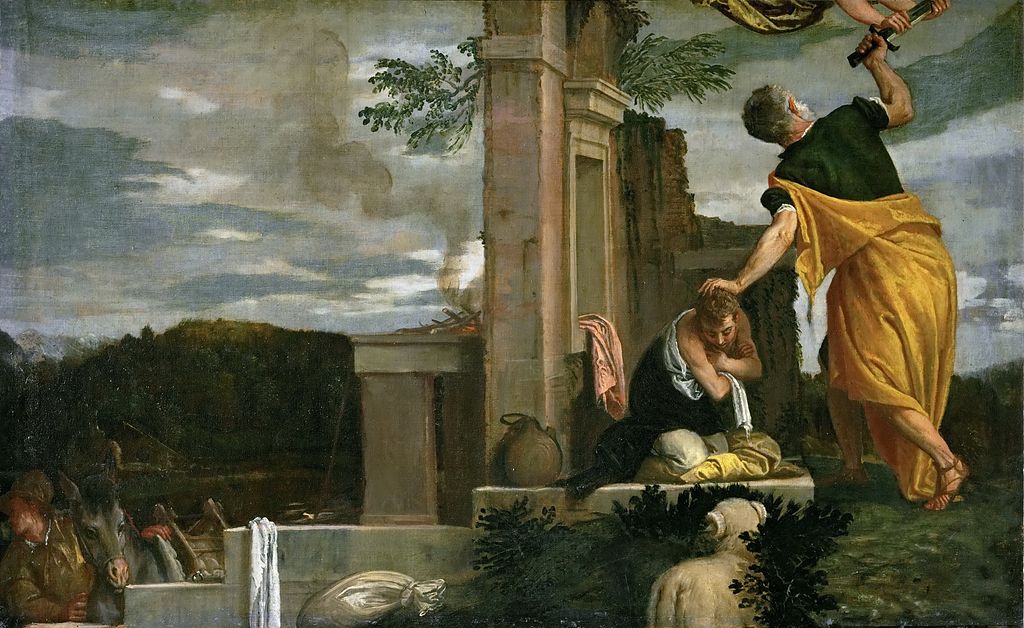
The name comes directly from the Biblical Hebrew יִרְאֶה (jireh) meaning, “to provide” or “to see.” In the Bible, it is the name of a place the where Abraham attempted to sacrifice Isaac before God intervened and provided a ram in his place. It has been in sporadic use as both a male and female given name in England and the United States since the 17th-century. It was born by a 19th-century Michigan politican, Jira Payne.
It has recently appeared in the U.S. Top 1000 Most Popular Male Names, coming in at #848 (2023). Its sudden appearance may have been popularized by the Elevation Worship and Maverick City Music song of the same name, released in 2021.
Its Spanish version of Yireh, is used as a unisex given name in Latin American countries.
The name is composed of the Hebrew elements from the Hebrew עשה (asa), “to do or make,” and אל (‘el), “God, divinity.” It is born in the Bible by 2 different characters, some allege they are the same person, a Moabite Warrior of King David and a Benjamite leader.
As of 2023, Jasiel appears in the U.S. Top 1000 Most Popular Male Names as the 939th most popular male name.
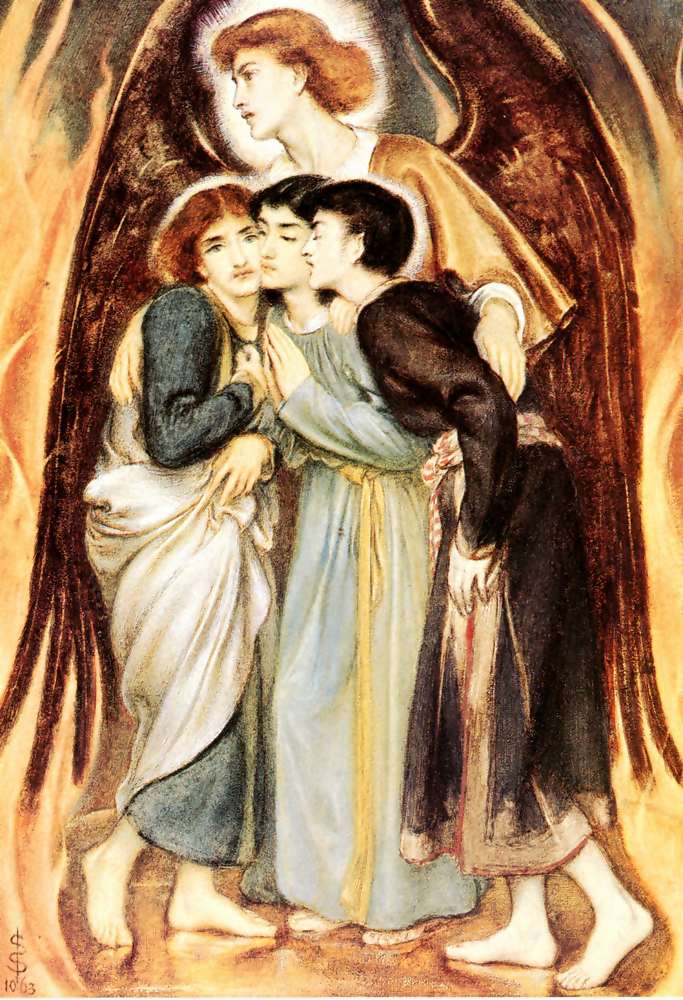
The name comes from the Hebrew meaning, “who is like God?; who is equal to God?,” “who is asked for?” and according to Hitchcock Bible names, “lent.” The name is borne by three male characters in the Bible, one mentioned in (Exodus 6:22) as one of the sons of Uzziel, the uncle of Moses and Aaron and most notably, it is the Hebrew name of Meshach (Dan. 1:11, 19) one of the three youths who refused to worship idols and were thrown in a furnace but miraculously survived.
Misael currently ranks in as the 192nd most popular male name in Mexico (2021) and the 790th most popular male name in the United States (2022).
In the Coptic Church, it is borne by St. Misael the Anchorite (7th-century CE).
Its feminine version of Mishaela is a pop song by Israeli pop singer, Achinoam Nini and has experienced sporadic usage in Israel and the English-speaking world. It is also the name of a character in Shining Force Gaiden: Final Conflict.
Pronunciation: Eng (jeh-DIAL); Port (ZHAH-dee-EL); Sp (YAH-dee-EL)
The name is composed of the Hebrew words ידע (yada’) meaning, “to know,” and אל (‘el) meaning “God.”
It is borne by three minor characters in the Old Testament, mentioned in 1 Chronicles 7:6, 1 Chronicles 11:45 and 1 Chronicles 26:2.
In recent years, its Spanish and Portuguese offshoot of Jadiel and Yadiel have been popular in Latin America. It may have been popularized by Puerto Rican reggaeton singer, Jadiel (born Ramón Alberto González Adams, 1985-2014).
Jadiel has appeared in the Brazilian Top 1000 names between 1980-2000. Jadiel has been in the U.S. Top 1000 since 2008 and currently ranks in at #878 in 2022. Yadiel appeared in the U.S. Top 1000 between 2008-2021, peaking at #850 in 2009.
The name comes directly from the Hebrew word for the cedar tree אֶרֶז. This name did not come into use as a masculine given-name among Jews until after the creation of the State of Israel in 1945. It may have been popularized by Aleksander Zederbaum (1816-1893), a Polish-Jewish journalist who founded the Hebrew language newspaper, Ha-Melitz who often used “Erez” as a pseudonym in his writings.
It is also the name of a Kibbutz and of Erez Crossing, the latter being the name of a border crossing on the Israeli-Gaza border.
The name is a Medieval Ashkenazi creation, composed of the Hebrew words keter (כֶּתֶר) “crown” and el (אֵל) “god.” It may have been a masculinized form of the popular Yiddish female name Kreindel (crown) or the Hebrew female nameAtarah(crown).
Kadriel
Kasriel
Katsriel
Katzriel
There are the modern Israeli feminized forms of Katrielle, Katriella & Katriela.
A notable bearer was Israeli ambassador to the Soviet Union, Katriel Katz (1908-1988).