David

Gender: Masculine
Origin: Hebrew
Meaning: “beloved.”

The name is derived from the Hebrew דָּוִד (Dawid), which is derived from the Hebrew word דוד (dwd) meaning “beloved.”

The name is borne in the Old Testament by King David, he is considered to be the greatest Jewish king in history, he is famous for defeating the evil Philistine, Goliath and several other endeavors mentioned in the Bible. He also plays a part in the Qu’ran and in Christian tradition, is considered an ancestor of Jesus.

In the English speaking world, the name has been in usage since the Middle Ages, it was borne by two Scottish Kings and St. Dewi (known as St. David in English) is considered the patron saint of Wales.

In the United States, the name currently ranks in as the 14th most popular male name, actually, David has been in the U.S. top 20 since 1880, and he peaked in 1960, coming in at # 1. In other countries, his popularity is as follows:

  • # 2 Davit (Armenia, 2008)
  • # 74 (Australia, 2007)
  • # 6 (Austria, 2008)
  • # 7 (Catalonia, Spain, 2008)
  • # 87 (Belgium, 2006)
  • # 53 (Canada, B.C. 2008)
  • # 31 (Chile, 2006)
  • # 64 (England/Wales, 2008)
  • # 1 (Faroe Islands, 2008)
  • # 96 (France, 2006)
  • # 6 (Hungary, 2008)
  • # 16 (Ireland, 2007)
  • # 4 (Israel, among Jewish boys, 2008)
  • #  9 Davide (Italy, 2007)
  • # 1 (Liechtenstein)
  • # 4 Dovydas (Lithuanian)
  • # 41 (the Netherlands, 2008)
  • # 51 (Norway, 2007)
  • # 8 Dawid (Poland, 2008)
  • # 4 (Romania, 2008)
  • # 27 (Scotland, 2008)
  • # 9 (Slovenia, 2005)
  • # 4 (Spain, 2008)
  • # 40 (Sweden 2007)
  • # 4 (Switzerland, among German-speakers, 2008)
  • # 6 (Switzerland, among French-speakers, 2008)
  • # 5 Davide (Switzerland, among Italian-speakers, 2008)

The David form is used in Albanian, Catalan, Croatian, Czech, Danish, Dutch, French, Galician, German, Norwegian, Portuguese, Romanian, Spanish and Swedish.

Other forms of the name are:

  • Davidi (Albanian)
  • Da’ud/Da’oud/Da’wud/Da’wood داؤود (Arabic)
  • Davit Դավիթ (Armenian)
  • Davud (Azeri)
  • Davud/Daud/Daut (Bosnian)
  • Daveth (Cornish)
  • Taavet/Taave/Taavi/Taavo/Tavo (Estonian)
  • Daavid (Finnish)
  • Taavetti/Taavi (Finnish)
  • Dáibhead/Dáibheid/Daithí/Davy (Gaelic/Irish)
  • Dawit/Dato დავით (Georgian)
  • David Δαβίδ (Greek)
  • Dávid (Hungarian/Faroese/Slovak)
  • Davíð (Icelandic)
  • Daud (Indonesian)
  • Davide (Italian: Davidino and Daviduccio are obscure diminutive forms that were occasionally used as independent given names)
  • Daudi (Kiswahili)
  • Dawid (Kurdish)
  • Dāvids/Dāvis (Latvian)
  • Dovydas (Lithuanian)
  • Davidu Давідъ(Old Church Slavonic)
  • Davud داوود (Persian)
  • Dawid (Polish: DAH-veed)
  • David Давид (Russian/Belarusian)
  • Davíd (Spanish)
  • Dàibheid/Dàibhidh/Daividh (Scottish)
  • Davud/Dâvud (Turkish)
  • Davyd (Ukrainian)
  • Dai (Welsh: a Welsh diminutive form of David, occasionally used as an independent given name)
  • Dafydd/Dewi (Welsh)
  • Dewydd (Welsh: archaic)
  • Dovid (Yiddish)
  • Dudel (Yiddish)
  • Tavel (Yiddish)

Feminine forms are:

  • Davida (English/Scottish)
  • Davina/Davinia (English/Scottish)

Designated name-days are December 29 and December 30.

Stephen

Gender: Masculine
Origin: Greek
Meaning: ” wreath; garland.”
Eng (STEE-ven); (STEF-en)

The name is derived from the Greek, Στεφανος, (Stephanos), which refers to a wreath or garland worn upon the head, hence, the name is sometimes interpreted to mean “crown.”

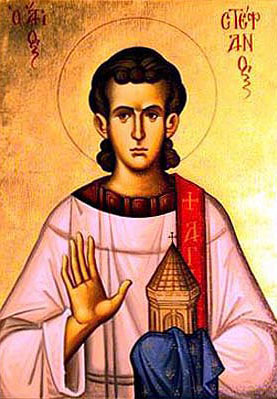
As written in the New Testament, it was the name of a deacon who was stoned to death for his beliefs and is regarded as the first Christian martyr.

The designated name-day is December 26.

In the United States, Stephen currently comes in as the 192nd most popular male name, while Steven is the 104th most popular, (2008).

Other forms of the name include:

  • Stefan/Stefaan/Stëven/Stephan (Afrikaans)
  • Shtjefën/Stefan (Albanian)
  • Istfan, إصتفان, ستيف, ستيفن (Arabic)
  • Stepanos/Stepan Ստեփանոս, Ստեփան (Armenian)
  • Tcheunne (Arpetan)
  • İstfan/Stepan (Azeri)
  • Estebe/Eztebe (Basque)
  • Esteve (Bearnais/Catalan/Occitanian/Provençal)
  • Steven (Breton)
  • Stefan Стефан (Bulgarian: Stefcho Стефчо is a diminutive form)
  • Stjepan (Croatian/Serbian: diminutive forms are Stipe and Stipo).
  • Štěpán/Štefan (Czech)
  • Stephen/Stefan/Stephan (Danish)
  • Steven/Stefaan/Stefanus/Stefan/Stephan (Dutch: Stef is a common Dutch diminutive form)
  • Tehvan (Estonian)
  • Sitiveni (Fijian)
  • Tahvo/Teppo (Finnish)
  • Tapani (Finnish)
  • Étienne (French: classic form)
  • Éstienne (French: medieval form)
  • Stéphane (French: more modern form)
  • Steffen (Frisian: used in Germany, Holland, Norway and Denmark)
  • Estevo (Galician)
  • Stefan/Stephan (German)
  • Stephanos Στέφανος (Greek)
  • Kepano/Kiwini (Hawaiian)
  • István (Hungarian: Pisti, Pisto and Isti. 30th most popular male in Hungary, 2008)
  • Stefán (Icelandic)
  • Steephan (Indian)
  • Steafán/Stiofán (Irish: Gaelic)
  • Stefano (Italian)
  • Stefanino/Stefanio/Stenio/Steno (Italian: obscure forms)
  • Stefanus/Stephanus (Latin)
  • Stefans/Stepans/Stepons (Latvian)
  • Steponas/Stepas (Lithuanian)
  • Stefan/Stevan Стефан, Стеван (Macedonian)
  • Stiefnu (Maltese)
  • Tipene (Maori)
  • Šćepan Шћепан (Montenegrin)
  • Stefanu Стефанъ (Old Church Slavonic)
  • Stefan/Szczepan (Polish)
  • Estêvão (Portuguese)
  • Ştefan (Romanian: Fane is a diminutive form)
  • Steivan/Stiafan (Romansch)
  • Stefan/Stiven/Stepan Стефан, Стивен, Степан (Russian)
  • Istevene (Sardinian)
  • Stìobhan/Stìophan/Stèaphan (Scottish: Steenie is a Scotch diminutive form)
  • Stevan Стеван (Serbian)
  • Štefan (Slovak/Slovene)
  • Esteban (Spanish)
  • Stefan/Staffan/Stephan (Swedish: Steffo is a diminutive form)
  • Êtiên (Vietnamese)
  • Stepan ஸ்டீபன் (Tamil)
  • İstefanos (Turkish)
  • Stefan/Stepan Степан, Стефан (Ukrainian)
  • Steffan (Welsh)

Stephanie is a common feminine form, in the United States, she was one of the most popular feminine names between 1972 and 1994. She ranked in at # 6, four years in a row, between the years 1984 and 1987.

As of 2008, she ranked in as the 105th most popular female name. In other countries, her rankings are as follows:

  • # 84 (Australia, 2007)
  • # 488 (the Netherlands, 2008)

Estefanía was the 77th most popular female name in Chile in 2006.

Other feminine forms include:

  • Esteveneta (Bearnais/Occitanian)
  • Štěpánka (Czech)
  • Stefana (Dutch)
  • Etiennette (French: archaic)
  • Stéphanie (French)
  • Stefanie (German/Danish/Dutch: was a very popular name in Germany during the 1980s and 90s. Germ: SHTEH-fah-nee; Dutch (STAY-fah-nee. Steffi is a common German diminutive form.)
  • Kekepania (Hawaiian)
  • Stefánia (Hungarian)
  • Stefania (Italian/Polish/Romanian: Polish diminutive forms are Stefcia and Stefa)
  • Stefanina (Italian: obscure)
  • Stefanella (Italian: obscure)
  • Stenia/Stena (Italian: obscure)
  • Szczepana (Polish)
  • Estèva (Occitanian/Provençal)
  • Štefánia (Slovak)
  • Estefanía (Spanish)

Stevie, Steff, and Steffie are the preferred English diminutives.

Emmanuel

Gender: Masculine
Origin: Hebrew
Meaning: “God is with us.”
עִמָּנוּאֵל

The name is composed of the Hebrew elements, אֵל (‘EL), meaning “God” and עִמָּנוּ (ʻImmānū), meaning “with us”. The name is a theophoric name, mentioned in Isaiah 7:14 and Isaiah 8:8. It subsequently appears again, in the New Testament, in Matthew, which is actually a quotation of Isaiah.

In Christian tradition, the reference to Emmanuel by Isaiah is believed to be a prophesy of the coming Messiah or Christ, many Jewish scholars disagree and believe that “Emmanuel” in Isaiah is in reference to either the son of Ahaz, Isaiah or Hezekiah. Regardless, the name has been common among both communities, and among Christians, the name is often enough bestowed upon a child borne around the Christmas season.

The name came into usage in the English speaking world the 16th-century, and has always been popular in the Latin speaking countries, especially in Spain and Portugal, and to a lesser extent, France and Italy.

In 2008, the name came in as the # 146th most popular male name, while Manuel stood in as the 186th most popular. Manuel was also the 40th most popular male name in Chile, and the 15th most popular in Spain during 2006.

The above form is used in French and English. Other forms include the following:

  • Amanuel (Aramaic)
  • Imanol (Basque)
  • Manel (Catalan/Portuguese)
  • Manuel (French/German/Italian/Portuguese/Romanian/Scandinavian/Spanish)
  • Emanuel (German/Czech/Dutch/Polish/Romanian/Scandinavian/Serbo-Croatian/Slovene)
  • Immanuel עִמָּנוּאֵל (German/Finnish/Hebrew)
  • Emmanouil Εμμανουηλ/Manouel Μανουηλ (Greek: Modern)
  • Manolis / Μανόλης (Greek: Modern)
  • Emánuel/Immánuel (Hungarian)
  • Emmanúel (Icelandic)
  • Imanuel (Indonesian)
  • Emanuele (Italian)
  • Emanuello (Italian: obscure)
  • Manuele (Italian)
  • Emmanuhel (Latin)
  • Emanuelis (Lithuanian)
  • Manwel (Maltese)
  • Manoel (Portuguese: Brazilian)
  • Enmanuèl (Provencal)
  • Manuèl (Provencal)
  • Immanuil Иммануил (Russian/Ukrainian)
  • Manolo (Spanish)

Feminine forms are:

  • Emmanuelle (French)
  • Manuela (German/Italian/Portuguese/Romanian/Spanish)
  • Emanuela/Emanuella (Italian)
  • Manwela (Maltese)
  • Manoela (Portuguese: Brazilian)
  • Emanuela (Spanish/Polish/Portuguese)
  • Emanuelita/Manuelita (Spanish/Portuguese: initially diminutives forms, used as independent given names)
  • Manola (Spanish/Portuguese)

Its designated name-days are March 26 (Finland/Italy/Sweden) and on December 25 (France)

Popular French diminutives are Manu (for both male and females) and Émane (Female), the English is usually Manny.

Adam

Gender: Masculine
Origin: Hebrew
Meaning: “man”

The name is found in the Old Testament as the name of the first man created by God. Whether Adam is used as a personal name or in a generic sense is up to debate, many Biblical scholars agree that the authors of Genesis were not using Adam as a personal name, but more of a generic term.

Though in modern Semitic languages, the modern word for man is many times Adam, or Ben-Adam (son of Adam), its actual etymology is also debated. Some believe it is ultimately derived from the Hebrew אדם (‘adam) meaning “red” referring either to human skin tone, or to the colour of earth, which in the Bible, is what God created Adam from. Other sources suggest that it may be related to an Akkadian source, Adamu, meaning “to make.”

The name is a popular choice among Christians, Jews and Muslims alike. In Europe, it has been in use since the early Middle Ages. Among Christians, Christ is often given the title of the “New Adam.”

Its designated name-day, along with Eve, is usually December 24.

Currently, Adam is the # 78th most popular male name in the United States. In other countries, his rankings are as follows:

  • # 35 (Australia, 2007)
  • # 28 (Belgium, 2006)
  • # 47 (Canada, BC, 2008)
  • # 8 (Czech Republic, 2008)
  • #32 (England/Wales, 2008)
  • # 34 (France, 2006)
  • # 7 (Hungary, 2008)
  • # 7 (Ireland, 2008)
  • # 10 (Israel, among Muslim boys, 2004)
  • # 1 (Israel, among Druze boys, 2004)
  • # 76 (the Netherlands, 2008)
  • # 6 (Northern Ireland, 2009)
  • # 19 (Scotland, 2008)
  • # 75 (Spain, 2006)
  • # 28 (Sweden, 2007)

In addition, the Adam form is also used in Armenian, Bulgarian, Catalan, Croatian/Serbian, Czech, Danish, Dutch, German, Icelandic, Polish, Romanian, Slovakian and Slovenian.

Other forms of the name include:

  • Adami (Albanian)
  • Ādam آدم (Arabic)
  • Adəm (Azeri)
  • Adame (Basque)
  • Adem (Bosnian/Kurdish)
  • Aadam (Estonian)
  • Ádam (Faroese)
  • Aadam/Aatami (Finnish)
  • Adám Αδάμ (Greek)
  • Akamu (Hawaiian)
  • ʼĀḏām אָדָם (Hebrew: Modern)
  • Ádám (Hungarian)
  • Ádhamh/Ádam (Irish)
  • Adamo (Italian)
  • Adamus (Latin)
  • Ādams (Latvian)
  • Adomas (Lithuanian)
  • Adamu (Old Church Slavonic)
  • Adão (Portuguese)
  • Aden/Adom (Romansch)
  • Adam Адам (Russian/Ukrainian)
  • Adàmu (Sardinian)
  • Addamu (Sicilian)
  • Aadam (Somalian)
  • Adán (Spanish, ah-DAHN)
  • Adan (Tagalog)
  • Âdem (Turkish)
  • Odam (Uzbek)
  • Adda (Welsh)

A feminine version is the Spanish and Scotch, Adamina.

A Polish diminutive form is Adaš

Adela, Adele

Gender: Feminine
Origin: Germanic/Greek
Meaning: “noble; mud; secretive.”
Eng (uh-DEL-uh); (uh-DEL)

The most popular etymology for this name is that it is from the old Germanic word adal meaning “noble” however, other sources have linked it to the Anglo-Saxon word ádela (mud) and the Greek αδελος, (adelos), meaning “hidden; secretive.”

The name was borne by a 7th-century Frankish princess, known as St. Adela, she is noted for her establishment of a monastery in Pfazel, France. It was also borne by a daughter of William the Conqueror. Another notable bearer is British pop singer Adele

Adela has not ranked in the U.S. top 1000 since 1957 and Adele since 1969.

The Adela form is used in Catalan, English, Galician, German, Polish, Romanian, Slovakian and Spanish. Other forms of the name include:

  • Ethel (Anglo-Saxon/English)
  • Adéla/Etela (Czech-Slovak)
  • Della (English contraction)
  • Adèle (French: ah-DEHL)
  • Adele (German/English/Finnish/Italian)
  • Adél (Hungarian)
  • Etela/Etelka (Hungarian)
  • Adelia (Spanish)

The designated name-days are: July 8 (Latvia), June 30/October 20/November 23 (Lithuanian), December 22 (Slovakia), December 24 (France),

Lazarus

Gender: Masculine
Origin: Aramaic/Greek

Lazarus is Biblical name that has never really caught on in the English speaking world, he has a morbid and Gothic vibe, he has that feel that belongs in an Anne Rice or Stephanie Meyer novel.

The name is derived from the Greek, Lazaros (Λαζαρος), which is a form of the Aramaic, Lazar. Lazar is in turn an Aramaic form of the Hebrew, male name, Eleazar אלעזר, Elʿāzār, meaning “God’s assistance” or “God has helped.”

I shall go into Eleazar in a separate posting, for now, I shall just focus on Lazarus and his variants, since, he seems to have created a persona all of his own.

In the New Testamant, the name Lazarus is mentioned twice, the strongest association has to be with Lazarus of Bethany, who is mentioned in the Gospel of John as a man who was miraculously resurrected from the dead by Jesus. Another Lazarus is the subject of Jesus’ parable Lazarus and Dives, (recounted in the Gospel of Luke).

In Eastern Orthodox and Catholic traditions, Lazarus of Bethany is revered as a saint, and later apocryphal accounts of his life became popular. Among Eastern Christian traditions, it is believed that Lazarus sailed off to Cyprus to evangelize the inhabitants where he later became the first Bishop Kittim, (Larnaka), other traditions have Lazarus and his sisters relocating to Provence, France, where it is said that he became the first Bishop of Marseilles.

Other forms of the name include:

  • Llàtzer (Catalan)
  • Lazar Лазарь/Лазар (Croatian/Czech/Bulgarian/Serbian/Russian/Ukrainian)
  • Lazarus (English/Danish/Dutch/German/Latin/Norwegian/Swedish)
  • Lasarus (Finnish/Swedish/Norwegian)
  • Lazare (French: lah-ZAHR)
  • Lazaros Λαζαρος (Greek)
  • Lázár (Hungarian)
  • Lazzaro (Italian)
  • Lozorius (Lithuanian)
  • Łazarz/Lazarz (Polish: WAH-zahsh/LAH-zahsh)
  • Lázaro (Portuguese/Spanish: LAH-sah-roh Latin American Spanish; LAH-thah-ro Iberian Spanish)
  • Lazár (Slovak)
  • Lasaros (Swedish)

Spanish feminine forms are Lázara and Lazarina.

The designated name-day is December 17.

Cornelia, Cornelius

Origin: Latin
Meaning: “horn.”
Eng (kore-NEE-lee-ah); (kore-NEE-lee-us).

The names are ultimately derived from a Roman clan name, known as the Cornelii, they were one of the most distinguished and influential clans in both the Roman Republic and Empire. Infact, it is believed that over %30 percent of all consulships were held by members of the Cornelii.

The name is believed to be derived from the Latin word cornu meaning “horn.”

The name is found in the New Testament, in the Acts, as the name of the first gentile convert to Christianity. The female counterpart was borne in history by Cornelia Africana, (2nd century B.C.E), the mother of the reformers known as the Gracchi brothers.

Other forms of the names include:

  • Kerneels (Afrikaans)
  • Kornel (Czech/Polish/Slovak)
  • Cornelis/Kornelis (Dutch)
  • Corneel/Korneel (Dutch)
  • Cees/Cor/Corné/Kees/Neel/Nelis (Dutch: diminutive forms that are sometimes used as independent given names)
  • Cornel/Cornelius (English)
  • Corneille (French: more common form)
  • Cornélius (French)
  • Cornelius/Kornelius (German: diminutives include, Corni, Corny, Neli and Nelli).
  • Niels (German/Dutch: originally a diminutive form, now used exclusively as an independent given name)
  • Kornél (Hungarian: 59th most popular male name of 2005 in Hungary)
  • Cornelio (Italian: diminutive form is Nello)
  • Korneli/Korneliusz (Polish: diminutive is Kornelek)
  • Cornélio (Portuguese)
  • Cornel/Corneliu (Romanian)
  • Cornel (Romansch)
  • Cornelio (Spanish)

Feminine forms include:

  • Kornelia (Czech/German/Polish: Polish diminutive form is Kornelka)
  • Cornelia (Dutch/English/German/Italian/Romanian/Spanish/Swedish: Dutch diminutive forms are Cokkie. In 2007, Cornelia was the 61st most popular female name in Sweden)
  • Neele (Dutch: originally a diminutive form, used as an independent given name)
  • Cornélie (French)
  • Nele (German: initially a diminutive form, now used as an independent given name, and currently very trendy in German speaking countries NEL-e)
  • Kornélia (Hungarian/Slovakian)

English diminutive forms for males are Corey and Neil, and for females they are usually Corey, Nell or Nellie.

Name-days are September 16/November 16 (Austria/Germany), December 17 (Slovakia)

Dagmar

Gender: Feminine
Origin: Old Norse
Meaning: “day maiden; bright day.”

Dagmar is from the Old Norse elements dag meaning “day” and maer meaning “maid.” Some modern Danish folk etymology link the name to dag meaning day and meri meaning “bright.” It has also been linked to the old Slavonic name, Dragomir meaning “dear peace, beloved peace.”

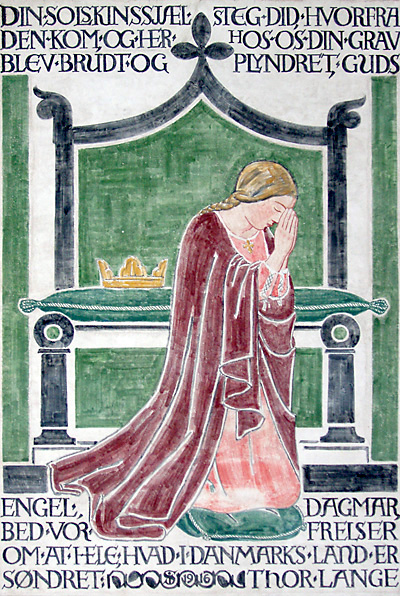
The name was borne by Dagmar of Denmark (1186-1212), also known as Markéta of Bohemia, Princess Dagmar of Denmark (1890-1961), Maria Federovna, also known as Dagmar of Denmark (1847-1928), Empress Consort of Russia.

Dagmar is also used in Iceland, Finland, Estonia, the Netherlands, Sweden, Norway, Germany and the Czech Republic.

Other forms of the name include:

  • Dagmara (Czech/Lithuanian/Polish/Slovak/Slovene)
  • Dakmari/Dakmar (Finnish)
  • Takmar/Takmari (Finnish)
  • Dagmár (Old Norse)
  • Dagmey (Old Norse)
  • Dagmor (Old Norse)
  • Dammei (Norwegian: dialectical form from Austlandt)
  • Dargmara (Vendish)

Diminutive forms are Dagmaruška, Dáša, Daška, Dašenka, Dašička (Czech), Dagmarka (Czech/Polish), Didi (Scandinavian), Dada and Dadka (Slovakian).

Designated name-days are:

May 24 (Germany), September 27 (Denmark, Norway and Sweden), November 26 (Estonia), December 12 (Poland), December 20 (Czech Republic),

Lucia, Lucille, Lucy, Lucian, Lucius

Origin: Latin
Meaning: “light.”

Today is December 13, said to be the darkest night of the year, and also the feast of St. Lucy, whose name appropriately means “light.” Contrary to popular belief, Lucy is the English form of Lucia, and is not a nickname that later became an independent given name, in fact, Lucy was fairly common in Medieval England, particularly after the Norman Conquest in 1066. The latinate form of Lucia, is a feminine version of the Latin, Lucius, which was a Roman praenomen derived from the Latin word lux meaning “light.”

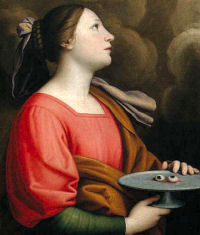
The name was popularized by a 4th-century Sicilian martyr, who, according to legend, was a beautiful Christian woman of noble lineage. She was particularly known for her striking eyes, and when a local pagan suitor tried to force her to marry him, she spent the entire night gouging her own eyes out, presenting them on a platter to the lovelorn nobleman the next day, proclaiming that if he loved her eyes so much, he could marry them instead of her. St. Lucy was immediately tortured and put to death and as a result, she is considered the patron saint of the blind.

Her feast day in Sweden is an especially popular celebration. Each year a girl is chosen to represent the saint, while leading a procession of singing white clad men and women. In older traditions, it was usually the oldest girl in the household who was picked, but since becoming a school or city festival, the title is either given to the prettiest girl or the most popular girl, sometimes done by popular demand of the populace, or school, in which the procession is held. The Sankta Lucia wears a wreath of lit candles upon her head and a red sash around her waist, afterwards, glög and lussekatte, (a type of Saffron biscuit),are served. Its popularity in Scandinavia may be due to some ancient pre-Christian roots, in which the early Germanic tribes would fend off the dark wintery nights with a procession of candles, its true origins have been somewhat lost to history, but there is a Scandinavian legend that claims that Saint Lucy appeared to a band of lost vikings, and lead them back safely to shore. Thereafter, Lucy became a popular saint among the Scandinavians.

The holiday is also celebrated in some parts of the United States, especially in Minnesota, where there are large Scandinavian enclaves, as well as in Norway, and among the Swedish speaking populations of Finland and in Estonia and Latvia.

Lucille is a derivative of the Latin feminine name, Lucilla, which was an old Latin diminutive form of Lucia. It was popularized as an independent given name, early on, due to the popularity of a 3rd century Roman martyr.

A modern famous bearer was Lucille Ball (1911-1989), a famous American actress and comedienne, known for her popular sitcom, I Love Lucy.

Lucille currently ranks in as the 613th most popular female name in the United States, she did experience a peak in popularity a the beginning of the 20th century, ranking in the highest back in 1919, coming in as the 27th most popular female name.

Its masculine form of Lucius, was a fairly common Roman praenomen during the Roman Republic and Roman Empire. It was borne by two kings of Etruria, and it was also borne by the Roman statesman, orator and philosopher, Lucius Annaeus Seneca. Lucius is also found in the New Testament, the name of a minor character, an Antiochan Christian. In addition, it was borne by three popes and a 3rd century male saint.

Lucianus, another male praenomen, is related to Lucius, but with slightly different meaning, the meaning refers to one who carries or bears light.

As of 2008, Lucian was the 810th most popular male name in the United States.

Other forms of the names include:

Lucia

  • Drita (Albanian: literally means “light” in Albanian, it is sometimes used as an alternative for Lucia).
  • Luzía (Aragonese)
  • Lusia (Breton)
  • Llúcia (Catalan)
  • Lucija Луција (Croatian/Latvian/Serbian: loot-SEE-yah)
  • Jasna (Croatian/Serbian: literally means “light” occasionally used as an alternative for Lucy. YAHS-nah)
  • Lucie (Czech: LOOT-syeh)
  • Lucia (Danish/Dutch/Corsican/Estonian/Norwegian/Romanian/Slovakian/Slovene/Swedish)
  • Luus (Dutch/Limburgish)
  • Lucy/Lucia (English: older pronunciation of the latter is LOO-shah, and in modern times, often pronounced loo-SEE-ah)
  • Lusia (Faroese)
  • Lukki/Lukka (Finnish)
  • Luusi/Luusia (Finnish)
  • Luce/Lucie (French)
  • Lucette (French: initially a diminutive form, now used as an independent given name, though considered very dated)
  • Luzie (Fruilian)
  • Lucia/Luzei/Luzia/Luzie/Luzi (German)
  • Zeia (German: old Pet form of Luzei, very obscure)
  • Loukia Λουκία (Greek: Modern)
  • Luca/Lúcia (Hungarian: former is pronounced LOOT-sah)
  • Lúcía/Lúsía (Icelandic)
  • Luce (Italian: LOO-chay)
  • Lucetta/Lucietta (Italian: initially diminutive forms, now used as independent given names)
  • Lucia (Italian: loo-CHEE-ah)
  • Luciella (Italian: originally a diminutive form, now used as an independent given name)
  • Lux (Latin: directly from the Latin word for “light” it is occasionally used as a given name in the English speaking world, and it was further popularized by the Eugenides book The Virgin Suicides, in which the lead character is named Lux Lisbon).
  • Liucija (Lithuanian: lyoot-SEE-yah).
  • Luċija (Maltese: loo-CHEE-yah)
  • Ruhia/Ruihi/Ruruhi (Maori)
  • Løssi (Norwegian: dialectical form of Lucy, from the regions of Møre and Romsdal).
  • Lucja (Polish: LOOT-syah)
  • Łucja (Polish: WOOT-syah)
  • Lúcia (Portuguese: LOOS-yah)
  • Luzia (Portuguese: loo-ZEE-uh)
  • Luziya/Svetlana (Russian: the latter is from the Old Slavonic meaning “light” and is sometimes used as an alternative form Lucy)
  • Liùsaidh (Scottish)
  • Lucìa (Sicilian)
  • Lucía (Spanish/Galician: loo-THEE-ah in Iberian Spanish and loo-SEE-ah in Latin American Spanish)
  • Luz (Spanish/Portuguese: literally ” light” in Spanish and Portuguese, it has been used as a variation for the Latin Lucia. LOOTH-Iberian Spanish LOOS-Latin American Spanish, LOOZH-Portuguese)
  • Luci (Swedish/Norwegian)
  • Lussa (Swedish: very old and obscure form of Lucy)
  • Lukia/Lucia (Ukrainian)
  • Lùsia (Venetian)
  • Lleucu (Welsh)

Lucian

  • Luken (Basque)
  • Lukian (Breton/Danish/German/Norwegian/Polish)
  • Lusian (Breton)
  • Llucià (Catalan)
  • Lucian (English: LOO-shen)
  • Lukianos (Finnish)
  • Lucien (French)
  • Lukianosz (Hungarian)
  • Lúkíanos (Icelandic)
  • Luciano (Italian/Galician/Portuguese/Spanish: Italian diminutives are Ciano, Luci and Lucio)
  • Lucianus (Latin/Dutch)
  • Lukiāns (Latvian)
  • Lukianas (Lithuanian)
  • Lucjan/Łucjan (Polish)
  • Luchian/Lucian (Romanian)
  • Lukián/Lucián (Slovakian)

Feminine forms are:

  • Liczenn (Breton)
  • Lucienne (French: luy-SYEN)
  • Luciana (Italian/Latin/Portuguese/Romanian/Spanish: Italian loo-CHAH-nah, Latin loo-KYAH-nah, Portuguese loo-SYAH-nah, Spanish: loo-THYAH-nah or loo-SYAH-nah)
  • Luciane (Brazilian Portuguese: loo-SYAH-nay)

Lucilla

  • Lucille/Lucile (French; English)
  • Lucilla (Italian/Latin: loo-CHEEL-lah in Italian)
  • Lucélia (Portuguese)
  • Lucília (Portuguese)
  • Lucila (Spanish/Portuguese)

An Italian masculine form is Lucilio

Lucius

  • Lucius (English LOO-shus)
  • Luvcie (Estruscan)
  • Lucius/Luzius (German)
  • Lúciusz (Hungarian)
  • Lucietto (Italian: obscure)
  • Lucido/Lucidio (Italian: obscure)
  • Lucio (Italian: loo-CHEE-o)
  • Luciolo (Italian: obscure)
  • Lucione (Italian: obscure)
  • Lugh (Manx)
  • Ruhiu (Maori)
  • Lucjusz/Łucjusz (Polish: LOOT-syoosh)
  • Lúcio (Portuguese)
  • Luci (Romanian)
  • Luzi (Romansch)
  • Lucio (Spanish: loo-THEE-o, loo-SEE-o)
Judah/Jude/Judith

Origin: Biblical Hebrew
Meaning: “celebrated; praise.”

Judah is a Greek form of the Hebrew name, Yehuda יְהוּדָה, which is the name of several characters in the Old Testament and at least two figures in the New Testament. In the Old Testament, the original Judah was said to be the fourth son of Leah and Jacob, the progenitor of the Judah tribe, and he is also traditionally believed to be a direct ancestor of Jesus. In Biblical Greek, Judah, Judas and Jude were all interchangeable, since in Greek, Yehudah was translated as Ioudas, but for convenience sake, especially in English, Judas is usually used to refer to the ex Apostle, Judas Iscariot, who is known for his betrayal of Christ, and due to these associations, this form of the name has extremely dubious connotations, especially among Christians. However, Jude is used in reference to another apostle, known as St. Jude Thaddeus, who is a very popular saint among Roman Catholics.

In Jewish circles, Judah is usually used in reference to the tribe, or in reference to Judah, the fourth son of Leah and Jacob. It is sometimes bestowed upon boys born around the festival of Hanukkah, which is used in honour of Judah Maccabeus, who is considered to be one of the greatest warriors in Jewish history. He was the son of Mattathias, a Cohen, and was known for his uprising against the Seleucid Empire in 167 BCE-160 BCE. The Jewish feast and holiday, known as Hanukkah, (Hebrew for “dedication”), commemorates the restoration of the temple in Jerusalem after Judah Maccabeus removed Pagan statuary from the Temple.

The name Jude has increased in popularity the last 10 years, as of 2008, he ranked in as the # 224th most popular male name in the United States.

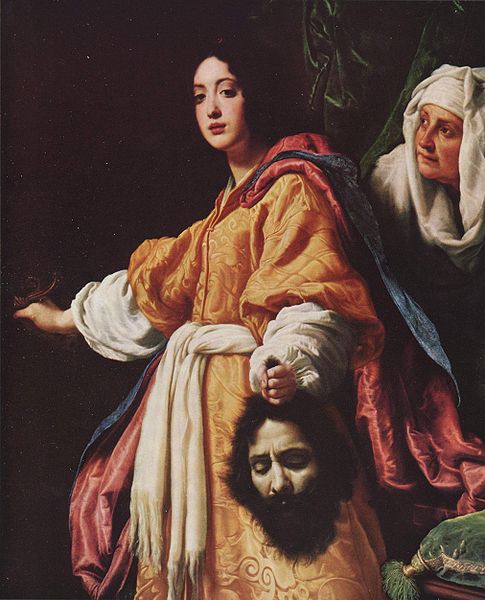
Its feminine form of Judith, Hebrew יְהוּדִית Yehudit, was borne in the Old Testament by a wife of Esau, but is probably most closely associated with the protagonist found in the Book of Judith, which is a deuterocanonical book, included in the Septuagint and in the Roman Catholic and Eastern Orthodox Christian Old Testament of the Bible. The book is rejected by Protestant Christians and Jews since it is mostly apocryphal and believed to be more of a morality tale versus anything based on historical fact, however, though the book is not considered historically accurate by Jews, Judith remained a popular Jewish heroine and symbol. In fact, the name’s popularity among Jews is probably more in association with her than of the wife of Esau. Judith is known for her beheading of the evil, Assyrian invader, Holofernes. She was a popular subject of artists for centuries.

The name experienced some usage in Catholic Europe during the Middle Ages, since Judith was considered as much a heroine among Christians as she was among Jews. The highest Judith ranked in the U.S. popularity charts, was at # 4 in 1940. As of 2008, she ranks in at a measly # 713. In 2006, she was the 6oth most popular female name in Spain.

Other forms of Judah and Jude include:

  • Chudas (Aragonese)
  • Judes (Catalan)
  • Judas (Danish/Dutch/German/Lithuanian/Norwegian/Portuguese/Spanish/Swedish: Portuguese ZHOO-dazh)
  • Jude (English/French)
  • Juudas (Finnish)
  • Juda (German/Czech/Croatian/Slovene)
  • Ioudas Ιουδας (Greek: Modern/Biblical)
  • Yehudah יְהוּדָה (Hebrew)
  • Júdás (Hungarian)
  • Yudas (Indonesian)
  • Iúdás (Irish)
  • Giuda (Italian)
  • Yuda (Kiswahili)
  • Iudas (Late Latin)
  • Juda/Judasz (Polish)
  • Júda (Slovakian)
  • Judá (Spanish/Portuguese: Spanish hoo-DAH, Portuguese zhoo-DAH)
  • Hudas (Tagalog/Filipino)
  • Yudel/Yidel (Yiddish)

Other forms of Judith include:

  • Ioudith Ιουδιθ (Biblical Greek)
  • Iudith (Biblical Latin)
  • Jitka (Czech: originally a diminutive form, now used as an independent given name YEET-kah).
  • Judita (Czech/Romansch/Slovak/Slovene)
  • Júdit (Czech)
  • Judit (Danish/Catalan/Hungarian/Norwegian/Spanish/Swedish)
  • Jytte (Danish)
  • Jutka (Dutch/Hungarian: originally diminutive forms, used as independent given names)
  • Juut (Dutch)
  • Judith (English/Dutch/Icelandic: English nickname is usually Judy)
  • Juudit/Juta (Estonian)
  • Judith/Judithe (French: diminutive is Juju)
  • Xudit (Galician)
  • Juditha (German: Jüdie is a diminutive form)
  • Jutta/Jutte (German/Dutch/Polish: originally a diminutive form, used as an independent given name, now considered dated)
  • Yehudit יְהוּדִית (Hebrew)
  • Yudit (Indonesian)
  • Giuditta (Italian: joo-DEET-tah)
  • Yuditi (Kiswahili)
  • Ita (Polish)
  • Judyta (Polish: yoo-DIH-tah)
  • Judite (Portuguese/Latvian: Portuguese pronunciation: zhoo-DEET, Brazilian Portuguese zhoo-JEE-che )
  • Juditta (Romansch)
  • Yudif/Yudita (Russian)
  • Judetta/Judina (Spanish)
  • Hudes (Yiddish)
  • Yutke (Yiddish)

Other notable bearers of the name include Judah Benjamin (1811-1884), former Attorney General of the Confederacy and the first Jewish American to be seriously considered for the Supreme Court and the first Jewish American to serve as a U.S. Senator. It is also borne by British actor, Jude Law (b.1972).

Notable Judiths include:

Judge Judith Scheindlin (b. 1942) an American judge, TV personality and author, and Judy Jetson of the 1950s cartoon series, The Jetsons.

Designated name-days are: October 28 (France: for Jude), May 5 (France: Judith), December 5th (Czech Republic), December 10 (Estonia, Hungary and Latvia).