Paul

Gender: Masculine
Origin: Latin
Meaning: “short; small; humble; few.”
Eng (PAWL)

The name is derived from the Latin Roman family name, Paulus, which could translate as meaning, “small, short; humble; few.”

Paul and his various forms has to be one of the most common male names used throughout the Christian world. It has been used equally among Orthodox Christians, Roman Catholics and Protestants.

Its most famous bearer was Paul of Tarsus, whose real name was Saul. St. Paul, as referred to by the Roman Catholic and Eastern Orthodox Churches, is attributed as being the author of much of the New Testament.

The name was borne by several popes, royals and saints thereafter.

Currently, its Germanic form of Paul is the 8th most popular male name in Germany, (2011). His rankings in other countries are as follows:

  • # 13 (Austria, 2010)
  • # 22 (France, 2009)
  • # 41 (Romania, 2009)
  • # 90 (Ireland, 2010)
  • # 130 (Scotland, 2010)
  • # 178 (United States, 2010)
  • # 485 (Netherlands, 2010)
His foreign equivalents rankings are as follows:
  • # 3 (Pablo, Spain, 2010)
  • # 4 (Páll, Faroe Island, 2010)
  • # 4 (Pau, Catalonia, 2010)
  • # 17 (Paweł, Poland, 2010)
  • # 26 (Pablo, Chile, 2010)
  • # 29 (Pavel, Czech Republic, 2010)
  • # 31 (Pablo, Catalonia, 2010)
  • # 44 (Pau, Spain, 2010)
  • # 91 (Pál, Hungary, 2010)
  • # 144 (Pablo, France, 2009)
  • # 202 (Paolo, France, 2009)
  • # 361 (Pablo, United States, 2010)

Other forms of the name include:

  • Pali (Albanian)
  • Paulë (Albanian)
  • Boulos/Bulos بولس (Arabic)
  • Faulus (Aramaic)
  • Boghos Պողոս (Armenian)
  • Poghos Պողոս (Armenian)
  • Paul (Basque/Dutch/English/Estonian/German/French/Romanian/Scandinavian/Silesian)
  • Paweł Павeл (Belarusian/Polish)
  • Polus (Berber)
  • Paol (Breton)
  • Pavel Павел (Bulgarian/Czech/Russian/Slovene)
  • Pavolo (Calabrian)
  • Pavulu (Calabrian)
  • Pau (Catalan/Occitanian)
  • Pawl (Cornish/Welsh)
  • Paulu (Corsican/Sardinian/Sicilian)
  • Pavao (Croatian)
  • Pavle პავლე Павле (Croatian/Georgian/Macedonian/Serbian)
  • Pavo (Croatian)
  • Palle (Danish)
  • Poul (Danish)
  • Pauwel (Dutch)
  • Paavel (Estonian)
  • Paavo (Estonian/Finnish)
  • Páll (Faroese/Icelandic)
  • Paavali (Finnish)
  • Pauli (Finnish)
  • Pol (Flemmish/Romansch)
  • Paale (Frisian)
  • Pals (Frisian)
  • Paulus पौलुस (Frisian/Hindi/Latin)
  • Pay (Frisian)
  • Powles (Frisian)
  • Pouw (Frisian)
  • Pauli (Fruilian)
  • Pódhl (Gaelic)
  • Pól (Gaelic)
  • Paulo (Galician)
  • Pavlos Παυλος (Greek)
  • Pāl पॉल (Hindi)
  • Pál (Hungarian)
  • Pósa (Hungarian)
  • Paolo (Italian/Portuguese)
  • Paolino (Italian/Portuguese)
  • Paulinus (Latin)
  • Pāvils (Latvian)
  • Paulius (Lithuanian)
  • Povilas (Lithuanian)
  • Paol (Lombard)
  • Paulose (Malayalam)
  • Pawl (Maltese)
  • Pawlu (Maltese)
  • Payl (Manx)
  • Paora (Maori)
  • Pål (Norwegian/Swedish)
  • Pavel (Romanian)
  • Paulin (Romansch)
  • Polet (Romansch)
  • Polin (Romansch)
  • Pulegn (Romansch)
  • Pàl (Scots-Gaelic)
  • Pawůł (Silesian)
  • Pavol (Slovak)
  • Pawoł (Sorbian)
  • Pablo (Spanish)
  • Paoro (Tahitian)
  • Pàul (Tuscan)
  • Pavlo Павло (Ukrainian)

For a Reference a Female forms See Paula and Paulina (soon to come)

Jonas, Jonah

Gender: Masculine
Origin: Hebrew
Meaning: “dove.”

The name is derived from the Greek, Ionas Ιωνας, a Greek form of the Hebrew name, Jonah, which is from the Hebrew יוֹנָה (Yonah) meaning, “dove.”

Jonah is found in the Old Testament in the Book of Jonah as the name of a prophet who was swallowed by a whale. His story was very popular during the Middle Ages.

Currently, its Greek translation of Jonas is one of the most popular male names in Northern Europe. He is the 5th most popular male name in Germany, (2011) and Norway (2010). His rankings in other countries are as follows:

  • # 4 (German-speaking, Switzerland, 2010)
  • # 6 (Austria, 2010)
  • # 22 (Denmark, 2010)
  • # 53 (Belgium, 2009)
  • # 154 (Netherlands, 2010)
  • # 163 (Czech Republic, 2006)
  • # 288 (France, 2009)
  • # 455 (United States, 2010)

While its original Biblical form of Jonah is far more rare, his rankings are as follows:

  • # 144 (United States, 2010)
  • # 301 (Netherlands, 2010)

Other forms of the name include:

  • Yunus يونس (Arabic/Turkish)
  • Jonàs (Catalan)
  • Jona (Croatian/Serbian)
  • Jonáš (Czech/Slovak)
  • Jonas (Dutch/English/French/German/Lithuanian/Scandinavian)
  • Joona (Finnish)
  • Joonas (Finnish)
  • Jonne (Finnish)
  • Jona (German)
  • Ionas (Greek)
  • Yonah יוֹנָה (Hebrew)
  • Jónás (Hungarian)
  • Jónas (Icelandic)
  • Giona (Italian)
  • Jonasz (Polish)
  • Iona (Romanian/Russian)
  • Jonás (Spanish)
In the Lithuanian case, this name is the Lithuanian form of John.

Benedict, Benedikt

Gender: Masculine
Origin: Latin
Meaning: “blessed.”

The name comes directly from the Late Latin name Benedictus meaning “blessed.” The name was borne by a 6th-centuy Italian monk and saint who credited for being the founder of the Order of the Benedictines.

The name was very common throughout Medieval Europe, being borne by 16 popes, it was fairly popular in England, in the form of Bennett.

The name was also commonly used among German-Jews, being used as a cognate of the Hebrew male name Baruch בָּרוּךְ (blessed).

In the United States, the name became taboo to use due to its associations with Benedict Arnold (1741-1801) a famous American deserter and traitor to the British.

The name recently skyrocketed in Germany after the succession of the German born Pope Benedict XVI. It is currently the 93rd most popular male name in Germany, (2011). It is especially popular in Bavaria.

His rankings in other countries are as follows:

  • # 1 (Bence, Hungary, 2010)
  • # 32 (Benedek, Hungary, 2010)
  • # 294 (Benoît, France, 2009)

Other forms of the name include:

  • Benedikti (Albanian)
  • Benedet (Aragonese)
  • Benedictu (Asturian)
  • Benedita (Basque)
  • Beñat (Basque)
  • Benead (Breton)
  • Benet (Catalan)
  • Benedettu (Corsican/Maltese/Sardinian)
  • Benedikt Венедикт (Croatian/Czech/German/Icelandic/Norwegian/Russian/Serbian/Scandinavian/Ukrainian)
  • Ben(d)t (Danish/Norwegian)
  • Benedictus (Dutch/Late Latin)
  • Benedict (English/German/Romanian/Scandinavian)
  • Bennett (English)
  • Pentti (Finnish)
  • Bénédict (French)
  • Benoît (French)
  • Beinidict (Gaelic)
  • Bieito (Galician)
  • Benedikhti ბენედიქტე (Georgian)
  • Bendix (German/Norwegian)
  • Bennet (German)
  • Benz (German)
  • Venediktos Βενέδικτος (Greek)
  • Bence (Hungarian)
  • Benedek (Hungarian)
  • Benett (Hungarian)
  • Benedetto (Italian)
  • Benito (Italian/Spanish)
  • Bettino (Italian)
  • Bendiks (Latvian)
  • Benediktas (Lithuanian)
  • Bendik (Norwegian)
  • Benedix (Plattdeutsch)
  • Benedykt (Polish)
  • Benedito (Portuguese)
  • Bento (Portuguese)
  • Benezet (Provençal)
  • Banadet (Romansch)
  • Banadegt (Romansch)
  • Bandet (Romansch)
  • Benedegt (Romansch)
  • Binidittu (Sicilian)
  • Beňadik (Slovak)
  • Bengt (Swedish)
  • Bened (Welsh)
  • Benesh (Yiddish)

Feminine forms include:

  • Benedetta (Corsican/Maltese/Italian/Sardinian)
  • Benedikta (Czech/German)
  • Benedikte (Danish/Norwegian)
  • Bénédicte (French)
  • Benoîte (French)
  • Benita (Italian/Spanish)
  • Bettina (Italian)
  • Benedicta (Latin/Romansch)
  • Benedykta (Polish)
  • Benedita (Portuguese)
  • Bengta (Swedish)

Jerome

Gender: Masculine
Origin: Greek ‘Ιερωνυμος
Meaning: “sacred name.”
Eng (jə-ROM), Fre (zheh-HROME)

The name is derived from the Greek male name, Hieronymus (‘Ιερωνυμος).

It was borne by a 5th-century saint who is responsible for creating the Vulgate Bible. He is revered as a Doctor of the Church.

The name was common in England during the 12th-century, but fell out of usage after the Protestant Reformation, only to be reintroduced again in 19th-century America via Catholic immigrants from Germany, Ireland and Italy.

Currently, Jerome is the 208th most popular male name in Germany, (2011).

Other forms of the name include:

  • Jeronimi (Albanian)
  • Hieronimos Հիերոնիմոս (Armenian)
  • Jerolin (Basque)
  • Gerasim Герасім (Belarusian)
  • Jeronim Йероним (Bulgarian)
  • Jeroni (Catalan)
  • Jeronim Јероним (Croatian/Serbian)
  • Jeroným (Czech)
  • Hero (Dutch)
  • Hiëronymus (Dutch)
  • Jeroen (Dutch)
  • Jero(o)m (Dutch)
  • Jerome (English/German)
  • Jérôme (French)
  • Iaróm (Gaelic)
  • Ieróim (Gaelic)
  • Xerome (Galician)
  • Jeromos (Hungarian)
  • Geronimo (Italian)
  • Girolamo (Italian)
  • Jeronimas (Lithuanian)
  • Ġlormu (Maltese)
  • Jiròni (Occitanian)
  • Hieronim (Polish/Slovene)
  • Jerônimo (Portuguese: Brazilian)
  • Jerónimo (Portuguese/Spanish)
  • Ieronim Иерони́м Ієронім (Romanian/Russian/Ukrainian)
  • Jaronas (Romansch)
  • Jerun (Romansch)
  • Giron(n)as (Romansch)
  • Jerone (Sardinian)
  • Zirominu (Sardinian)
  • Giròlamu (Sicilian)
  • Hieronym (Slovak)
  • Jarolím (Slovak)
  • Hierónimo (Spanish)
  • Sierôm (Welsh)


Titus

Titus (Roman Emperor)Gender: Masculine
Origin: Latin
Meaning: “title of honour.”
Eng (TY-tus)

The name comes from the Roman praenomen which is derived from the Latin, titulus, meaning “title of honour.”

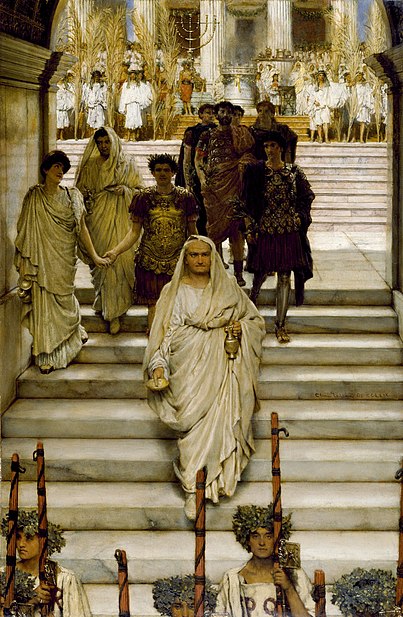
In Ancient History, the name is borne by Titus Flavius Vespasianus, the tenth Roman emperor in the Roman Empire and the second of the Flavian Dynasty.

In the New Testament, the name is borne by a companion of St. Paul who later became the first bishop of Crete and was a recipient of one of Paul’s epistles.

The name was also used by Shakespeare for his tragedy Titus Andronicus (1593).

Currently, Titus is the 253rd most popular male name in Germany, (2011) and the 397th most popular in the United States, (2010).

Other forms of the name include:

  • Tito (Aragonese/Basque/Galician/Italian/Portuguese/Spanish)
  • Titus (Czech/Danish/Dutch/English/French/German/Latin/Norwegian/Swedish)
  • Tiitus (Finnish)
  • Tite (French)
  • Titos Τιτος (Greek Biblical)
  • Titou τιτου (Greek Modern)
  • Titusz (Hungarian)
  • Títus (Icelandic/Slovak)
  • Titas (Lithuanian)
  • Titu Тітъ (Old Church Slavonic)
  • Tytus (Polish)
  • Tit Тит (Romanian/Russian/Croatian/Slovene)

An Italian, Portuguese and Spanish feminine form is Tita.

The designated name-day is January 4th.

Korbinian

Gender: Masculine
Origin: German
Meaning: “raven”
(kor-BIN-nee-ahn)

Before I get into the history, I just want to say that I quite like this name. He has the same trendy vibe as Corbin and the sophisticated feel of Sebastian all wrapped into one. With the popularity of other trendy male K names, I could see this picking up in the United States. If only more Anglophones were aware of its existence..
Korbinian does share a common ancestor with Corbin. Both names are derived from the Latin corvus meaning “raven.”  It may have actually been a Latin translation of the German male name, Hraban (raven).
Korbinian’s roots are Latin, but its usage seems to be isolated to Bavaria and Austria. The reason being is that the name is connected to a 7th-century Frankish saint who was known for converting the region of Bavaria to Christianity. Interestingly enough, he was not borne as Korbinian, his real name was Waldegiso, being named after his father. For reasons unknown, his mother who was named Corbiniana, decided to rename her son upon her husband’s death, making him a junior of herself.
St. Corbinian had lived as a hermit in France, he was very popular among the locals, who would often visit him and listen to his sermons. One day, he decided to make a pilgrimage to Rome, where he met with the Pope, who convinced Corbinian to quit the life of a hermit and instead evangelize the Germanic tribes on the French border. He was delegated by the Pope to administer to the Duke of Bavaria. Corbinian was made the first bishop of Freising.
According to legend, while on his way to Rome, Corbinian was attacked by a wild bear. He managed to tame it and made the animal carry his belongings all the way to Rome. Upon his arrival to Rome, Corbinian set the bear free.
It is often believed that the story was apocryphal, a way to symbolize the saint’s conversion of the ferocious German tribes to docile Christians. His motifs and symbols are often the bear. The bear, (which is in reference to St. Corbinian), is found in Freising and Bavarian heraldry. In fact, the current pope, Benedict XVI, was previously the bishop of Freising-Munich when he assumed the Papacy, he integrated the bear into his papal coat-of-arms, in honour of St. Corbinian. The source of Corbinian’s life can be found in the Vita Corbiniani written by Bishop Arbeo of Freising.
Possible nickname options are Korby and Binny. The Latin spelling is Corbinian. This form is also used in Germany.
It feminine form of Corbiniana  is not a bad choice either. With the recent interest in such names as Cordelia and Georgiana across the pond in Britain, this might make an appealing alternative.
Currently, Korbinian is the 227th most popular male name in Germany, (2011).

Annemarie

Gender: Feminine
Origin: French

The name is a compound of Anne and Marie. Originally, the name was used by Catholic families, usually in honour of the Virgin Mary and her legendary mother St. Anne. Its usage spread to German-speaking countries and became especially common in Bavaria.

Currently, Annemarie is the 361st most popular female name in Germany, (2011). Its South Slavic form of Anamarija is currently the 48th most popular female name in Croatia (2010) and the 79th most popular in Slovenia, (2010).

  • Anamarija Анамарија (Croatian/Macedonian)
  • Annemarie (Dutch/English/French/German/Limburgish/Scandinavian)
  • Amrei (Bavarian/Swiss-German)
  • Annamirl (Bavarian)
  • Annamaria (Italian)
  • Anna Maria (Polish/Romansch)
  • Ana María (Spanish)

Pius

Gender: Masculine
Origin: Latin
Meaning: “pious; dutiful.”
Germ (PEE-oos)

The name is derived from the Late Latin, meaning “pious; dutiful.” It was borne by twelve popes, and the name has been especially common in German-speaking countries, particularly among Catholic families.

Currently, it the 386th most popular male name in Germany, (2011).

Other forms of the name include:

  • Pius (German/Latin/Polish/Romansch)
  • Pio (Italian/Portuguese)
  • Pijus (Lithuanian)
  • Pío (Spanish)
A feminine form is Pia 

Chantal

Gender: Feminine
Origin: French
Meaning: debated
Fre (CHAn-TAHL); Eng (SHAHN-tel)

The name comes from the surname of a popular French Catholic saint, Jeanne Françoise de Chantal (1572-1641), a French noblewoman and widow who became a nun upon her husband’s death, eventually founding the order of the Visitation of Holy Mary.

Originally, the name was used by devout French-Catholic parents, but due to its pleasant and feminine sound, its usage has spread elsewhere. It has been used in the Netherlands, the English-speaking world and in German-speaking countries. In Germany, the term chantalismus was coined, referring to German parents who like to give their daughters foreign and exotic sounding names.

Its popularity in other countries may have been due to the false assumption that the name is derived from the French verb chanter (to sing). In reality, the name may actually be related to a Provençal place name, cantal, (stony place). Even then, the origins of the surname are still a subject of debate.

In France, the name has spun off several double names, such as Marie-Chantal, Jeanne-Chantal and Anne-Chantal.

It is currently the 395th most popular female name in Germany (2011) and the 491st most popular in the Netherlands, (2010).

It is borne by Chantal, Princess of Hanover (b.1955), heiress to a Swiss chocolate fortune and Marie-Chantal, Crown Princess of Greece, Princess of Denmark (b.1968).

Marlene

Gender: Feminine
Origin: German
Eng (mar-LEEN); Germ (mahr-LEH-neh)

The name is a blend of Maria and Magdalena, originally, it was usually bestowed in honour of St. Mary Magdalen by German-Catholic parents.

The name experienced a surge in popularity in Germany during WWII due to a popular song, Lili Marleen.

In the United States, the name was introduced by German actress, Marlene Dietrich (1901-1992), who was born Maria Magdalena von Losch.

Currently, in German-speaking countries, the name is experiencing a revival, it is the 29th most popular female name in Austria, (2010) and the 41st most popular in Germany. In the United States, she stands at # 902, (2010)

Other forms of the name include:

  • Marleen (Dutch/German)
  • Marla (English/German)
  • Marlene (English/German/Scandinavian)
  • Marlène (French)
  • Marlen (German)
  • Marilena (Italian)
  • Marlena (Polish/Slovene)