The name is of uncertain origin or meaning, it may derive from the Greek place-name, Ephesus or the Greek elements, εὖ (eu), meaning “good” and φύσις (physis) meaning, “nature.” It was born by a 3rd-century Sardinian saint, the patron of Cagliari on Sardinia.
It is mainly used on Sardinia.
It was borne by Sardinian scientist, Efisio Arru (1927-2000), and Sardinian scientist, Efisio Marini (1835-1900).
The name was born by an 8th-century Anglo-Saxon female saint who did missionary work in Germany. It is composed of the Anglo-Saxon element, weald (power) and burg (fortress). Her feast day was celebrated on May 1st and the day before is called Walpurgisnacht (St. Walpurgis’ Eve).
In German-speaking countries, the name is most common in Bavaria and Austria, more so at the turn of the 20th-century.
In the Harry Potter series by J.K. Rowling, this is the name of the mother of Sirius Black.
The name spread in use across Europe, especially in Nordic and Germanic countries. Other forms include:
Wealburh (Anglo-Saxon)
Valpurga (Catalan, Italian)
Valburga (Czech, Hungarian, Portuguese, Spanish)
Valborg (Danish, Norwegian, Swedish)
Walburga (Dutch, German, Polish)
Walburg (English)
Valba, Valbe (Estonian)
Valli (Estonian)
Valbjørg (Faroese, Norwegian)
Vappu (Finnish)
Valpuri (Finnish)
Gauburge (French)
Walburge, Valpurge (French)
Waldeburg (German, archaic)
Walpurga (German)
Valbjörg (Icelandic)
Válbor (Sami)
Várbu (Sami)
A common German short form is Wally, while a Swedish nickname is Bojan.
Italian masculine forms are Valburgo, Walburgo, Walpurgo and Valpurgo.
The name is borne in the Bible by the son of Joseph and Asenath, who is considered a patriarch, as he is a founder of one of the 12 trubes of Israel. According Genesis 41:52, he is named thus by Joseph because “God has made me fruitful in the land of my suffering.”
The name was also borne by a few early Christian saints, including St. Ephraim of Syria (4th-century, CE).
Ephraim appeared in the U.S. Top 1000 between 1880-1914, it disappeared for 99 years and reappeared in the charts in 2013. For its first centennial cycle, it peaked at #403 in 1880. As of 2023, it was the 992nd most popular male name.
Its Spanish counterparts of Efraín and Efrén have also appeared in the U.S. Top 1000, Efraín appeared between 1950 and 2014, peaking at #469 in 1981 whilst Efrén appeared between 1966-2007, peaking at #768 in 1990.
Pron: Eng (i-DAH-lee-ah; id-DAHL-yah); Pol (ee-DAHL-yah)
The name can have a few different origins and meanings. It does seem to appear in use in Medieval France, in this case, it may be an elaborated form of a Germanic name, perhaps related to a Frankish element, idal (unknown meaning) or the Old Norse ið, meaning “work.” Alternately, it appears in Greek mythology as an epithet for the goddess Aphrodite. In this case, the etymology is from the name of city on the island of Cyprus called Idalion, in which a temple to Aphrodite existed. The etymology of the city name itself is from the Greek Eidon helios, “I saw the sun.”
The name has had use across Europe. In Poland, it came into use in the 19th-century when Juliusz Słowacki used it as the name of a heroin in his 1866 play, Fantazy. It was thereafter used as the name of a character in the 1909 novel, Trędowata by Helena Mniszkówna.
In Poland, it has appeared in and out of the 200 most popular female names between 2010 and 2022, peaking at #172 in 2021.
In 2023, 160 girls were given this name in the United States.
The name is of unknown origin or meaning, the consensus is that it is Germanic but which Germanic language it originates from is up for debate. Since it first occurred in Spain, the most likely is that it is of Gothic origins, possibly composed of the Germanic elements *allaz “all, whole, every”‘ and wart “‘guard, ward.” The second element may also stem from wars (cautious, guarded). Others have related it to the Old Norse, Hallvadr (hall-guard) or Alfarr (elf-warrior), but this is less likely.
The name has been in use in the Iberian peninsula since Medieval times, it was borne by Álvar Fáñez (12th-century), a vassal of El Cid and the subject of the Spanish epic poem, El Cantar de mio Cid.
It is the progenitor of the Spanish surname, Alvarez/Álvarez and the Portuguese, Alves.
Álvaro is the 10th most popular male name in Spain as of 2022. His rankings in other countries/regions are as follows:
#22 (Galicia, Spain)
#69 (Catalonia, Spain)
#97 (Chile, 2021)
#99 (Basque Country, Spain)
#188 (Mexico, 2021)
#794 (United States)
Usage/Forms
Àlvar (Catalan)
Álvaro (Portuguese, Spanish)
Álvaro (Galician)
Alvar (German, Scandinavian)
Alvaro (Italian)
Alvarus (Latin)
Alwar (Polish)
Feminine forms include, Álvara (Portuguese, Spanish), Alvara (Italian, Scandinavian).
The name is composed of the Germanic elements al (all) and rikr (ruler). It was most notably borne by two Gothic kings, Alaric I and Alaric II. Alaric I was known for leading a rebellion against Rome and sacking it. His Gothic name was 𐌰𐌻𐌰𐍂𐌴𐌹𐌺𐍃 (Alareiks).
An historical curiosity, Alaric has never experienced much usage, however, it has been in the U.S. Top 1000 since 2017, and currently ranks in as 915th most popular male name.
Other forms include:
Alaric (Catalan, French, English, Occitanian)
Alarich (Czech, German, Slovak)
Alareiks (Gothic)
Alarico (Italian, Portuguese, Spanish)
Alaricus (Latin)
Alariks (Latvian)
Alarikas (Lithuanian)
Alaryk (Polish)
Alarih Аларих (Russian, Ukrainian)
Alarik (Scandivanian, Slovene)
Obscure feminine forms include Alarica, Alarika and Alarice.
Both come from the Greek, θεός (theos) meaning “god” and δόσις (dosis) meaning “giving.” Both the male and female form were borne by several Christian saints and Medieval rulers. In the English-speaking world, a notable bearer was Theodosia Alston Burr (1783-1813), the daughter of Aaron Burr and an American socialite who mysteriously disappeared in a ship-wreck. Her fate has been a source of speculation for two centuries, but she most likely died in the wreck. She is also the subject of the Broadway opera song from Hamilton, My Theodosia.
It’s female version has experienced usage in the English-speaking world since the 15th-century. It has spun off several diminutive off-shoots, which later became independent names, such as Docie/Dosey, Doshie, Dosha, Docia and Theda.
Theodosia appeared in the U.S. Top 1000 Most Popular Female Names between 1880-1895, it peaked at number #547 in 1880. It’s offshoot of Doshie appeared in the U.S. Top 1000 between 1880-1905 and peaked at #640 in 1884 whereas Doshia peaked at #582 in 1881 and Docia at #317 in 1880.
Theda (THEE-dah) was the name of silent film actress, Theda Bara (born Theodosia Burr Goodman, 1885-1955). Theda appeared in the U.S. Top 1000 between 1880-1948 and peaked at #350 in 1916. Theda Bara may have helped sustain the usage of the name in the United States, but it seems to have been common enough long before she graced the silver screen.
In the 1988 movie For Keeps, starring Molly Ringwald, a teen couple are faced with an unexpected pregnancy, in which they name their daughter Theodosia, short form Thea, it is a last minute decision decided by the father who gets the name from his deceased grandmother of the same name.
It is the name of the main character of the R. L. LaFevers 2007 children’s novel, Theodosia and the Serpents of Chaos, which spun off a tv series.
Its pronunciation in the English-speaking world fluctuates depending on the region and personal preference, from THEE-oh-DOH-see-uh, to THEE-oh-DOH-shuh and THEE-oh-DOH-zhuh, the sky’s the limits.
Its masculine form has always been prevalent in eastern Christian countries but did not pick up the same momentum in the English-speaking world as its feminine counterpart did.
Female forms
Tayodosiya ታዮዶሲዮስ (Amharic)
Thudusya ثيودوسيا (Arabic, used by Arab Christians)
Tully is the English form of the Roman family name, Tullius, which is derived from the praenomen, Tullus, of an unknown meaning. It is likely Etruscan and its meaning has been lost. Other suggestions include that it is from the Latin, tullius (spout of water; gush of blood) or the Latin term, tollere, meaning “to lift,” allegedly referring to the act of a Roman father lifting their newborn son and claiming him.
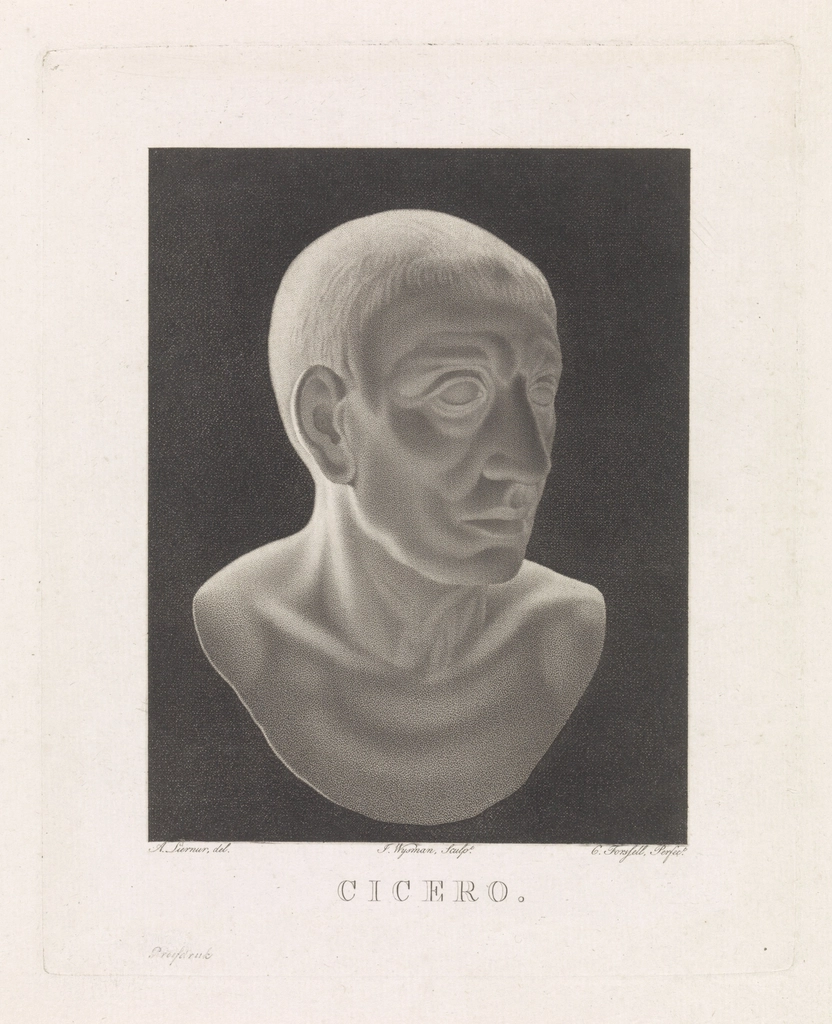
A notable bearer is Marcus Tullius Cicero.
It was also borne by several male and female saints.
Alternately, Tully has been used on females occasionally, mainly as a diminutive form of Petula.
Male forms
Tulli (Catalan)
Tullie (French, this is a unisex name in France, though it is rare)
Both names are derive from the Latin galilaeus, meaning “from Galilee,” which ultimately derives from the Hebrew, גָּלִיל, meaning “district; circle; hill; knoll.” The name was used in honor of the place name in the New Testament.
Galileo was borne by Galileo Galilei (1564-1642), he in turn was named for an ancestor.
As of 2022, its feminine counterpart of Galilea appears in the U.S. Top 1000 Most Popular Female names, coming in at #731.
Nectar is the English form of the Greek NektariosΝεκτάριος, which is derived from νέκταρ (nektar), meaning “nectar, the drink of the gods. Nectar is not a name that has ever been in common use in the English-speaking world, but since it is the name of several Eastern and Western Christian saints, the proper English male translation of the name would be Nectar; or it would have appeared thus in the calendar.
It was borne by St. Nectaire of Auvergne, a 4th-century Christian missionary to the Gauls in what is now the Massif Central region of France. According to Gregory of Tours, he was sent by Pope Fabian, along with his brothers, where he transformed a temple that was dedicated to Apollo on Mont Cornadore into a cathedral that still stands, and was subsequently beheaded by the local Gaulic chieftain. The commune of Saint-Nectaire in the Puy-de-Dôme department of France gets its name from him, as does the cheese of the same name; or the latter technically comes from the Marshal of Senneterre, which is a linguistic corruption of Saint-Nectaire.