Theodore

Gender: Masculine
Origin: Greek
Meaning: “god’s gift.”

The name is derived from the Greek Theodoros (Θεοδωρος) which is composed of the elements θεος (theos) meaning “god” and δωρον (doron) “gift.” The name was borne by several early saints, two popes and three tsars of Russia.

In recent American history the name was borne by President Theodore Roosevelt (1858-1919) of whom the Teddy Bear was named for.

It is currently the 263rd most popular male name in the United States, (2010).

An interesting fact: Dorothy is derived from the same Greek roots but in reverse order.

Other forms of the name include:

  • Tewodros ተውዶሮስ (Amharic)
  • Tadros تادرس (Arabic: used among Arab Christians)
  • Todos ܛܘܕܘܫ (Aramaic: used among Assyrian and Chaldean Christians)
  • Hvejdar Хведар (Belarusian)
  • Teodor Теодор (Bulgarian/Catalan/Croatian/Czech/Danish/Estonian/Finnish/Hungarian/Polish/Romanian/Scandinavian/Slovakian/Slovene/Ukrainian)
  • Todor (Bulgarian/Serbiab/Northern Greek)
  • Theirn (Cajun)
  • Theodoor (Dutch)
  • Theodorus (Dutch/Latin)
  • Theodore თევდორე (English/Georgian)
  • Tuudor (Estonian)
  • Teuvo (Finnish)
  • Théodore (French)
  • Theodor (German)
  • Theodoros Θεόδωρος (Greek)
  • Thodoros Θόδωρος (Greek)
  • Fedor (Hungarian)
  • Tivadar (Hungarian)
  • Tódor (Hungarian)
  • Téodóir (Irish)
  • Teodoro (Italian/Portuguese/Spanish)
  • Todaro (Italian)
  • Teodors (Latvian)
  • Thei (Limburgish)
  • Teodoras (Lithuanian)
  • Toše Тоше (Macedonian)
  • Tiodore (Occitanian)
  • Toader (Romanian)
  • Tudor (Romanian/Welsh)
  • Fedor Федор (Russian/Slovene)
  • Fjodor Фёдор (Russian)
  • Teodoru (Sicilian)
  • Fedja (Slovene)
  • Todor (Slovene)
  • Fedir Федір (Ukrainian)
  • Tewdwr/Tudur (Welsh)
Common diminutives include:
  • Tosho Тошо (Bulgarian)
  • Toshko Тошко(Bulgarian)
  • Ted/Teddy (English)
  • Tedo თედო (Georgian)
  • Fedja Федя (Russian)

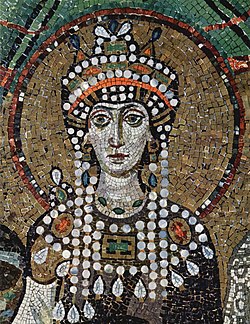
Its feminine form of Theodora was very popular in Byzantium, it was borne by at least five Byzantine Empresses including Empress Theodora who is also revered as a saint.

Other feminine forms include:

  • Teodora Теодора თეოდორა (Bulgarian/Catalan/Crotian/Georgian/Italian/Macedonian/Polish/Portuguese/Romanian/Serbian/Slovene/Spanish/Swedish)
  • Todorka Тодорка (Bulgarian/Macedonian)
  • Theodora Θεοδώρα (Czech/English/German/Greek)
  • Theda (English/German)
  • Théodora (French)
  • Teodóra (Hungarian)
  • Fedora Федора (Russian/Slovene)
  • Feodora Феодора (Russian)

Evangeline

Gender: Feminine
Origin: Greek
Meaning: “good news.”
Eng (ee-VAN-je-LEEN)

The name is derived from the Greek ευ (good) and αγγελμα (news; message). Evangelos (masculine) and Evangelina (feminine) have always been popular names in Greece. Evangeline seems to be particularly common among French-Canadians and the Acadians of Louisiana since the 16th-century. The name was used for the title character in Henry Longfellow’s 1847 poem Evangeline, which recounts the trials and tribulations of the Acadians after their expulsion from Canada.

A parish in Louisiana was named in the character’s honour.

Currently, Evangeline is 333rd most popular female name in the United States, (2010).

Other forms of the name include:

  • Evangeliya Евангелия (Bulgarian)
  • Evangeline/Evangéline (Cajun/Franco-English)
  • Evangelina (Croatian/Hungarian/Italian/Portuguese/Romanian/Serbian/Spanish)
  • Évangéline (French)
  • Evangelia Ευαγγελία (Greek)
  • Vangelia Βαγγελιώ (Greek)
  • Evangelija Евангелија (Macedonian)
  • Vangelija Вангелија (Macedonian)
  • Evangelica (Romanian)

Masculine forms include:

  • Evangelis Ευαγγέλης (Greek)
  • Evangelos Ευάγγελος (Greek)
  • Vangelis Βαγγέλης (Greek)
  • Evangelo (Italian)

Source

  1. http://www.behindthename.com/name/evangeline

Landry

Gender: Masculine
Origin: German
Meaning: “land ruler.”
Eng (LAN-dree); Fre (LAWn-DREE)

Considered the second oldest surname in France, it is a name steeped in history and religion. It is currently one of the most popular male names among Cajun-Americans.

The earliest record of the name Landry is in the 5th-century, where it is recorded as the name of the Bishop of  Sées, later canonized as a saint. In the 5th-century it was borne by another male saint, St. Landry the Bishop of Paris, he is particularly noted for founding the first hospital in Paris, the Hôtel-Dieu. Another Medieval saint who bears the name is St. Landry of Metz.

The name was such a common given name in Medieval France that it later carried over as a patronymic.

St. Landry Parish in Louisiana was named by French settlers in honour of St. Landry of Paris. The name has since fallen out of fashion in France but has remained a classic among the Acadians of Louisiana. In fact, it is currently the 891st most popular male name in the United States, 2010.

The name is derived from the Frankish name, Landericus, which is composed of the Germanic elements, land (land) and ric (power; rule; might).

The name is currently borne by American football player, Landry Jones (b.1989).

It is the name of a town in France, which was also named in honour of St. Landry of Paris.

Other forms of the name include:

Landerik (Czech)
Landerico (Italian/Spanish)
Landeryk (Polish)

Source

  1. http://www.behindthename.com/top/lists/us/2010

Guy

Gender: Masculine
Origin: French
Meaning: “wood; wide.”
Eng (GIE); Fre (GEE)

The name is derived from the early Germanic name Wido which is possibly derived from the Germanic element, widu, either meaning, “wood” or “wide.”

The name was introduced into England after the Norman Conquest, but after the infamy of 16th-century Guy Fawkes the name went out fashion. It was, however, always a very common name among French-Americans, especially among the French Acadians of Louisiana.

The Italian form is Guido, which has been a fairly common name among Italian-Americans but is now associated with a controversial term describing a middle class Italian-American from the East Coast of the United States. This was especially brought to attention after the 2009 reality tv show, Jersey Shore. However, it is uncertain if the term used to describe a particular class of people within the Italian community is related to the given name or to a different etymological source.

The name was borne by a Sicilian saint and martyr.

The designated name-day in France is June 12.

Other forms of the name include:

  • Guiu (Catalan)
  • Vid (Croatian/Hungarian/Slovene)
  • Vít (Czech/Slovak)
  • Vitus (Danish/Dutch/German/Hungarian)
  • Gwijde (Dutch)
  • Guy (English/French)
  • Guidon (French)
  • Gui (French)
  • Wide (Frisian)
  • Guido (German/Italian)
  • Veit (German)
  • Wido/Wito (German)
  • Cino (Italian)
  • Guidarello (Italian)
  • Guidino (Italian)
  • Guidolino (Italian)
  • Guidone/Guittone (Italian)
  • Guidotto (Italian)
  • Guiduccio (Italian)
  • Guittoncino (Italian)
  • Gvidas/Gvidonas (Lithuanian)
  • Gwido (Polish)
  • Wit (Polish)
  • Guidas (Romansch)
  • Guidi (Slovene)
  • Gvido/Gvidon (Slovene)
  • Vito (Spanish)

French masculine diminutives include: Guitou, Guiton, GuiGui & Guy-Guy

Feminine offshoots include:

  • Vita (Danish)
  • Guyenne (French)
  • Guyette (French)
  • Guyonne (French)
  • Vida (Hungarian/Slovene)
  • Guida (Italian/Romansch)
  • Guidetta (Italian)
  • Gvida (Slovene)
  • Gvidica (Slovene)

Sources

  1. http://www.behindthename.com/php/related.php?name=guy
  2. http://www.askoxford.com/firstnames/guy?view=uk

Valeria, Valerie

Gender: Feminine
Origin: Latin
Meaning: “healthy.”
Eng (VAL-eh-REE); It (vah-LAY-ree-ah); Fre (VAH-lay-RHEE)

Valeria is the feminine form of the Latin Valerius, an ancient Roman clan name that indicated strength, boldness or health. The name was popularized in Europe via the cult of St. Valeria, a 2nd century Roman martyr, and the cult of St. Valérie of Limoges.

In the United States, Valerie currently ranks in as the 135th most popular female name (2008). The highest it ranked was in 1959 at # 60. In the Netherlands, she is the 136th most popular female name (2008). Its latinate form of Valeria currently stands as the 73rd most popular female name in the United States. In 2006, she was the 69th most popular female name in Chile and the 55th most popular in Spain.

Other forms of the name include:

  • Valeria (Albanian/Italian/Latin/Norwegian/Romanian/Spanish/Swedish)
  • Valèria (Catalan)
  • Valérie (Czech: vah-LEHR-yeh)
  • Valerie (Dutch/German/English/Swedish)
  • Valériane (French)
  • Valérie (French: VAH-lay-RHEE)
  • Valérine (French)
  • Valeska (German: an old diminutive form, short form is Leska, fairly common in Brazil, perhaps introduced via German immigrants).
  • Valéria (Hungarian/Portuguese/Slovak)
  • Valeriana (Latin/Italian/Spanish)
  • Waleria (Polish: vah-LEHR-yah)
  • Waleriana (Polish)
  • Valeriya Валерия (Russian)
  • Valerija (Slovene/Croatian/Latvian/Lithuanian/Serbian)
  • Valerijana (Slovene)
  • Valerina (Slovene/Italian)

A Slovakian diminutives is Valika, Russian diminutives are Valya and Lera, an English diminutive is Val, German diminutives are Vali and Lilli, Slovene diminutives are, Valči, Valčika andValčka. A French diminutives is Valé.

Masculine forms are

  • Valery (English)
  • Valerian (English)
  • Valère/Valérien/Valéry (French)
  • Vallier (French)
  • Valeriano (Italian/Spanish)
  • Valerino (Italian)
  • Valerio (Italian/Spanish)
  • Valiero (Italian)
  • Valerianus (Latin)
  • Walerian/Waleriusz/Walery (Polish)
  • Valeriu (Romanian)
  • Valeri Валерий (Russian)
  • Valerij/Valerijan/Valerijano/Valerijo/Valerin/Valerjan (Slovene)

A Romanian diminutive form is Vali.

The designated name-days are: April 18 (Czech Republic), April 28, (France, Hungary), June 20 (Slovakia), June 7 (Bulgaria), June 20 (Russia) and December 9 (Lithuania and Croatia).

Renata, Renatus, René, Renée

Origin: Latin
Meaning: “rebirth.”

The origins of René and Renée can be traced back to the Late Latin male name Renatus, meaning “rebirth; born again.” The name is borne by several saints in both its Latin masculine form and feminine Latin form. The French forms have experienced usage in the Netherlands, Slovenia, Slovakia, the Czech Republic as well as Anglo-phone countries.

Renée enjoyed a short spout of popularity in the United States during the late 60s and early 70s, the highest it peaked was in 1967 coming in at # 62. As of 2008, she came in at # 734. Surprisingly, its masculine version ranked in higher in the top 1000, coming in as the 561st most popular male name in 2008. René is still somewhat prevalent among the Cajun and Creole communities of Louisiana.

In 2005, he was the 57th most popular male name in Slovenia.

Renata has experienced usage from South America to Eastern Europe, she is a common choice in Poland, Germany, Italy and Brazil. In 2006, she was the 34th most popular female name in Chile and the 68th most popular female name in Hungary.

Other forms of the name include:

  • Renata (Czech, Croatian, German, Italian, Lithuanian, Polish, Portuguese, Spanish. Polish diminutive forms are: Rena, Renatka and Renia. Spanish diminutive form is Renita, often used as an independent given name)
  • Renate (Dutch/German)
  • Renáta (Hungarian/Czech/Slovak)

Masculine forms include:

  • René (French, Czech, Dutch, German, Hungarian, Slovakian, Slovenian)
  • Renát (Hungarian/Slovakian)
  • Röné (Hungarian)
  • Renato (Italian/Spanish)
  • Renatus (Late Latin)
  • Renáto (Slovakian)
  • Renátus (Slovakian)

The designated name-day is November 6 in Slovakia, October 19 in France, November 12 in Poland and Lithuania, November 28 in the Czech Republic (Renata is October 13); October 6 in Hungary and January 23 in Estonia.

The name is borne by French mathematician and philosopher René Descartes and French painter René Magritte and American actress Renée Zellweger.