‘Aisha, Aisha

Gender: Feminine
Origin: Arabic عائشة
Meaning: “alive”
(ah-EE-shah)

The name has to be one of the most popular female names among Sunni Muslims as it was borne by the second wife of the prophet Muhammed and according to the Sunnis, she was his favorite wife. After Muhammed’s death, ‘Aisha went to war against Ali the fourth, and as a result, she is viewed negatively among some Shi’a Muslims.

The name itself is derived from the Arabic meaning, “alive” and it is currently the 96th most popular female name in England (2009).

In the United States, it first caught on as a given name among non-Muslims during the 1970s, particularly among African-Americans. The inspiration may have been Princess Aisha of Jordan, daughter of King Hussein (b.1968) and in 1975, Stevie Nicks named her first daughter, Aisha.

Its rankings in other countries are as follows:

# 25 (Bosnia & Herzegovina, 2010 as Ajša)
#478 (the Netherlands, 2010)
#682 (United States, 2010)

Other forms of the name include:

Aisha (Albanian)
Ajshja (Albanian)
Aixa (Asturian: obscure, used in the Middle Ages among the Moors’ of Asturia)
Aiša/Ajša (Bosnian)
Àïxa (Catalan obscure, used in the Middle Ages among the Moors’)
Aïché/Aché (Chadian)
Aïsja (Dutch)
Aisha  بکر (Farsi)
Aïcha (French: used among French-speaking Arabs)
Aischa (German)
Ayesha आयेशा (Indian)
Aisyah (Indonesian/Malay)
Ajsha Айша (Kazakh/Chechen)
Aisza (Polish: obscure. This was used among Polish-Tatar Muslims of the Polish-Common Wealth during the 16th-century)
Aissatou (Senegalese)
Caa’isha (Somalian)
Aisa (Spanish: obscure, used in Medieval Spain among Spanish Muslims)
Asha (Swahili)
Eshe (Swahili)
Gayshә Гайшә (Tatar)
Aişe (Turkish: archaic)
Ayşe (Turkish)

Conrad, Cord, Kurt & Koen

It sounds like it could be the name of a law firm, but all of the above are derivatives of the Germanic name Conrad.

Conrad is composed of the Germanic elements, kuoni (brave) and rad (counsel). It was borne by a 10th-century Bavarian saint, and his name has left its mark on Catholic Germany since. In fact, it was a very popular name in Medieval Germany and Konrad has seemed to have been so common that the proverb Hinz und Kunz (the equivalent of the English, Every Tom, Dick & Harry) was created.

It was also borne by several illustrious German kings and dukes.

Conrad is still a fairly common name  modern Germany and is currently rising in popularity in the United States. As of 2010, it was the 772nd most popular male name. Its Dutch diminutive form of Koen has recently appeared in the U.S. top 1000, coming in as the 940th most popular male name (2010). In the Netherlands, Koen ranks significantly higher, he is the 39th most popular male name (2010). In English, it is pronounced (KOH-en) like the common Jewish surname, while in Dutch it is pronounced (KOON).

In 2009, Konrad was the 44th most popular male name in Poland.

The once popular Kurt and the newly introduced Cord are also Germanic contractions.

Other forms of the name include the following:

Conráu (Asturian)
Korrada (Basque)
Konrad Конрад (Belarusian/Bulgarian/Estonian/Finnish/Polish/Scandinavian/Slovene/Ukrainian/Russian)
Conradí (Catalan)
Conradu (Corsican)
Konrád (Czech/Hungarian/Slovak)
Coenraad (Dutch)
Kiefer (Dutch)
Koenraad (Dutch)
Konradijn/Conradijn (Dutch)
Kuber (Dutch)
Conrad (English/French/German/Swedish)
Konradin (German: archaic)
Kunó (Hungarian)
Konráður (Icelandic)
Corrado (Italian)
Corradino (Italian: archaic)
Konrads (Latvian)
Konradas (Lithuanian)
Kondrat (Polish: archaic)
Conrado (Portuguese/Spanish)
Corràdu (Sardinian)
Currado (Sicilian)
Curradino (Sicilian)

In German, Conrad/Konrad has a plethora of diminutives such as: Cohen, Conni, Conz, Curd, Keno, Koni, Konni, Konz, Kord, Kuno and Kuntz.

Feminine forms include:

Conradine/Konradine (German/Norwegian)
Corrada (Italian)
Corradina (Italian)
Konradyna (Polish)

The designated name-days are: February 14 (Poland), February 19 (Poland), April 21 (Hungary & Poland), June 1 (Poland), August 1 (Poland), October 4 (Poland), November 12 (Estonia & Poland), November 21 (Poland) and November 26 (Poland & Germany).

Source

  1. http://www.behindthename.com/name/conrad


Ramiro

Gender: Masculine
Origin: Spanish/Germanic
Meaning: “famous advice.”
(rah-MEE-ro)

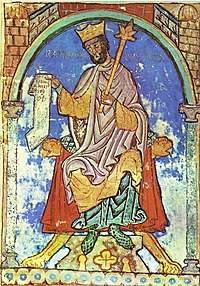
The name is derived from the Latinized form a Visigothic name, Ramirus. It is composed of the Germanic elements ragin (advice) and mari (famous).The name was borne by a 6th-century Leonese saint and martyr. It was also borne by several Spanish kings.

Currently, Ramiro is 770th most popular male name in the United States (2010).

Other forms of the name include:

Ramir (Catalan)
Ramire (French)

Source

  1. http://www.behindthename.com/name/ramiro

Peter

Gender: Masculine
Origin: Greek
Meaning: “rock.”
Eng (PEE-ter)

The name is derived from the Greek Πετρος (Petros) meaning, “rock.”

The name is found in the New Testament as a vernacular translation for the Aramaic Cephas (rock) a nickname designated to the Apostle Simon Bar-Jonah by Jesus. He is known as St. Peter, and Catholics traditionally attribute him as being the first Pope.  Among other denominations, he is considered to be one of Christ’s most prominent apostles.

Due to the associations with the apostle, Peter became an extremely prevalent male name throughout the Christian world.

The name seems to have been in usage in England since early times, but became especially popular after the Norman invasion. During this period, the form of Piers was preferred, being gradually replaced in popularity by Peter over the centuries.

Currently, Peter is 191st most popular male name in the United States, (2009). He has been steadily declining in the United States for the past 10 years, in 2000 he ranked in at # 125. His rankings in other countries, however, has not faltered. His rankings including his vernacular forms are as follows:

  • # 7 Pedro (Brazil, 2009)
  • # 9 Petar (Bulgaria, 2008)
  • # 15 Petr (Czech Republic, 2009)
  • #38 Pierre (France, 2006)
  • # 3 (Greenland, 2003-2004)
  • # 8 (Hungary, 2008)
  • # 33 Petur (Iceland, 2008)
  • # 70 (Ireland, 2008)
  • # 25 Pietro (Italy, 2007)
  • # 8 Pēteris (Latvia, 2005)
  • # 9 Petar (Macedonia, 2006)
  • # 10 Piotr (Poland, 2008)
  • # 3 (Slovakia, 2004)
  • # 59 (Slovenia, 2005)
  • # 50 Pedro (Spain, 2008)

Other forms of the name include:

  • Petrus (Afrikaans/Dutch/German/Indonesian/Latin/Limburgish/Plattdeutsch/Swedish)
  • Pieter (Afrikaans)
  • Pjetër/Pjetri (Albanian)
  • Ṗeṭros ጴጥሮስ (Amharic/Ethiopian)
  • Pero (Aragonese)
  • Bedros/Pedros Պետրոս (Armenian)
  • Botros/Boutros/Butros بطرس (Arabic/Coptic)
  • Pedru (Asturian/Konkoni)
  • Pyotr (Azeri)
  • Betiri (Basque)
  • Kepa (Basque)
  • Peio (Basque)
  • Peru (Basque)
  • Petri (Basque)
  • Piatro Пятро (Belarusian)
  • Piotr Пётр (Belarusian/Polish)
  • Pêr (Breton)
  • Pierrick (Breton)
  • Penko Пенко (Bulgarian)
  • Petar Петар (Bulgarian/Croatian/Macedonian/Serbian)
  • Pere (Catalan)
  • Peder (Cornish/Danish/Lombard/Norwegian)
  • Petru (Corsican/Romanian/Sicilian)
  • Pyè (Creole)
  • Pero (Croatian/Serbian)
  • Petar Петар (Croatian/Macedonian/Serbian/Slovene)
  • Petr (Czech)
  • Pelle (Danish/Norwegian/Swedish: originally a diminutive, now occasionally used as an independent given name. PEL-le)
  • Peer (Danish/Dutch/German)
  • Per (Danish/Faroese/Norwegian/Swedish)
  • Peter (Danish/Dutch/English/German/Luxembourgish/Norwegian/Slovak/Swedish)
  • Peeter (Estonian)
  • Peiru (Extramadura)
  • Pætur/Petur (Faroese)
  • Patras پطرس (Farsi)
  • Pekka (Finnish)
  • Petteri (Finnish)
  • Petri (Finnish)
  • Pietari (Finnish)
  • Pierre (French)
  • Piter/Pier/Pit (Frisian)
  • P’et’re პეტრე (Georgian)
  • Petros Πέτρος (Greek)
  • Pathros (Hindi)
  • Péter (Hungarian)
  • Petres (Hungarian)
  • Peto (Hungarian)
  • Pétur (Icelandic)
  • Peadar (Irish-Gaelic)
  • Pietro (Italian/Albanian)
  • Petronius (Latin)
  • Pēteris (Latvian)
  • Petras (Lithuanian)
  • Pir (Luxembourgish)
  • Petre Петре (Macedonian/Romanian)
  • Pathrose (Malayalam)
  • Pietru (Maltese)
  • Peddyr (Manx)
  • Petera (Maori)
  • Petter (Norwegian/Swedish)
  • Pèir/Pèire/Pèr (Occitanian)
  • Pedro (Portuguese/Spanish)
  • Pêro (Portuguese: archaic)
  • Pidru (Quecha)
  • Peadar/Peader/Peder/Peidar/Peider (Romansch)
  • Pyotr Пётр (Russian)
  • Pedru/Perdu/Pretu (Sardinian)
  • Peadar/Peadair (Scottish-Gaelic)
  • Pyjter/Piter (Silesian)
  • Pětr (Sorbian)
  • Petero (Swahili)
  • Pär (Swedish)
  • Pethuru (Tamil)
  • Raayappar (Tamil)
  • Petro Петро (Ukrainian)
  • Piter (Uzbek)
  • Piero (Venetian)
  • Piitre (Vöro: an Eastern Estonian dialect)
  • Pedr (Welsh)

In French, Pierre is used in a number of compound names. Some of the most common include:

Some common Italian compound names include: Piergiuseppe, Pietropaolo, Pierpaolo, Pietrantonio, Pierantonio, Pierluigi , Piergiorgio , Pietrangelo, Pierangelo, Pierce, Pierfrancesco, Piermaria and Piersilvio

Its feminine form of Petra was once a very popular name in German-speaking countries, but is now considered rather dated. Throughout Central Europe, however, she is experiencing a strong trend. Her current rankings are as follows:

  • # 46 (Czech Republic, 2009)
  • # 9 (Hungary, 2008)
  • # 46(Slovenia, 2005)

Feminine forms include:

  • Peta (Afrikaans/English)
  • Penka Пенка (Bulgarian)
  • Petra(Bulgarian/Croatian/Czech/Dutch/Finnish/German/Greek/Hungarian/Scandinavian/Serbian/Slovak/Slovene/Spanish)
  • Petrina (Croatian/German)
  • Pernille (Danish/Norwegian)
  • Petrea (Danish)
  • Petrine (Danish/German/Norwegian)
  • Petronella (Danish/Norwegian/Swedish)
  • Pietronella (Dutch)
  • Parnel/Pernel (English: archaic)
  • Peronel (English: archaic)
  • Petronel (English: archaic)
  • Petriina (Finnish)
  • Pernelle (French)
  • Pernette (French)
  • Péroline (French)
  • Péronelle (French)
  • Perrenotte (French)
  • Perrette (French)
  • Perrine (French)
  • Pétronelle (French)
  • Peyronne (French)
  • Pierrine/Pierrette (French)
  • Pétronille (French)
  • Peekje (Frisian)
  • Peterke (Frisian)
  • Petje (Frisian)
  • Petke (Frisian)
  • Pierke/Pierkje (Frisian)
  • Pieterke (Frisian)
  • Pietje/Piertje (Frisian)
  • Petrónia (Hungarian)
  • Petronia (Italian/Latin/Polish)
  • Petronilla (Italian/Latin)
  • Piera/Pierina (Italian)
  • Pieretta (Italian)
  • Pieruccia (Italian)
  • Pietra/Pietrina (Italian)
  • Pietruccia (Italian)
  • Petronela (Polish/Romanian)
  • Petrona (Spanish)
  • Pernilla (Swedish)

Italian female compound forms include: Pierangela and Pieranna.

Common German pet forms are: Pedi, Petzi and Pezi

The designated name-days are: April 29 (Hungary) and June 29 (Hungary, Germany, Slovakia, Sweden).

Sources

Dominic

Gender: Masculine
Origin: Latin
Meaning: “of the Lord; Sunday”
Eng (DOM-ih-nic)

The name is derived from the Late Latin, Dominicus, meaning “of the Lord.” In Medieval Europe, it was often given to children born on sunday. The Spanish form of this name, Domingo is also the Spanish word for sunday, while in modern Italian, the feminine version, Domenica, is the Italian word for sunday.

The name was borne by a 12th-century Catholic saint who is attributed as being the founder of the Dominican Friars (1170-1221). The name has been borne by several other saints since then.

The name was occasionally used in Medieval England, but completely fell out of usage after the Reformation.

In the United States, Dominic is the 93rd most popular male name, (2008). His rankings in other countries are as follows:

  • # 91 (Australia, 2008)
  • # 75 (Canada, B.C., 2008)
  • # 6 Dominik (Croatia, 2009)
  • # 12 Dominik (Czech Republic, 2009)
  • # 45 Dominik/Dominic (Germany, 2009)
  • # 74 Domonkos (Hungary, 2008)
  • # 7 Dominykas (Lithuania, 2008)
  • # 18 Dominik (Poland, 2008)
  • # 24 Domen (Slovenia, 2005)
  • # 5 Men (Switzerland, among Romansch-speakers, 2008)

Other forms of the name include:

  • Dominik Домінік (Albanian/Croatian/Czech/German/Hungarian/Polish/Slovak/Slovene/Ukrainian)
  • Domingu (Asturian)
  • Txomin (Basque)
  • Daminik Дамінік (Belorusian)
  • Domènec (Catalan)
  • Dominicus (Dutch/Latin Latin)
  • Dominic (English/German/Romanian)
  • Dominique (French)
  • Dominikus (German)
  • Doménikos Δομήνικος (Greek: Modern)
  • Dóminik (Icelandic)
  • Domhlaic (Irish-Gaelic)
  • Doiminic (Irish-Gaelic)
  • Domenico (Italian)
  • Domenichino (Italian: obscure)
  • Domenicuccio (Italian: obscure)
  • Mimmo (Italian: originally a diminutive form, now used as an independent given name)
  • Domán (Hungarian)
  • Domonkos (Hungarian)
  • Domos (Hungarian)
  • Dominiks (Latvian)
  • Domeneg(h)/Dumeneg(h) (Lombard)
  • Dominykas (Lithuanian)
  • Duminku (Maltese)
  • Dumini (Piedmontese)
  • Domingos (Portuguese)
  • Domeni/Dumeni (Romansch)
  • Dumeng (Romansch)
  • Dumenic (Romansch)
  • Men (Romansch: originally a diminutive form, now used as an independent given name)
  • Dominigu (Sardinian)
  • Domenicu/Dumènicu/Duminicu/Dumìnicu (Sicilian)
  • Mimmu (Sicilian)
  • Domen (Slovene)
  • Domingo (Spanish)

Croatian diminutive is Dinko
An English diminutive is Dom and occasionally Nick
French pet forms are: Do, Dodo, Dom, Domi, Doum, Doumé and Mingo.
Italian diminutives include: Menico, Micuccio, Mico, Micu, Micuzzu, Mimmo, Mingo, Minguccio, Mimì and Minicu.
Polish short form is Domek
Romansch diminutives are: Maini, Mang, Mec, Menisch and Mic.

Feminine forms include:

  • Dominika (Croatian/Czech/German/Hungarian/Polish/Slovene)
  • Domenika (German)
  • Dominica (German/Late Latin)
  • Domenica (Italian)
  • Domia (Italian)
  • Dominica (Italian)
  • Dominichella (Italian: obscure)
  • Mimma (Italian)
  • Domnika Домника (Macedonian)
  • Duminka (Maltese)
  • Domingas (Portuguese)
  • Dumengia (Romansch)
  • Dumenia (Romansch)
  • Dumina (Romansch)
  • Memma (Romansch)
  • Menga (Romansch: originally a diminutive, now used as an independent given name)
  • Mengia (Romansch: originally a diminutive, now used as an independent given name)
  • Fidula (Sardinian)
  • Dominga (Spanish)

Italian diminutives are: Menica, Micuccia, Mimma and Mimì
Romansch diminutives are: Meca, Mena and Mica

Sources

  1. http://www.behindthename.com/name/dominic
  2. http://www.askoxford.com/firstnames/dominic?view=uk

Charles, Caroline

Gender: Masculine
Origin: German
Meaning: “man; free man”

The name is derived from a Germanic root word describing someone who is of the farm or peasant class. It corresponds with the Anglo-Saxon term ceorl (churl) and the Old German word karl. Both words were used to describe a male member of society who came from the lowest ranks but was not considered a servant or thrall. It is believed that its Old High German counterpart, karal, was originally used to describe any man. Interestingly enough, in the Poetic Edda, the progenitor of the peasant class is named Karl.

Its usage as a given name seems to have begun with the Frankish King and Holy Roman Emperor, Charles the Great also known as Charlemagne. As a result, the name became extremely common among French royalty and was later introduced to the British Royal Line when Mary Queen of Scots named her son Charles, later known as Charles I Stuart. Since Mary of Scots grew up in France, it is believed that her naming choices may have been influenced by her early habitation among French royalty.

The name was also extremely common among Swedish, German and Spanish Royalty.

It has also been borne by several saints.

Charles remains a fairly prevalent name throughout the Western World. In the English-speaking world, Charles’ rankings are as follows (vernacular forms are italicized):

  • # 72 (Australia, 2008)
  • # 85 (Canada, B.C., 2008)
  • # 2 Karlo (Croatia, 2009)
  • # 56 (England/Wales, 2008)
  • # 21 Carlos (Spain, 2008)
  • #63 (United States, 2008)

Its diminutive form of Charlie is often used as an independent given name, sometimes ranking even higher on the charts than its formal counterpart. His rankings are as follows:

  • # 26 (Australia, 2008)
  • # 7 (England/Wales, 2008)
  • #29 (Ireland, 2008)
  • # 1 (Isle of Man, 2009)
  • # 8 (Northern Ireland, 2009)
  • # 22 (Scotland, 2009)
  • # 42 (Sweden, 2009)
  • # 307 (United States, 2008)

Other forms of the name include:

  • Karlo (Albanian/Croatian/Finnish/Serbian)
  • Kirollis كيرولوس(Arabic: used primarily among Arab Christians if used at all)
  • Carllos (Asturian)
  • Carlos (Asturian/Galician/Portuguese/Spanish)
  • Karla/Karlos (Basque)
  • Karol (Basque/Polish/Slovak)
  • Xarles (Basque)
  • Charlez (Breton)
  • Carl/Karl Карл (Bulgarian/Finnish/German/Russian/Scandinavian/Ukrainian)
  • Carles (Catalan)
  • Charlys (Cornish)
  • Carlu (Corsican/Sicilian)
  • Karel (Czech/Dutch/Limburgish/Slovene)
  • Karelius (Danish/Norwegian: archaic)
  • Carolus (Dutch/Latin)
  • Kaarel (Estonian)
  • Kaarle/Kaarlo (Finnish)
  • Charles (French/English)
  • Charlot (French: originally a diminutive form, now completely out of usage. SHAR-lo)
  • Keerl/Kerll (German: rare form)
  • Karolos Κάρολος (Greek: Modern)
  • Kale (Hawaiian)
  • Károly (Hungarian: Kah-roi)
  • Séarlas (Irish-Gaelic)
  • Carlino/Carolino (Italian)
  • Carlo (Italian/Welsh)
  • Kārlis (Latvian)
  • Charel (Lexumbourgish: KAH-rel)
  • Sjarel (Limburgish. SHAH-rel)
  • Karolis (Lithuanian. kah-roh-lis)
  • Karlu (Maltese)
  • Carol (Romanian)
  • Carli (Romansch)
  • Carule/Carlus (Sardinian)
  • Tèarlach (Scottish-Gaelic)
  • Korla (Sorbian)
  • Kalle (Swedish: a diminutive form commonly used as an independent name. KAHL-le)
  • Siarl (Welsh: SHARL)

Czech diminutives: Karlík, Karlíček.
English diminutives: Charlie, Chas, Chaz, Chip, Chuck, Chuckie
French diminutives: Charlie, Charlot
Hungarian diminutives: Karcsi
Italian diminutives: Carletto, Carluccio
Polish diminutives: Karolek, Lolek
Portuguese/Spanish diminutives: Carlito, Carlitos

Its feminine offshoot of Caroline is a French borrowing. Pronounced (kare-uh-LINE) in English, it has always been a common name. She is currently the 94th most popular female name in the United States, (2008), her rankings in other countries are as follows: (vernacular forms are italicized)

  • #5  (Denmark 2009)
  • # 6 Carolin/Caroline (Estonia, 2007)
  • # 9 (Luxembourg, 2008)
  • # 74 (Norway, 2009)

Its more elaborate versions of Carolina/Karolina are also fairly prevalent in other countries. Carolina has had a history of usage among English-speakers as well, but among Americans, the name is usually associated with the States, both of which were named in honour of Charles I.

Currently, Carolina is the 355th most popular female name in the United States, (2008). Her rankings in other countries are as follows:

  • # 33 (Chile, 2006)
  • # 4 Karolína (Czech Republic, 2009)
  • # 14 Karolina (Poland, 2009)
  • # 54 (Spain, 2008)

Charlotte (see Charlotte entry for more info)

  • Carlota/Carlotta (Liechtenstein, 2008)
  • Carlota # 41 (Spain, 2008)

Carla/Karla

  • Carla (Catalonia Spain, 2008)
  • # 39 (Chile, 2006)
  • Karla # 7 (Croatia, 2009)
  • # 42 (France, 2006)

Other feminine forms include:

  • Carolina (Catalan/English/Italian/Portuguese/Spanish/Swedish)
  • Karla (Croatian/Czech/Dutch/German/Scandinavian)
  • Karola (Croatian/Czech/German/Hungarian)
  • Karolina (Croatian/German/Hungarian/Latvian/Lithuanian/Polish/Scandinavian/Slovak/Slovene)
  • Karolína (Czech)
  • Karoline (Danish/German/Norwegian/Swedish)
  • Carla (Dutch/English/German/Italian/Portuguese/Spanish)
  • Carola (Dutch/German/Italian/Scandinavian)
  • Carolien (Dutch: cah-ro-LEEN)
  • Caroline (Dutch/English/French/German/Scandinavian)
  • Charlotte (Dutch/English/French/German/Scandinavian)
  • Carly (English: originally a diminutive form, now used as an independent given name)
  • Carolyn (English)
  • Charla (English: contraction of Charlene)
  • Karoliina (Finnish)
  • Carole (French)
  • Charlène (French/English: In French pronounced shahr-LEN, imported into the English speaking world where it is pronounced shar/char-LEEN)
  • Charline (French: shahr-LEEN)
  • Carolin (German: cah-ro-LEEN)
  • Karline (German)
  • Sarlott (Hungarian)
  • Séarlait (Irish-Gaelic)
  • Carletta (Italian)
  • Carlina (Italian)
  • Carlotta (Italian)
  • Carlottina (Italian)
  • Carluccia (Italian)
  • Tèarlag (Scottish-Gaelic)
  • Carlota (Spanish)
  • Charlotta (Swedish)

Their bearers are too numerous to list. Its designated name-days are: March 2 (France), November 4 (France).

For Caroline and her variations, May 9 (Poland), May 20 (Sweden), June 3 (Slovakia), July 5 (Lithuania/Poland), July 18 (Poland), August 6 (Lithuania) and February 2 (Hungary).

Benjamin

Gender: Masculine
Origin: Hebrew
Meaning: “son of the south; son of the right hand.”
Eng (BEN-juh-min)

The name is borne in the Old Testament by the youngest son of Jacob and Rachel. According to Rabbinical scholars, Benjamin was initially named Benoni, an illusion to Rachel dying after childbirth, meaning, “son of my pain.” Jacob had changed his name to Benjamin, a name which is somewhat debated.

According to most sources, Benjamin is composed of the Hebrew elements ben meaning, “son of” and jamin, which can either be interepreted as meaning, “the right side” or “the south” since in ancient Hebrew, there was no grammatical difference between “right” and “south.” This may be in reference to the idea that Benjamin was born in Canaan. However, the meaning of “the right side” can also be in reference to strength and virtue.

In the Samaritan Penteteuch, the name is rendered as Benjamim, which literally means “son of days” which may be a reference to Jacob’s old age when Benjamin was born.

The name was always common among Jews, but did not become common among western Christians until after the Protestant Reformation, among Eastern Orthodox, the name was in usage since the Middle Ages, since it was also borne by an early Eastern Christian martyr.

Currently, Benjamin ranked in as the 25th most popular male name in the United States, in other countries, his rankings are as follows:

  • # 10 (Australia, 2008)
  • # 62 (Belgium, 2006)
  • # 7 (Canada, B.C., 2008)
  • # 1 (Chile, 2006)
  • # 18 (England/Wales, 2008)
  • # 53 (Hungary, 2008)
  • # 65 (the Netherlands, 2009)
  • # 17  (Norway, 2009)]
  • # 60 (Scotland, 2009)
  • # 47 (Slovenia, 2005)
  • # 36 (Sweden, 2009)

In French, benjamin is also a slang term for a young child, roughly translating to “kid.”

Other forms of the name include:

  • Binyamin בִּנְיָמִין بنيامين (Arabic/Hebrew)
  • Benxamín (Asturian/Galician)
  • Benkamin (Basque)
  • Benjamí (Catalan)
  • Benghjaminu (Corsican)
  • Benjamin Бењамин (Croatian/Danish/Dutch/English/Finnish/French/German/Serbian)
  • Benjamín (Czech/Icelandic/Slovak/Spanish)
  • Beniamín Βενιαμίν (Greek)
  • Peni (Hawaiian)
  • Benjámin (Hungarian)
  • Beniamino (Italian)
  • Bendžamins (Latvian)
  • Benjaminas (Lithuanian)
  • Beniamin (Polish/Romanian)
  • Benjamim (Portuguese)
  • Veniamin Вениамин (Russian)
  • Bünyamin (Turkish)

Common Dutch, German and English short forms are: Ben, Benny and Benji.

French short forms are Ben and Jamin.

Hungarian diminutives are Benke, Benkő, Benő and Béni.

Obscure but legitimate feminine forms are: Benjamine (French), Benjámina (Hungarian), Beniamina (Italian).

Famous bearers include:

Current Prime Minister of Israel, Benjamin Netanyahu (b.1949), Jewish Khazar ruler, Benjamin (9th-century C.E.), St. Benjamin of Persia (5th-century C.E.), Pope Benjamin II of Alexandria (1327-1339), Benjamin Franklin (1706-1790) Benjamin Disraeli (1804-1881) and Ben Affleck (b.1972).

Designated name-days are: January 3 (Hungary), March 31 (France/Slovakia), December 20 (Finland) and December 28 (Sweden).

Bridget

Gender: Feminine
Origin: Celtic
Meaning: debated
(BRID-jet)

Bridget is an anglicization of the Irish Gaelic Brighid, which is of somewhat debated meaning. One theory is that it is derived from the Gaelic brígh, meaning, “power, strength, vigor, virtue.”

Another theory put out by Gods and Fighting Men (1904), translated by Lady Augusta Gregory, is that it is from the Gaelic breo-saighit meaning, “fiery arrow.”

Other sources have suggested it to mean “exalted one.”

In Celtic mythology, this was the name of an extremely important and powerful goddess.

According to the medieval Irish anthology, Lebor Gabála Érenn, Bridget was a goddess of poetry and was the daughter of Dagda. She was also associated with fire, wisdom and anything with an elevated status, whether it be a high mountain top, or someone of high social status.

The name was also borne by an early Irish saint, whose story and legend often melds with that of the ancient goddess. St. Bridget of Kildare was believed to have been a nun and one of the first converts under St. Patrick.
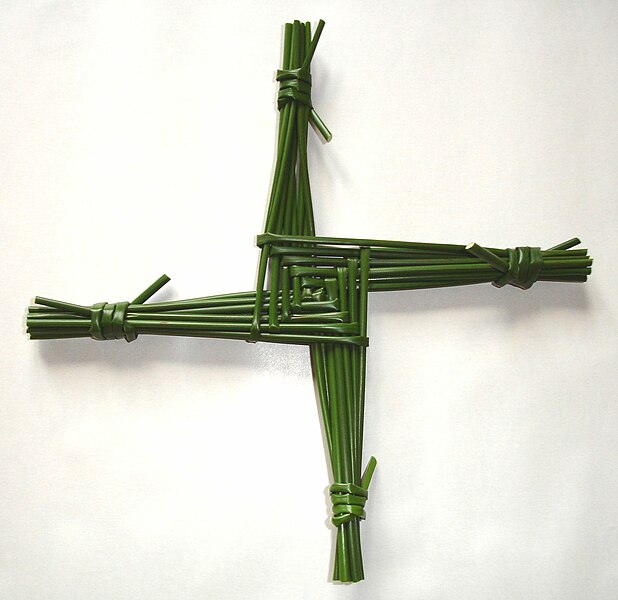
The St. Bridget’s Cross is often attributed to her, according to legend, she came upon a dying non- Christian man, in an effort to convert him to the new religion, she made a cross from the reeds that were beside him. That is all that is known of the origins of the St. Bridget’s Cross, but traditionally, a new one is made each year, on the feast of St. Bridget, (Feb. 1) while the old one is burned.

The feast of St. Bridget, which in some calenders falls on the 1st or 2nd of February,was originally one of the major festivals of the Celtic calender, known as Imbolc, it marked the first days of spring.

The name Bridget spread outside the Celtic world to the Germanic countries, it was popularized in Scandinavia by St. Bridget of Sweden, a Swedish noblewoman, mystic and founder of the Bridgettine order of nuns. She was also the mother of St. Katherine of Vadstena.

Between the 18th and 19th-centuries, when Irish immigrants first settled in the United States, the name was so common among the Irish, that Bridget or its diminutive form of Biddy became a slang term for any Irish woman.

Currently, Bridget 394th most popular female name in the United States, 2008. Its cognate of Brigitta is currently the 88th most popular female name in Hungary, (2008).

Other forms of the name include:

  • Brigit (Asturian/Scottish)
  • Birkide/Birxita (Basque: beer-KEE-de, beer-SHEE-tah)
  • Brec’hed (Breton: modern)
  • Brigantis (Breton: ancient)
  • Brigita Бригита (Bulgarian/Croatian/Czech/Latvian/Lithuanian/Romanian/Slovak/Slovene)
  • Brígida (Catalan/Portuguese/Spanish)
  • Brigantia (Celtic)
  • Berit (Danish/Norwegian: BEH-reet)
  • Birgit (Danish/Norwegian/Swedish: BEER-geet)
  • Birgitta (Danish/Dutch/Estonian/Finnish/German/Icelandic/Lithuanian: beer-GEET-tah)
  • Birgitte (Danish/German: beer-GEET-te)
  • Birte/Birthe (Danish/Norwegian: BEER-te)
  • Gitte (Danish: originally a diminutive form, used as an independent given name: GEET-te)
  • Bridget (English/German)
  • Pirjo (Finnish: PEER-yo)
  • Pirkko (Finnish” PEERK-ko)
  • Piritta (Finnish: PEE-reet-tah)
  • Priitta (Finnish: PREET-tah)
  • Brigitte (French: bree-ZHEET)
  • Bríxida (Galician: BREE-shee-dah)
  • Berecyntia (Gaulic)
  • Brigindo/Brigandu (Gaulic)
  • Birgid (German: BEER-geet)
  • Brida (German: obscure)
  • Brigida (German/Sardinian: bree-GEE-dah)
  • Brigitta (German/Hungarian)
  • Bríd (Irish-Gaelic: BREED)
  • Brídín (Irish-Gaelic: brid-EEN)
  • Brighid/Brigid (Irish-Gaelic)
  • Bedelia (Irish)
  • Bride (Irish: BRIDE or BREED)
  • Brigidine (Irish)
  • Brigida (Italian: BREEJ-ee-dah)
  • Brigidina (Italian: obscure)
  • Briej (Limburgish)
  • Brede (Manx)
  • Breesha (Manx)
  • Breeshey (Manx)
  • Breda (Norwegian: BREH-dah)
  • Brita/Britta/Brit/Britt (Norwegian/Swedish: BREE-tah, BRIT-tah, BRITT)
  • Bryda (Polish)
  • Brygida (Polish: brih-GEE-dah)
  • Braida/Brida (Romansch)
  • Brìghde/Brìde (Scots-Gaelic)
  • Gittan (Swedish: originally a diminutive form, used as an independent given name: GEET-tahn)
  • Ffraid (Welsh: FRAID)

A Swiss German diminutive form is Brigittli. German short forms are: Biggi, Briggi, Gitte, Gitti and Gittl.

Irish and English diminutives are: Biddy, Bride, Bree, Brie, Bridie and Bridge.
Alice, Allison

Gender: Feminine
Origin: debated
Meaning: debated
Eng (AL-is)

The name is of debated origin and meaning, and is usually narrowed down to two possible origins and meanings, one, the most popular theory, is that it is a French Norman form of Alaïs, which is an old French form of the Germanic, Adalheid, meaning, “noble; high.” Other sources like to link the name with a Greek source, meaning, “truth”, however, though this is a popular etymology, I was never able to confirm it.

Alice was quite popular in Medieval Europe, as were her offshoots: Alicia, Alix and Alison.

In 1880, Alice was the 8th most popular female name in the United States, today, Alice stands at a meagre # 326, being replaced by her more modern sounding counterparts: Alicia and Allison.

Allison is the 32nd most popular female name in the United States, (2008).

Contrary to popular belief, Allison/Alison is a very old feminine given name, which can be traced all the way back to the Normans. Its was originally a diminutive form of Aalis, (the Norman form of Alice), and was introduced into England during the 11th-century. Allison/Alison disappeared at the end of the Middle Ages, and was revived in the 20th-century. She first appeared in the U.S. top 1000 in 1946, coming in as the 903rd most popular female name.

Another very current version is Alicia, which is actually fading in popularity. As of 2008, she was the # 178th most popular female name in the United States, but back in 1983, she was the 41st most popular female name.

The Alice is form is not just relegated to English-speaking countries. Her usage is found in France, pronounced, (ah-LEES), in Italy as (ah-LEE-che), in the Czech Republic as (ah-LEET-seh). She is also used in German-speaking countries, Portuguese-speaking countries and in Scandinavia. Her current rankings are as follows:

  • # 99 (Australia, 2008)
  • # 58 (Belgium, 2006)
  • # 46 (England/Wales, 2008)
  • # 358 (Germany, 2009)
  • # 85 (Ireland, 2008)
  • # 10 (Italy, 2006)
  • # 488 (the Netherlands, 2008)
  • # 1 (Sweden, 2009)

Her Latinate counterpart of Alicia is also very transcultural, her rankings are as follows:

  • # 97 (Australia, 2008)
  • # 62 (Belgium, 2006)
  • # 95 (England/Wales, 2008)
  • # 94 (Germany, 2009)
  • # 110 (the Netherlands, 2008)
  • # 17 Alicja (Poland, 2008)
  • # 90 (Scotland, 2008)
  • # 43 (Spain, 2008)
  • # 29 (Sweden, 2009)

Other forms of the name include:

  • Alizia (Aragonese)
  • Licia (Asturian)
  • Alike (Basque)
  • Alícia (Catalan/Spanish: ah-LEE-thee-ah Spanish European. ah-LEE-see-ah Latin American Spanish)
  • Alice (Czech/Danish/Dutch/English/French/German/Icelandic/Italian/Norwegian/Swedish)
  • Alicia (English/Galician/German/Italian: ah-LEE-shuh in English and ah-LEE-chah in Italian)
  • Aila/Aile (Estonian)
  • Aili (Estonian/Scottish)
  • Aliise (Estonian)
  • Aliisa (Finnish)
  • Alison (French)
  • Alix (French: ah-LEEKS)
  • Aliki/Alíkē Aλίκη (Greek: Modern)
  • Aliz (Hungarian)
  • Ailís (Irish-Gaelic: AY-leesh)
  • Alise (Latvian)
  • Alicija (Lithuanian)
  • Ealee (Manx)
  • Ealish (Manx)
  • Aalis (Norman)
  • Alicja (Polish: ah-LEET-syah)
  • Alisa Алиса (Russian)
  • Aileas (Scots-Gaelic)
  • Alica (Slovakian: ah-LEET-sah)
  • Allis (Swedish)
  • Alis (Welsh)

An obscure Italian masculine form is  Alicio.

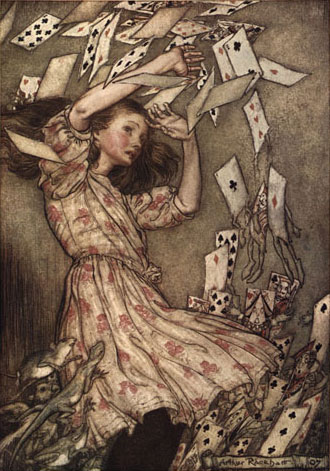
In popular fiction, it is borne by the protagonist of Lewis Carroll’s Alice’s Adventures in Wonderland (1865).

Designated name-days are Janury 15 (Czech Republic), June 23rd (Sweden), September 16 (Estonia) and December 16 (France).

Victor, Victoria

Origin: Latin
Meaning: “victory.”

Both names are derived from the Latin, meaning, “victory.”

Victoria is the feminine form of Victorius, but it was also the name of the Roman goddess of Victory, the counterpart of the Greek goddess, Nike.

The name was borne by an early North African Christian martyr, its masculine counterpart, was also borne by several early saints, including three popes.

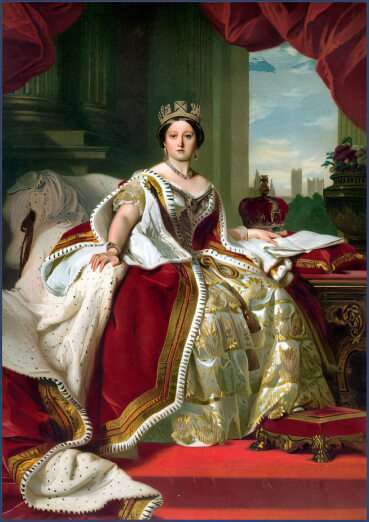
Victoria did not come into use in the English-speaking world till the 19th-century, when Victoria became queen of the British Empire. This period in history, the Victorian Era, was named in her honour, as were several geographic locations throughout the former British Empire.

Currently, in the United States, Victoria is the 27th most popular female name. Her rankings in other countries are as follows:

  • # 41 (Belgium, 2006)
  • # 56 (Canada, B.C., 2008)
  • # 28 (Chile, 2006)
  • # 16 (Czech Republic, 2009)
  • # 17 (Denmark, 2009)
  • # 44 (Germany, 2009)
  • # 10 (Hungary, 2008)
  • # 27 Vittoria (Italy, 2006)
  • # 297 (the Netherlands, 2008)
  • # 26 (Norway, 2009)
  • # 2 Wiktoria (Poland, 2008)
  • # 8 (Russia, Moscow, 2007)
  • # 58 (Spain, 2008)
  • # 92 (Sweden, 2009)

As for its masculine counterpart, Victor, was never a popular choice in the English speaking world, but has always been quite common in Latin American countries and on continental Europe. His rankings are as follows:

  • # 15 (Belgium, 2006)
  • # 37 (Chile, 2006)
  • # 45 (Czech Republic, 2009)
  • # 7 (Denmark, 2009)
  • # 270 (Germany, 2009)
  • # 206 (the Netherlands, 2008)
  • # 9 Wiktor (Poland, 2008)
  • # 8 (Sweden, 2009)
  • # 111 (the United States, 2008)

Other forms of Victoria include:

  • Victòria (Catalan)
  • Viktorie (Czech: diminutive form is Viktorka)
  • Viktoria (Danish/German/Swedish)
  • Victoria (Dutch/English/Finnish/German/Norwegian/Romanian/Spanish/Swedish)
  • Vihtoriina (Finnish)
  • Victoire (French)
  • Victorine (French)
  • Viktória (Hungarian/Slovak)
  • Viktorina (Hungarian)
  • Viktoría (Icelandic)
  • Vittoria (Italian)
  • Vittoriana (Italian)
  • Vittorina (Italian)
  • Viktorija Викторија (Latvian/Lithuanian/Serb0-Croatian/Slovene)
  • Wiktoria (Polish)
  • Vitória (Portuguese)
  • Viktoriya Виктория (Russian/Ukrainian)

Common English diminutives include: Vicky/Vicki or Tori. A Romanian short form is Vica. Vicki/Vikki is also used as a short form in the German speaking countries as well as in Scandinavia.

Wiktorka and Wisia are the Polish short forms.

Male variations include:

  • Viktor (Albanian/Czech/Dutch/Finnish/German/Hungarian/Slovak/Swedish)
  • Vítor (Asturian)
  • Viktar Віктар (Belarusian)
  • Victor (Danish/Dutch/German/English/French/Norwegian/Portuguese/Romanian/Swedish)
  • Vittorio (Italian)
  • Victorius (Latin)
  • Viktoras (Lithuanian)
  • Wiktor (Polish)
  • Vítor (Portuguese)
  • Viktor Виктор (Russian/Ukrainian)
  • Víctor (Spanish)

The name was borne by famous French author, Victor Hugo.