Benedict, Benedikt

Gender: Masculine
Origin: Latin
Meaning: “blessed.”

The name comes directly from the Late Latin name Benedictus meaning “blessed.” The name was borne by a 6th-centuy Italian monk and saint who credited for being the founder of the Order of the Benedictines.

The name was very common throughout Medieval Europe, being borne by 16 popes, it was fairly popular in England, in the form of Bennett.

The name was also commonly used among German-Jews, being used as a cognate of the Hebrew male name Baruch בָּרוּךְ (blessed).

In the United States, the name became taboo to use due to its associations with Benedict Arnold (1741-1801) a famous American deserter and traitor to the British.

The name recently skyrocketed in Germany after the succession of the German born Pope Benedict XVI. It is currently the 93rd most popular male name in Germany, (2011). It is especially popular in Bavaria.

His rankings in other countries are as follows:

  • # 1 (Bence, Hungary, 2010)
  • # 32 (Benedek, Hungary, 2010)
  • # 294 (Benoît, France, 2009)

Other forms of the name include:

  • Benedikti (Albanian)
  • Benedet (Aragonese)
  • Benedictu (Asturian)
  • Benedita (Basque)
  • Beñat (Basque)
  • Benead (Breton)
  • Benet (Catalan)
  • Benedettu (Corsican/Maltese/Sardinian)
  • Benedikt Венедикт (Croatian/Czech/German/Icelandic/Norwegian/Russian/Serbian/Scandinavian/Ukrainian)
  • Ben(d)t (Danish/Norwegian)
  • Benedictus (Dutch/Late Latin)
  • Benedict (English/German/Romanian/Scandinavian)
  • Bennett (English)
  • Pentti (Finnish)
  • Bénédict (French)
  • Benoît (French)
  • Beinidict (Gaelic)
  • Bieito (Galician)
  • Benedikhti ბენედიქტე (Georgian)
  • Bendix (German/Norwegian)
  • Bennet (German)
  • Benz (German)
  • Venediktos Βενέδικτος (Greek)
  • Bence (Hungarian)
  • Benedek (Hungarian)
  • Benett (Hungarian)
  • Benedetto (Italian)
  • Benito (Italian/Spanish)
  • Bettino (Italian)
  • Bendiks (Latvian)
  • Benediktas (Lithuanian)
  • Bendik (Norwegian)
  • Benedix (Plattdeutsch)
  • Benedykt (Polish)
  • Benedito (Portuguese)
  • Bento (Portuguese)
  • Benezet (Provençal)
  • Banadet (Romansch)
  • Banadegt (Romansch)
  • Bandet (Romansch)
  • Benedegt (Romansch)
  • Binidittu (Sicilian)
  • Beňadik (Slovak)
  • Bengt (Swedish)
  • Bened (Welsh)
  • Benesh (Yiddish)

Feminine forms include:

  • Benedetta (Corsican/Maltese/Italian/Sardinian)
  • Benedikta (Czech/German)
  • Benedikte (Danish/Norwegian)
  • Bénédicte (French)
  • Benoîte (French)
  • Benita (Italian/Spanish)
  • Bettina (Italian)
  • Benedicta (Latin/Romansch)
  • Benedykta (Polish)
  • Benedita (Portuguese)
  • Bengta (Swedish)

Isadora, Isidora

Origin: Greek
Meaning: “gift of Isis.”
Eng (IZ-ih-DORE-ah)

The name is a feminine form of the Greek male name, Isidoros Ισιδωρος, which is composed of the name of the Egyptian goddess, Isis and the Greek word doron (gift). The name may have been created during the Hellenization of Egypt after the 3rd-century BCE, when Greek and Egyptian pantheon began to be syncrenize.

The name was also borne by several early Christian saints, the most famous being Isidore of Seville, the patron saint of Seville, Spain. This is most likely why the name became so common throughout the Spanish-speaking world.

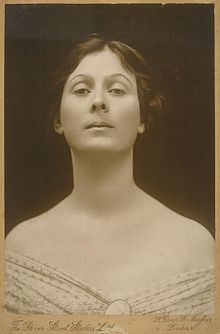
In the English-speaking world, it was most famously borne by famous dancer Isadora Duncan (1877-1927).

Currently, Isidora is the 3rd most popular female name in Chile, (2010).

Other forms of the name include:

  • Isadora (English)
  • Isidora Ισιδωρα Исидора (Greek/Italian/Macedonian/Portuguese/Romanian/Russian/Serbian/Spanish)
  • Izidóra (Hungarian)
  • Izydora (Polish)
  • Izidora (Slovene)
  • Isidra (Spanish)

Masculine forms include:

  • Isidori (Albanian/Sicilian)
  • Isidoru (Asturian)
  • Isidor (Catalan/Spanish)
  • Isidorus (Dutch)
  • Isadore (English)
  • Isidore ისიდორე (English/French/Georgian/German)
  • Isidoros Ισιδωρος (Greek)
  • Izidór (Hungarian)
  • Isidoro (Italian/Portuguese/Spanish)
  • Isidor Исидор (Macedonian/Romanian/Russian)
  • Zidore (Occitanian)
  • Izydor (Polish)
  • Izidor (Slovene)
  • Isidro (Spanish)

Amaro

Gender: Feminine
Origin: Spanish
Meaning: debated

The name could either be derived from a Germanic name Adhemar which may be composed of the elements ot (wealth; fortune) and mar (fame) or it could be from a Latin adjective amarus meaning “bitter.”

The name was borne by a legendary saint whose cult is especially popular in the regions of Galicia and Asturias. It is said that he travelled on his boat to heaven.

The name is currently the 44th most popular male name in Chile, (2010).

Alphonse, Alonso

Gender: Masculine
Origin: German
Meaning: “noble and ready.”

The name is believed to be derived from a Visigothic male name Adalfuns which is composed of the elements adal (noble) and funs (ready). It has also been associated with another Visigothic name Hildefuns meaning (battle ready). The name has always been popular in its various forms throughout Southern Europe, especially in the Iberian Peninsula where it was borne by several kings.

In its French form of Alphonse, it is the name the title character in Alexander Dumas’ 1873 book Monsieur Alphonse, which recounts the exploits of a pimp. Due to this literary association the name has come to mean “pimp” in several languages, most notably in Danish and in Polish.

Its Spanish form of Alonso, however, remains a very common name throughout the Spanish-speaking world. It is currently the 16th most popular male name in Chile (2010). It is also the 84th most popular in Spain (2010) and the 637th most popular in the United States (2010).

The more archaic Italian and Spanish form of Alfonso appears in the U.S. top 1000, coming in as the 742nd most popular male name (2010).

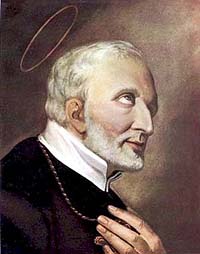
The name was most famously borne by St. Alphonsus Liguori, an Italian saint who founded the order of the Redemptorists and is considered a Doctor of the Church by the Catholic Church.

Other forms of the name include:

  • Adalfuns (German: archaic)
  • Alifonso (Aragonese)
  • Alfonsu (Asturian/Sardinian/Sicilian)
  • Fonsu (Cantabrian)
  • Alfontso (Basque)
  • Alfoñs (Breton)
  • Alfons (Catalan/Czech/Dutch/Finnish/German/Maltese/Polish/Romanian/Scandinavian: also the word for pimp in Polish and Danish)
  • Fons (Dutch)
  • Funs (Dutch)
  • Alfo (Finnish)
  • Alhvo (Finnish)
  • Altto (Finnish)
  • Alphonse (French)
  • Afonso (Galician/Portuguese)
  • Alphons (German)
  • Alfonz (Hungarian)
  • Alfonzino (Italian)
  • Alfonso (Italian/Portuguese/Spanish)
  • Alfonzo (Italian)
  • Alonzo (Italian)
  • Alphonsus (Late Latin)
  • Alfonss (Latvian)
  • Funske (Limbergish)
  • Alfonsas (Lithuanian)
  • Alonso (Portuguese/Spanish)
  • Affonzu (Sicilian)
  • Arfansu/Arfanzu (Sicilian)
  • Alfonz (Slovak/Slovene)

Feminine forms include:

  • Alphonsine (French)
  • Alfonza (Hungarian)
  • Alfonzin (Hungarian) 
  • Alfonzina (Hungarian)
  • Alfonsa (Italian/Portuguese/Spanish)
  • Alfonsina (Italian/Portuguese/Spanish)
  • Alfonza (Italian)
  • Alfonzina (Italian)

Joachim, Joaquin

Gender: Masculine
Origin: Hebrew
Meaning: “Yahweh has established.”
Eng (JOKE-im); Sp (wah-KEEN)

The name is possibly derived from the Biblical Hebrew male name, Jehoiachin, which is found in the Old Testament as the name of king of Judah imprisoned during the Babylonian exile.

Joachim appears in the apocryphal Gospel of James as the name of the husband of St. Anne and the father of the Virgin Mary. In the Qu’ran the father of Mary is named Imran, though Joachim and Imran are not etymological related. The Catholic Church, Eastern Orthodox Churches and the Anglican Church has traditionally revered this legendary character as a saint and as a result, the name became extremely popular across Europe, especially in Catholic countries.

The name was never very common in the English-speaking world but was occasionally used by Irish-Catholics and American-Catholics.

Currently Joachim is the 319th most popular male name in France, (2009) and the 496th most popular in the Netherlands (2010). Its Spanish form of Joaquin, however, ranks even higher in a couple of countries. His rankings are as follows:

  • # 5 (Chile, 2010)
  • # 99 (Spain, 2010)
  • # 306 (United States, 2010).

Other forms of the name include:

  • Iyakem (Amharic/Ethiopian)
  • Chuaquín (Aragonese)
  • Xuaco/Xuacu (Aragonese)
  • Jokin (Basque)
  • Chaosum (Breton)
  • Joasim (Breton)
  • Jechim (Breton)
  • Joasin (Breton)
  • Jaouas (Breton)
  • Yoakim Йоаким (Bulgarian)
  • Yakim Яким (Bulgarian)
  • Yokim Йоким (Bulgarian)
  • Joaquim (Catalan/Portuguese)
  • Quim (Catalan/Portuguese)
  • Ximo (Catalan/Valencian)
  • Youakim (Coptic/Syrian)
  • Jáchym (Czech)
  • Jokum (Danish)
  • Jochem (Dutch/German)
  • Aki (Finnish)
  • Jaakkima (Finnish)
  • Joachim (English/French/German/Hungarian/Polish)
  • Kim (Finnish/Scandinavian)
  • Kimi (Finnish)
  • Xaquín (Galician)
  • Xoaquin (Galician)
  • Xocas (Galician)
  • Ioa’kime იოაკიმე (Georgian)
  • Achim (German)
  • Jochen (German)
  • Jochim (German)
  • Jóakim (Icelandic)
  • Gioacchino/Gioachino (Italian)
  • Giovacchino (Italian)
  • Yoakima (Lingala)
  • Joakim Јоаким (Macedonian/Serbian/Scandinavian) 
  • Akimka (Maldovan)
  • Iacin (Murcian)
  • Juaqui (Murcian)
  • Quino (Murcian)
  • Ioachim (Romanian)
  • Giuachin (Romansch)
  • Akim АкимЯким (Russian)
  • Yakim (Russian)
  • Joaquín (Spanish)
  • Joakym Йоаким (Ukrainian)

Feminine forms include:

  • Gioacchina (Italian)
  • Gioachina (Italian)
  • Giovacchina (Italian)
  • Joachima (Polish)


Jimena, Ximena

Gender: Feminine
Origin: Spanish
Meaning: debated
Ximena Sp/Cat (shee-MEH-nah); South Am. Sp (hee-MEH-nah)
Jimena (hee-MEH-nah)

There are two general theories as to the origins of this name, one is that it is a feminine form of Simon another is that it is derived from the Basque word seme meaning “son.” In either case, it seems to have been a very popular female name in Medieval Spain.

It was borne by Ximena Díaz (1054-1115) the wife of El Cid and who also eventually became his successor to the Valencian throne. It was also borne by an even earlier Spanish noblewoman, Jimena of Asturias (b.900).

Currently Jimena and Ximena both appear in the Mexican top 100. Its Catalan form of Ximena is the 2nd most popular female name in Mexico while its Spanish derivative of Jimena ranked in at # 13.

Her rankings in other countries are as follows:

  • # 42 (Spain, 2010 Jimena)
  • # 272 (United States, 2010 Ximena)
  • # 400 (United States, 2010 Jimena)

Other forms of the name include:

  • Ximena (Catalan/Ladino/Portuguese)
  • Chimène (French. shee-MEN)
  • Ximene (French. zee-MEN)
  • Jimena (Galician/Spanish)
  • Gimena (Medieval Spanish)
Obscure masculine forms are Jimeno and Ximeno.
Sources

Fernanda and Ferdinand

Origin: German
Meaning: “brave journey”

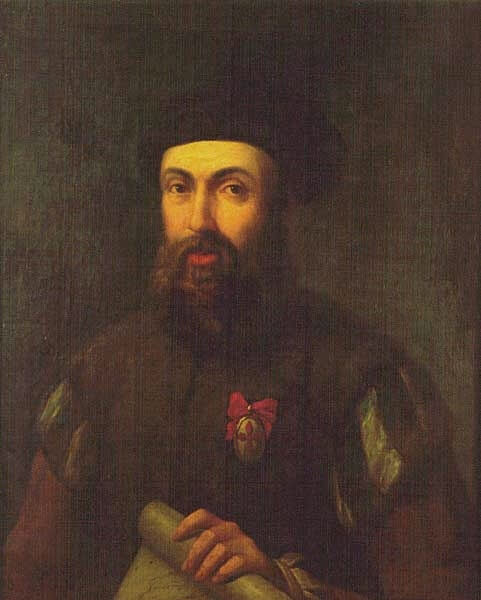
Ferdinand is composed of the Germanic elements, farði (journey) and nanð (brave; courageous).

The name was first introduced into Iberian Peninsula by the Visigoths and from there it entered into the Spanish royal lines. Interestingly enough, it did not become common in Germanic countries until the 16th-century, when the Habsburg gained control over Spain. The name was very popular among Spanish royalty and later with the Hapsburgs.

Ferdinand is the progenitor of the common Spanish surnames Fernandez and Hernandez.

Its feminine form of Fernanda is currently the 10th most popular female name in Chile, the 15th most popular in Mexico and the 341st most popular in the United States, (2010). While its contracted Hungarian form of Nándor is currently the 67th most popular male name in Hungary, (2010).

Other feminine forms include:

  • Fernande (French)
  • Ferdinanda (German)
  • Ferdinande (German)
  • Ferdinandine (German)
  • Fernandia (German)
  • Ferdinanda (Italian)
  • Fernanda (Italian/Portuguese/Spanish)
  • Winanda (Polish)
  • Hernanda (Spanish)

Masculine forms include:

  • Fernandu (Asturian)
  • Hernandu (Asturian)
  • Erlantz (Basque)
  • Errando (Basque)
  • Pernando (Basque)
  • Perrando (Basque)
  • Ferrà (Catalan)
  • Ferran (Catalan)
  • Ferdinand (Czech/French/German)
  • Veeti (Finnish)
  • Veerti (Finnish)
  • Veertinantti (Finnish) 
  • Fernand (French)
  • Fernandel (French: obsolete)
  • Ferrand (French: obsolete)
  • Fernán (Galician)
  • Fridunanth (Gothic)
  • Fernandó (Guarani)
  • Fernandío (Guarani)
  • Ferdinánd (Hungarian)
  • Nándor (Hungarian)
  • Ferdinando (Italian)
  • Fernando (Italian/Spanish)
  • Nando (Italian)
  • Fernandu (Leonese)
  • Nandu (Leonese)
  • Ferdinandas (Lithuanian)
  • Fridenand (Old High German)
  • Ferdynand (Polish)
  • Winand (Polish)
  • Fernão (Portuguese)
  • Hernando (Spanish)
  • Hernán (Spanish)
A common German short form is Ferdy.

Virginia

Gender: Feminine
Origin: Latin
Meaning: “virgin”
(ver-JIN-yah)

Virginia is a feminine form of the Roman family name Virginius which is believed to be derived from the Latin virgo meaning “virgin; maiden.”

According to Roman legend, the name was borne by a girl who was killed by her father in order to save her from a corrupt Roman official.

The Commonwealth of Virginia was named by Sir Walter Raleigh in 1584 in part for Queen Elizabeth I of England (known as the Virgin Queen) and also in part an anglicized form of a Native American chief’s name, Wingina. 

The name was borne by Virginia Dare (1587), lauded to be the first ethnically English child to be born in the New World. The name seems to have been very popular in the United States among early settlers, either as a nod to an American birth or in honour of the first English child born in the United States.

Among Catholic immigrants, the name caught on due to its associations with the Virgin Mary.

Currently, Virginia is the 608th most popular female name in the United States, but in 1921, it ranked in as the 6th most popular female name.

Other forms of the name include:

  • Virginië (Afrikaans)
  • Virxinia (Asturian)
  • Virgínia (Catalan)
  • Vijini (Creole)
  • Verginia(Latin: early)
  • Virginie (French/Czech)
  • Firginia (Frisian)
  • Wilikinia (Hawaiian)
  • Virzsini (Hungarian)
  • Verginia(Italian)
  • Virna (Italian)
  • Virginia (Italian/Spanish/Portuguese)
  • Virdžīnija (Latvian)
  • Virdžinija (Lithuanian)
  • Virginn-a (Ligurian)
  • Wirginia (Polish)
  • Verge (Occitanian)
  • Virgínia (Occitanian)
  • Verjhini (Occitanian)
  • Virdžinėjė (Saimogaitian)

A common English short form is Ginny.

Source

  1. http://www.behindthename.com/name/virginia

Dulce

Gender: Feminine
Origin: Spanish/Portuguese
Meaning: “sweet; candy.”
DOOL-the (Spanish), DOOL-se (Latin American Spanish)

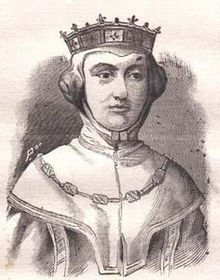
The name comes directly from the Spanish and Portuguese word for “sweet; candy” and has been used in the Iberian peninsula since the early Middle Ages. It was borne by Douce I of Provence (1090-1129), Douce II of Provenece (b.1166) Dulce of Barcelona (1160-1198) and Dulce I of Léon (b.1195).

Currently it is the 409th most popular female name in the United States, (2010).

It was commonly bestowed among Jews and Christians. Other forms of the name include:

  • Dulcía (Aragonese)
  • Dulze (Basque)
  • Esti (Basque)
  • Estinñe (Basque)
  • Dolça (Catalan/Ladino/Occitanian/Provençal)
  • Dowse (English: archaic)
  • Duce (English: archaic)
  • Dulcie (English)
  • Dulcinea (English/Spanish)
  • Douce (French: archaic)
  • Aldonza/Aldonça (Galician)
  • Dolce (Italian: archaic. DOLE-chay)
  • Zusa (Yiddish. A direct translation of Dolça, this was used among Spanish-Jews who had been expelled from Spain and had settled in Germany and Poland introducing it to Yiddish-speakers, thus creating a Yiddish cognate. A masculine cognate is Zusman)
Source

Cyrus

Gender: Masculine
Origin: Persian

The name is found in History and in the Old Testament as the name of one of the most powerful leaders who ever lived, Cyrus the Great (c. 600 BC or 576 BC–530 BC). He was a conqueror of the Babylonians and who, according to the Bible, freed the captive Jews, allowing them to return to their homeland. It is also borne by several other Persian kings.

Cyrus, in its Persian form, has always been a popular male name in Iran. In the English-speaking world, it did not catch on until after the Protestant Reformation. Currently, Cyrus is the 488th most popular male name in the United States, (2010). The name is commonly used among Iranian-Americans, due to it being such a classic name in Iran and the fact that it is easily translatable to English.

As for its etymology, general consensus agrees that it may derive from the ancient Persian elements khor (sun) and vash (likeness). However, the noted linguist, Karl Hoffman (1915-1996), argued that it is based on an Indo-European root meaning “to humiliate.”

Other forms of the name include:

  • Kores (Afrikaans)
  • Kyowros Կյուրոս (Armenian)
  • Ciru (Asturian)
  • Kir Кир (Azeri/Belarusian/Bosnian/Bulgarian/Croatian/Kyrgyz/Polish/Russian/Rusyn/SerbianUkrainian)
  • Kuir (Basque)
  • Ziro (Basque)
  • Kirus (Breton)
  • Cir (Catalan/Occitanian)
  • Kýros (Czech/Icelandic/Slovak/Slovene)
  • Cyrus (Dutch/English/French/Latin/Polish/Romanian)
  • Kyros Κυρος (Estonian/German/Greek/Scandinavian)
  • Kyyros (Finnish)
  • Cyr (French)
  • Syrus (Frisian)
  • Cíoras (Gaelic)
  • K’iros კიროს (Georgian)
  • Koresh כּוֹרֶשׁ (Hebrew)
  • Círus/Cýrus (Hungarian)
  • Kurus (Hungarian)
  • Cirino (Italian)
  • Ciro (Italian. CHEE-ro)
  • Cirotto (Italian)
  • Kurushi Куруши (Kyrgyz)
  • Kûruşê (Kurdish)
  • Kīrs (Latvian)
  • Kyras (Lithuanian)
  • Kurusy (Malay)
  • Kurush/Kourosh کوروش‎ (Persian)
  • Ciro (Spanish/Portuguese. SEE-ro; THEE-ro)
  • Kiros (Turkish)
The designated name-days are: January 31 (Poland) and September 12 (Poland).
The name has several feminine offshoots, including Cyra, (Eng. SY-rah), which was a popular female name during the Byzantine empire and the Russian, Kira (KEER-ah). Kira  is currently the 90th most popular female name in Hungary, (2010) and the 308th most popular in the United States, (2010). Other feminine forms include:
  • Kira Кира (Bulgarian/German/Hungarian/Latvian/Polish/Russian/Ukrainian)
  • Cyra (English/Latin/Polish)
  • Kiira (Estonian/Finnish)
  • Kyra (Greek/English)
  • Kíra (Hungarian)
  • Cira (Italian/Spanish)
  • Cirina (Italian)
The designated name-days for Kira are: March 10 (Latvia), March 12 (Russia), July 7 (Poland), October 12 (Latvia). November 7 (Estonia).
Source