Mona

The name could be of several different etymologies depending on the source of the bearer. In Nothern Europe, it is a contracted form of Monika or any name that contains the element -mona. 

In the case of the Mona Lisa, mona is an archaic Italian title, being a contraction of madonna.

It has been suggested that the name could be from the Greek monos (one) and it can also be used as an anglicized form of the Gaelic, Muadhnait (little noble one).

The name is used throughout the Middle East, in this case it is derived from the Arabic منى (muna) meaning, “wishes; desires.”

Currently, Mona is the 160th most popular female name in Germany, (2011).


Azad

Gender: Masculine
Origin: Persian
Meaning: “free.”

The name comes directly from the Persian word for “free,” and has been in usage since Pre-Islamic times. It was borne by Azad Shah Afghan (1750-1781) the founder of the Azad dynasty which had ruled most of Central Asia for the later half of the 18th-century. It was also borne by an early Christian saint and martyr who was martyred along with his companions under the Sassanid Empire of the 4th-century. In the Western calendar of Saints, his name is usally latinized as Asatus.

It is currently borne by a German rapper of Kurdish descent, known simply as Azad (b.1974)

Azad is currently the 465th most popular male name in Germany, (2011).

Hira

Gender: Feminine
Origin: Arabic
(HEE-rah)

The name is of uncertain meaning but is taken from the name of a cave in Mecca where it is believed the Prophet Mohammed first received his visions and revelations from God through the angel Gabriel.

The name is often used as a feminine given name, bestowed in reference to the event that took place.

Currently, Hira is the 483rd most popular female name in Germany, (2011).

Rania

Gender: Feminine
Origin: Arabic/Greek
Meaning: “to gaze at.”

The name could either be from the Arabic, rana رنا, meaning, “to gaze at”, or it could be a Greek contraction of Ourania, the modern Greek form of Urania (sky).

It is currently borne by Queen Rania of Jordan (b.1970)

Rania ranked in as the 489th most popular female name in Germany, (2011). The name is sometimes transliterated as Ranya or Raniya. A Bosnian form is Ranja.


Dahlia, Dalia

Gender: Feminine
(DAHL-yah)

A name with various different meanings and references depending on how you choose to spell it. It is an edgier floral appellation that could overcome a Lily or Daisy any day, as well as a name that can fit into any culture or society. Along with its easy pronunciation and feminine, vivacious sound, the name is pleasing to just about any language on the planet.

If you prefer the Dalia route, then the name can either be Lithuanian, Hebrew or Arabic. If spelled like the flower, the meaning stems from the surname of the botanist who first classified the species, Anders Dahl; Dahl being a common Swedish surname meaning “valley. ”

Dalia by Emily Blivet

Dalia by Emily Blivet

The name could be derived from the Lithuanian word for “fate; luck; lot.” It was the name from the Baltic goddess of weaving, fate and childbirth and she is believed to have been interchangeable with the goddess Laima. The name is still relatively popular in Lithuania, and is currently borne by Lithuania’s President, Dalia Grybauskaitė (b.1956).

The name is also very common in the Middle East. In Israel, it is a more modern Hebrew word name meaning “branch.” In Arabic, it means “grapevine.”

The name is occasionally used in Mexico, where the dahlia is considered the national flower. In fact, the ancient Aztecs used the flower for ceremonial purposes and fashioned its stems into pipes.

Currently, Dalia is the 476th most popular female name in Germany, (2011), and the 969th most popular in the United States, (2010). Its floral counterpart of Dahlia came in as the 650th most popular female name in the United States, (2010).

A possible nickname option is the sweet, yet vintagy Dolly

Simeon, Simon

Gender: Masculine
Origin: Biblical, Hebrew
Meaning: “he has heard.”
Eng (SIE-mun)

Simeon first appears in the Old Testament as a patriach of the Simeonite tribe and one of the 12 sons of Jacob.

The name origins are debated. The Torah claims that the name is in reference to Leah’s cry of anguish to God over her husband’s deference to her. Being a derivative of the Hebrew shama’on meaning “he has heard my suffering.” In this case, the name would share the same etymology as the name Ishmael (God has heard).

In some classical Rabbinical texts the name is sometimes translated to mean “he who listens to the words of God.” It has even been suggested that it is derived from the Hebrew sham’in meaning “there is sin” which is in reference to Zimri, an ancestor of Simeon’s, who committed the sin of having a relationship with a Midianite woman.

The name was borne by several other characters in the Old and New Testament, in the forms of Simeon and Simon. Simon later became associated with St. Peter. During the early Christian era, the Greek world took the name to mean “snub nosed” due to its similarity in sound to the Greek word σιμοσ (simos).

Simon has always been prevalent in the Western World, it is currently very trendy in continental Europe. The rankings of popularity in various countries are as follows:

  • # 3 (Poland, Szymon, 2010)
  • # 7 (Austria, 2010)
  • # 10 (Belgium, 2009)
  • # 12 (Italy, Simone, 2008)
  • # 26 (Germany, 2011)
  • # 32 (Denmark, 2010)
  • # 37 (Sweden, 2010)
  • # 49 (France, 2009)
  • # 56 (the Netherlands, Siem, 2010)
  • # 60 (Croatian, Šimun, 2010)
  • # 60 (Norway, Simen, 2010)
  • # 64 (Norway, 2010)
  • # 71 (Croatia, Šime, 2010)
  • # 75 (the Netherlands, 2010)
  • # 91 (Hungary, 2010)

Other forms of the name include (divided alphabetically by origin)

  • Simeon Սիմէօն (Albanian/Armenian/Bulgarian)
  • Simon Симон Սիմոն (Albanian/Armenian/English/Finnish/German/Hungarian/Macedonian/Malayalan/Norwegian/Occitanian/Slovenian/Swedish/ Romanian)
  • Samān (Arabic)
  • Shamo (Assyrian)
  • Shamun ܫܡܥܘܢ (Assyrian)
  • Şımon (Azeri)
  • Ximun (Basque)
  • Shyman Шыман (Belarusian)
  • Symon Сымон (Belarusian)
  • Simó (Catalan)
  • Simone (Corsican/Italian)
  • Šime (Croatian)
  • Šimo (Croatian)
  • Šimun (Croatian)
  • Šimon (Czech/Prekmurian/Slovak)
  • Simion (Danish/Romanian)
  • Simoen (Danish)
  • Siemen (Dutch/Frisian)
  • Siem (Dutch)
  • Siimon (Estonian/Finnish)
  • Smeon ስምዖን, (Ethiopian)
  • Símeon /Símun (Faroese)
  • Sema (Finnish)
  • Semen (Finnish/Gascon)
  • Semjon (Finnish)
  • Semoi (Finnish)
  • Siim (Finnish)
  • Siimoni (Finnish)
  • Simeoni (Finnish)
  • Simo (Finnish/Serbian)
  • Symeon Συμεών (Greek)
  • Symeonos Συμεώνος (Greek)
  • Siimuut (Greenlandic)
  • Shimon שמעון (Hebrew)
  • Símon (Icelandic)
  • Síomón (Irish)
  • Sshimeoni (Kosovar)
  • Sīmanis (Latvian) 
  • Sīmans (Latvian)
  • Simons (Latvian)
  • Saimonas (Lithuanian)
  • Saimontas (Lithuanian)
  • Simanas (Lithuanian)
  • Simas (Lithuanian)
  • Simeonas (Lithuanian)
  • Simonas(Lithuanian)
  • Sime Симе (Macedonian)
  • Shimon (Malayalam)
  • Simen/Simian (Norwegian)
  • Simå (Norwegian dialectical form: Norrland & Østerdalen)
  • Sømjo (Norwegian dialectical form: Rogaland)
  • Simonu/Symeonu (Old Church Slavonic)
  • Symeon (Polish)
  • Szymon (Polish: Szymek and Szymuś are diminutives)
  • Simão (Portuguese)
  • Simeão (Portuguese)
  • Simun (Quecha)
  • Schimun (Romansch)
  • Semyon Семён (Russian)
  • Sim (Scottish)
  • Šimej (Slovene)
  • Simón (Spanish)
  • Jimeno (Spanish)
  • Ximeno (Spanish)
  • Simoni (Swahili)
  • Shemod (Syrian)
  • Shimeon (Syrian)
  • Semen/Symon Симон (Ukrainian)
  • Mişon (Turkish)
  • Seimon (Welsh)
  • Simwnt (Welsh)
  • Shimmel (Yiddish)

Feminine forms include:

  • Simona (Czech/Italian/Portuguese/Romanian/Slovak/Slovenian)
  • Simonia/Simonie (Danish)
  • Simoona (Finnish)
  • Simone (French)
  • Simonette (French)
  • Szimóna (Hungarian)
  • Szimonetta (Hungarian)
  • Símonía (Icelandic)
  • Simonetta (Italian)
  • Sima (Lithuanian)
  • Simonė (Lithuanian)
  • Szymona (Polish)
  • Simoneta (Portuguese)
  • Ximena (Portuguese/Spanish)
  • Simoneta/Šimona (Slovak)
  • Simeona (Slovene)
  • Jimena (Spanish)

The designated name-day is October 28, and October 30 in Slovakia.

Asad

Gender: Masculine
Origin: Arabic أسد
Meaning: “lion.”

The name comes from one of the many Arabic words denoting the aspect of the lion. It was used as a title for Ali (599-661). The name seems to be pre-Islamic in origin as it was the name of the maternal grandfather of Ali: Asad ibn Hashim.

Currently, its Turkic form of Esad is the 499th most popular male name in Germany, (2011).

Another form of the name includes:

  • Esad (Albanian/Bosnian/Turkish).

Isadora, Isidora

Origin: Greek
Meaning: “gift of Isis.”
Eng (IZ-ih-DORE-ah)

The name is a feminine form of the Greek male name, Isidoros Ισιδωρος, which is composed of the name of the Egyptian goddess, Isis and the Greek word doron (gift). The name may have been created during the Hellenization of Egypt after the 3rd-century BCE, when Greek and Egyptian pantheon began to be syncrenize.

The name was also borne by several early Christian saints, the most famous being Isidore of Seville, the patron saint of Seville, Spain. This is most likely why the name became so common throughout the Spanish-speaking world.

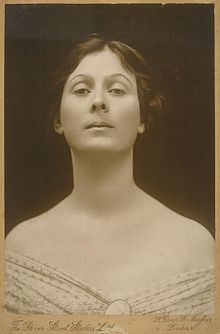
In the English-speaking world, it was most famously borne by famous dancer Isadora Duncan (1877-1927).

Currently, Isidora is the 3rd most popular female name in Chile, (2010).

Other forms of the name include:

  • Isadora (English)
  • Isidora Ισιδωρα Исидора (Greek/Italian/Macedonian/Portuguese/Romanian/Russian/Serbian/Spanish)
  • Izidóra (Hungarian)
  • Izydora (Polish)
  • Izidora (Slovene)
  • Isidra (Spanish)

Masculine forms include:

  • Isidori (Albanian/Sicilian)
  • Isidoru (Asturian)
  • Isidor (Catalan/Spanish)
  • Isidorus (Dutch)
  • Isadore (English)
  • Isidore ისიდორე (English/French/Georgian/German)
  • Isidoros Ισιδωρος (Greek)
  • Izidór (Hungarian)
  • Isidoro (Italian/Portuguese/Spanish)
  • Isidor Исидор (Macedonian/Romanian/Russian)
  • Zidore (Occitanian)
  • Izydor (Polish)
  • Izidor (Slovene)
  • Isidro (Spanish)

Fadi

Gender: Masculine
Origin: Arabic فادي
Meaning: “saviour.”
(FUH-DEE)

The name comes directly from the Arabic word for saviour and is a very popular name among Middle Eastern Christians. Al-Fadi (the saviour) is an appellation used for Jesus.

Currently, Fadi is the 470th most popular male name in Quebec, Canada (2010).

The feminine form is Fadia فادية.

Sources

  1. http://www.behindthename.com/name/fadi
  2. http://www.babynamer.com/fadi
  3. http://www.babynamespedia.com/meaning/Fadi


Yasser

Gender: Masculine
Origin: Arabic  ياسر
Meaning: “to be rich; to become easy.”
(YAH-sir)

The name is derived from the Arabic يسر  (yasira) meaning “to be rich; to become easy.”

Currently, Yasser is the 394th most popular male name in Quebec, Canada (2010).

Other forms of the name include: Yasir. 

The name is borne by Palestinian Liberation Organization leader Yasir Arafat.

Source

  1. http://www.behindthename.com/name/yasir