Gender: Feminine
Origin: Persian
Meaning: “butterfly.”
The name comes directly from the Farsi meaning “butterfly.” Parvana is the Pashtun version. Farvaneh is an older Persian form.
Gender: Feminine
Origin: Persian
Meaning: “butterfly.”
The name comes directly from the Farsi meaning “butterfly.” Parvana is the Pashtun version. Farvaneh is an older Persian form.
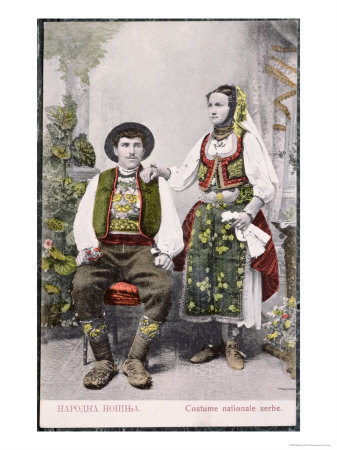 Gender: Feminine
Origin: Serbian
Meaning “active”
(rah-DOY-kah)
The name is a popular one in Serbia, though technically it comes from the same root as the word radost, which appears in all the Southern Slavic languages. The masculine form is Radoje (rah-DOY-yeh).
 Gender: Feminine
Origin: Icelandic
Meaning: “sea goddess”
(SY-dees)
The name is made up of the Norse elements sae meaning “sea” and dis meaning “goddess.”
As of 2008, approximately 147 women in Iceland bore this as a first name, and 33 had it as a middle name.
The name is also in usage on the Faroe Islands.
 Gender: Masculine
Origin: Old Norse/Norwegian
(tar-YEYE; jei rhymes with the word eye)
The name is derived from the old Norse Torgeir, which is composed of the elements Thor, (in reference to the Norse god), and geirr meaning “spear.” Hence: “Thor’s speare.”
The name is currently very popular in Norway. Another form of the name is Terje (TARE-yeh).
The name was borne by Tarjei Vesaas, (1897-1970). He is considered to be one of Norway’s greatest writers of the 20th-century.
Other forms are Torjer and Torger.
The designated name-day is October 13.
 Gender: Masculine
Origin: Frisian
Meaning: “ice sword”
The name is of Frisian origin and is derived from the ancient Germanic elements is meaning “ice” and brand meaning “sword”, hence: “ice sword.”
Aother name with the same elements is Isbert (bright ice; as bright as ice); and a variation of Ysbran is Ysbrand.
 Gender: Feminine
Origin: Slovenian
Meaning: “dawn.”
(ZAR-yah)
The name is derived from an old Slavonic name Zarya, which was the name of an ancient Slavonic goddess of the dawn.
Zarja is also the word for dawn in Slovenian.
 Gender: Feminine
Origin: Lithuanian
Meaning: “hope”
(VEEL-tay)
The name is derived from the Lithuanian word viltis, meaning “hope.”
It is a direct translation of the Latin saint’s name Spes.
It is currently the 8th most popular female name in Lithuania (2008)

Gender: Feminine
Origin: Frankish/Germanic
Meaning: “family battle”
English: (FAIR-uh-HILD); German: (fah-rah-HILT)
The name is derived from the Germanic fara meaning “family, lineage, kind” and the element hild meaning “battle.” Hence “family battle.”
The name was born by Farahild of Neustria, Belgium (593-684), wife of Wandregisi, the mother of St. Amalberga.
There is a Dutch and German alternative of Farahilde. There is also the modern Dutch contraction of Veerle (FAIR-leh).
The advantage of this name is its possible nickname option of Fara.
 Gender: Feminine
Origin: Estonian
Meaning: “petite; small”
(VAYEE-keh)
The name seems to come directly from the Estonian word describing something tiny. It has been in usage as a female name for a long time.
The pronunciation is rather hard to transcribe, but phonetically in English it would sound something like (VY-keh).
The name was borne by a famous Australian-Estonian artist, Vaike Lakeman.
(Upper left self portrait of Vaike Lakeman).
 Gender: Feminine
Origin: Albanian
Meaning: “greenery; verdure.”
(bleh-REE-nah)
Derived from the Albanian word blerim describing a shade of green, roughly translating as “spring-green,” the adjective is used to describe the greenery of plants, grass and leaves.
The masculine form is Blerim (bleh-REEM).