Bellona

Gender: Feminine
Origin: Latin
Meaning: “war.”
(bell-LONE-uh)

    The name is derived from the Latin word bellum meaning “war.”

    In ancient Rome, Bellona was an ancient war-goddess who was possibly leftover from the Etruscan era, in fact she is sometimes believed to have predated the Roman war god, Mars. Earlier sources have her listed as Duellona, which is derived from an even older word for war. She was considered a numinous god, that is god who is present in all places and objects. In later eras of Rome, Bellona was considered to be the consort and sister to Mars. In antiquated Rome, all things pertaining to political war endeavors were held at the Temple of Bellona.

    Her festival was celebrated on June 3rd.

    In modern culture, she is often used as a representation for military virtue. The name might make an interesting and more refreshing alternative to Bella and Isabella, both of which have become exceedingly popular.

    Other forms include:

    • Bellone (French)
    • Belona (Spanish)

    Zephyr

    Gender: Masculine
    Origin: Greek
    Meaning: “west wind.”
    Ζεφυρος
    (ZEF-er)

    The name is derived from the Greek Zephyros (Ζεφυρος), meaning, “the west wind.”

    In Greek mythology, the name is borne by one of the four wind gods, known as the Anemoi.

    Zephyr was the god of the west wind; harbinger of gentle breezes and warm air that comes with late spring and early summer. He was the husband of Chloris (greenery) and the father of Carpos (fruit).

    Another form is Zephyrinus, which was borne by a 3rd-century martyr and also borne by a Pope.

    His Roman counterpart is Favonius.

    Other forms include:

    • Zefirinus (Afrikaans)
    • Zèfir/Zeferí (Catalan)
    • Zeperino (Cebuano)
    • Zefirin (Croatian)
    • Zefyrinus (Czech/Danish/Dutch)
    • Zefyr (Danish/German/Norwegian/Polish/Swedish)
    • Zéphyr/Zéphyrin (French)
    • Zephyros Ζεφυρος (Greek)
    • Tzafrir צַפְרִיר (Hebrew)
    • Zephürosz (Hungarian: very obscure)
    • Zefiro (Italian)
    • Zephyrus/Zephyrinus (Latin)
    • Zefyras/Zefyrinas (Lithuanian)
    • Zefiryn (Polish)
    • Zéfiro/Zeferino (Portuguese)
    • Zefirin (Romanian)
    • Céfiro/Ceferino (Spanish/Galician)

    Nicknames include Zef.

    Feminine forms are

    • Zéphyrine (French)
    • Zeferina (Italian)
    • Zeferyna (Polish)

    Juno, June, Junia

    Gender: Feminine
    Origin: Latin
    Meaning: uncertain
    Eng (JOO-no); Lat (YOO-no); (JOON); Eng (joo-NEE-uh; JOON-yah); Lat (yoo-NEE-ah).

    The name Juno is an ancient one; possibly going all the way back to the period of the Etruscans.

    The origin and etymology is strongly contended and not quite certain. Some sources believe that it may be derived from the Etruscan name Uni which possibly means “alone; one; unit.” Others argue that it is derived from the Indo-European element Yeu, referring to youth and vitality.

    In Ancient Rome, Juno was the supreme goddess. She was considered the protectress and counselor of the State. She was revered as a queen and known under the title of Juno Regina (Juno, the Queen).

    Under the title of Juno Moneta, she was revered as the patroness of all things financial and econonimical.

    The month of June gets its name from her, and as the patroness of women, marriage and fertility, the idea that June is the best time to marry comes from ancient Roman tradition, when young women chose to marry on the month in hopes that Juno would be more favorable in dispensing luck upon their marriage.

    Juno was actually a goddess of many faces and incarnations. She was also revered as a counterpart to the Greek goddess Athene Pallas, as well as a counterpart to Hera. She was seen as the patroness of children and childbirth under the title of Lucina.

    In Popular Culture, the name has recently sparked a small revival and interest thanks in part, to the 2007 independent film Juno (Ellen Page), in which it is mentioned in the movie that the character was named for the goddess, though the name has still yet to have even made it to the top 1000 names in the United States.

    There is also the form of Junia, which was more often used on real people in ancient Rome rather than Juno itself. The name was ususually used in honour of the goddess and it appears in the New Testement as the name of a Roman matron.

    There is also the masculine version of Junius or Iunius. Junilla was an ancient Latin diminutive form which might appeal to some modern parents.

    The month name of June itself first became popular in the 19th-century. Another name to consider is the more unusual Cornish form of Metheven (METH-eh-VEN).

    Other forms of the name include:

    • Junona (Croatian/Czech/Lithuanian/Polish/Serbian/Slovene)
    • Junon (French)
    • Júnía (Icelandic)
    • Giunia (Italian)
    • Giunone (Italian: joo-NOH-nay)
    • Ġunone (Maltese: joo-NOH-nay)
    • Iuno (Latin/Romanian: YOO-no)
    • Giununi (Sicilian)
    • Juni (Norwegian/Swedish)

    Aušra, Aušrinė

    Gender: Female
    Origin: Lithuanina
    Meaning “dawn”
    (OWSH-rah)

    The name comes directly from the Lithuanian word for dawn.

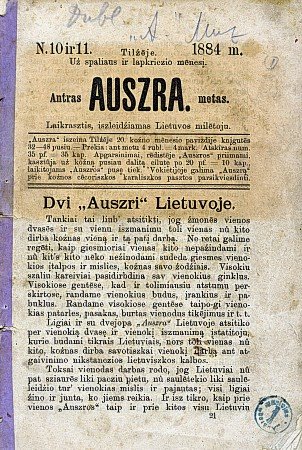
    It was the name of the first ever Lithuanian language newspaper and the first national newspaper for Lithuania.

    The first issue was published in 1883. It was a significant event in modern Lithuanian history and marked the rebirth of Lithuanian nationalism which eventually resulted in Lithuania’s independence. The name most likely caught on as a first name after this event.

    In Poland, the name is rendered as Auszra.

    ausrine-160x215Similary, there is also the ancient Lithuanian female name, Aušrinė (owsh-REE-nay).

    In Lithuanian mythology, she was a goddess who personified the planet, Venus, (the morning star).

    Some scholars contend that she was a goddess of beauty, youth and health and was revered as the Queen of the Stars.

    It is believed that she was the daughter of the goddess Saulė (the sun), and Perkunas, (the god of the sky and lightning).

    She was the sister of Jupiter, Mars, Mercury and Saturn.

    Legends hold that when the moon divorced the sun, he fell madly in love with Ausrine.

    He kidnapped her and in revenge, her father Perkunas, struck the oak god Azuolas with lightning, making him bleed upon Aušrinė’s lily white gown, rendering her impure.

    As a result, the moon was no longer interested in marrying Aušrinė.

    Both names designated name-day is April 27.

    (Upper left, first issue of the Lithuanian language newspaper, Ausra.)

    Masculine forms include: Aušris, Aušrinis, Aušrys, and Aušrius.

    Another feminine form is Aušrė and Aušrelė.

    Translations

    These are potential translations of the name in other languages:

    • Aushra, Oshrelle, Ozra (English)
    • Auchra, Auchrèle, Auchrine, Auchrée (French)
    • Auszra, Auszryna (Polish)
    • Auschra, Auschrele, Auschrine (German)

    Calques

    Calques are names that are directly translated into the target language, the following are Calques of the above name

    • Fajr, Sahar (Arabic)
    • Alba (Catalan, Italian, Spanish)
    • Dawn (English)
    • Aube, Aurore (French)
    • Shachar (Hebrew)
    • Eos (Greek)
    • Hajnal (Hungarian)
    • Aurora (Latin)
    • Ausma (Latvian)
    • Liwen (Mapuche)
    • Zora (Old Church Slavonic)
    • Jutrzenka (Polish)
    • Usha, Ushas (Sanskrit)
    • Gwawr (Welsh)

    Sources

    Aubrey

    Gender: Masculine
    Origin: English
    (AW-bree)

    The name is a Norman French form of the Germanic, Alberich and was very common in Medieval England.

    The name Alberich itself is derived from two Germanic elements, alb meaning “elf” and rich meaning “power, authority or rule” hence the name means either “elf power” or “elf ruler.”

    Alberich appears in Germanic mythology as the name of a malevolent elf king. The same character appears in the Nibelungenlied.

    The name was borne by a 12th-century English saint. He was known for founding the Cistercian order of monks.

    It was also borne by Alberich Zwyssig a Cistercian monk, (born Johann Josef Maria Zwyssig also known as Father Alberich or Father Aleberik), he is credited for composing the Swiss Psalm or the present day, Swiss national anthem (1841).

    In recent years, in the United States, the name has been used as a female name. In 2007, the name came in at # 42 for girls. The name was last seen for males in 2002, coming in at # 937. In England, the name is still used as a masculine name.

    A more feminine alternative, is the flower name, Aubrieta.

    Other forms include:

    • Auberon (English)
    • Albéric (Flemmish)
    • Aubéron (French)
    • Aubery/Aubry (French)
    • Obéron (French)
    • Elberich/Olberich (German)
    • Alberico (Italian)
    • Albericus (Latin)
    • Alberichas (Lithuanian)
    • Alberyk (Polish)
    • Alberik (Russian)

    (Pictured at right, Alberich of the Nibelungenlied by Arthur Rackhum).

    Melpomene

    Gender: Female
    Origin: Greek
    Meaning “to celebrate with song and dance.”
    English (mel-PAH-meh-NEE); Greek (mel-po-MEH-nee)
    Μελπομένη

    The name is found in Greek mythology by the Muse of Tragedy. She was often invoked by poets and singers before they performed. She was the daughter of Zeus and Mnemosyne.

    The name comes from the Greek Μελπομενη meaning “choir.”

    Other obscure gems include:

    • Melpòmene (Catalan/Galician/Spanish)
    • Melpomené (Czech/Hungarian)
    • Melpomène (French: mel-poh-MEN)
    • Melpomenė (Lithuanian)
    • Melpômene (Portuguese: very obscure)
    • Melpomena (Serbo-Croatian/Slovene)

    Flora

    Gender: Female
    Origin: Latin
    Meaning: “floral.”

    The name is derived from the Latin word flos, meaning “flower.”

    It was the name of the Roman goddess of flowers, she was the wife of Zephyr, the West Wind.

    In modern terminology, the name has been used in reference to the entire plant kingdom.

    The name was quite common in the middle of the 19th-century. With its two syllable sweetness, and its vintage charm, the name might appeal to those who find such names as Ava, Clara, Cora, Della, Ella, Greta, Mira, Nola, Perla appealing.

    Other forms include:

    • Floor (Dutch)
    • Floortje (Dutch: diminutive form of Floor, used as an independent given name)
    • Fleur (French)
    • Fleurette/Florette (French: diminutive forms, used as independent given names)
    • Flore (French)
    • Floretta (German/English)
    • Flóra (Hungarian)
    • Fiora (Italian)
    • Fiorella/Fioretta (Italian: diminutive forms, used as independent given names)
    • Flura (Romansch)
    • Flor (Spanish)
    • Fflur (Welsh)

    Bia

    Gender: Female
    Origin: Greek
    Meaning: “force; might; power.”
    (BEE-ah)

      This attractive, sweet two-syllable name, may be appealing to those who have been considering such trendy names as Gia, Leah, Mia, Nia, and Tea.

      The name has an ancient and primordial past, in Greek mythology, Bia was the female personification of force, power, strength and compulsion.

      She and her sister Nike, (victory), were the sisters of Cratos (Strength) and Zelos (Rivalry). They were the winged attendance of Zeus, and stood before his thrown on Mt. Olympus. They were known as spirits or daemon.

      Some scholars believe that Bia may have started out as a pre-classical goddess, but was relegated to the duty of a type of protectress or angel to the Olympian gods during the Hellenistic period.

      In Italy, Bia is used as a nickname for Bianca. In fact, it was born by the illegitimate daughter of the Italian nobleman Cosimo I de Medici, and a beautiful portrait done by Agnolo Bronzino, depicts the young beauty.

      Agnes

      Gender: Female
      Origin: Greek and Latin
      Meaning: “lamb; pure, chaste, holy.”
      (AG-nes)

        The name is of debated origin and meaning. It may be derived from the Greek hagno meaning “pure; chaste; holy.”

        Likewise, it may be derived from the Latin word for “lamb.” Since the lamb later became associated with purity and chastity, the  two above origins and meanings have become interchangeable.

        The name was borne in Greek mythology by an Oceanid nymph, who was said to have raised the god Zeus.

        On Mt. Lyceaus in Arcadia, there was a well sacred to her. When the region was suffering from drought, she prayed and fasted for several days. Afterward, she touched the surface of the well with a branch of an oak tree, inducing a huge rain storm.

        The name was borne in Christian legend by an early virgin martyr who refused to comply with the wishes of a local suitor who later denounced her as a Christian. The local prefect forced her to go through several public humiliations before beheading her.

        It was also borne by a medieval Czech princess, who was later canonized by the Catholic church as a saint. Known as St. Agnes of Bohemia, she is a minor subject in the popular English Christmas carol, Good St. Wenceslaus, and is still revered as a local heroine in her native homeland. Another saintly namesake is  Agnes of Assisi.

        The name was quite popular throughout Europe in the Middle Ages, due to its strong Christian connotations, the word agnes in Latin was also used in reference to Christ’s sacrifice, as in agnes dei, lamb of God.

        The name was prevalent in England before the Reformation, and fell somewhat out of favor, until it was revived in the late 19th-century.

        In recent years, the name has experienced a surge in popularity in a few European countries.

        In Sweden she was the 16th most popular female name of 2007.

        In Hungary, she was the 75th most popular female name of 2005.

        Other forms of the name include:

        • Agnesa/Agnesë (Albanian: the birth name of Mother Theresa of Calcutta)
        • Inas (Arabic)
        • Oanez (Breton: diminutive form of Agnes pronouned WAH-nes).
        • Agnesza Агнеса (Bulgarian)
        • Agnès (Catalan/French: pronounced like ang-YES in French).
        • Gnese (Corsican)
        • Agneza (Croatian)
        • Anežka (Czech)
        • Agnete/Agnethe (Danish)
        • Nancy (English: originally an English pet form, the name has been used as an independent name for quite awhile, its popularity spiked in the 1940s and 50s and is currently considered dated. Another nickname used as an independent form is Nan.
        • Aune (Finnish: pronounced AU-ne the first part is pronounced like how without the H)
        • Iines (Finnish)
        • Agenete/Agnet (Frisian: other forms include Anjes, Anjesse, Anyesse, Anjet and Anjette.
        • Inessa/Nessa (German)
        • Neeske (German/Frisian: initially a diminutive form, used as an independent given name)
        • Hagne (Greek: pronounced AHG-nay)
        • Agnea (Icelandic: pronounced ahg-NAY-ah).
        • Agnéis (Irish-Gaelic)
        • Agnese (Italian/Latvian: pronounced in Italian like ang-YAY-say. It could also be Latvian pronounced (ahg-NEH-seh).
        • Agnesina (Italian: obscure form)
        • Ines (Italian: a borrowing from the Spanish)
        • Ágnes (Hungarian: pronounced like AHG-nesh). Diminutive form is Ági.
        • Baranka (Hungarian: a literal translation)
        • Agnė (Lithuanian: pronounced AHG-nay).
        • Annis/Annice (Medieval English forms: both are pronounced the same ANN-nis)
        • Agnieszka (Polish: pronounced ahg-NYESH-kah, the name is extremely popular in Poland. Medieval diminutive forms include Jagienka, Jagnusia and Jagna. An older form which has fallen out of usage is the Medieval Jagnieszka. Modern diminutive forms include Aga, Agunia and Agusia.
        • Inês (Portuguese)
        • Agneza (Romanian)
        • Neisa/Nesa/Nescha/Nesina (Romansch: credit goes to Capucine)
        • Agnessa (Russianpronounced on-YEZ-ah).
        • Senga (Scottish: an anagram of Agnes, the name is also said to be from the Gaelic seang meaning “slender.”
        • Agnija Агнија (Serbian)
        • Neza (Slovene: originally a Slovenian diminutive form, it is now used as an independent given name, pronounced NEH-zhah).
        • Hańža (Sorbian)
        • Inés (Spanish/Galician: pronounced like ee-NES, the name has become prevalent in other countries, it is used in Slovenia, Croatia, Latvia, Finland and Estonia, only in Finland and Estonia it is spelled Iines pronounced the same way as in Spanish. A French borrowing is spelled Inès.)
        • Agneta/Agnetha/Agnita/Agna (Swedish/Norwegian: pronounced ung-YEH-tah, ung-NEE-tah and ANG-nah, these forms are considered dated in Sweden being replaced by the trendier Agnes. It is borne by Agnetha Fältskog of ABBA fame )
        • Nesta (Welsh)

        Nicknames include: Aggie, Nessa, Ness and Nessie

        An obscure Italian male form is Agnesio.

        Coincidentally, Agni is an Old Norse male name, also found as Ahni and Hogne. Snorre Sturlasson wrote about a legendary King of Sweden named Agni. He is known for defeating the Finnish chief Frosti and taking his daughter Skjalf hostage, who he later married and had children with. The name is believed to be derived from the Nordic agh meaning “spear point” or may possibly be derived from the word agi meaning “fear; dread.” It seems to have fallen out of usage. Maybe a you would be brave enough to use it on your own son ;).

        Castalia

        Gender: Female
        Origin: Greek
        Meaning: “sewn-together.”
        (kuh-STAHL-yah); (KAH-stuh-LEE-uh)

        In Greek Mythology, Castalia was the sister of Callirrhoe. She was the nymph of the Castalian springs, which are found at the foot of Mt. Parnassus, just right under the temple of Delphi.

        She was known to inspire the genius of poetry to those who drank her waters.

        The water was also used to clean the Delphian temples.

        Other forms of the name include:

        • Castàlia (Catalan)
        • Castalie (French)
        • Kastalia (German: virtually unheard of)
        • Castália (Portuguese: obscure)