Thoosa

Gender: Female
Origin: Greek
Meaning “swift.”
Eng (THOO-sah); Grk (thoh-OO-sah)

Rendered in Greek as Thoösa Θόωσα, it is borne by a sea nymph in Greek mythology. She was the daughter of Phorcys and Ceto and beloved by the god Poseidon. She was associated with currents and swiftness. By Poseidon she bore the cyclops, Polypemus. She was also the sister of Echidna, and Scylla and was often depicted as a mermaid-like creature.

In recent years, it is the name of an English brand of womens’ running wear, founded in 2006 by CEO Caroline MacNally.

The name is rendered in Spanish as Toosa, (not by any means a common name), and in Lithuanian as Teosa (also very obscure).

Rhode/Rhoda

Gender: Female
Origin: Greek
Meaning “rose.”
(RO-dee); (ROH-dah)

The name of a sea nymph and also possibly an ancient primordial sea goddess, according to Greek mythology, Rhode was one of the oldest of the Oceanid nymphs and was said to be the daughter of Poseidon/Oceanus and Tethys. She is sometimes claimed to be the daughter of Halia and Poseidon, Amphitrite and Poseidon or the daughter of Aphrodite.

It is even suggested by some scholars that Rhode, Halia and Amphitrite might have been one and the same sea goddess who was later replaced by the Olympic pantheon and relegated to a sea nymph.

Rhode’s cult was especially popular on the Isle of Rhodes where it was believed she was the wife of the sun-god, Helios and one and the same with the goddess Athena. She was the mother of the Curetes of Crete. It is also suggested that the Island of Rhodes gets its names from her.

There is also the more modern Biblical form of Rhoda, (RO-dah).

In the New Testament it was the name of a maid who lived in the house of Mary, mother of John Mark. In the English speaking world, Rhoda came into usage in the 17th century, she has not ranked in the U.S. Top 1000 since 1975 when she came in at # 777. The highest she ever ranked in U.S. naming history was # 159 in 1881. In the 1970s Rhoda was the name of a character in the popular sitcom of the same name.

Halia, Leucothea

Gender: Female
Origin: Greek
Meaning “briny.”
(HAHL-yah; HAY-lee-ah); (loo-KO-thee-uh)

The name is found in Greek mythology as the name of a sea nymph native to the Isle of Rhodes, sometimes believed to be one of the original Telchines (indigenous Rhodian gods).

According to Olympic-Rhodian legend, Halia was the favorite of Poseidon and was believed to be the personification of sea salt. She had six sons and one daughter: Rhode.

Her six sons’ forbade the goddess, Aphrodite, from landing on their island. In retaliation, Aphrodite drove the six boys into such madness that they raped their own mother. Halia committed suicide by throwing herself into the sea. Her sons were buried in the deep sea caves beneath the island, and it was believed by the Rhodians that Halia was reincarnated as the goddess Leucothea, who they worshipped with great honour.

Leucothea means “white goddess.” It believed that Leucothea was a title given to various sea nymphs who were later transformed as goddesses.

Coincidentally, hali’a, a Hawaiian word turned given name, is from the Hawaiian verb meaning “to remember one fondly.” Or if spelled halia, it is a past imperfect verb of hali meaning “to carry”, or “to bear.”

Other forms of Leucothea include the original Greek Leukothea (Λευκοθέα), the Spanish Leucótea (very obscure) and the Lithuanian Leukotėja (also very obscure).

Psamathe

Gender: Feminine
Origin: Greek
Meaning: “sand goddess”
Ψάμαθη
(SAM-uh-THEE)

The name is derived from the Greek psammos meaning sand, and the Greek theia meaning “goddess,” hence: “sand goddess.”

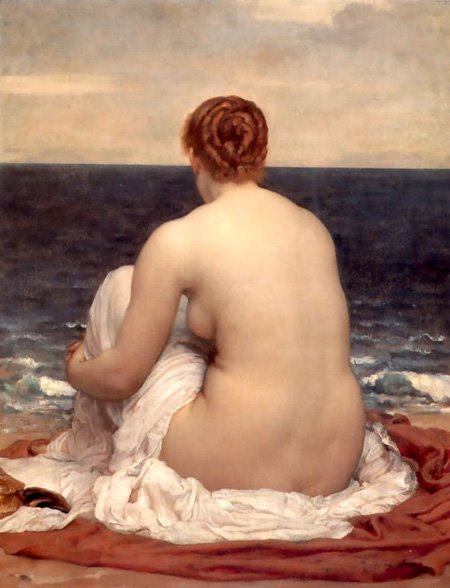
The name is found in Greek mythology as the name of the goddess of sand and beaches. She was the wife of Proteius, who was the seal herder of Poseidon. Psamathe had one mortal son and a nymph for a daughter.

She was assaulted on the beach by King Aeacus. She tried to escape his advances by transforming herself into a seal, however, Aeacus was able to overcome her, and she became pregnant with a son whom she named Phocus meaning “seal.”

Psamathe is also the name of a moon.

Another form of the name that appears is Psamanthe (sah-MAN-thee).

Other forms that exists but not necessarily in usage are:

  • Psàmate (Catalan)
  • Psamathée (French: psah-mah-TAY)
  • Psamate (Italian/Spanish)
  • Psamatė (Lithuanian)

The name would make a more unique alternative to the more popular Samantha.

Possible nickname options are Sam and Sammie.

Penelope

Gender: Feminine
Origin: Greek
Eng (pen-NEL-uh-PEE)

The name is of uncertain origins, many scholars believe that the name is pre-Hellenistic and is related to an ancient word, penelops (πηνελοψ), which means “duck,” others argue that the name is Greek compound name composed of the elements, pene (πηνη) meaning “threads.”  Many scholars feel that the latter is the most appropriate since it was the name of Odysseus wife who kept her suitors at bay by pretending to weave.

The name appears in Greek mythology as the name of a wood nymph who was speculated to be the mother of the god Pan.

The name is occasionally used in German, Italian,

Other forms of the name include:

  • Penèlope (Catalan)
  • Penelopa (Croatian/Polish/Romanian/Serbian: Pela, Pelka and Pelcia are the Polish diminutives)
  • Pénélope (French)
  • Penelópē Πηνελόπεια/Πηνελόπη (Greek)
  • Pénelopé (Hungarian)
  • Penelopė (Lithuanian)
  • Penelopeia (Norwegian/Danish/Swedish)
  • Penélope (Spanish/Portuguese)

The name is currenly borne by Spanish actress Penelope Cruz.

Possible English nickname options, include, Penny, Poppy, Lola, and Nell.

Galatea

Gender: Feminine
Origin: Greek
Meaning: “milky white.”
Pronunciation (gah-lah-TAY-ah)

The name is found in Greek mythology. It borne by a wood nymph who lived on the Isle of Sicily; she was pursued by the giant, Polyphemos, but rejected his advances and fell in love with a local mortal by the name of Acis. In his jealousy, Polyphemos bashed Acis’ skull with a rock. Grief-stricken, Galatea transformed Acis into a stream.

Another Galatea was the object of Pygmalion’s affection. He carved a beautiful statue and fell in love with it, after praying to Aphrodite, the statue came to life and was named Galatea, due to the milky white texture of her skin.

Possible nickname options include Gala & Tea.

The name is used in Spanish and Italian.

Other forms include:

  • Galateja (Bosnian/Croatian/Serbian)
  • Galateia (Czech/Portuguese/Slovak)
  • Galatée (French)
  • Galatėja (Lithuanian)

Éponine

Gender: Female
Origin: French
Meaning “great mare.”
Pronunciation French (AY-po-NEEN); English (EP-eh-NEEN)

The name is derived from the name of the Ancient Gaulic goddess, Epona.

A goddess associated with fertility, Epona was known as the patroness of horses, donkeys, and mules. She was the only Celtic diety whose worship became popular among Romans, who delegated her as protectress and controller of calvary and chariots. Remnants of her devotion are found all throughout central Europe. One famous artifact is an inscription written by a Syrian, which goes as follows

Eponina ‘dear little Epona’: she is Atanta, horse-goddess Potia ‘powerful Mistress’, Dibonia, Catona ‘of battle’, noble and good Vovesia.” (1st-Century BC). Rom, Dieux-Sievres, France.

Along with the inscription were found remnants of a cauldron and a sacrificed horse.

Though a popular minor divinity among the Romans, it is now believed that the Celts revered her as a powerful, central figure to their religion. Her story as told by the Celts, is lost to history, but Plutach came up with an interesting allegory regarding the goddess’ beginnings:

reports out of Agesilaus, his third book of Italian matters, that Fulvius Stella loathing the company of a woman, coupled himself with a mare, of whom he begot a very beautiful maiden-child, and she was called by a fit name, Epona…

The name Epona is derived from the Gaulic elements of ekwos, meaning “horse.” Equus is thought to be derived from this, and the term pony is said to be derived from the goddess’ name.

Eponina was an endearing latinized form used to invoke the goddess by devotees.

The horse was a central figure to ancient Celtic religions. There are carvings and paintings of horses found throughout France and the British Isles, thought to have been made by the Celts.

The famed chalk horse of Uffington, England has been associated with an Epona-like diety by scholars and archeologists. It is believed that Epona is related to the Welsh horse goddess, Rhiannon.

In more recent history, Éponine was used by Victor Hugo for his 1862 novel Les Miserables.

Variations of this name include the more pure and ancient form of Epona, the more latinate form of Eponina, and the sweetly feminine and romantic French form of Éponine.

The most popular French nickname for this is Ponette which also happens to be a French term used for a young, female pony.

Ponette was the name of the title character of the 1996 French film by Jacques Doillon.

Other nicknames include, Eppie, Pony, Poe, Nina, & Ninette.

Parthenope

Gender: Feminine
Origin: Greek
Meaning: “maiden voice”
Pronunciation (par-THEN-uh-PEE)
Παρθενόπη

In Greek mythology, it is the name of a nymph who seduced Odysseus, as well as the daughter of King Ancaeus of Samos. It is also the name of an Ancient Greek settlement in Naples

It was borne by Frances Parthenope Verney (1819-1890), writer, journalist and elder sister of Florence Nightengale.

Other unusual forms include:

  • Parthénope/Parthénopé (French)
  • Partenope (Serbo-Croatian/Italian)
  • Parténope (Portuguese: very obscure)

Xanthe

Gender: Feminine
Origin: Greek
Meaning: “blonde; yellow; yellow-brown.”
Pronunciation: (ZAN-thee)
Ξανθη

This was the name of one of the daughters of the minor Greek god, Oceanus. She was a nephalai nymph who was responsible for yellow tinged clouds. It was also the name of an Amazon and it was borne by the wife of Aesclepius.

In Classical Greece, the name was most likely bestowed upon fair haired girls or used as a sort of nickname for blondes, the equivalent of the English nickname, Blondie, and of the Latin Flavia.

Blonde hair was considered an exotic trait, and was therefore a rarity, yet pertained much admiration. The Greeks considered it as a sign of divinity, in fact, the Greeks liked to believe that the Gods all had blonde hair, especially Aphrodite.

If the idea of an X name is too much to fathom on a child, then you might prefer the slightly more tamed and Italianate Flavia or Flaviana. Xan would make an incredibly spunky nickname option.

Another form is Xanthia and the masculine form is Xanthos (Ξανθος)