Manoah

  • Origin: Biblical Hebrew מָנ֫וֹחַ
  • Meaning: “rest.”
  • Gender: Male

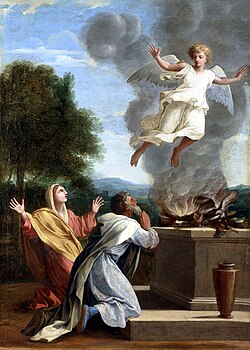
Manoah appears in Judges 13, described as a man from Zorah of the tribe of Dan. His wife is unnamed, but together they become the parents of Samson after an angelic visitation.

The name itself is derived from the Hebrew root נוּחַ (nuach) meaning “to rest, to settle, to repose, to be at ease.”

Between the 18th-century to early 20th-century, Manoah experienced some use in the U.S. and England. Common short forms were Manny, Menno and Noah.

In 2023, it appeared in the Netherlands charts for the most popular male names, though it did not rank in very high, coming in at #422.

International Variations

  • Manué (French)
  • Manoach (German)
  • Manoa (Spanish)

Sources

Sārta

  • Gender: Feminine
  • Origin: Latvian
  • Meaning: “reddish; rosy; glowing; bonfire”
  • Pron: SAHR-tuh

From the Latvian adjective sārts, which has two closely related meanings, either “reddish, rosy, flushed with color” or “bonfire, blaze.”

An extremely rare traditional Latvian female name, it was first and only recorded in Zemgale (Dobele) in 1929, even though it had already appeared in the Latvian name calendar of 1879.
(Source: Kalnājiņa & Švābe, KS 285.)

A rare masculine form is Sārtis, documented only once in Riga in the 1930s.

Sārtone is another variation, which is also only been record one time in Latvia in the 1920s.

Sources

Voron

  • Origin: Russian Ворон
  • Variant: Vorona.
  • Meaning: “crow; raven.”
  • Gender: Male

It is a Russian male given name and noun meaning “raven.” It comes directly from the Old East Slavic воронъ (voronŭ), which in turn derives from Proto-Slavic voronъ — a term shared by many Slavic languages (e.g., Polish wrona, Czech vran, Bulgarian voron), all referring to the raven or crow.

Sources

Niedamir, Niedomira

  • Origin: Polish
  • Meaning: “one who does not give peace.”
  • Pron: (NYEH-dah-MEER; NYEH-daw-MEER-ah)

An Old Polish male name which is composed of the elements, nie (no), dać (to give), and mir/mirz (peace). Its designated name-day is November 16th. Another form is Niedamierz (February 14).

Niedamir survives mainly as a historical curiosity, noted in medieval records and occasionally revived in literature and fantasy contexts, such as the Witcher universe.

The feminine form is Niedomira, which celebrates its name-day on February 14th.

Source

Milvydas, Milvydė

  • Origin: Lithuanian
  • Meaning: “beloved to see.”
  • M (MIL-vee-dahs); F (MIL-vee-dey)

Milvydas is an ancient Baltic male name constructed from the elements, mīlas or mielas, meaning, “dear; kind; beloved,” and vydėti, “to see, to perceive,” or vydas “vision; sight.” Another form is Milvidas.

Male diminutive forms are: Milas, Milius, Vidas, Vidis, and Vydas.

The feminine counterparts are Milvida, Milvyda and Milvydė.

The designated name-day for Milvydė is November 11th.

Female diminutive forms are: Mila, Milė, Milva, Vyda, and Vydė.

Source

Ojārs

  • Origin: Latvian
  • Meaning: “rascal; mischievous; lively man.”
  • Gender: Male
  • (oh-YARHZ)

The name comes directly from the Latvian word meaning, “rascal, mischievous; lively man.” The word itself may be connected to the Old Polish ogier (stallion), or the Estonian oja (stream). The Polish ogier – stallion – rascal, seems more likely.

It likely came into use thanks to the Latvian eponymous short story, Ojārs (1892) by Ānsis Lerhis-Puškaitis. It was first recorded as a given-name in Riga in 1903, inducted into the Latvian name-day calendar in 1908, and started to experience relative popularity between the 1920s-1970s.

Notable bearers include, Latvian sculptor, Ojārs Arvīds Feldbergs (b. 1947); Latvian singer, Ojārs Grīnbergs (1942-2016); Latvian politician, Ojārs Ēriks Kalniņš (1949-2021); and Latvian author, Ojārs Vācietis (1933-1983).

The designated name-day is November 11th.

Source

  • Siliņš, Kārlis. Latviešu personvārdu vārdnīca. Rīga: Avots, 1990.

Rangel

  • Origin: Bulgarian Рангел
  • Meaning: “archangel.”
  • Gender: Male

Not to be confused with the Spanish surname of a different etymology, Rangel is a traditional Bulgarian first name derived from Рангел (arangel), meaning “archangel.”

The designated name-day is November 8th.

Notable bearers include Bulgarian actor, Rangel Valchanov (1928-2013); and Bulgarian footballer, Rangel Ignatov (b. 1997).

Sources

Svirbutas

  • Origin: Lithuanian
  • Meaning: debated
  • Gender: Male

Svirbutas is an ancient Lithuanian male name, attested in historical sources from the 13th–15th centuries. It belongs to the older layer of Baltic personal names that predate Christianization, often formed from archaic roots with meanings now obscure or lost.

It likely derives from the Lithuanian elements svir (to swing, to sway; to be of importance) and but (to be; to exist).

The designated name-day is November 8th.

A potential Lithuanian female form is Svirbutė.

Sources

Muizz

  • Origin: Arabic معِزّ
  • Meaning: “to give honour; to empower.”
  • Variant transcription: Muiz.
  • Gender: Male

An Arabic male name derived from the verb ʿazza (عزّ) meaning “to be mighty, strong, honored.”

In Islam, al-Muʿizz (ٱلْمُعِزّ) — “The Bestower of Honor” — is one of the 99 Names of Allah.

The most notable bearer is al-Muʿizz li-Dīn Allāh (953 – 975 CE), the fourth Fatimid caliph, renowned for founding the city of Cairo (al-Qāhira) in 969 CE.

It is used throughout the Islamic world, but is particularly common among Muslims in Nigeria.

Sources