Didier, Desiderius

Gender: Masculine
Origin: French
Meaning: “longing; desire.”
(DEE-dyay)

The name is an old French form of Desiderius, which is from the Latin desiderium, meaning, “longing; desire.”

The name was borne by a 6th century French Bishop, who later resigned his seat and lived a life of poverty as a hermit. He founded a monastery in Vosges and his feast day is celebrated on June 19th.

Popular French nicknames include Die and Didi.

Other forms include:

  • Dider (Breton)
  • Dezsér (Hungarian)
  • Dezsider (Hungarian)
  • Dezső (Hungarian)
  • Dero/Derio (Italian)
  • Derino (Italian)
  • Desiderio (Italian)
  • Desio (Italian)
  • Desiderius (Latin/Dutch/German)
  • Dezydery (Polish)
  • Desidério (Portuguese)
  • Dezideriu (Romanian)
  • Dezider (Slovene)

Feminine forms include:

  • Didière (French)
  • Desideria (Italian/Spanish)
  • Desidera (Italian)
  • Dera/Derina (Italian)
  • Desia (Italian)
  • Dezyderia (Polish)
  • Desidéria (Portuguese)

The name Desirée is related but has a slightly different etymology, hence, I shall have a separate entry.

Bellona

Gender: Feminine
Origin: Latin
Meaning: “war.”
(bell-LONE-uh)

    The name is derived from the Latin word bellum meaning “war.”

    In ancient Rome, Bellona was an ancient war-goddess who was possibly leftover from the Etruscan era, in fact she is sometimes believed to have predated the Roman war god, Mars. Earlier sources have her listed as Duellona, which is derived from an even older word for war. She was considered a numinous god, that is god who is present in all places and objects. In later eras of Rome, Bellona was considered to be the consort and sister to Mars. In antiquated Rome, all things pertaining to political war endeavors were held at the Temple of Bellona.

    Her festival was celebrated on June 3rd.

    In modern culture, she is often used as a representation for military virtue. The name might make an interesting and more refreshing alternative to Bella and Isabella, both of which have become exceedingly popular.

    Other forms include:

    • Bellone (French)
    • Belona (Spanish)

    Zephyr

    Gender: Masculine
    Origin: Greek
    Meaning: “west wind.”
    Ζεφυρος
    (ZEF-er)

    The name is derived from the Greek Zephyros (Ζεφυρος), meaning, “the west wind.”

    In Greek mythology, the name is borne by one of the four wind gods, known as the Anemoi.

    Zephyr was the god of the west wind; harbinger of gentle breezes and warm air that comes with late spring and early summer. He was the husband of Chloris (greenery) and the father of Carpos (fruit).

    Another form is Zephyrinus, which was borne by a 3rd-century martyr and also borne by a Pope.

    His Roman counterpart is Favonius.

    Other forms include:

    • Zefirinus (Afrikaans)
    • Zèfir/Zeferí (Catalan)
    • Zeperino (Cebuano)
    • Zefirin (Croatian)
    • Zefyrinus (Czech/Danish/Dutch)
    • Zefyr (Danish/German/Norwegian/Polish/Swedish)
    • Zéphyr/Zéphyrin (French)
    • Zephyros Ζεφυρος (Greek)
    • Tzafrir צַפְרִיר (Hebrew)
    • Zephürosz (Hungarian: very obscure)
    • Zefiro (Italian)
    • Zephyrus/Zephyrinus (Latin)
    • Zefyras/Zefyrinas (Lithuanian)
    • Zefiryn (Polish)
    • Zéfiro/Zeferino (Portuguese)
    • Zefirin (Romanian)
    • Céfiro/Ceferino (Spanish/Galician)

    Nicknames include Zef.

    Feminine forms are

    • Zéphyrine (French)
    • Zeferina (Italian)
    • Zeferyna (Polish)

    Laura

    Gender: Feminine
    Origin: Latin
    Meaning: “laurel.”
    Eng (LORE-uh); It/Span (LOW-rah).

    The name first came into usage during the 9th century in Spain, due to the cult of Saint Laura of Cordova, (864).

    She was a widow who decided to become a nun, but was put in a vat of molten lead and was boiled to death by her Moorish captors.

    Laure de Noves, was the object of the poet, Petrarch’s affection (1308-1348). The Italian poet refers to her as Laura in his writings.

    Laura, illustrated by her virtues and well-celebrated in my verse, appeared to me for the first time during my youth in 1327, on April 6, in the Church of Saint Claire in Avignon, in the first hour of the day; and in the same city, in the same month, on the same sixth day at the same first hour in the year of 1348, withdrew from life, while I was at Verona, unconscious of my loss…. Her chaste and lovely body was interred on the evening of the same day in the church of the Minorites: her soul, as I believe, returned to heaven, whence it came. (Petrarch)

    Laure de Noves was the wife of Hugh de Sade, (the ancestor of the Marquis de Sade in which the name Laure appears often in the Sade family tree), who ultimately dies from the plague. She was the symbol of unrequited love and was transformed into a Beatrice type character after her death in many of Petrarch’s poems.

    The name has always been relatively common in the English speaking world. Laura currently comes in at # 215 of the U.S. top 1000. In other countries her rankings are as follows:

    • Australia # 78 (2007)
    • Belgium # 3 (2006)
    • Chile # 43 (2006)
    • France # 26 (2006)
    • Hungary # 12 (2005)
    • Ireland # 32 (2007)
    • the Netherlands # 31 (2008)
    • Scotland # 77 (2007)
    • Slovenia # 36 (2005)
    • Spain # 4 (2007)

    Other forms include:

    • Llora (Catalan pronounced YOH-rah)
    • Laure (French, diminutive form Laurette)
    • Lára (Icelandic pronounced LOW-rah)
    • Lavra (Slovenian/Russian)

    Diminutive forms of Laura include Laurie, Lori, Lorie and Lauretta (Italian); Laurita (Spanish) and Laurette (French).

    Masculine forms are the Italian Lauro and the late Latin Laurus.

    The Laura form is used in most Romance speaking countries including Italy, Romania and is used among Portuguese speakers. It is also used throughout Central Europe such as the German speaking countries, Poland, Slovakia, Hungary and the Czech Republic.

    The name is borne by former first lady of the United States Laura Bush, children’s author Laura Ingalls Wilder, Laura Esquival author of Like Water for Chocolate. British designer and clothing brand Laura Ashley. Actress Laura Linney.

    It is also the name of a river that runs through the Ukraine and Romania and the name of a village in Gliwice County, Poland.

    Coincidentally, in Greek Lavra and Laura was a term used in the Eastern Orthodox church to describe a cluster of cells or caves, designed for monastic hermits. In this case, the name is derived from the Greek meaning an “alley” or “passage way.”

    (Pictured above: Laure de Noves).

    Blaise

    Gender: Male
    Origin: Latin
    Meaning “stammerer”
    Eng (BLAZE); Fre (BLEZ)

    The name is derived from the Roman name Blasius which is derived from the Latin blaesus meaning “stammerer.”

    The name was borne by a popular early Christian martyr of Armenia. He was a bishop who was beaten to death by hot irons. In the Middle Ages, the saint’s feast day of February 3rd was designated for the blessing of the throat. It was popularly believed that the saint was responsible for curing illness of the throat. The name is also borne by French philosopher, Blaise Pascal.

    Other forms of the name include:

    • Barsegh (Armenian)
    • Blaž (Bosnian/Croatian/Serbian/Slovenian)
    • Blaes/Bleas (Breton)
    • Blazey (Cornish)
    • Biasgiu (Corsican)
    • Vlaho (Croatian)
    • Blażej (Czech)
    • Brais (Galician)
    • Vlasios/Vlasis (Greek Modern)
    • Balázs (Hungarian: buh-LAHS)
    • Biagio (Italian: diminutive form is Biagino which is occasionally used as an independent name)
    • Blasius (Latin/German)
    • Blażiejus/Blażys (Lithuanian)
    • Błażej(Polish: bWOn-ZHAY; ˈbwaʐɛj ).
    • Bras (Portuguese)
    • Blesi (Romansch)
    • Vlasi (Russian)
    • Blas (Spanish)

    Feminine forms include:

    • Biagia (Italian: diminutive form is Biagina)
    • Blasia (Late Latin and Italian: Blasiola is a diminutive form)

    Flora

    Gender: Female
    Origin: Latin
    Meaning: “floral.”

    The name is derived from the Latin word flos, meaning “flower.”

    It was the name of the Roman goddess of flowers, she was the wife of Zephyr, the West Wind.

    In modern terminology, the name has been used in reference to the entire plant kingdom.

    The name was quite common in the middle of the 19th-century. With its two syllable sweetness, and its vintage charm, the name might appeal to those who find such names as Ava, Clara, Cora, Della, Ella, Greta, Mira, Nola, Perla appealing.

    Other forms include:

    • Floor (Dutch)
    • Floortje (Dutch: diminutive form of Floor, used as an independent given name)
    • Fleur (French)
    • Fleurette/Florette (French: diminutive forms, used as independent given names)
    • Flore (French)
    • Floretta (German/English)
    • Flóra (Hungarian)
    • Fiora (Italian)
    • Fiorella/Fioretta (Italian: diminutive forms, used as independent given names)
    • Flura (Romansch)
    • Flor (Spanish)
    • Fflur (Welsh)

    Agnes

    Gender: Female
    Origin: Greek and Latin
    Meaning: “lamb; pure, chaste, holy.”
    (AG-nes)

      The name is of debated origin and meaning. It may be derived from the Greek hagno meaning “pure; chaste; holy.”

      Likewise, it may be derived from the Latin word for “lamb.” Since the lamb later became associated with purity and chastity, the  two above origins and meanings have become interchangeable.

      The name was borne in Greek mythology by an Oceanid nymph, who was said to have raised the god Zeus.

      On Mt. Lyceaus in Arcadia, there was a well sacred to her. When the region was suffering from drought, she prayed and fasted for several days. Afterward, she touched the surface of the well with a branch of an oak tree, inducing a huge rain storm.

      The name was borne in Christian legend by an early virgin martyr who refused to comply with the wishes of a local suitor who later denounced her as a Christian. The local prefect forced her to go through several public humiliations before beheading her.
      It was also borne by a medieval Czech princess, who was later canonized by the Catholic church as a saint. Known as St. Agnes of Bohemia, she is a minor subject in the popular English Christmas carol, Good St. Wenceslaus, and is still revered as a local heroine in her native homeland. Another saintly namesake is  Agnes of Assisi.

      The name was quite popular throughout Europe in the Middle Ages, due to its strong Christian connotations, the word agnes in Latin was also used in reference to Christ’s sacrifice, as in agnes dei, lamb of God.

      The name was prevalent in England before the Reformation, and fell somewhat out of favor, until it was revived in the late 19th-century.

      In recent years, the name has experienced a surge in popularity in a few European countries.

      In Sweden she was the 16th most popular female name of 2007.

      In Hungary, she was the 75th most popular female name of 2005.

      Other forms of the name include:

      • Agnesa/Agnesë (Albanian: the birth name of Mother Theresa of Calcutta)
      • Inas (Arabic)
      • Oanez (Breton: diminutive form of Agnes pronouned WAH-nes).
      • Agnesza Агнеса (Bulgarian)
      • Agnès (Catalan/French: pronounced like ang-YES in French).
      • Gnese (Corsican)
      • Agneza (Croatian)
      • Anežka (Czech)
      • Agnete/Agnethe (Danish)
      • Nancy (English: originally an English pet form, the name has been used as an independent name for quite awhile, its popularity spiked in the 1940s and 50s and is currently considered dated. Another nickname used as an independent form is Nan.
      • Aune (Finnish: pronounced AU-ne the first part is pronounced like how without the H)
      • Iines (Finnish)
      • Agenete/Agnet (Frisian: other forms include Anjes, Anjesse, Anyesse, Anjet and Anjette.
      • Inessa/Nessa (German)
      • Neeske (German/Frisian: initially a diminutive form, used as an independent given name)
      • Hagne (Greek: pronounced AHG-nay)
      • Agnea (Icelandic: pronounced ahg-NAY-ah).
      • Agnéis (Irish-Gaelic)
      • Agnese (Italian/Latvian: pronounced in Italian like ang-YAY-say. It could also be Latvian pronounced (ahg-NEH-seh).
      • Agnesina (Italian: obscure form)
      • Ines (Italian: a borrowing from the Spanish)
      • Ágnes (Hungarian: pronounced like AHG-nesh). Diminutive form is Ági.
      • Baranka (Hungarian: a literal translation)
      • Agnė (Lithuanian: pronounced AHG-nay).
      • Annis/Annice (Medieval English forms: both are pronounced the same ANN-nis)
      • Agnieszka (Polish: pronounced ahg-NYESH-kah, the name is extremely popular in Poland. Medieval diminutive forms include Jagienka, Jagnusia and Jagna. An older form which has fallen out of usage is the Medieval Jagnieszka. Modern diminutive forms include Aga, Agunia and Agusia.
      • Inês (Portuguese)
      • Agneza (Romanian)
      • Neisa/Nesa/Nescha/Nesina (Romansch: credit goes to Capucine)
      • Agnessa (Russianpronounced on-YEZ-ah).
      • Senga (Scottish: an anagram of Agnes, the name is also said to be from the Gaelic seang meaning “slender.”
      • Agnija Агнија (Serbian)
      • Neza (Slovene: originally a Slovenian diminutive form, it is now used as an independent given name, pronounced NEH-zhah).
      • Hańža (Sorbian)
      • Inés (Spanish/Galician: pronounced like ee-NES, the name has become prevalent in other countries, it is used in Slovenia, Croatia, Latvia, Finland and Estonia, only in Finland and Estonia it is spelled Iines pronounced the same way as in Spanish. A French borrowing is spelled Inès.)
      • Agneta/Agnetha/Agnita/Agna (Swedish/Norwegian: pronounced ung-YEH-tah, ung-NEE-tah and ANG-nah, these forms are considered dated in Sweden being replaced by the trendier Agnes. It is borne by Agnetha Fältskog of ABBA fame )
      • Nesta (Welsh)

      Nicknames include: Aggie, Nessa, Ness and Nessie

      An obscure Italian male form is Agnesio.

      Coincidentally, Agni is an Old Norse male name, also found as Ahni and Hogne. Snorre Sturlasson wrote about a legendary King of Sweden named Agni. He is known for defeating the Finnish chief Frosti and taking his daughter Skjalf hostage, who he later married and had children with. The name is believed to be derived from the Nordic agh meaning “spear point” or may possibly be derived from the word agi meaning “fear; dread.” It seems to have fallen out of usage. Maybe a you would be brave enough to use it on your own son ;).

      Beatrice, Beatrix

      Gender: Feminine
      Origin: Latin
      Meaning: “blessed; traveller, voyager.”
      Eng (BEE-uh-TRISS); (BEE-uh-TRICKS)

      The name is of somewhat debated meaning, some sources list it as a derivative of the Latin word beatus meaning “blessed” while other sources claim that it is a feminine form of the Latin name, Viator which means, “traveller” or “voyager.”

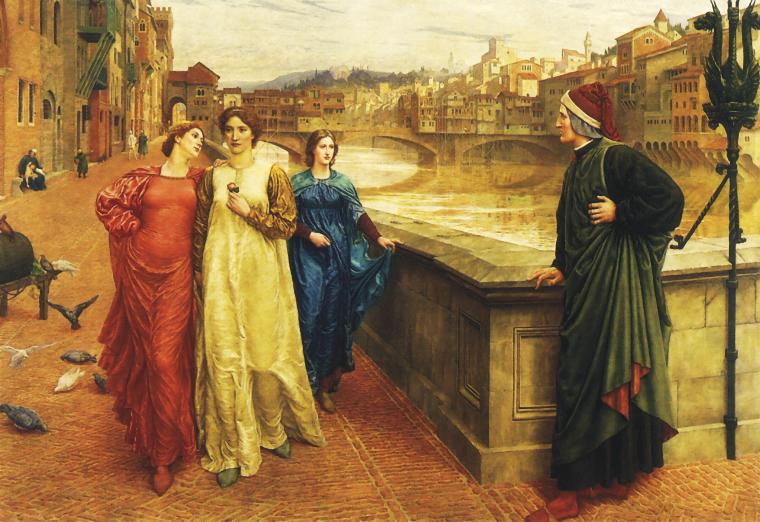
      The famous Italian poet, Dante Aligheri, author of the Inferno, and other works, used Beatrice Portinari, (a local noblewoman whom the author was in love with), as a recurrent theme in his writings. The name has been consistently popular in Italy since the Middle Ages, she was especially popular in the rest of Europe during the Middle Ages as well, but has gone in and out of fashion since, depending on the country. It was particularly popular in England before the Reformation, where it experienced a revival in the 19th-century. Peter Rabbit author, Beatrix Potter, bore the name (1866-1943).T he name is also borne by several early Christian saints, and it is currently borne by Queen Beatrix of the Netherlands.

      Beatrix has not ranked in the U.S. top 1000 since 1883! As of 2005, however, Beatrix was the 88th most popular female name in Hungary. Her counterpart of Beatrice faired much better in the U.S. statistics, though not anywhere near the top 100, Beatrice at least ranks in at # 833 (2008). In 2006, Beatriz was the 59th most popular female name in Spain.

      Other forms of the name include:
      • Batirtze (Basque)
      • Beatriu (Catalan)
      • Beatrijs (Dutch)
      • Beatrix (Dutch/English/German)
      • Béatrice/Béatrix (French: bay-ah-TREES/bay-ah-TREEKS)
      • Beke/Beeke (Frisian: diminutive forms are Bekje. Pronounced BEH-ke)
      • Beatrisa (German)
      • Beatríke Βεατρίκη (Greek: Modern)
      • Beatricse/Beatrisz/Beatrix (Hungarian: a Hungarian diminutive is Trixi)
      • Beatrice (Italian/English/Romanian/Swedish: in Italian, pronounced, bay-ah-TREE-chay. Bice is a common diminutive form, though in recent years, it is considered dated, and the diminutive form of Bea has taken its place instead)
      • Bicetta/Cettina (Italian: originally diminutive forms, now used as independent given names, though, very obscure)
      • Beatrise (Latvian)
      • Beatričė (Lithuanian)
      • Beatriċi (Maltese: the pronunciation is somewhat similar to the Italian)
      • Beatrycze (Polish: beh-ah-TRIH-cheh)
      • Beatryks (Polish: beh-ah-TRIKS)
      • Beatris (Provencal)
      • Beatrisa Беатриса (Russian)
      • Beatrìci (Sardinian)
      • Beitris (Scottish)
      • Beatrica (Slovene: beh-ah-TREET-sah)
      • Beatriz (Spanish/Portuguese: Spanish Iberian: bey-ah-TREETH, Spanish Latin American: bey-ah-TREES; Portuguese Iberian: bee-ah-TREEZH)
      • Beatrixe (Swiss-German)
      • Betrys (Welsh)

      The names, Beata and Viatrix, have also been linked with Beatrice.

      Common English diminutives are Bea, Bee, Trixie and Trissie. A Portuguese short form is Bia.

      Name-days are: January 17 (Lithuania), February 13 (France), July 29 (Lithuania/Poland), December 2 (Sweden).

      Atticus

      Gender: Male
      Origin: Greek
      Meaning: “from Athens.”
      (AT-tik-kus)

        The name has its origins in an ancient Roman cognamen, in addition to it being a popular Greek name, used in reference to someone who hailed from the Greek region of Attica, where Athens is situated.

        It was borne by Titus Pomponius Atticus, (35 BC). Saint Atticus of Constantinople (a.d. 425); Herodes Atticus, a Greek rhetorician (101-177) B.C.; Atticus the Philosopher, a companion to Plato (175 B.C.)

        In modern popular culture, it was the name of Atticus Finch, in (To Kill a Mockingbird), and the main title character of the novel by Ron Hansen, Atticus.

        The feminine form is Attica which was a common female name in Ancient Rome.

        During the last five years, the name has become increasingly more common in the United States, it currently ranks in # 689 and seems to be rising.

        Atticus is also a brand of clothing, founded in 2001, by Blink-182 band members Tom DeLonge and Mark Hoppus.

        Another form is the Serbo-Croatian, Atik.

        Éponine

        Gender: Female
        Origin: French
        Meaning “great mare.”
        Pronunciation French (AY-po-NEEN); English (EP-eh-NEEN)

        The name is derived from the name of the Ancient Gaulic goddess, Epona.

        A goddess associated with fertility, Epona was known as the patroness of horses, donkeys, and mules. She was the only Celtic diety whose worship became popular among Romans, who delegated her as protectress and controller of calvary and chariots. Remnants of her devotion are found all throughout central Europe. One famous artifact is an inscription written by a Syrian, which goes as follows

        Eponina ‘dear little Epona’: she is Atanta, horse-goddess Potia ‘powerful Mistress’, Dibonia, Catona ‘of battle’, noble and good Vovesia.” (1st-Century BC). Rom, Dieux-Sievres, France.

        Along with the inscription were found remnants of a cauldron and a sacrificed horse.

        Though a popular minor divinity among the Romans, it is now believed that the Celts revered her as a powerful, central figure to their religion. Her story as told by the Celts, is lost to history, but Plutach came up with an interesting allegory regarding the goddess’ beginnings:

        reports out of Agesilaus, his third book of Italian matters, that Fulvius Stella loathing the company of a woman, coupled himself with a mare, of whom he begot a very beautiful maiden-child, and she was called by a fit name, Epona…

        The name Epona is derived from the Gaulic elements of ekwos, meaning “horse.” Equus is thought to be derived from this, and the term pony is said to be derived from the goddess’ name.

        Eponina was an endearing latinized form used to invoke the goddess by devotees.

        The horse was a central figure to ancient Celtic religions. There are carvings and paintings of horses found throughout France and the British Isles, thought to have been made by the Celts.

        The famed chalk horse of Uffington, England has been associated with an Epona-like diety by scholars and archeologists. It is believed that Epona is related to the Welsh horse goddess, Rhiannon.

        In more recent history, Éponine was used by Victor Hugo for his 1862 novel Les Miserables.

        Variations of this name include the more pure and ancient form of Epona, the more latinate form of Eponina, and the sweetly feminine and romantic French form of Éponine.

        The most popular French nickname for this is Ponette which also happens to be a French term used for a young, female pony.

        Ponette was the name of the title character of the 1996 French film by Jacques Doillon.

        Other nicknames include, Eppie, Pony, Poe, Nina, & Ninette.