Loveday

Gender: Female
Origin: English/Cornish
Meaning: “love day”
(LUV-day)

The name is derived from the Anglo-Saxon Léofdæg, literally meaning “love day.”

The name has been in usage since the 11th century, and was very common in Cornwall England.

Other forms of the name include:

  • Lovedaia
  • Lovedaya
  • Loveta
  • Lovota
  • Luueday
  • Luuedei
  • Luveday
  • Leofdaeg

Svea

Origin: Swedish
Gender: feminine
Meaning “Swedes”
(SVEH-ah)

The name is derived from the old name for Sweden, Svea rike, literally meaning “kingdom of the Swedes.” Svea meaning “swede” and rike meaning “kingdom.”

The name became especially popular in Sweden during the first half of the 20th-century. It was used as a patriotic name.

The name is still relatively common in Sweden, in 2007, it was the 97th most popular female name in Sweden.

Its designated name-day is January 2nd

. The name is also in usage in Estonia, the designated name-day being August 14.

Anahí

Gender: Female
Origin: debated
Meaning: debated
(ah-nah-EE)

The name, which has recently become extremely popular in South American countries, is clouded in mystery and legend.

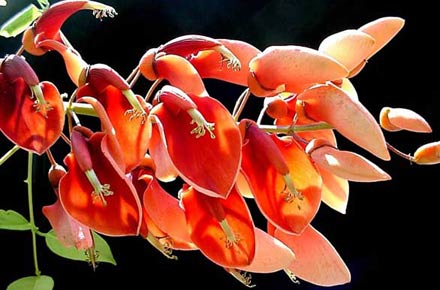
In legend, Anahí was the daughter of a Guarani chief, her and her father tried to fight the Spanish, but were finally subdued. In punishment, the Conquistador’s tied Anahí to a tree and set her on fire. Legend says that the next day, the same tree bloomed flowers, and that is supposedly how the Ceibo tree got its flowers.

The Ceibo is the national flower of Argentina.

Some sources believe that the name may be of Guarani origin and mean “flower of the sky.” Or that it is simply the Guarani word for the Ceibo tree itself. Still other sources contend that it is a derivative of the Assyrian Anahita, and that it first appeared in South America via Lebanese and Assyrian immigrants at the beginning of the 20th-century.

The name is currently borne by famous Mexican actess, Anahí Portillo (b. 1983).

In 2008, the name ranked in at 437 for the top 1000 names in the U.S.

(upper left, Ceibo tree, national flower of Argentina).

Coppélia

Gender: Feminine
Origin and Meaning: unclear
(kope-PAY-lee-ah)

The name is of uncertain meaning or origin.

It first appeared in a famous ballet entitled Coppélia, which premiered in 1870.

The ballet was based off of a story written by German author, E.T.A. Hoffmann (1776-1822), in which a character by the name of Dr. Coppelius creates a beautiful, life-like, dancing doll which he names Coppélia.

It is highly speculated that the name Coppelius was a latinization of the Yiddish nickname Koppel, (a nickname for Jacob).

Elsabe

Gender: Female
Origin: Afrikaans
Pronunciation (EL-sah-BAY)

An old lower Germanic form of Elizabeth, the name was first recorded in Germany in a 1492 Hamburg census as Ilsabe and Ilsabeen.

The name has not been in wide usage in Holland or Germany since the Renaissance, but it is still prevalent among Afrikaan speakers in South Africa.

(Johannesburg pictured at right).

Isemay

Gender: Feminine
Origin: English
(EE-zeh-MAY); (iz-MAY); (IZ-mee)

The name is of uncertain meaning but was first recorded in England around the 13th century and was found in various incarnations such as Ysemay, Ismay, and Isamaya. Though it has been speculated that the name is derived from the old French Esmee (esteemed) or the Ancient Greek Ismene, its most likely origin is from a Germanic name Ismagi(n) meaning “iron-strength.” The name completely fell out of usage at the end of the middle ages.

This rare gem might appeal to those who love Isabelle or Isabella, but just find it a tad bit too popular. Perhaps there is an Isabella/Isabelle and May you want to honour in the family, this name might be just what you are looking for.

Serilda

Gender: Feminine
Origin: German
Meaning “armed warrior.”
(zeh-RIL-dah)

The name is a popular older German name. It is considered rather old fashioned in German speaking countries these days.

The name was borne by both the mother and wife of famous bandit, Jesse James. James’ wife, (pictured above), was known affectionately as Little Z, in order to differentiate her from her mother-in-law. The women were cousins and, in the James Family’s case, their shared name was most likely a family name. Although both women spelled their name Zerelda, it is more likely than not that their name was derived from the traditional Germanic form.

English nicknames include Zee or Z or Zizi.

Crina

Gender: Feminine
Origin: Romanian
Meaning “lily”
(KREE-nuh).

Finding Lily’s popularity to be just a tad too much? Then this exotic yet simple name might just be what you are looking for. Crina is derived from Romanian word crin meaning “lily” and is currently very popular in the Eastern European Latin Speaking country.

Lăcrimioara

Gender: Feminine
Origin: Romanian
Meaning: “lily of the valley.”
(lah-kree-MYOH-ruh)

From the Romanian word for the lily of the valley, it literally means “little tear.” The name is currently very popular in Romania. The name is borne by Lăcrimioara Ionescu-Cornea (b.1969) a Romanian textile and fashion designer.

Belcolore

Gender: Feminine
Origin: Italian
Meaning “beautiful colour.”
(Bel-koh-LORE-ay)

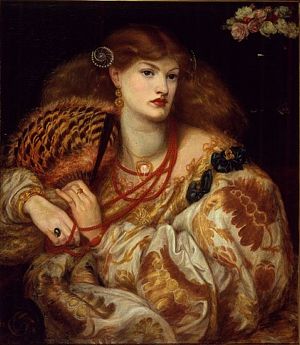
The name seems to have been in usage in Medieval Italy. The name appears once in the Florence registar of 1427, as that of the name of a woman. It is also the name of a female character in Boccaccio’s second story of the eighth day in the Decameron. Dante Gabriel Rossetti did a portrait of a Medieval Italian lady entitled Belcolore (left). The name is made up of two elements bel meaning beautiful and colore meaning colour. Nicknames could include Belle