Farahild

Gender: Feminine
Origin: Frankish/Germanic
Meaning: “family battle”
English: (FAIR-uh-HILD); German: (fah-rah-HILT)

The name is derived from the Germanic fara meaning “family, lineage, kind” and the element hild meaning “battle.” Hence “family battle.”

The name was born by Farahild of Neustria, Belgium (593-684), wife of Wandregisi, the mother of St. Amalberga.

There is a Dutch and German alternative of Farahilde. There is also the modern Dutch contraction of Veerle (FAIR-leh).

The advantage of this name is its possible nickname option of Fara.

Väike

Gender: Feminine
Origin: Estonian
Meaning: “petite; small”
(VAYEE-keh)

The name seems to come directly from the Estonian word describing something tiny. It has been in usage as a female name for a long time.

The pronunciation is rather hard to transcribe, but phonetically in English it would sound something like (VY-keh).

The name was borne by a famous Australian-Estonian artist, Vaike Lakeman.

(Upper left self portrait of Vaike Lakeman).

Blerina

Gender: Feminine
Origin: Albanian
Meaning: “greenery; verdure.”
(bleh-REE-nah)

Derived from the Albanian word blerim describing a shade of green, roughly translating as “spring-green,” the adjective is used to describe the greenery of plants, grass and leaves.

The masculine form is Blerim (bleh-REEM).

Roshanara

Gender: Feminine
Origin: Persian
Meaning: “light of the assembly.”
Urdu spelling شاهزادی روشن آرا بیگم

The name was borne by a Pakistani princess, Roshanara Begum (1617-1671).

She was the second eldest daughter of the Moghul ruler, Shah Jahan.

She is the most renowned woman in Moghul history, known for her exploits with her brother Aurangzeb, who together, seized the throne away from their other incompetent brothers. She was said to be an advisor to her brother.

She was also known for her many sexual liasons and exploits, something which was frowned upon in Islamic society at the time.

Her brother, Aurangzeb, had her imprisoned in her garden palace. She was caught by her brother with another lover, and was sentenced to a slow death by poisoning.

She is buried in the Roshanara Bagh, a garden which she commissioned herself in Delhi.

The British later built a club in the middle of the garden, calling it the Roshanara Club.

(upper left, Roshanara Bagh).

Capucine

Gender: Feminine
Origin: French
Meaning: “hood; cape” or “nasturtium.”
(kah-poo-SEEN)

The name is derived from the Italian cappucio which was a translation of the old French word, chaperon, meaning “hood” or “cape.”

The chaperon was a type of hood that could be worn in various different styles, by both men and women, that was popular throughout Western Europe during the Middle Ages.

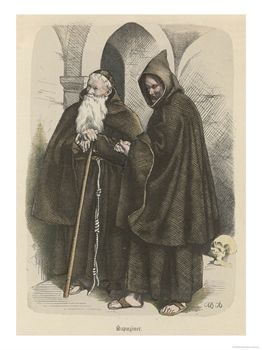
The name was given to the Capuchin Friars, an off shoot of the Franciscan order, to denote the long woolen brown hooded robes that they were especially known for.

nastThough of the same etymology as the above two words, in modern French, capucine is the word for the nasturtium plant.

The name first took off after the 1960s, due to famed actress, Capucine, star of the Pink Panther (1933-1990).

Currently, the name is very fashionable in France.

In 2006 it came in at # 96 in the Top Female name of France.

The designated name-day in France is October 5.

The nasturtium is able to survive in the fall months.

Boel

Gender: Female
Origin: Swedish/Danish/Norwegian
Meaning: “battle recovery; battle improvement”
(BOO-ul)

The name is derived from the Norse Bothild, which is made up of the elements bot which means “recovery; improvement” and hild, which means “battle.” Hence the name could either mean “battle recovery” or “battle improvement.”

In Sweden, the usage of the name first came to light in the region of Skåne, (on the Danish border), around the 14th century, listed as Boeld. It suddenly became incredibly popular in the middle of the 18th century.

Today the name is still in usage in Sweden, but is considered rather old fashioned and dated.

Other forms of the name include:

  • Bodil (Danish/Faroese/Norwegian)
  • Boeld (Danish)
  • Boel (Danish/Swedish)
  • Bolette (Danish)
  • Bodhild (Norwegian)
  • Bol (Norwegian: dialectical form)
  • Bóthildr (Old Norse)

Its designated name-days are June 17 (Norway) and January 26 (Sweden).

Aušra, Aušrinė

Gender: Female
Origin: Lithuanina
Meaning “dawn”
(OWSH-rah)

The name comes directly from the Lithuanian word for dawn.

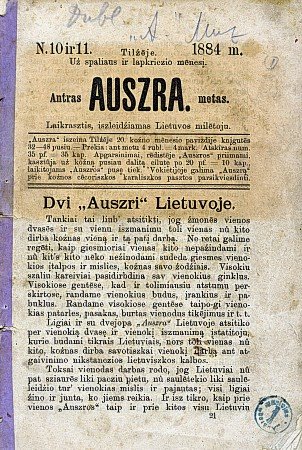
It was the name of the first ever Lithuanian language newspaper and the first national newspaper for Lithuania.

The first issue was published in 1883. It was a significant event in modern Lithuanian history and marked the rebirth of Lithuanian nationalism which eventually resulted in Lithuania’s independence. The name most likely caught on as a first name after this event.

In Poland, the name is rendered as Auszra.

ausrine-160x215Similary, there is also the ancient Lithuanian female name, Aušrinė (owsh-REE-nay).

In Lithuanian mythology, she was a goddess who personified the planet, Venus, (the morning star).

Some scholars contend that she was a goddess of beauty, youth and health and was revered as the Queen of the Stars.

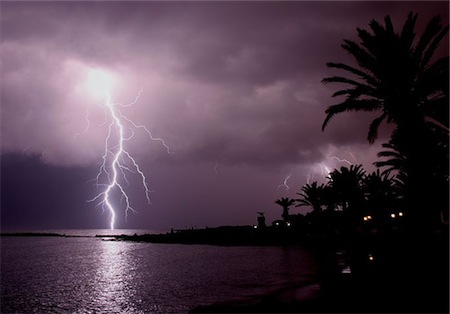
It is believed that she was the daughter of the goddess Saulė (the sun), and Perkunas, (the god of the sky and lightning).

She was the sister of Jupiter, Mars, Mercury and Saturn.

Legends hold that when the moon divorced the sun, he fell madly in love with Ausrine.

He kidnapped her and in revenge, her father Perkunas, struck the oak god Azuolas with lightning, making him bleed upon Aušrinė’s lily white gown, rendering her impure.

As a result, the moon was no longer interested in marrying Aušrinė.

Both names designated name-day is April 27.

(Upper left, first issue of the Lithuanian language newspaper, Ausra.)

Masculine forms include: Aušris, Aušrinis, Aušrys, and Aušrius.

Another feminine form is Aušrė and Aušrelė.

Translations

These are potential translations of the name in other languages:

  • Aushra, Oshrelle, Ozra (English)
  • Auchra, Auchrèle, Auchrine, Auchrée (French)
  • Auszra, Auszryna (Polish)
  • Auschra, Auschrele, Auschrine (German)

Calques

Calques are names that are directly translated into the target language, the following are Calques of the above name

  • Fajr, Sahar (Arabic)
  • Alba (Catalan, Italian, Spanish)
  • Dawn (English)
  • Aube, Aurore (French)
  • Shachar (Hebrew)
  • Eos (Greek)
  • Hajnal (Hungarian)
  • Aurora (Latin)
  • Ausma (Latvian)
  • Liwen (Mapuche)
  • Zora (Old Church Slavonic)
  • Jutrzenka (Polish)
  • Usha, Ushas (Sanskrit)
  • Gwawr (Welsh)

Sources