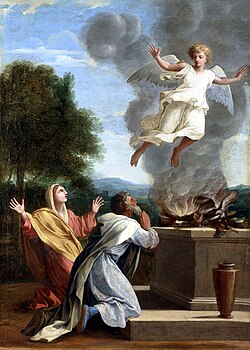
Manoah appears in Judges 13, described as a man from Zorah of the tribe of Dan. His wife is unnamed, but together they become the parents of Samson after an angelic visitation.
The name itself is derived from the Hebrew root נוּחַ (nuach) meaning “to rest, to settle, to repose, to be at ease.”
Between the 18th-century to early 20th-century, Manoah experienced some use in the U.S. and England. Common short forms were Manny, Menno and Noah.
In 2023, it appeared in the Netherlands charts for the most popular male names, though it did not rank in very high, coming in at #422.
From the Biblical Hebrew קוּםqum (to rise) and אֵל ‘el (God).
It is borne by at least three Biblical figures, including the nephew of Abraham in Genesis 22:21, a leader of the tribe of Ephraim in Numbers 34:24; and the ruler of the tribe of Levi in Book of Chronicles 27:17.
It was in use in 19th-century America among Protestant families with the short form of Kem.
The name Hephzibah (Hebrew חֶפְצִי־בָהּ, Ḥefzī-bāh) means “my delight is in her.” In the Hebrew Bible, it appears as the name of the wife of King Hezekiah and the mother of King Manasseh (2 Kings 21:1; 2 Chronicles 33:1).
In Isaiah 62:4, Hephzibah is also used symbolically as a poetic name for restored Zion, representing the renewed favor of God toward His people
The name was occasionally used among medieval Jewish communities, where it appears in apocryphal and mystical writings such as the Apocalypse of Zerubbabel and the Zohar. In these texts, a legendary warrior woman named Hephzibah fights the enemies of Israel in the messianic age, slaying wicked kings and defending Jerusalem.
Hephzibah enjoyed modest popularity among Protestant families in the 18th and 19th centuries, especially in colonial America and Puritan New England, where Old Testament names were widely favored. Common diminutives included Eppie, Hepsie, and Hepsy.
By the early 20th century, the name’s use had largely waned, surviving mainly as a literary or historical curiosity.
It was often utilized in 19th-century literature, being the name of a character in George Eliot’s Silas Marner (1861); and Nathaniel Hawthorne’s The House of the Seven Gables (c. 1851), which features Hepzibah Pyncheon, a proud but impoverished New England gentlewoman. Recently, it appears as the name of a witch in the Harry Potter series by J.K. Rowling.
An early notable bearer was American Bostonian Socialite, Hepzibah Swan (d. 1825, unknown birth date). A more recent notable bearer is American-Australian pianist, Hephzibah Menuhin (1920-1981).
It is also the name of several places in the United States.
With its mix of Biblical grace, Gothic Americana, and warrior-woman legend, Hephzibah carries both majesty and mystery. Its vintage nicknames—Eppie, Hepsie, Hepsy—soften its grandeur, making it unexpectedly wearable today.
Hephzibah, long slumbering in scripture and story, may be ready for revival.
Sources
Withycombe, E. G. The Oxford Dictionary of English Christian Names. Oxford: Clarendon Press, 1950.
Rehoboth (Hebrew: רְחוֹבוֹת, Reḥovot) is a biblical place-name from the Old Testament. It is usually translated as “broad places,” being from the Hebrew root rḥb (רחב), meaning “to be wide, spacious.”
In Genesis 26:22, Isaac digs a well and names it Rehoboth. There are other towns called Rehoboth mentioned in Genesis 10:11 and 36:37.
Rehoboth, Massachusetts, founded in 1643, is one of the oldest towns in the state. Rehoboth Beach is the name of a town in Delaware, and Rehovot is the name of a town near Tel Aviv in Israel.
As a male given-name, it came into use among 18th-century American protestants due to its Biblical associations.
It’s an edgy choice with early colonial American appeal. Are you daring enough to use this name?
The name is Hebrew, either derived from צל (tsel) (shadow) or צלל (tsalal) (to ring like a bell). In Genesis 4:19, it is the name of one of the two wives of Lamech.
Though it never became a widespread Jewish name until recently, it had usage in the Protestant Anglo world since the 16th-century and experienced mild popularity in the mid to late 19th-century. It appeared in the U.S. Top 100 between 1881 and 1886, peaking at #679. It was borne by Zillah Oakes (circ. 1870s), the namesake of the city of Zillah, Washington. It was also borne by New Zealand Politician, Zillah Smith Gill (1859-1937).
In English literature, Lord Byron used it as the name of the wife of Abel in his 1821 play, Cain. It is the name of a servant in Emily Brontë’s Wuthering Heights (1847), and the name of the titular heroin in the 1865 operetta by Australian composer, William Wilkins Russell. In recent years, it is the name of a character in Madeleine L’Engle’s, A Swiftly Tilting Planet (1978).
It may have occasionally been used as a form or short form of Cecilia.
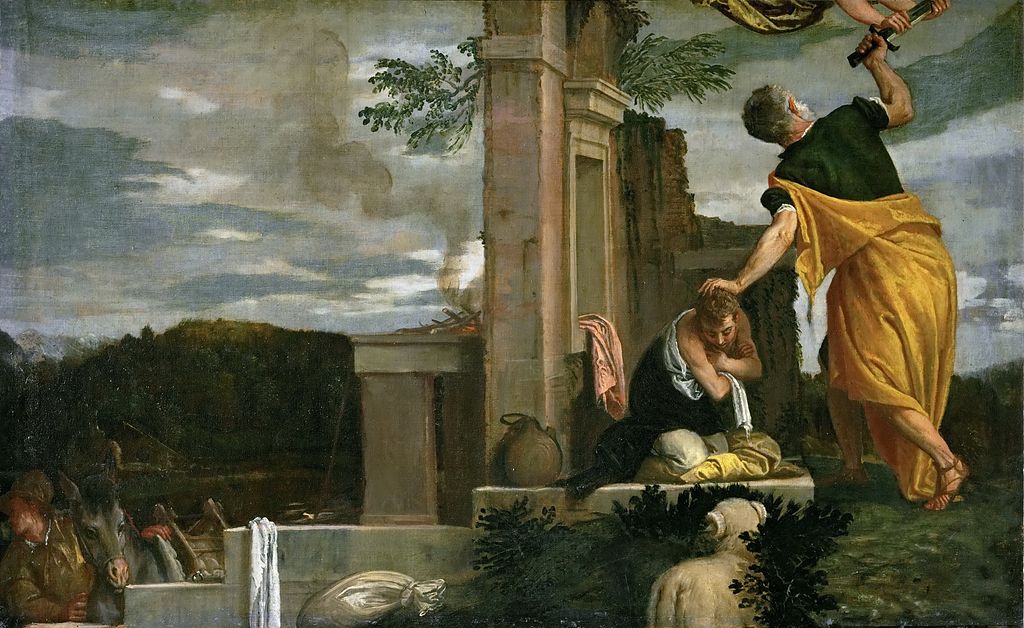
The name comes directly from the Biblical Hebrew יִרְאֶה (jireh) meaning, “to provide” or “to see.” In the Bible, it is the name of a place the where Abraham attempted to sacrifice Isaac before God intervened and provided a ram in his place. It has been in sporadic use as both a male and female given name in England and the United States since the 17th-century. It was born by a 19th-century Michigan politican, Jira Payne.
It has recently appeared in the U.S. Top 1000 Most Popular Male Names, coming in at #848 (2023). Its sudden appearance may have been popularized by the Elevation Worship and Maverick City Music song of the same name, released in 2021.
Its Spanish version of Yireh, is used as a unisex given name in Latin American countries.
The name is composed of the Hebrew elements from the Hebrew עשה (asa), “to do or make,” and אל (‘el), “God, divinity.” It is born in the Bible by 2 different characters, some allege they are the same person, a Moabite Warrior of King David and a Benjamite leader.
As of 2023, Jasiel appears in the U.S. Top 1000 Most Popular Male Names as the 939th most popular male name.
The name is borne in the Bible by the son of Joseph and Asenath, who is considered a patriarch, as he is a founder of one of the 12 trubes of Israel. According Genesis 41:52, he is named thus by Joseph because “God has made me fruitful in the land of my suffering.”
The name was also borne by a few early Christian saints, including St. Ephraim of Syria (4th-century, CE).
Ephraim appeared in the U.S. Top 1000 between 1880-1914, it disappeared for 99 years and reappeared in the charts in 2013. For its first centennial cycle, it peaked at #403 in 1880. As of 2023, it was the 992nd most popular male name.
Its Spanish counterparts of Efraín and Efrén have also appeared in the U.S. Top 1000, Efraín appeared between 1950 and 2014, peaking at #469 in 1981 whilst Efrén appeared between 1966-2007, peaking at #768 in 1990.
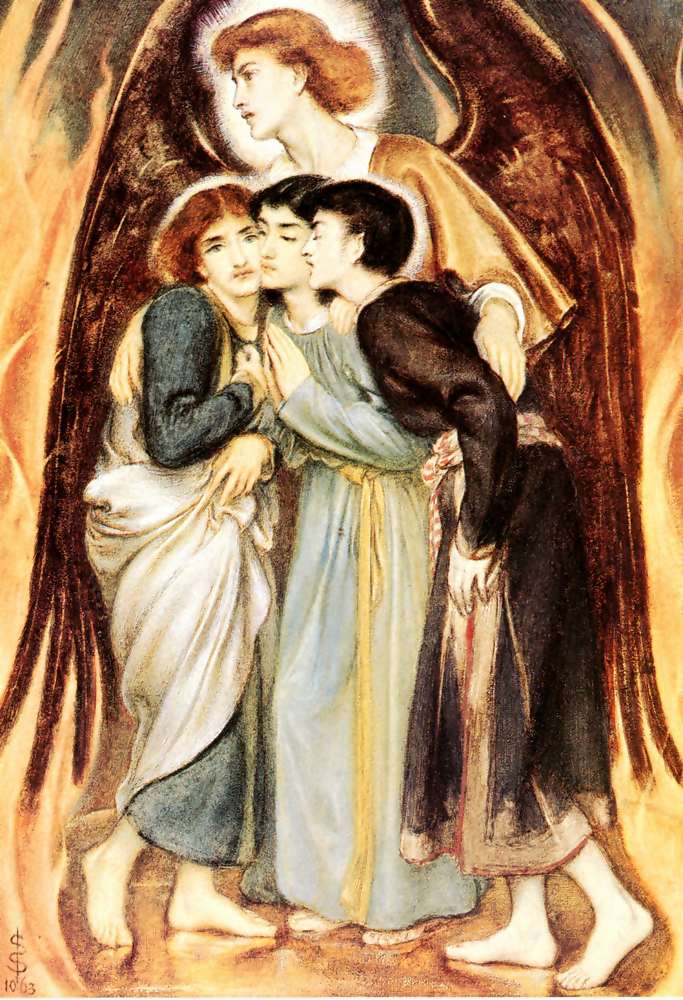
The name comes from the Hebrew meaning, “who is like God?; who is equal to God?,” “who is asked for?” and according to Hitchcock Bible names, “lent.” The name is borne by three male characters in the Bible, one mentioned in (Exodus 6:22) as one of the sons of Uzziel, the uncle of Moses and Aaron and most notably, it is the Hebrew name of Meshach (Dan. 1:11, 19) one of the three youths who refused to worship idols and were thrown in a furnace but miraculously survived.
Misael currently ranks in as the 192nd most popular male name in Mexico (2021) and the 790th most popular male name in the United States (2022).
In the Coptic Church, it is borne by St. Misael the Anchorite (7th-century CE).
Its feminine version of Mishaela is a pop song by Israeli pop singer, Achinoam Nini and has experienced sporadic usage in Israel and the English-speaking world. It is also the name of a character in Shining Force Gaiden: Final Conflict.
Pronunciation: Eng (jeh-DIAL); Port (ZHAH-dee-EL); Sp (YAH-dee-EL)
The name is composed of the Hebrew words ידע (yada’) meaning, “to know,” and אל (‘el) meaning “God.”
It is borne by three minor characters in the Old Testament, mentioned in 1 Chronicles 7:6, 1 Chronicles 11:45 and 1 Chronicles 26:2.
In recent years, its Spanish and Portuguese offshoot of Jadiel and Yadiel have been popular in Latin America. It may have been popularized by Puerto Rican reggaeton singer, Jadiel (born Ramón Alberto González Adams, 1985-2014).
Jadiel has appeared in the Brazilian Top 1000 names between 1980-2000. Jadiel has been in the U.S. Top 1000 since 2008 and currently ranks in at #878 in 2022. Yadiel appeared in the U.S. Top 1000 between 2008-2021, peaking at #850 in 2009.