Nikita

Gender: Masculine
Origin: Greek
Meaning: “victory.”

The name is a Russian and Macedonian form of the Greek, Nicetas, which is derived from νικη (nike) meaning, “victory.”

It was borne by a 5th-century Serbian saint, considered the patron saint of Romania.

In more recent years it has been associated with Russian General Secretary and Premier of the Soviet Union during the 1950s and 1960s, Nikita Krushchev (1894-1971).

In Russian folklore, it is borne by Nikita the Tanner, who is believed to have rescued a Kievan princess from the clutches of an evil dragon.

Currently, Nikita is the 10th most popular male name in Moscow, Russia (2010) and the 176th most popular male name in Germany, (2011).

In the West, the name has occasionally been used for females, however, it is uncertain if this is a borrowing from the Russian or if it in fact a borrowing from the Indian. The name is coincidentally a feminine Indian name, which is derived from the Sanskrit meaning “earth” or “sleep.” It is sometimes transliterated as Nikhita.

Other forms of the name include:

  • Nikita Никита Նիկիտա ნიქითა (Armenian/Bulgarian/Chuvash/Georgian/Macedonian/Romanian/Serbian)
  • Mikita мікіта (Belarusian)
  • Niketas Νικήτας (Greek)
  • Nicetas (Latin/Polish)
  • Mykyta Микита (Ukrainian)

Maurice

Gender: Masculine
Origin: Latin
Meaning: “dark; black”
Fr. (moh-REESE) Eng (MOR-ris).

He may seem a bit dated to some, but parents looking to vintage names like Leo and Brice/Bryce might see the appeal in this. Traditionally nicknamed Maury, parents who opt for the French pronunciation have the advantage of using Reese. Look past Maury Povich and the cartoon character in Madgascar, and you will find that the name has a long and rich history.

He is a derivative of the Roman name Mauritius, which is derived from the Latin Maurus meaning, “dark-skinned; dark complexion.”

The name was borne by Emperor Maurice of Byzantium (539-602). Known in Greek as Maurikios and in his native Armenian as Morik, he was one of the most influential and decisive rulers of the Byzantine Empire, so much so that he is a national hero in his native Armenia till this day.

StMaurice2 (1)The name is also borne by a very popular 3rd century saint. St. Maurice was an Egyptian by birth and a Roman citizen. He served in the Roman army and was apart of the Theban legions, which had been stationed in Switzerland at the time of the saint’s martyrdom. According to legend, Emperor Maximian ordered Maurice and his legions to destroy a local Christian community, when Maurice and his followers refused to harass fellow Christians, the emperor ordered them to be executed. The area of martyrdom is now known as Saint Maurice-en-Valais and the Abbey of Saint Maurice-en-Valais supposedly houses the saint’s relics.

800px-St._Moritz_by_nightThe saint also gave his name to another town in Switzerland: St. Moritz, (Top of the World), is a beautiful little resort town that sits in the Valley of Engadine and the canton of Graubünden. Their coat of arms actually features the legendary saint. St. Maurice is also venerated among Coptic Christians. In fact, the names Maurice and Maurikios are fairly common among Egyptian Christians.

The German form of Moritz is found in the popular German children’s series Max and Moritz written by Wilhelm Busch in 1865. The humorous duo is still a common pop icon in German speaking countries. Other notable appearances include a novel by E.M. Forster, (Maurice) written in 1913, a tale of same sex love in early 20th-century England.

The Island of Mauritius or L’île Maurice in French, is a former French colony off the coast of Africa. It was named in honor of Prince Maurice of Nassau, the Stadtholder of the Netherlands.

The designated name-day is September 22

Currently, Maurice is the 150th most popular male name in Germany, (2011), and he still lurks within the U.S top 1000 coming in as the 445th most popular male name, (2010).

Other forms of the name include:

  • Morik Մորիկ (Armenian)
  • Moïc (Breton)
  • Maurici (Catalan)
  • Maurikios (Coptic/Greek)
  • Maric Мариц (Croatian/Serbian)
  • Maurits (Dutch/Scandinavian)
  • Mauri (Finnish)
  • Maur (French)
  • Maurice (French/English)
  • Moriz (German: archaic)
  • Moritz (German/Scandinavian)
  • Móric (Hungarian/Slovakian)
  • Mór (Hungarian)
  • Muiris (Irish)
  • Maurizio (Italian)
  • Mauro (Italian/Portuguese/Romansch)
  • Mauritius (Late Latin)
  • Maurus (Latin/Romansch)
  • Morics (Latvian)
  • Maurycy (Polish)
  • Maurício (Portuguese)
  • Maurin (Romansch)
  • Murezi (Romansch)
  • Murezzan (Romansch)
  • Mauricio (Spanish)
  • Meuric/Meurig (Welsh)

Its feminine counterparts are Maura, Mauricia and Maurizia.

Common English short forms are  Maury, Moe and Morry.

Benno

Gender: Masculine
Origin: German
Meaning: “bear.”
(BEN-no)

The name is believed to be a contraction of any Germanic name which begis with the bern (bear) element.

The name was popularized by a 12th-century German saint, Benno of Meissen. He is revered as the patron saint of anglers, weavers and oddest of all, alliteration.

Currently, Benno is the 215th most popular male name in Germany, (2011)/

Other forms of the name include:

  • Beno (Czech/Hungarian/Slovak)
  • Benno (German/Romansch)
  • Bennone (Italian)
A Polish feminine form is Benona.

Sources

  1. http://www.behindthename.com/name/benno
  2. http://en.wikipedia.org/wiki/Benno

Torben

Gender: Masculine
Origin: Danish/German
Meaning: “Thor’s bear.”

The name is derived from the Old Norse, Þórbjörn, which is composed of the elements, Þór (Thor) and björn (bear).

Currently, Torben is the 177th most popular male name in Germany, (2011).

Other forms of the name include:

  • Tarben (Danish)
  • Thorben (Danish/German)
  • Torbjørn (Danish/Norwegian)
  • Þórbjörn (Faroese/Icelandic/Old Norse)
  • Thorbjøn (Norwegian)
  • T(h)orbjörn (Swedish)


Timon

Gender: Masculine
Origin: Greek Τιμων
Meaning: “honour; esteem.”
Eng (TIE-men; tih-MONE)

The name is derived from the Greek time (τιμη), meaning, “honour; esteem.”

The name is borne by a very minor character in the New Testament as was used by Shakespeare for his eponymous character in Timon of Athens (1607).

Currently, Timon is the 203rd most popular male name in Germany, (2011).

Other forms of the name include:

  • Timon (English/German/Hungarian)
  • Tymon (Polish)

A Polish feminine form is Tymona.

Jerome

Gender: Masculine
Origin: Greek ‘Ιερωνυμος
Meaning: “sacred name.”
Eng (jə-ROM), Fre (zheh-HROME)

The name is derived from the Greek male name, Hieronymus (‘Ιερωνυμος).

It was borne by a 5th-century saint who is responsible for creating the Vulgate Bible. He is revered as a Doctor of the Church.

The name was common in England during the 12th-century, but fell out of usage after the Protestant Reformation, only to be reintroduced again in 19th-century America via Catholic immigrants from Germany, Ireland and Italy.

Currently, Jerome is the 208th most popular male name in Germany, (2011).

Other forms of the name include:

  • Jeronimi (Albanian)
  • Hieronimos Հիերոնիմոս (Armenian)
  • Jerolin (Basque)
  • Gerasim Герасім (Belarusian)
  • Jeronim Йероним (Bulgarian)
  • Jeroni (Catalan)
  • Jeronim Јероним (Croatian/Serbian)
  • Jeroným (Czech)
  • Hero (Dutch)
  • Hiëronymus (Dutch)
  • Jeroen (Dutch)
  • Jero(o)m (Dutch)
  • Jerome (English/German)
  • Jérôme (French)
  • Iaróm (Gaelic)
  • Ieróim (Gaelic)
  • Xerome (Galician)
  • Jeromos (Hungarian)
  • Geronimo (Italian)
  • Girolamo (Italian)
  • Jeronimas (Lithuanian)
  • Ġlormu (Maltese)
  • Jiròni (Occitanian)
  • Hieronim (Polish/Slovene)
  • Jerônimo (Portuguese: Brazilian)
  • Jerónimo (Portuguese/Spanish)
  • Ieronim Иерони́м Ієронім (Romanian/Russian/Ukrainian)
  • Jaronas (Romansch)
  • Jerun (Romansch)
  • Giron(n)as (Romansch)
  • Jerone (Sardinian)
  • Zirominu (Sardinian)
  • Giròlamu (Sicilian)
  • Hieronym (Slovak)
  • Jarolím (Slovak)
  • Hierónimo (Spanish)
  • Sierôm (Welsh)


Fritz

Gender: Masculine
Origin: German
(FRITZ)

The name was originally a diminutive form of Friederich but has exclusively been used as an independent given name since the 19th-century.

The name was so common at the beginning of the 20th-century that the term fritz was often used by American and British troups during the Second World War to designate a random German soldier.

Like many other vintage names, Fritz has recently started to gain momentum in popularity in Germany. Currently, it is the 157th most popular male name in Germany, (2011).

A common nickname is Fritzi.

Mariella

Gender: Feminine
Origin: Italian

The name is from an Italian hypocritistic form of Maria.

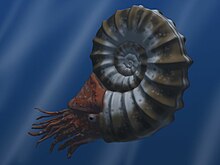
It is also the name of an extinct species of ammonoid.

Currently, Mariella is the 143rd most popular female name in Germany, (2011). Other forms of the name include:

  • Mariela (Croatian/Serbian/Slovene/Romanian/Spanish)
  • Marielle (German)


Elli

Gender: Feminine
Origin: Old Norse
Meaning: “old age.”
(EL-lee)

I love this, while it is not a name I’d ever use myself, it is one of those names that you would never suspect had such a long and symbolic history.

The name is often listed as a Germanic diminutive form of Elisabeth, which may be in part, true, but its usage as a given name actually pre-dates Elisabeth’s introduction to the Germanic world.

In Old Norse, elli is the word for old age, and she is personified in the Prose Edda. Her story is recounted in the Book of Gylfaginning, in which she defeats Thor in a wrestling match.

In pre-Christian Norse culture, old age often symbolized wisdom.

Elli has been a popular name throughout Scandinavia and Germany. It experienced a vogue in the 19th-century and seems to be experiencing a revival. It is currently the 172nd most popular female name in Germany, (2011). Another German spelling is Elly.

Elli is also used in Estonia and Finland.