Luay, Luai

  • Origin: Arabic لؤيّ
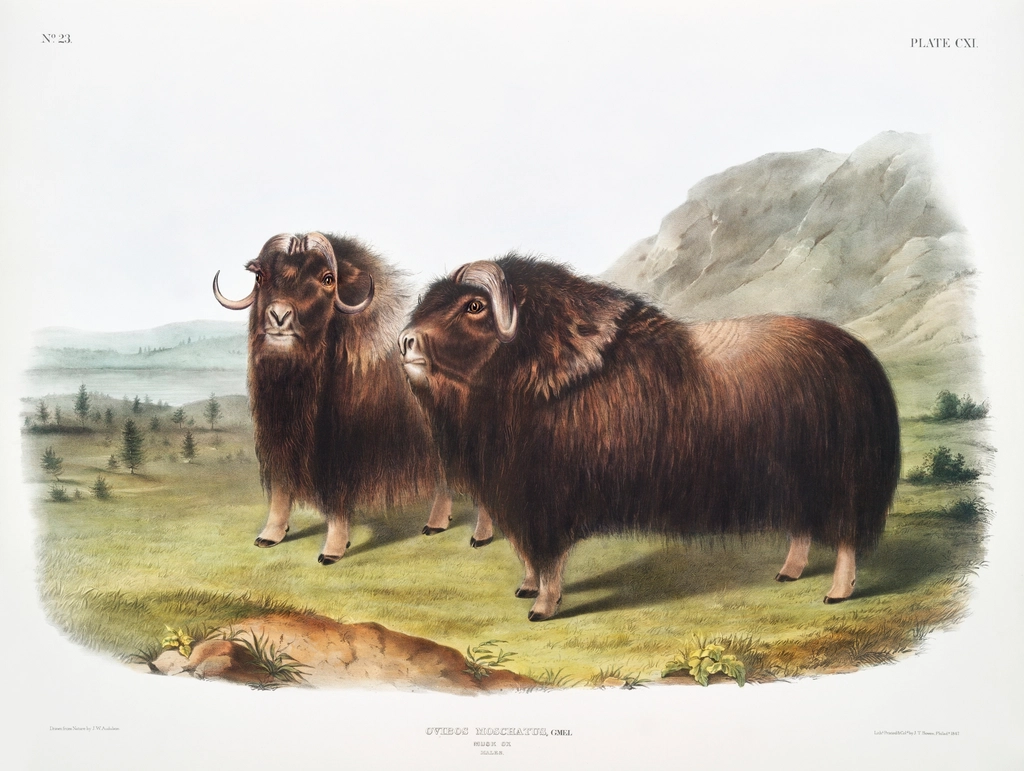
  • Meaning: “wild ox; protector.”
  • Gender: Male
  • (LOO-iey)

The name is derived from the Arabic لأًى (laʾan) “wild ox,” which can also have the euphemism of a shield or protector. Interestingly enough, it may share the same etymological root as the Hebrew female name, Leah.

The name is borne by Lu’ayy ibn Ghalib (3rd-century C.E.) who was the ancestor of the Islamic prophet Muhammed.

Other forms of the name include:

  • Luaj (Albanian/Bosnian)
  • Lüey (Azeri/Turkish)
  • Louay (Maghrebi Arabic)
  • Louie (Maghrebi Arabic)
  • Loay لؤی (Urdu)

Sources

Mihirimah, Mehrmah

  • Origin: Persian
  • Meaning: “sun & moon; affection of the moon; kindness of the moon.”
  • Gender: Female

The name is composed of the Persian elements mehr / mihr / meher (مِهر) — a Persian word meaning “sun,” “affection,” “kindness,” or “love” (and often with connotations tied to the ancient Iranian / Zoroastrian deity Mithra) and māh (ماه), meaning “moon” or “month.”

The name entered wider use through Ottoman royal history, where Mihrimah Sultan (1522–1578) — the daughter of Sultan Suleiman the Magnificent and Hürrem Sultan — became one of the most powerful and educated women of her time.

A modern Persian form is Mehrmah.

An Urdu form is Meharmah and another Turkish form is Mihrümah.

Sources

Muizz

  • Origin: Arabic معِزّ
  • Meaning: “to give honour; to empower.”
  • Variant transcription: Muiz.
  • Gender: Male

An Arabic male name derived from the verb ʿazza (عزّ) meaning “to be mighty, strong, honored.”

In Islam, al-Muʿizz (ٱلْمُعِزّ) — “The Bestower of Honor” — is one of the 99 Names of Allah.

The most notable bearer is al-Muʿizz li-Dīn Allāh (953 – 975 CE), the fourth Fatimid caliph, renowned for founding the city of Cairo (al-Qāhira) in 969 CE.

It is used throughout the Islamic world, but is particularly common among Muslims in Nigeria.

Sources

Lamis

  • Origin: Arabic لَميس
  • Meaning: “soft.”
  • Gender: Female

The name comes directly from the Arabic لمِيس ‎(lamīs), meaning “soft; tender; soft to the touch.”

An Urdu and Bengali form is Lamisa.

Alternately, it appears in Greek mythology, in the epic Dionysiaca by Nonnus of Panopolis as the name of one of the leaders of the satyrs who joined the army of Dionysus in his campaign against India. In that context, the meaning of the name is not clarified and the mythological reference is very obscure.

Sources

Mawaddah

  • Origin: Arabic مَوَدَّة
  • Meaning: “affection; love; friendship”
  • Variant transcription: Mawada, Mawadda & Mouadda (Maghrebi Arabic).
  • Gender: Female

The name is from the Arabic word مَوَدَّة (mawaddah), meaning, “affection; love; friendship.” It has the same sense as the Greek word and name, Agape. It is ultimately derived from the Arabic root و-د-د (w-d-d), meaning, “love; affection; compassion.”

Sources

Niloufar

  • Origin: Persian نیلوفر
  • Bengali: নিলুফার
  • Urdu: نیلوفر
  • Uzbek: Нилуфар
  • Variant Transcriptions: Nilofar, Nilufar, Nilofer
  • Meaning: “morning glory; water lily; nenuphar”
  • Gender: Female

The name comes directly from the Farsi word نیلوفر (niloufar), meaning, “morning glory; water lily; nenuphar.”

It ultimately derives from Middle Persian nīlōpār, from Sanskrit nīlotpala (नीलोत्पल) meaning blue lotus (nīla “blue” + utpala “lotus”). Through Persian, it spread widely into other languages of the Islamic and Silk Road world. The Greek-Latin loan nénuphar comes from this same root, appearing in medieval botanical and poetic texts to denote the water lily (Nymphaea).

Niloufar has been used as a feminine given name in Iran, Afghanistan, Tajikistan, Azerbaijan, and Turkey (where it appears as Nilüfer).

Notable bearers include:

  • Niloufar Bayani, Iranian conservationist and scholar.
  • Nilüfer Yumlu (known simply as Nilüfer), celebrated Turkish pop singer.
  • Princess Niloufer of Hyderabad (1916–1989), Ottoman princess renowned for her beauty and philanthropy.

International Variations

  • Nunufar Նունուֆար (Armenian)
  • Nilufər (Azeri)

Sources

Mumtaz

  • Origin: Arabic ممتاز
  • Meaning: “excellent; distinguished.”
  • Gender: Unisex

The name is derived from the Arabic root م-ت-ز (m-t-z), meaning “to be distinguished, eminent, or excellent.” As an adjective, Mumtaz literally means “distinguished,” “excellent,” “outstanding,” or “exalted.”

It is often used as a word of exclamation in the same way “that’s cool” or “that’s great” is used in English.

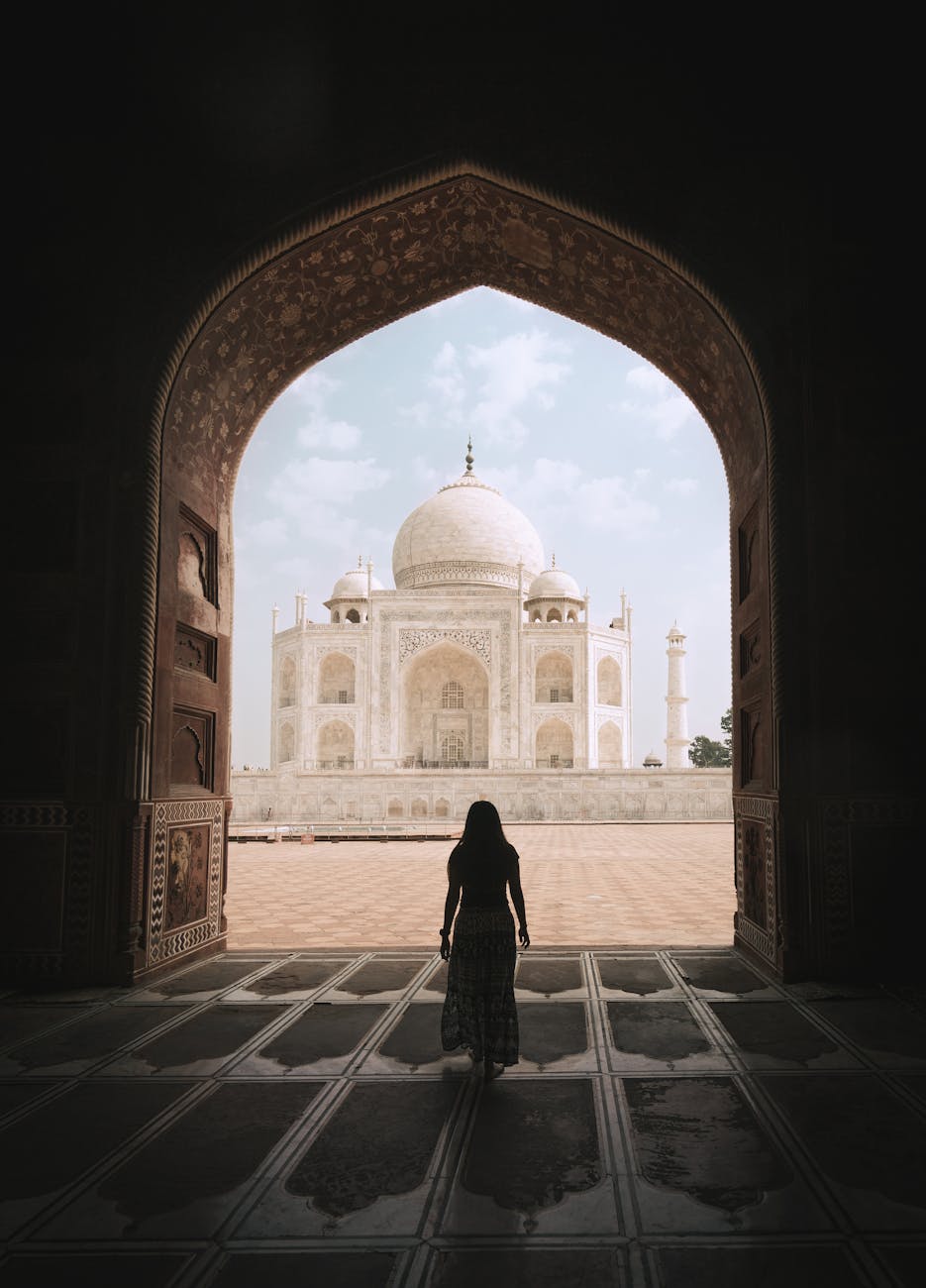
It is also used as a given-name. In the Arabic-speaking world, it is a masculine name but in Southeast Asia, it is unisex. A notable female bearer was Mumtaz Mahal (1593–1631),
the beloved wife of Mughal Emperor Shah Jahan, for whom the Taj Mahal was built. Her real name was Arjumand Banu Begum, but she was titled Mumtaz Mahal, meaning “Distinguished One of the Palace.”

Mümtaz is the Turkish form, it is mostly masculine but is occasionally used on females.

A strictly feminine form is Mumtaza(h)

Sources

Mahtab

  • Origin: Persian مهتاب
  • Meaning: “moonlight.”
  • Gender: Female, unisex in Southeast Asia
  • Pron: MAH-tawb

The name is from the Persian word, مهتاب (mahtab), meaning “moonlight.” It is a poetic female name that has spread throughout the Persianate world. It is occasionally used on males in Southeast Asia.

Notable Bearers

  • Mahtab Singh (1782-1813), was the first wife of Ranjit Singh, founder of the Sikh Empire.
  • Mehtab Kadın (1830-1888) (Turkish form), was the name of the consort of Sultan Abdulmejid I of the Ottoman Empire.
  • Mahtob Mahmoody (b. 1979): Iranian-American author and daughter of Betty Mahmoody, whose story inspired Not Without My Daughter (1991), starring Sally Field.

Its Turkish form of Mehtap was among the top 100 girls’ Turkish names between 1980-1993, and peaked at # 58 in 1983.

International Variations

  • Mehtəb (Azeri)
  • Mahtob Маҳтоб (Tajik, Uzbek)
  • Mahitab (Turkish – Ottoman)
  • Mehtap (Turkmen, Turkish)

Sources

Numan

  • Origin: Arabic نُعْمان
  • Meaning: “blood; red; bliss; anemone flower.”
  • Transliterations: Nu’man; Nouman (Maghrebi Arabic; Persian); Noman নোমান (Bengali, Tatar, Urdu)
  • Gender: Male
  • Pron (NOO-mahn)

The name comes directly from the Arabic word نُعْمان (nu’man), which is a poetic term describing “blood” as in a type of blood that brings vitality and beauty. It is also the word for the colour crimson and the anemone flower. It is ultimately from the root n–ʿ–m (ن ع م), which shares the same root with Naim نعم (comfort, tranquility, luxury, ease).

Numan ibn al-Munḏir (d. 602 CE) was one of the last Lakhmid kings of al-Ḥīrah, a pre-Islamic Arab Christian kingdom in southern Iraq. He is remembered in Arabic literature for his eloquence and patronage of poets.

In early Islamic history, Numan ibn Bashir al-Ansari (d. 684 CE) was a Companion of the Prophet Muḥammad and a prominent figure in the first Islamic century.

Sources

Zulfiqar

  • Origin: Arabic ذو الفقار
  • Meaning: debated
  • Gender: Male
  • Pron: ZOOL-fee-KAR

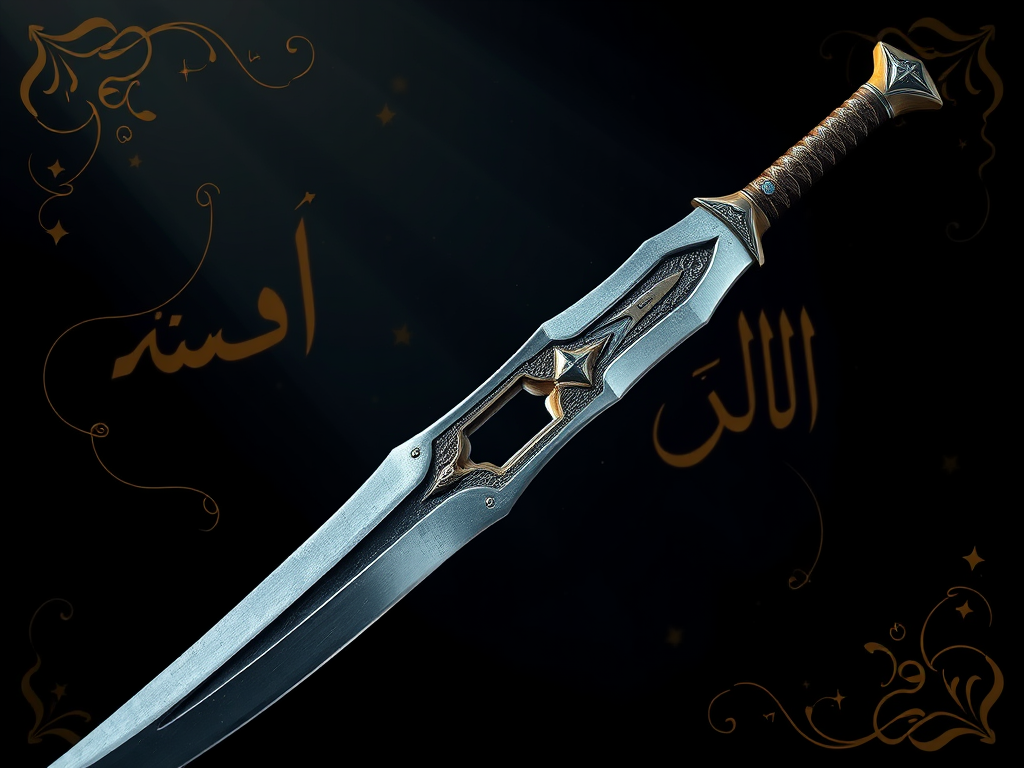
In Islamic tradition it specifically refers to a sword with a split or notched blade—the legendary weapon given by the Prophet Muhammad to his cousin and son-in-law ʿAlī ibn Abī Ṭālib.

It possibly comes from classical Arabic compound dhū / dhu (ذو) (possessor of; one who has), and fiqār / fiqar (فقار) (spine; vertebrae). Other sources suggest the second element may relate to the stars of Orion’s belt.

The phrase literally means “the one with the notches” or “owner of the notched spine.”

International Variations

  • Zylfikari, Zilfikari (Albanian)
  • Zupulkar Зулпукъар (Avar)
  • Zülfüqar (Azeri)
  • Zulfikar (Bosnian, Indonesian)
  • Zulfakar Зульфакъар (Chechen)
  • Zülpykar Зұлпықар (Kazakh)
  • Zilfiqar (Kurdish)
  • Zulfaqar (Malay)
  • Zolfeghar ذوالفقار (Persian)
  • Zulfikor (Tajik/Uzbek)
  • Zülfikar (Turkish)

Sources