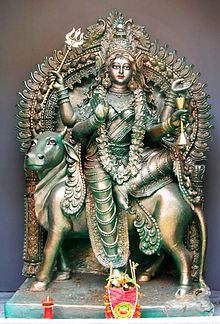
Padma

  • Origin: Sanskrit
  • Kannada: ಪದ್ಮಾ (Kanada)
  • Sanskrit, Hindi: पद्म, पद्मा
  • Tamil: பத்மா
  • Telugu: పద్మా
  • Tibetan: པདྨ
  • Gender: Unisex
  • Meaning: “lotus.”
  • (PUD-mah); (pəd̪.mə/)

The name Padma (पद्म) is derived from Sanskrit, meaning “lotus.” In South Asian tradition, the lotus is one of the most sacred flowers, symbolizing purity, beauty, spiritual awakening, and transcendence — a blossom that rises pristine from muddy waters.

Religious & Mythological Significance

Lakshmi: In Hindu texts, Padma is used as a by-name of the goddess Lakshmi, goddess of wealth, fortune, and prosperity. She is often depicted standing or seated upon a lotus, holding lotus flowers in her hands.

Vishnu: The lotus is also associated with Vishnu, Lakshmi’s consort, and the cosmic lotus from which the universe springs.

Attributes: The padma is one of the four attributes (ayudhas) often shown in iconography of deities — symbolizing purity, enlightenment, and divine perfection.

Buddhism & Jainism: The lotus also holds deep meaning in Buddhist and Jain traditions, where it represents spiritual liberation and the blossoming of wisdom.

The name is technically unisex but more commonly bestowed on females. A notable bearer is American author, Padma Lakshmi (b. 1970).

It is also the name of a major river in Bangladesh and in the Harry Potter series, Padma Patil is the twin of Parvati Patil.

International Variations

  • Padmé (f) – a pop-culture invention from the Star Wars franchise, which is based on the Sanskrit name.
  • Badma Бадма (u) (Buryat, Kalmyk)
  • Pema པད་མ (u) (Bhutanese)
  • Padmi (f), Padmo (m) (Javanese)
  • Bhotum បទុម (u) (Khmer)
  • Badmaa Бадмаа (f) (Mongolian)
  • Badam Бадам (u) (Mongolian)
  • Padam पद्म (u) (Nepali)
  • Patthama ปัทมา (Thai) (f)

Sources

Nishka

  • Origin: Sanskrit निष्क
  • Gender: feminine
  • Pronunciation: NISH-kah

The name is derived from the Sanskrit निष्क (niska), which essentially means “gold coin,” “gold vessel” or “a gold pendant.” It can refer to a unit of measurement, which is the weight of gold equal to 18 or 15 Suvarṇas or karsa. It is defined in the 15th-century Yogasārasaṅgraha by Vasudeva, a compendium of Ayurverdic medicine and pharmacology.

Sources

Jashan

  • Origin: Hindi जशन
  • Meaning: “festivities.”
  • Gender: masculine
  • Pronunciation: JAH-shahn

The name comes directly from the Hindi word जशन meaning, “festivities.”

Sources

Vihana

  • Origin: Sanskrit विहाना
  • Meaning: “dawn; early morning.”
  • Gender: feminine
  • (vee-HAH-nah)

The name comes directly from the Sanskrit word विहान (vihana) meaning, “dawn; early morning.”

Sources

Vyom

  • Origin: Hindi, Sanskrit व्योम
  • Meaning: “space; ether; firmament; heavens; sky.”
  • Gender: masculine
  • Pronunciation: VYOOM

The name comes directly from the Hindi word व्योम (vyom), which means, “space, ether, firmament, sky; heavens.” It is ultimately linked to the Sanskrit व्योमन् (vyoman) of the same meaning.

Sources

Dhyana, Dhyani, Dhyan

Dhyana & Dhyani are unisex (pronounced TAH-nah & TAH-nee), ultimately derived from the Sanskrit ध्यान and meaning “meditation; attention.” Both concepts are applied in Buddhism and Hinduism.

An exclusive masculine form is Dhyan.

Sources

Ajay

  • Origin: Sanskrit
  • Bengali: অজয়
  • Devangari: अजय
  • Gujarati: અજય
  • Hindi/Marathi: अजय
  • Kannada: ಅಜಯ್
  • Malayalam: അജയ്
  • Tamil: அஜய்
  • Telugu: అజయ్
  • Meaning: “invincible; unconquerable.”
  • Gender: masculine
  • Pronunciation: uh-JYE

The name is from the Sanskrit a अ (not) & jaya जय (victory).

The name appeared in the British Top 500 Male Names between 1996-2011, and peaked at #300 in 2003.

Other forms Ajai and Ajit.

Sources

Gauri

  • Origin: Sanskrit, Hindi, Marathi गौरी
  • Meaning: “fair; light-skinned; white; brilliant.”
  • Gender: feminine
  • Pronunciation: GORE-ee

The name comes directly from the Sanskrit word meaning “fair; light-skinned; white; brilliant.” In Hinduism, this is an epithet for the goddess Parvati in her Mahagauri form.

The Kannada and Tamil form is Gowri கௌரி (Tamil) & ಗೌರಿ (Kannada).

Gauri can also be a Finnish male form of the name Gabriel.

Sources

Hansa

The name can have a few origins and meanings. It is primarily an Indian name that comes from the Sanskrit हंस (hamsa), which originally referred to an aquatic bird of passage. The hamsa is described as a mythical bird with knowledge in the Rig Veda and also as the main means of transport for the gods Brahma, Gayatri, Saraswati, and Vishvakarma in Hinduism. In the Ramayana, the hamsa was the bird that carried love letters between Damayanti and Nala. According to Indian legend, arayanna (heavenly hamsa swans) are said to live in the Himalayas where they eat pearls and are able to separate milk from water.

The hamsa bird is also associated with the concept of soham (that I am), as when it is said fast, hamsa starts to resemble soham. The latter is linked with the Brahman, and thus the bird is often associated with the cycle of samsara.

The hamsa bird has also been a popular motif in Indian art for centuries.

Over the centuries, it has interchangeably been translated as a swan, flamingo, goose or duck. It is ultimately from the Proto-Indo-European root word *ǵʰh₂éns, which is also the progenitor of the English word goose, German gans (goose), and the Latin anser (goose).

In India, as a given-name, it is used among all languages groups. The name is primarily used on females but has occasionally been given to males.

The name is also German and Scandinavian female name, being a contracted form of Johanna. Other forms are Hansina and Hansine.

Sources

Anil, Anila

Anila is from the Sanskrit आनिल (wind), in Hinduism it is an epithet for the wind God, Vayu. In contemporary India, both names are unisex.

Anıl is a Turkish unisex name meaning “the memory; to be remembered,” in Turkish. Anil is also a popular Albanian & Bosnian male name, while Anila is the feminine form that is exclusively used in Albania & Bosnia.

Anıl appeared in the Top 100 Most Popular Male Names in Turkey between 1990 and 2012, peaking at #51 in 1991.

Sources