Mayada

  • Origin: Arabic ميادة
  • Meaning: “to sway back and forth.”
  • Variant Transcription: Mayyada.
  • Gender: Female

From the Arabic verb تَمايَدَ (tamayada), meaning “to sway gracefully, to move with a gentle or elegant motion.” It comes from the triliteral root م ي د (m-y-d), which carries connotations of swaying, oscillating, or walking with poise and pride.

It is mainly used in the Levant, Gulf Countries and Sudan.

Two notable bearers are Syrian singer singer, Mayada El-Hennawy (b. 1959) and Palestinian-German runner, Mayada Al-Sayad (b. 1992).

Sources

Zulfiqar

  • Origin: Arabic ذو الفقار
  • Meaning: debated
  • Gender: Male
  • Pron: ZOOL-fee-KAR

In Islamic tradition it specifically refers to a sword with a split or notched blade—the legendary weapon given by the Prophet Muhammad to his cousin and son-in-law ʿAlī ibn Abī Ṭālib.

It possibly comes from classical Arabic compound dhū / dhu (ذو) (possessor of; one who has), and fiqār / fiqar (فقار) (spine; vertebrae). Other sources suggest the second element may relate to the stars of Orion’s belt.

The phrase literally means “the one with the notches” or “owner of the notched spine.”

International Variations

  • Zylfikari, Zilfikari (Albanian)
  • Zupulkar Зулпукъар (Avar)
  • Zülfüqar (Azeri)
  • Zulfikar (Bosnian, Indonesian)
  • Zulfakar Зульфакъар (Chechen)
  • Zülpykar Зұлпықар (Kazakh)
  • Zilfiqar (Kurdish)
  • Zulfaqar (Malay)
  • Zolfeghar ذوالفقار (Persian)
  • Zulfikor (Tajik/Uzbek)
  • Zülfikar (Turkish)

Sources

Safin, Safana, Safina

Safin سَفِين is an Arabic male name that derives from the Arabic root, S-F-N س ف ن meaning, “ship.” Safin itself is the plural form and therefore means “ships.” The singular form of Safina سَفِينة (ship) is used as a female given-name. Another feminine form, which is Safana سَفّانة, literally meaning “boatwright” in modern Arabic derives from the same root but may have had a connotation of a precious gem or pearl in old Arabic and was also used as a term of endearment for a daughter.

The name is used in reference to “سفينة نوح” (safinat Nuh), which is Arabic for Noah’s ark.

Other forms include: Safeen (masculine), Saffanah (feminine), Safanah (feminine) & Safinah (feminine).

A Tatar form is Сәфинә” (Säfinä).

Safina is used throughout the Islamic world.

Sources

Ramz, Ramzi, Ramza, Ramzia

  • Origin: Arabic
  • Meaning: “code, sign, mark.”

Ramiz رامز , Ramz رَمْز & Ramzi رمزي are Arabic masculine names which come directly from the Arabic word (ramz) رَمْز , meaning, “code, sign, mark, symbol, gesture.” It is ultimately derived from R-M-Z root in Arabic.

Ramzi appeared in the U.S. Top 1000 Most popular male names between 1973-1990 and peaked at #320 in 1982. It’s usage in the United States may have been influenced by immigrant groups who use the name (Southeastern European Muslims, Arab immigrants & Southeastern Asian Muslims immigrants), mixed with Anglophone parents who were probably using it as an alternate spelling for the English surname/place-name, Ramsey, which means “wild garlic island.” It should also be noted that during this time period, the use of Arabic names became especially popular among African-Americans.

The name is sometimes transliteration as Ramzy and I suppose in the English-speaking world it could also be transliterated as Ramsey.

The feminine forms are Ramza and Ramzia, spelled Ramziya Рәмзия in Central Asian & Turkic languages (Bashkir, Chechen, Tatar).

Other forms include:

Male

  • Remzi Ремзи (Albanian, Bosnian, Crimean Tatar, Turkish)

Female

  • Remzije (Albanian, Bosnian)
  • Remziye (Turkish)

Sources

Duha

  • Origin: Arabic ضحى
  • Meaning: “forenoon.”
  • Gender: unisex
  • DOO-hah

The name comes directly from the Arabic word for forenoon or late morning. In Islam, it is used in reference to Salat ad-Duha صَلَاة الضحى‎‎, a voluntary prayer that is said between Fajr and Dhuhr and is used mainly for the atonement of sins.

It is also the name of the 93rd chapter in the Qu’ran, al-Ḍuḥā الضحى‎, (the Morning).

As a given-name, it is traditionally unisex, but has been more often bestowed on females.

Other forms include:

  • Duha Духа (Albanian, Arabic (standard), Bashkir, Bosnian, Chechen, Kazakh, Kurdish, Turkish)
  • Zuha ज़ुहा (Azeri, Hindi)
  • Doha, Dohaa للال چاشت (Bengali, Urdu)
  • Dhuha (Javanese, Malaysian)
  • Zoha ضحی (Persian)
  • Zuho Зуҳо (Tajik, Uzbek)

Sources

Latif, Latifa

  • Origin: Arabic لَطِيْف
  • Meaning: “gentle; kind; benevolent.”

Latif is a masculine given-name which comes directly from the Arabic word لَطِيف (gentle; kind; benevolent). In Islam, Al-Latif لطيف, (the Kind; the Benevolent) is one of the 99 names of Allah (God). It’s feminine form is Latifa.

Latif & Latifa are commonly used throughout the Islamic world.

A notable American bearer is actress & singer, Queen Latifah.

Other forms include:

  • Latıif (m), Latıifa (f) (Avar)
  • Lətif (m), Lətife (f) (Azeri)
  • Latheef, Latheefa (Dhivehi)
  • Latifah (f) (Indonesian, Malaysian)
  • Letîf (m), Letîfe (f) (Kurdish)
  • Lәtyjif (m), Lәtyjifә (f) (Tatar)
  • Letife (f) (Turkish)
  • Lateef لطیف, Lateefa(h) (Urdu)

Sources

Fuad

  • Origin: Arabic فُؤاد
  • Meaning: “heart.”
  • Gender: masculine
  • Pronunciation: foo-AD

The name comes directly from the Arabic word for heart. It is used equally among Arab- Muslims & Christians. Among Christians, particularly Palestinians, Chaldeans and Lebanese Christians who profess Roman Catholicism, it is used in reference to the Sacred Heart of Jesus or the Immaculate Heart of Mary, in the same way the Spanish name Corazón is used in the Spanish-speaking world, though in the Arabic case, the name is strictly masculine.

Among Muslims, the term fu’ad is used at least 5 times in the Quran. The name is used throughout the Islamic world.

It is even used among Non-Arab groups in the Middle East, such as Mizrachi Jews.

The name was borne by two Egyptian kings.

Other forms include:

  • Fuad (Amharic, Azeri, Bosnian, Indonesian)
  • Fouad (Maghrebi)
  • Fuat (Turkish)
  • Fawad (Urdu)

A feminine form is Fuada(h).

Sources

Rumaysah, Romaïssa

رُمَيْسَة
Photo by Rhyan Stark on Pexels.com

The name seems to be of disputed etymology, but is Arabic in origin. It was the name of Rumaysah bint Milhan known as Umm Sulaym, one of the first women to convert to Islam. Her son was Anas ibn Malik who was one of the companions of the Prophet Muhammed.

The name itself seems to have several meanings attached to it, according to QuranicNames.com, it possibly derives from رُمَيْسَة and mean “wind that scatters like dust.” If spelled رُمَيْثَة (transliterated as Rumaithah) it is the name of a place. It may also be linked with the Arabic root R-M-TH, which can mean “increasing.” Another association is that it is a feminine form of the Arabic male name Rams/Ramth meaning, “raft.”

Other sources have listed it as meaning “bouquet,” but I could not verify this information. If anyone has anymore information regarding the etymology of this name, it would be much appreciated.

Romaïssa (hro-MY-sah) is a North African variation that has been very popular in the Maghreb and in the Maghrebi Diaspora. 

It’s Turkish form of Rümeysa is the 94th most popular female name in Turkey (2019)/

Other transliterated forms include:

  • Romaysa(h)
  • Romeysa
  • Rumaila
  • Rumaisa(h)
  • Rumaitha
  • Rumaysah

Other forms include:

  • Rumejsa (Albanian/Bosnian)
  • Rusejma (Bosnian)
  • Rümeysa (Turkish)
  • Rumeysa (Turkish)
  • Romeesa (Urdu)

Sources

  1. https://quranicnames.com/rumaisah-
  2. https://www.behindthename.com/name/romaissa/submitted
  3. https://www.babynames.co.uk/names/rumaysa/
  4. https://en.wikipedia.org/wiki/Umm_Sulaym_bint_Milhan
  5. https://www.names.org/n/rumaisah/about#pronunciation
  6. https://muslimnames.com/rumaisah
  7. https://hamariweb.com/names/muslim/arabic/girl/rumaisa-meaning_5822
  8. https://de.wikipedia.org/wiki/Umm_Sulaim_bint_Milh%C4%81n
  9. https://www.knjigaimena.com/?znacenje-imena-Rumejsa
  10. http://www.turkstat.gov.tr/PreTablo.do?alt_id=1059

Nora, Nour

1024px-Dawn._Buryatia,_Russia


This multicultural name has recently experienced a revival. In European countries, the name stems from any name ending in the -nora element, such as Honora & Eleanora. In Arabic, Nora is a variant transliteration of Nurah, which is a strictly feminine version of the unisex Arabic name, Nur (light). Nur is used as one of the 99 attributes of Allah, al-Nur (the light).

The name was used by Henrik Ibsen for his main character in his play, A Doll’s House (1878).

Outside of East Asia, there isn’t a counry where Nora is unhead of or is not in use. Nora has been in out of the U.S. Top 100 since 1880! She currently ranks in as the 30th Most Popular Female Name in the United States. Her rankings in other countries are as follows:

  • #2 (Norway, 2018)
  • #10 (Netherlands, 2018)
  • #11 (Hungary, 2018)
  • #14 (Switzerland, 2018)
  • #15 (Denmark, 2018)
  • #20 (Belgium, 2018)
  • #23 (Austria, 2018)
  • #26 (Catalonia, Spain, 2018)
  • #28 (Sweden, 2018)
  • #38 (Canada, BC, 2018)
  • #47 (Spain, 2018)
  • #64 (Norah, Netherlands, 2018)
  • #79 (Bosnia & Herzegovina, 2018)
  • #84 (Norah, Canada, BC, 2018)
  • #85 (Italy, 2018)
  • #119 (France, 2018)
  • #140 (Norah, United States, 2018)
  • #184 (Norah, France, 2018)
  • #197 (England & Wales, 2018)
  • #283 (Norah, England & Wales, 2018)

Its Dutch version of Noor also ranks high in several popularity charts. This name is also used by Muslim families as a variation of Nur. Her rankings in other countries are as follows:

  • #10 (Netherlands, 2018)
  • #25 (Belgium, 2018)
  • #279 (England & Wales, 2018)
  • #311 (France, 2018)

Noortje is another Dutch version which currently ranks in as the 203rd Most Popular Female Name in the Netherlands.

Other forms of its European version include:

  • Nora Нора Νόρα (Bulgarian, Greek)
  • Noera (Dutch)
  • Noor (Dutch)
  • Noortje (Dutch)
  • Norah (Dutch, English, French)
  • Nonie (English)
  • Noreen (English, Irish)
  • Noora (Estonian, Finnish)
  • Nóra Но́ра (Faroese, Hungarian, Irish, Russian)
  • Nuura (Finnish, Scandinavian)
  • Nóirín (Gaelic)
  • Norina (Italian, Provençal, Romansch)
  • Norá (Sami)
  • Norea (Scandinavian)
  • Norena (Scandinavian)
  • Noria (Scandinavian)
  • Norita (Spanish, Scandinavian)

The Arabic Nur is traditionally a unisex name which is popularly used in many Islamic countries. Its Maghrebi form of Nour currently ranks in the following popularity charts for girls:

  • #40 (Belgium, 2018)
  • #48 (Catalonia, Spain, 2018)
  • #48 (France, 2018)
  • #76 (Spain, 2018)
  • #137 (Italy, 2018)
  • #197 (Netherlands, 2018)

Nur is currently the 87th Most Popular Female Name in Bosnia & Herzegovina (2018).

Other forms of the Arabic version include:

  • Noora, Nura (Arabic, strictly feminine)
  • Noura (Maghrebi Arabic, strictly feminine)
  • Núria (Catalan)
  • Nor (Malay, unisex)
  • Nuru (Swahili, strictly feminine)

Sources

Hakim, Hakeem

Istanbul,_Hagia_Sophia,_AllahThe name is derived from an Arabic honorific title حكيم that can have several different meanings. The name roughly translates as “sage” or “wise” but it can also mean “physician” or “philosopher” and is often used to denote a doctor, judge or someone highly educated in a particular scientific field in the Arabic world.

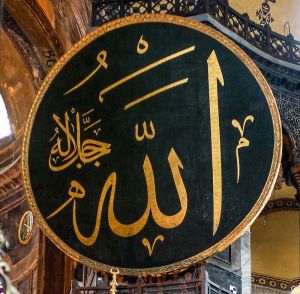
It is also used as a given name in most of the Islamic world,as in Islam, Al-Hakim is one of the 99 names of Allah.

As of 2016, Hakeem 905th most popular male name. Hakeem first entered the U.S. top 1000 in 1989 when it peaked at its highest in popularity, coming in as the 586th most popular male name. Hakim has only appeared in the U.S. Top 1000 one time in 1976, when it was the 881st most popular male name.

In France, Hakim appeared in the Top 1000 between 1961 and 2008 and peaked in popularity in 1981 when it was the 161st most popular male name in France.

Another form is

  • Hakimi ჰაქიმი (Georgian)

Sources