Elvira

  • Origin: Visigothic
  • Meaning: Uncertain
  • Usage: Albanian, Bashkir, Bosnian, Catalan, Croatian, Dutch, Estonian, Finnish, Galician, German, Hungarian, Italian, Latvian, Portuguese, Provençal, Romanian, Romansch, Russian, Scandinavian, Slovene, Tatar
  • Transcription: Эльвира (Russian)
  • Gender: Female
  • Eng (el-VY-rah); Sp (el-VEE-rah; el-BEE-rah)

A 19th-century gem and late 20th-century vampiric monikor, the name is of uncertain meaning but has its origins in Medieval Spain. It is likely of Visigothic origins, possibly derived from Gailawera or Geloyra, which stem from gails (happy) or (spear); and wers (friendly, agreeable, true).

It should be noted that Elvira (Latin: Iliberri or Iliberis) was an ancient Iberian and later Roman city located near present-day Granada, in Andalusia, southern Spain. However, in this case, it is likely derived from an Iberian source, meaning “new town.”

It was a popular female name among the royal family of Castille & León, producing two queens who bore this name, Elvira of Castile, Queen of León (965–1017) and Elvira of Castile, Queen of Sicily (c. 1100–1135).

It was later used in Mozart’s 1787 opera Don Giovanni (libretto by Lorenzo Da Ponte), in which Donna Elvira is one of Don Giovanni’s former lovers. This likely popularized the name outside of the Iberian peninsula.

By the turn of the 20th-century, Elvira was not unknown in the United States, though never overly popular, it peaked at #254 in 1914, but fell out the Top 1000 by 1981, the same year Elvira, Mistress of the Dark came on the scene.

The real Halloween link began in 1981, when actress Cassandra Peterson created the camp-horror TV hostess Elvira, Mistress of the Dark for a Los Angeles late-night show (Movie Macabre).

Dressed in a plunging black gown with a beehive of jet hair, Elvira presented old horror movies with sardonic humor — blending Gothic sex appeal, irony, and B-movie kitsch.

The character became a pop-culture icon: Halloween TV specials, films, pinball machines, comic books, and even perfume lines immortalized her as the Queen of Halloween.

Outside the United States, this name does not have such associations. In Sweden, it has been among the top 100 girls’ since 1998 and peaked at #25 in 2014. As of 2024, it came in at #40.

It’s a popular name in the Balkans, even spinning off a male form of Elvir (Bosnian and Albanian).

Other forms include:

  • Elbire (Basque)
  • Elvíra (Czech/Slovakian)
  • Elviira (Estonian, Finnish)
  • Elvire (French)
  • Elwira (Polish, also an alternate Swedish spelling, Sorbian)
  • Elvīra (Latvian)
  • Elvyra (Lithuanian)

Obscure Lithuanian male forms are the Lithuanian, Elvyras; the Polish, Elwir(o), and the Italian Elviro.

Name days: August 25 (Austria), July 16 (Croatia), February 10 (Hungary), January 25 (Spain), March 1 (Sweden), November 21 (Slovakia), August 13 (Latvia).

Sources

Tugomil

  • Origin: Croatian
  • Meaning: “beloved in grief.”
  • Gender: Masculine

The name is a rare Croatian masculine name, composed of the Old Slavonic elements, tuga (sorrow, grief) and mil (dear, beloved).

Its designated name-day is September 15th and is mainly used in Northern Croatia.

A feminine form is Tugomila

Other potential forms include:

  • Tihomil (Czech, Slovak)
  • Tęgomil (Polish)

Source

Siemomysł

  • Origin: Polish
  • Meaning: “thinking of lineage.”
  • Gender: Masculine
  • Pron: (SHYEH-mo-MEES; SHYEH-mo-MEE-swoo)

An Old Polish name, it is composed of the words, siemo (seed, lineage, family) and mysł (thoughts).

It was borne by a 10th-century Polish duke of the Polans. He was a member of the Piast Dynasty and known as the father of Mieszko I. He was recorded by Gallus Anonymous. A medieval yet obsolete German translation is Zemuzil. It was borne by a few other Medieval Polish dukes.

Siemo- names were characteristic of the Piast Dynasty.

In Poland, the name is rather obsolete. The designated name-day is September 14.

Diminutive forms would be: Siemimysłek, Siemimysłuś, Siemek, Siemiś, Siemcio, Sieminio, Mysłek, Mysłuś, Mysłko, and Mysły.

Other forms include:

  • Sěmomysl (Czech, Slovak)
  • Samisel (French, obsolete, historical)
  • Zemisel (French, obsolete, historical)
  • Zemuzil (German, obsolete, historical)
  • Siemimysł (Polish)
  • Ziemomysł (Polish)
  • Sjomomysl, Žemomysl (Sorbian)

Sources

Apollinaris, Apollinaire

  • Origin: Greek Ἀπολλινάρις
  • Meaning: “of Apollo.”
  • Gender: Masculine

The name is from the classical Greek, related to Apollo. It was borne by several early Christian saints. The most notable being St. Apollinaris of Ravenna, a Syrian Christian missionary to Ravenna who was martyred there and thereafter became the city’s patron saint.

The French form Apollinaire is linked to the Franco-Polish poet, Guillaume Apollinaire. He lived from 1880 to 1918. He was born Wilhelm Albert Włodzimierz Apolinary Kostrowicki.

Apolinary was common in Poland during the late 19th-century and early 20th-centuries, it is now obsolete. Diminutives include: Apolinek, Apollinek, Apolin, Apollin, Polin, Polinary, Polinarek, Polinaruś, Poli, and Polik.

In Italy, Apollinare was mainly used in the Romagna region due to it being the name of their patrion saint, but it has since fallen out of use.

Apollinaire sporadically appeared in the French Top 1000 between 1900 and 1926 and peaked at #403 in 1923. In 2024, 5 babies were given this name.

Neither its masculine form nor its feminine form had much usage in the English-speaking world. It was mostly used in families of Greek or Eastern European background during the late 19th-century.

Designated name-days include July 20th, July 23rd, and September 12th

Other forms include

  • Abolinarius أبونيناريوس (Arab Christian)
  • Apolighnar Ապողլինար (Armenian)
  • Apolinar Ապոլինար (Armenian, Spanish)
  • Apolinaris ܐܦܘܠܝܢܪܝܣ (Assyrian)
  • Apoliñari (Basque)
  • Apalinariy Апалінарый (Belarusian)
  • Appolinariy Апполінарій (Bulgarian, Ukrainian, Rusyn, Russian)
  • Apol·linar, Apol·linari (Catalan)
  • Apollinaris Ⲁⲡⲟⲗⲗⲓⲛⲁⲣⲓⲥ (Coptic, Dutch, English, German, Greek, Scandinavian)
  • Apollinari (Corsican, Sardinian)
  • Apolinár (Czech, Slovak)
  • Apollinaire (French)
  • Apolinario (Galician, Spanish)
  • Apo’linar აპოლინარ (Georgian)
  • Apollinarios Ἀπολλινάριος (Greek)
  • Apollinár (Hungarian)
  • Apollinare (Italian)
  • Apolenaris (Late Latin)
  • Apolinārs (Latvian)
  • Apolinaras (Lithuanian)
  • Apollinarju (Maltese)
  • Apolinary (Polish)
  • Apolinário (Portuguese)
  • Apolinàri (Provençal)
  • Pulinéra (Romagnol)
  • Apollinari (Romansh)
  • Apolinariu (Romanian)
  • Apolinarije (Serbo-Croatian, Slovenian)
  • Apołinare (Venetian)

Its feminine form is Apollinaria, which is also borne by an early Christian saint.

Other feminine forms include:

  • Abolinarya أبوليناريا (Arab Christian)
  • Apoghlinaria Ապողլինարիա (Armenian)
  • Apolinaria Ապոլինարիա, აპოლინარია (Armenian, Galician, Georgian, Polish, Romanian, Spanish)
  • Apolinaryja, Apolinariya,ܐܦܘܠܝܢܪܝܐ, Аполлинария (Assyrian, Bulgarian, Russian, Rusyn, Ukrainian)
  • Apalinariya, Apalinaryja, Апалінарія (Belarusian)
  • Apollinaria Ⲁⲡⲟⲗⲗⲓⲛⲁⲣⲓⲁ, Ἀπολλιναρία (Coptic, Corsican, German, Greek, Lithuanian, Romansh, Sardinian)
  • Apolinária (Czech, Portuguese, Sardinian, Slovak)
  • Apollinarie (French)
  • Apollinária (Hungarian)
  • Apolinārija (Latvian)
  • Apollinarja (Maltese)
  • Apolinària (Provençal)
  • Apolinarija (Serbo-Croatian, Slovenian)

A traditional feminine diminutive form in Russian is Polina. Polish diminutives include: Apollinka, Apollina, Apolinka, Apolla, Apola, Pola, Polka, Polcia, Polina, and Polinka. Modern Greek diminutives include: Nαρία (Naría), Πόλλα (Pólla), or Λίνα (Lina). Potential English short forms would include: Apple, Pollie, Polly, and Narey, or Narie.

Sources

Zillah

  • Origin: Biblical Hebrew צִלָּה
  • Meaning: “shade, shadow; bell.”
  • Gender: Female
  • Eng (ZIL-luh)

The name is Hebrew, either derived from צל (tsel) (shadow) or צלל (tsalal) (to ring like a bell). In Genesis 4:19, it is the name of one of the two wives of Lamech.

Though it never became a widespread Jewish name until recently, it had usage in the Protestant Anglo world since the 16th-century and experienced mild popularity in the mid to late 19th-century. It appeared in the U.S. Top 100 between 1881 and 1886, peaking at #679. It was borne by Zillah Oakes (circ. 1870s), the namesake of the city of Zillah, Washington. It was also borne by New Zealand Politician, Zillah Smith Gill (1859-1937).

In English literature, Lord Byron used it as the name of the wife of Abel in his 1821 play, Cain. It is the name of a servant in Emily Brontë’s Wuthering Heights (1847), and the name of the titular heroin in the 1865 operetta by Australian composer, William Wilkins Russell. In recent years, it is the name of a character in Madeleine L’Engle’s, A Swiftly Tilting Planet (1978).

It may have occasionally been used as a form or short form of Cecilia.

Other forms include:

  • Sella Σέλλα Селла (Armenian, French, Greek, Italian, Polish, Russian, Slovak, Spanish)
  • Zilla (Czech, Dutch, English, French, German, Italian, Polish, Scandinavian, Spanish)
  • Sille, Zille, Selle, Zelle (French)
  • Sela სელა (Georgian, Lithuanian, Portuguese)
  • Tzila, Tsila Цілла (Hebrew, Ukrainian)
  • Cilla (Hungarian, Polish)
  • Cillá (Hungarian)
  • Silla (Latvian)
  • Zila (Portuguese)

Sources

Alaric

Photo by Leandro Paes Leme on Pexels.com
  • Origin: Gothic
  • Meaning: “ruler of all.”
  • Gender: masculine
  • Pronunciation: Eng (AL-e-rik)

The name is composed of the Germanic elements al (all) and rikr (ruler). It was most notably borne by two Gothic kings, Alaric I and Alaric II. Alaric I was known for leading a rebellion against Rome and sacking it. His Gothic name was 𐌰𐌻𐌰𐍂𐌴𐌹𐌺𐍃 (Alareiks).

An historical curiosity, Alaric has never experienced much usage, however, it has been in the U.S. Top 1000 since 2017, and currently ranks in as 915th most popular male name.

Other forms include:

  • Alaric (Catalan, French, English, Occitanian)
  • Alarich (Czech, German, Slovak)
  • Alareiks (Gothic)
  • Alarico (Italian, Portuguese, Spanish)
  • Alaricus (Latin)
  • Alariks (Latvian)
  • Alarikas (Lithuanian)
  • Alaryk (Polish)
  • Alarih Аларих (Russian, Ukrainian)
  • Alarik (Scandivanian, Slovene)

Obscure feminine forms include Alarica, Alarika and Alarice.

Sources

Phaedra

  • Origin: Greek Φαίδρα
  • Meaning: “bright.”
  • Gender: feminine
  • Pronunciation: Eng (FAY-drah, FYE-drah, FEED-rah)

The name comes directly from the Greek word φαιδρός meaning, “bright.”

It is borne in Greek mythology by the sister of Ariadne and the wife of Theseus. There are several versions of her tragic tale, one is that Aphrodite drove Phaedra to fall madly in love with the latter’s step-son, Hippolytus who rejects Phaedra, and in retaliation, Phaedra claims that Hippolytus attempted to rape her. Theseus who was granted 3 wishes by Poseidon wishes his own’s son death by having Poseidon summon 3 bulls from the sea who subsequently dragged Hippolytus to death. In another version of the tale, Phaedra falls in love with Hippolytus of her own free-will but he rejects her, and the story follows the same sequence of events as above.

The story was retold by Ovid and Senece the Younger and later became the popular subject of plays throughout Europe.

In England and France, the name became more widespread after its use in Jean Racine’s 1677 play, Phèdre and later Algernon Charles Swinborn’s1866 play, Phaedra. Friedrich Schiller also wrote a play and recently it was the subject of the opera written by German playwrite, Hans Werner Henze.

It is also another name for the plant, Bernardia, as well as the name of a genus of butterfly and an asteroid.

In France, Phèdre is a unisex name as it is a translation of both Phaedra & Phaedrus.

Phaedra appeared in the Top 100 Most Popular Female Names in Belgium, ranking in at #87 in 1997.

A masculine form is Phaedrus and Phaidros.

Forms and use include:

  • Fedra Федра (Catalan, Corsican, Italian, Lithuanian, Norwegian, Polish, Portuguese, Russian, Slovene, Spanish, Ukrainian)
  • Faidra (Czech, Finnish, Hungarian, Slovakian, Swedish)
  • Fædra (Danish)
  • Phaedra (Dutch, English, Latin)
  • Phèdre (French)
  • Phaidra Φαίδρα (German, Greek)
  • Phädra (German)

Sources

Lieba, Liba, Lieber

Liba can have a few meanings, it is firstly a polonized form of the Yiddish ליבאַ Lieba (love), which is identical to the German word. It may have also been influenced by the Czech word libý (nice; pleasant). It was popular among Eastern-European Jews as it also coincided with the Czech-Slovak name Líba, which is a contracted form of names like Libuše & Liběna.

Also sometimes spelled Liebe.

It was sometimes anglicized by Jewish immigrants to Leeba.

A Yiddish masculine form is Liber or Lieber.

In Latvia, the designated name-day is April 19, though in this case, it is probably a borrowing from the Czech & Slovak use.

Sources

Posted in Uncategorized | 1 Reply

Adonis, Adonija, Adonise

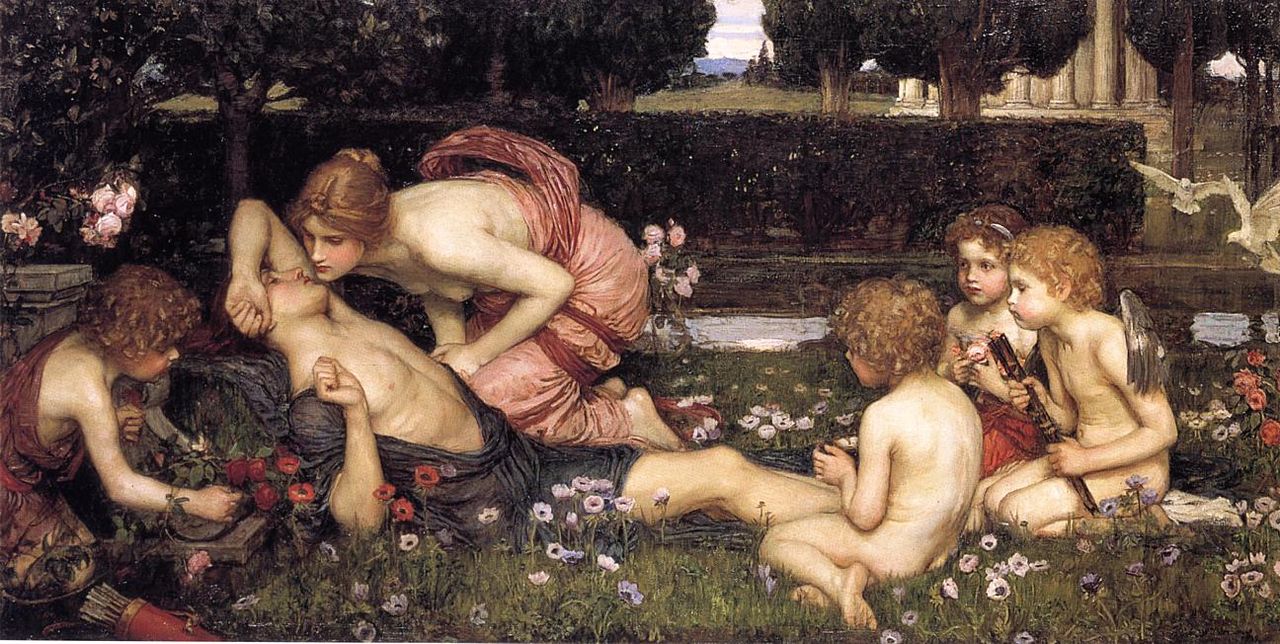
Adonis is borne in Greek mythology by the god of beauty and desire. According to the most popular myth, he was born of the incestuous union of Theias and his daughter Myrrha. Myrrha had tricked her own father into having sex with her. The gods transformed Myrrha into a myrrh tree after Theias attempted to kill her whilst pregnant with Adonis. Adonis was beloved of Aphrodite and mothered by Persephone, but he was subsequently killed by a boar when Artemis, or in some versions, Ares, sent a boar to kill Adonis out of jealousy. When Adonis died, Aphrodite cried tears which mingled with Adonis’ blood, producing the Anemone flower. Aphrodite instituted the Adonia festival in his commemoration, whereby all women had a mass mock funeral of Adonis by growing plants in potsherds on their rooftops and performing a mass funeral ritual as soon as the plants sprouted.

It is likely Adonis was imported by the Greeks from the Phoenicians, the latter being the descendants of the Sumerians, Mesopotamians & Babylonians. It is believed by most scholars that Adonis is an adaptation of the Sumerian story of Dumuzid & Inanna (later Tammuz & Ishtar), in which a ritual funeral rite was also performed by women across the former Babylonian empire. Adonis itself is a Hellenized form of the Canaanite, adon, which means “lord” and was often used as an appellation by the Canaanites for the god Tammuz. The Jews adopted this appellation for Yahweh in the form of Adonai (my lord).

Adonis is borne by an 8th-century French saint of Vienne. He is also listed as Adon & Ado. Adonis has sporadically been used as a given-name in Greece, anglophone, francophone & hispanophone countries. The French feminine off-shoots, though rare these days, are Adonise (AH-do-NEEZ) and Adonie, and were actually prevalent in 18th-centurry Quebec & New Orleans. An obscure Italian feminine form is Adonella.

There is the male Biblical Hebrew name, Adonijah meaning (my lord is Yahweh). It is borne by a son of King David and was Hellenized in the Septuagint as Adonias.

Other forms include:

  • Adonies (Catalan)
  • Adonia (Dutch, Italian, Swedish)
  • Adonija Адония (French, German, Russian)
  • Adonias Αδωνίας (French, Greek, Portuguese)
  • Adonías (Galician)
  • Adonja (Norwegian)
  • Adoniasz (Polish)
  • Adonías (Spanish)
  • Adoniya Адонія (Ukrainian)

Currently, Adonis is the 242nd most popular male name in the United States and the 461st most popular in France.

Other forms include:

  • Adonisi ადონისი (Albanian, Georgian)
  • Adonis Адонис Адоніс Άδωνις Ադոնիս (Armenian, Bosnian, Bulgarian, Croatian, Dutch, English, Estonian, French, Macedonian, German, Greek, Polish, Romanian, Russian, Ukrainian, Scandinavian, Serbian, Slovene, Spanish, Turkish)
  • Adónis Адо́ніс (Belarusian, Continental-Portuguese, Czech, Slovak)
  • Adó (Catalan)
  • Adónisz (Hungarian)
  • Adone, Adon (Italian)
  • Adônis (Brazilian-Portuguese)
  • Adón (Spanish)

Sources

Lubomir, Lubomira

  • Origin: Slavic
  • Gender: masculine
  • Meaning: “love & peace.”

Lubomir is composed of the Slavic elements, lubo (love) & mir (peace).

Its Czech form of Lubomír was one of the most popular male names in the Czech Republic between 1935-2006, it peaked at #16 in 1959.

Other forms include:

  • Ljubomir Љубомир Љубомир (Bosnian, Macedonian, Serbo-Croatian, Slovene)
  • Lubomir Любомир (Bulgarian, Polish)
  • Lyubomir Лыѹбомир (Old Church Slavonic, Russian)
  • Lubomierz (Polish)
  • Ľubomír (Slovakian)
  • Lyubomyr (Ukrainian)

Diminutives & Short Forms

  • Ljubiša, Ljubo (Bosnian, Bulgarian, Serbo-Croatian, Slovene)
  • Luboš (Czech)
  • Ljube, Ljupcho, Ljupčo (Macedonian)
  • Ľuboš (Slovakian)

Feminine forms are

  • Ljubomira (Bosnian, Bulgarian, Macedonian, Serbo-Croatian, Slovene)
  • Lubomíra (Czech)
  • Lubomira (Medieval Slavic, Polish)
  • L’ubomíra (Slovak)
  • Lyubomyra (Ukrainian)

Sources