Hira

Gender: Feminine
Origin: Arabic
(HEE-rah)

The name is of uncertain meaning but is taken from the name of a cave in Mecca where it is believed the Prophet Mohammed first received his visions and revelations from God through the angel Gabriel.

The name is often used as a feminine given name, bestowed in reference to the event that took place.

Currently, Hira is the 483rd most popular female name in Germany, (2011).

Lavinia

Gender: Feminine
Origin: Latin
Meaning: uncertain
Eng (lah-VIN-nee-uh)

The name is possibly of Etruscan origins but its meaning has been lost to history. It is borne in the in Roman legend by the wife of Aeneas and the ancestor of the Roman people. Her story has been retoled throughout the centuries and was lately the subject of the 2008 eponymous novel by Ursula K. Le Guin. According to legend, the city of Lavinium was named by Aeneas in honour of his wife.

The name has been borne by a few other famous literary characters such as Shakespeares tragic heroine in Titus Andronicus (1588) and a character in Frances Hodgson Burnett’s 1905 novel, A Little Princess.

It is also the name of a genus of fish and butterfly and it is the name of a suburb of São Paolo Brazil.

Lavinia seems to have been a very popular name in the 18th and 19th-century in both England and the United States. It was often shortened to Vinny or Lovie. Both of which appear as occasional independent given names around the same time.

Its Portuguese form of Lavínia is currently the 45th most popular female name in Brazil, (2011).

Other forms of the name include:

  • Lavynyya Лавиния (Bulgarian)
  • Lavínia (Catalan/Hungarian/Portuguese)
  • Lavinia (Dutch/English/French/German/Italian/Latin/Romanian/Spanish)
  • Lavina (English/Italian)
  • Lauinia (Latin)
  • Lawinia (Polish)
  • Lavinija Лавиния (Russian)
  • Lavíniya Лаві́нія (Ukrainian)
An obscure Polish masculine form is Lawiniusz.

Larissa

Gender: Feminine
Origin: Greek Λαρισα
Meaning: “citadel.”
Eng (lah-RIS-suh)

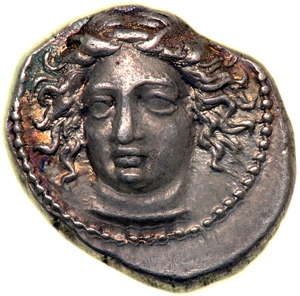
The name is borne in Greek mythology by a nymph of Thessaly and daughter of Pelasgus. It is also the name of the capitol city of Thessaly, Greece, which is believed to have gotten its name from the nymph, who was considered a sort of patron of the city in pre-Christian times.

The name has always been popular throughout Eastern Europe due to the veneration of an Eastern Orthodox saint of the same name.

It was introduced into the English-speaking world via Boris Pasternak’s 1957 novel, Doctor Zhivago, in which the heroine is named Larissa nicknamed Lara.

Currently, Larissa is the 33rd most popular female name in Brazil, (2011). Her rankings in other countries are as follows:

  • # 41 (Switzerland, German-Speaking, 2010)
  • # 44 (Austria, 2010)
  • # 48 (Slovenia, Larisa, 2010)
  • # 55 (Bosnia & Herzegovina, Larisa, 2010)
  • # 95 (Germany, 2011)
  • # 259 (the Netherlands, 2010)
  • # 760 (United States, 2010)

Other forms of the name include:

  • Larisa Лариса (Bosnian/Bulgarian/Croatian/Greek/Latvian/Lithuanian/Romanian/Russian/Serbian/Slovene)
  • Làrissa (Catalan)
  • Larissa (Dutch/English/German/Italian/Portuguese)
  • Larysa Лариса (Polish/Ukrainian)
A common Russian short form is Lara.

Adrian

Gender: Masculine
Origin: Latin
Meaning: “from Hadria”

The name is derived from the Latin Hadrianus, a Roman cognomen meaning, “from Hadria.” Hadria was a small town in the North of Italy. It gave its name to the Adriatic Sea.
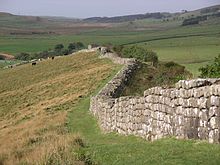
The name was borne by Publius Aelius Hadrianus (76-138 CE), known in the modern world as Emperor Hadrian, he is most famous for the wall he built across Great Britain, known as Hadrian’s Wall.
The name remained common throughout Europe, and is fairly popular across the Western World till this day. It was borne by several saints and popes, including the first and only English pope, Adrian IV, as well as the only Dutch pope, Adrian VI.
Currently, Adrian is the 6th most popular male name in Spain, (2010) and the 7th most popular in Norway, (2010). His rankings in other countries are as follows:
  • # 29 (Catalonia, 2009)
  • # 33 (Poland, 2010)
  • # 43 (Germany, 2011)
  • # 48 (Austria, 2010)
  • # 49 (Croatia, 2010)
  • # 51 (France, Adrien, 2010)
  • # 56 (United States, 2010)
  • # 60 (Sweden, 2010)
  • # 63 (Hungary, 2010)
  • # 81 (Belgium, Adrien, 2009)
  • # 455 (France, Adrian, 2009)

Other forms of the name include:

  • Ad (Afrikaans/Limbergish)
  • Adriaan (Afrikaans/Dutch)
  • Adrianus (Afrikaans/Latin)
  • Arrie (Afrikaans)
  • At (Afrikaans)
  • Daan (Afrikaans)
  • Jaans (Afrikaans)
  • Adrian Адриан (Albanian/Bulgarian/Croatian/Dutch/English/Finnish/Polish/Romanian/Russian/Scandinavian/Ukrainian)
  • Ardian (Albanian)
  • Adrianu (Asturian/Corsican/Sicilian)
  • Adiran (Basque)
  • Adrijan (Bosnian/Croatian/Serbian/Slovene)
  • Hadrijan (Bosnian)
  • Adrià (Catalan)
  • Jadran(ko) (Croatian)
  • Adrián (Czech/Hungarian/Slovak/Spanish)
  • Arie (Dutch)
  • Arjan (Dutch)
  • Hadrian(us) (Dutch/German/Latin)
  • Adrien (French)
  • Hadrien (French)
  • Aidrean (Gaelic)
  • Adrán (Galician)
  • Adrao (Galician)
  • Hadrán (Galician)
  • Hadrao (Galician)
  • Hádrian (Galician)
  • Adrianos Αδριανός (Greek)
  • Adorján (Hungarian)
  • Adrían (Icelandic)
  • Adriano (Italian/Portuguese)
  • Adrio (Italian)
  • Adriāns (Latvian)
  • Adrianas (Lithuanian)
  • Adrijonas (Lithuanian)
  • Adrião (Portuguese)
  • Adriànu (Sardinian)

Feminine forms include:

  • Adriana  (Albanian/Bulgarian/Catalan/Czech/Galician/German/Greek/Italian/Latin/Lithuanian/Polish/Romanian/Russian/Slovak/Spanish)
  • Adrijana (Bosnian/Croatian/Serbian)
  • Hadrijana (Bosnian/Croatian/Serbian)
  • Jadranka (Croatian)
  • Adriána (Czech/Hungarian/Slovak)
  • Ariane (Dutch)
  • Hadriana (Galician/Latin)
  • Adria (German/Italian)
  • Adriane (German)
  • Adrienne (French)
  • Adrienn (Hungarian)
  • Adrianna (Polish)
  • Drina (Spanish)

Polish feminine diminutives are Ada and Adi.

Melina

Gender: Feminine
Origin: Greek/Italian/Bosnian

The name is of various origins depending on the bearer of the name. In Greek, it is most likely derived from melos meaning “honey.” In Italian, it is an abstraction of Carmelina, which is an elaborate form of Carmel. In former Yugoslavia, it is associated with the name of a city, located in what is now Bosnia-Herzegovina.

The name was borne by famous Greek actress Melina Mercouri (1920-1994) and Greek-American actress, Melina Kanakaredes (b.1967).

It is currently the 30th most popular female name in Argentina, (2009), the 59th most popular in France, (2009), the 60th most popular in Bosnia & Herzegovina (2010) and the 502nd most popular in the United States, (2010).

Other forms of the name include the French Mélina and Méline.

Macarena

Gender: Feminine
Origin: Spanish
(mah-kah-RAY-nah)

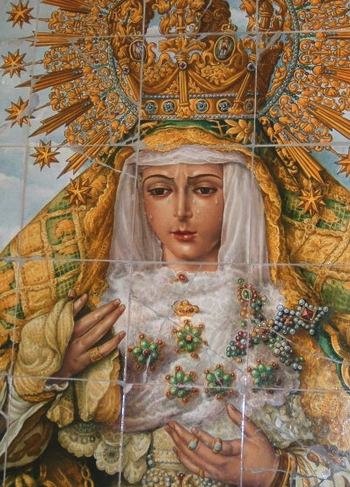
The name is used in reference to an epithet of the Virgin Mary, María Santísima de la Esperanza Macarena is a shrine in the barrio of Macarena, Seville. It is believed that the barrio got its name from a temple named for a person named Macarius.

The name has been a fairly common female given name in Spain and was brought to attention via the 1990s song of the same name, which is actually singing about a girl named Macarena.

Currently, Macarena 50th most popular female name in Argentina, (2009).

Montserrat

Gender: Feminine
Origin: Catalan
Meaning: “jagged mountain.”
SP (munsəˈrat)

Montserrat comes from a name of a mountain in Barcelona and is used in reference to a monastery which houses a shrine to the Virgin Mary known as Santa Maria de Montserrat. The same mountain is legendarily believed to be the home of the Holy Grail.

The name literally means “jagged mountain” or “serrated mountain” in Catalan.

As of 2006, Monserrat was the 27th most popular female name in Chile and it is currently the 86th most popular in Mexico, (2010).

Another form of the name is Monserrat.

Common Spanish diminutives include: Mont, Montse, Muntsa, Serrat or Rat.

Sources

  1. http://www.behindthename.com/name/montserrat
  2. http://www.babycenter.com.mx/pregnancy/nombres/nombres_populares_2010/

Virginia

Gender: Feminine
Origin: Latin
Meaning: “virgin”
(ver-JIN-yah)

Virginia is a feminine form of the Roman family name Virginius which is believed to be derived from the Latin virgo meaning “virgin; maiden.”

According to Roman legend, the name was borne by a girl who was killed by her father in order to save her from a corrupt Roman official.

The Commonwealth of Virginia was named by Sir Walter Raleigh in 1584 in part for Queen Elizabeth I of England (known as the Virgin Queen) and also in part an anglicized form of a Native American chief’s name, Wingina. 

The name was borne by Virginia Dare (1587), lauded to be the first ethnically English child to be born in the New World. The name seems to have been very popular in the United States among early settlers, either as a nod to an American birth or in honour of the first English child born in the United States.

Among Catholic immigrants, the name caught on due to its associations with the Virgin Mary.

Currently, Virginia is the 608th most popular female name in the United States, but in 1921, it ranked in as the 6th most popular female name.

Other forms of the name include:

  • Virginië (Afrikaans)
  • Virxinia (Asturian)
  • Virgínia (Catalan)
  • Vijini (Creole)
  • Verginia(Latin: early)
  • Virginie (French/Czech)
  • Firginia (Frisian)
  • Wilikinia (Hawaiian)
  • Virzsini (Hungarian)
  • Verginia(Italian)
  • Virna (Italian)
  • Virginia (Italian/Spanish/Portuguese)
  • Virdžīnija (Latvian)
  • Virdžinija (Lithuanian)
  • Virginn-a (Ligurian)
  • Wirginia (Polish)
  • Verge (Occitanian)
  • Virgínia (Occitanian)
  • Verjhini (Occitanian)
  • Virdžinėjė (Saimogaitian)

A common English short form is Ginny.

Source

  1. http://www.behindthename.com/name/virginia

Israel

Gender: Masculine
Origin: Hebrew: יִשְׂרָאֵל
Meaning: “wrestles with God.”

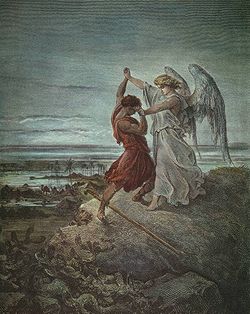
The name is found in the Old Testament (Genesis 32:28 and 35:10) as the name given to the Patriarch Jacob after he had wrestled with an angel. Jacob’s descendants came to be known as the Israelites later forming the Kingdom of Israel. This is where the modern day country gets its name.

The name is very popular among Orthodox Jews but hasn’t seemed to have caught on in other circles. It is currently the 220th most popular male name in the United States, (2010).

Other forms of the name include:

  • Yisrael ይስራኤል (Amharic)
  • Yisra’el יִשְׂרָאֵל (Hebrew)
  • Izrael (Polish)
  • Izrail Изра́илإِسْرَائِيل‎ (Russian/Arabic)
  • Iser (Yiddish)
  • Issur (Yiddish)
  • Sroel (Yiddish)
Source

Cynthia

Gender: Feminine
Origin: Greek Κυνθια
Meaning: “of mount Cynthos.”
(SIN-thee-ə)

The name was used in ancient Greece as an epithet for the goddess Artemis as she was said to be born on Mount Cynthos in Greece. In the English-speaking world, this was not used as a given name until after the Renaissance when many Greek mythological names were brought to the forefront as proper English given names.

Currently, Cynthia is the 380th most popular female name in the United States, (2010).

Other forms of the name include:

  • Cynthia (Dutch/English/French/German)
  • Cynthie (French)
  • Kynthia Κυνθία (Greek)
  • Cinzia (Italian)
  • Zinta (Latvian)
  • Cyntia (Polish)
  • Cíntia (Portuguese)
  • Ciniza (Slovene)
  • Cintija (Slovene)
  • Cintia (Spanish/Italian)

In English, Dutch and German, Cindy or Cindi are the default nicknames.

Source

  1. http://www.behindthename.com/name/cynthia