Facundo

Gender: Masculine
Origin: Spanish
Meaning: “eloquent.”

The name is derived from a Latin element meaning, “eloquent.”

It was borne by an early Spanish saint and martyr and was a fairly common name in the region of Castille during the Middle Ages but is now a rather obsolete name in Spain.

It is, however, a very popular name in Argentina. This is most likely due to the fame of Colonal Facundo Quiroga (1788-1835). Quiroga was a supporter and promoter of federalism during the formation of Argentina.

The name is borne by several other famous Argentines, including Facundo Arana (b.1971) and Facundo Cabral (1937-2011).

Currently, Facundo is the 10th most popular male name in Argentina, (2009).

Lautaro

Gender: Masculine
Origin: Mapuche
Meaning: “speedy Southern Caracara.”
(low-TAH-ro)

The name is a hispanifization of the Mapuche name Lef-Traru, a double name composed of the Mapudungan words, lef (speedy; fast) and traru (the word for the Southern Caracara, a type of bird indigenous to Chile).

The name was borne by a famous Mapuche military leader who led an uprising against the Spanish in Chile (1535-1557).

In Chile, Lautaro is seen as the first Chilean military hero and he is often viewed as a symbol of patriotism. However, the name is extremely popular in Argentina and not in Chile.

Lautaro is currently 4th most popular male name in Argentina, (2009). Its popularity in Argentina may be more due to the associations of the Logia Lautaro, an 19th century Revolutionary Latin American society that was formed by patriots against the Spanish royalists.

Either way, whether in Argentina or Chile the name represents strong patriotic sentiments whether the bearers be of European or Indigenous ancestry.

It is also the name of a volcano in Chile.

It is currently borne by Argentine footballer, Lautaro Acosta (b.1988)

Laurier

Gender: Masculine
Origin: French
Meaning: “laurel tree; bay tree.”

The name comes directly from the French word for the laurel tree, a long popular name among French-Canadians, the name first appeared in the French Revolutionary calender of the 1700s, where many nature names replaced common saints names.

Its popularity in Quebec may have been sparked due to Canada’s first francophone prime minister Wilfred Laurier (1841-1919). He is considered one of Canada’s greatest statesmen.

It is currently the 370th most popular male name in Quebec, Canada (2010).

Source

  1. http://www.rrq.gouv.qc.ca/Interactif/PR2I121_Prenoms/PR2I121_Prenoms/PR2SPrenoms_01.aspx

Virginia

Gender: Feminine
Origin: Latin
Meaning: “virgin”
(ver-JIN-yah)

Virginia is a feminine form of the Roman family name Virginius which is believed to be derived from the Latin virgo meaning “virgin; maiden.”

According to Roman legend, the name was borne by a girl who was killed by her father in order to save her from a corrupt Roman official.

The Commonwealth of Virginia was named by Sir Walter Raleigh in 1584 in part for Queen Elizabeth I of England (known as the Virgin Queen) and also in part an anglicized form of a Native American chief’s name, Wingina. 

The name was borne by Virginia Dare (1587), lauded to be the first ethnically English child to be born in the New World. The name seems to have been very popular in the United States among early settlers, either as a nod to an American birth or in honour of the first English child born in the United States.

Among Catholic immigrants, the name caught on due to its associations with the Virgin Mary.

Currently, Virginia is the 608th most popular female name in the United States, but in 1921, it ranked in as the 6th most popular female name.

Other forms of the name include:

  • Virginië (Afrikaans)
  • Virxinia (Asturian)
  • Virgínia (Catalan)
  • Vijini (Creole)
  • Verginia(Latin: early)
  • Virginie (French/Czech)
  • Firginia (Frisian)
  • Wilikinia (Hawaiian)
  • Virzsini (Hungarian)
  • Verginia(Italian)
  • Virna (Italian)
  • Virginia (Italian/Spanish/Portuguese)
  • Virdžīnija (Latvian)
  • Virdžinija (Lithuanian)
  • Virginn-a (Ligurian)
  • Wirginia (Polish)
  • Verge (Occitanian)
  • Virgínia (Occitanian)
  • Verjhini (Occitanian)
  • Virdžinėjė (Saimogaitian)

A common English short form is Ginny.

Source

  1. http://www.behindthename.com/name/virginia

Israel

Gender: Masculine
Origin: Hebrew: יִשְׂרָאֵל
Meaning: “wrestles with God.”

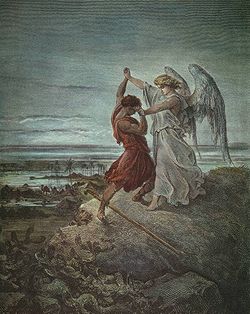
The name is found in the Old Testament (Genesis 32:28 and 35:10) as the name given to the Patriarch Jacob after he had wrestled with an angel. Jacob’s descendants came to be known as the Israelites later forming the Kingdom of Israel. This is where the modern day country gets its name.

The name is very popular among Orthodox Jews but hasn’t seemed to have caught on in other circles. It is currently the 220th most popular male name in the United States, (2010).

Other forms of the name include:

  • Yisrael ይስራኤል (Amharic)
  • Yisra’el יִשְׂרָאֵל (Hebrew)
  • Izrael (Polish)
  • Izrail Изра́илإِسْرَائِيل‎ (Russian/Arabic)
  • Iser (Yiddish)
  • Issur (Yiddish)
  • Sroel (Yiddish)
Source

Thaddeus

Gender: Masculine
Origin: Aramaic
Meaning: uncertain
Eng (THAD-dee us; TAD-dee-us)

The name is a Greek transliteration of the Aramaic male name, Thaddai, which is argued to either be derived from an Aramaic word meaning heart or to be an Aramaic version of the Greek male name, Theodore.

In the New Testament, the name is borne by one of the 12 Apostles, known as Jude Thaddeus, especially among Catholics. He is popularly known as St. Jude, St. Thaddeus or St. Jude Thaddeus and is venerated as the patron saint of lost causes.

In American history, the name was borne by the Polish borne revolutionary hero, Taddeusz Kosciuszko (1746-1817).

In 2010, Thaddeus was the 983rd most popular male name in the United States. In Slovenia, Tadej was the 58th most popular male name of 2010.

The name Tadeusz, has always been a popular male name in Poland, it is the name of the title character of one of Poland’s beloved literary classics, Pan Tadeusz by Adam Mickiewicz.

Other forms of the name include:

Aday (Aramaic)
T’adeos Թադէոս (Armenian)
Tadevuš (Belarusian) (tah-DEH-voosh)
Tadija (Croatian) (TAH-dee-yah)
Tadeáš (Czech/Slovak) (tah-deh-AHSH)
Thaddée/Taddée (French) (tah-DAY)
Thaddäus (German) (tad-DAY-oos)
Thaddaeus/Thaddaios  Θαδδαιος (Greek: Biblical)
Tádé (Hungarian) (TAH-day)
Taddeo (Italian) (tah-DAY-o)
Tadas (Lithuanian) (TAH-dahs)
Tadeušas (Lithuanian) (TAH-deh-oo-SHAHS)
Tadeusz (Polish) (tah-DAY-oosh)
Tadeu (Portuguese)
Faddei/Faddey Фаддей (Russian) (FAD-day)
Tadej (Slovene) (tah-DAY)
Tadeo (Spanish) (tah-DEY-o)

Common English diminutives are Tad, Thad and Teddy. In Polish it is Tadek.

The designated name-days are: June 25 (Slovakia), October 28 (Poland) and October 30 (Czech Republic),

Feminine forms include the Italian, Taddea and the Polish, albeit rare, Tadea.

Source

  1. http://www.behindthename.com/name/thaddeus

Nemunas

Gender: Masculine
Origin: Lithuanian
Meaning: unknown
(NEH-moo-nahs)

The name is derived from the name of a river in Lithuania, Neman.

In Lithuanian, the Neman is referred to as the Father of Rivers and is the subject of a famous Lithuanian poem which can be recited by most Lithuanians, written by Maironis, goes as follows:

Lithuanian lyrics Approximate English translation
Kur bėga Šešupė, kur Nemunas teka Where the Šešupė runs, where the Neman flows
Tai mūsų tėvynė, graži Lietuva That’s our homeland, beautiful Lithuania

The origin and meaning of the name is debatable. Some sources claim it is derived from an Old Baltic source referring to a damp place while others will insist that it was the name of a Baltic god.

The designated name-day is August 20.

Sources

  1. http://www.behindthename.com/namedays/lists/8.php
  2. http://day.lt/vardai/Nemunas
  3. http://en.wikipedia.org/wiki/Neman_River

Libuše

Gender: Feminine
Origin: Czech/Slovak
Meaning: “dear; pleasant”
(lee-BOO-sheh)

The name is borne by a legendary Czech princess who was considered the mother of the Czech people. In the 8th-century, she supposedly founded the city of Prague. She was the youngest daughter of King Krok and was chosen by her father to be heir to his throne.

The people, however, were not pleased with the idea of a female ruler so she was forced to resign and choose a successor. She pointed her finger in the direction of Stadice and chose a ploughman by the name of Premsyl. Libuse married him and thus began a Czech dynesty.

Its designated name day is July 10.

In German chronicles, the name was often rendered as Libussa or Libusche.

Esta

Gender: Feminine
Origin: Estonian
(EHS-ta)

The name may have started off as an affectionate form of Esther, but later came to be associated with the Latin word Esta, meaning “Estonia.” The name is more likely used in patriotic reference.

The designated name-day is May 16.

Other forms include: Este and Esti.

Sources

  1. http://www.behindthename.com/namedays/lists/est.php
  2. http://en.wiktionary.org/wiki/Esta
  3. http://online.ectaco.co.uk/main.jsp?do=e-services-dictionaries-word_translate1&direction=2&status=translate&lang1=45&lang2=en&source=Estonia

William, Liam

Gender: Masculine
Origin: German
Meaning: “desire; helmet protection.”
(WIL-yem)

The name is of Norman origins and is derived from the Old Germanic elements wil meaning “desire” and helm, meaning “helmet; protection.”

In the early Middle Ages, the name was especially popular among Norman nobility and royalty. It was borne by an 8th-century saint, William of Gellone, a monk and cousin of Charlemagne.

The name was introduced into England in the 11th-century by William the Conqueror, and remained an extremely common name in England from thereon.

In the United States, William stands as the 8th most popular male name (2008), the lowest he has ever ranked in U.S. history was in 1992 and then again in 1995 when it came in as the 20th most popular male name.

At the turn of the last century, for 30 years in a row, William remained the 2nd most popular male name in the United States, (1880-1909).

His rankings in other countries is as follows:

# 2 (Australia, 2008)
# 16 (Canada, B.C., 2008)
# 10 (England/Wales, 2008)
# 83 (France, 2006)
# 44 (Ireland, 2007)
# 402 (the Netherlands, 2008)
# 5 (New Zealand, 2009)
# 19 (Norway, 2007)
# 46 (Scotland, 2008)
# 4 (Sweden, 2008)

Another popular up-and-coming form is Liam, which is an Irish contracted form of William. Currently, he stands as the 75th most popular male name in the United States (2008). His rankings in other countries are as follows:

# 17 (Australia, 2007)
# 48 (Belgium, 2006)
# 10 (Canada, B.C., 2008)
# 22 (England/Wales, 2008)
# 26 (Ireland, 2008)
# 82 (the Netherlands, 2008)
# 7 (New Zealand, 2009)
# 4 (Scotland, 2009)
# 13 (Sweden, 2007)

The name is borne by Irish actor, Liam Neeson.

Other cognates of William include:

  • Guildhelm (Afrikaans/Old Dutch)
  • Uilliam (Albanian)
  • Willelm (Anglo-Saxon)
  • Guillén (Aragonese)
  • Gwilherm (Breton)
  • Uiliam Уилиам (Bulgarian)
  • Guillem (Catalan)
  • Vilém (Czech)
  • Vilhelm (Danish)
  • Willem (Dutch)
  • Wim (Dutch)
  • William (English/Scandinavian)
  • Villem/Villu (Estonian)
  • Vilhelmi (Finnish)
  • Vilho (Finnish: contracted form)
  • Viljami (Finnish)
  • Ville (Finnish: contracted form)
  • Guillaume (French)
  • Jelle (Frisian: originally a diminutive form, used as an independent given name)
  • Pim (Frisian: originally a diminutive form, used as an independent given name)
  • Wilke/Wilko (Frisian)
  • Guillerme (Galician)
  • Wilhelm (German/Polish)
  • Gouliélmos Γουλιέλμος (Greek: Modern)
  • Vilmos (Hungarian)
  • Vilhjálmur (Icelandic)
  • Uilleag (Irish-Gaelic)
  • Uilliam (Irish-Gaelic)
  • Ulick (Irish: anglicization of Uilleag)
  • Guglielmo (Italian: most common offshoot)
  • Lemo (Italian: contracted form)
  • Velmo/Velmino (Italian: obscure)
  • Villelmo (Italian: obscure)
  • Villermo (Italian: obscure)
  • Vilio (Italian: obscure)
  • Guilielmus (Latin)
  • Viljams (Latvian)
  • Vilis (Latvian)
  • Wöllem/Wullem/Wum (Limburgish)
  • Vilhelmas (Lithuanian)
  • Vilius/Viliumas (Lithuanian)
  • Wellëm (Luxembourgish)
  • Illiam (Manx)
  • Wiremu (Maori)
  • Gllâome (Norman)
  • Guilhem (Occitanian)
  • Willahelm (Old German)
  • Vilhjálmr (Old Norse)
  • Willken/Wilm/Willm (Plattdeutsch)
  • Guilherme (Portuguese)
  • Zelmino/Zelmo (Romanesque)
  • Vilhelm (Romanian/Scandinavian)
  • Wellem (Ripoarisch)
  • Vilgelm Вильгельм (Russian/Ukrainian)
  • Vėljams (Samogaitian)
  • Uilleam (Scottish-Gaelic)
  • Gugghiermu (Sicilian)
  • Vilim Вилим (Serbian)
  • Viliam (Slovak)
  • Viljem (Slovene)
  • Guillermo (Spanish)
  • Gelmo/Gilmo (Venetian)
  • Gwil (Welsh)
  • Gwilim/Gwilym (Welsh)
  • Velvel װֶעלװֶעל (Yiddish: also the Yiddish word for wolf but commonly used as a diminutive form of Wilhelm)

Notable bearers include: Swiss national folk hero, William Tell (14th-century), Scottish national hero, William Wallace (13th-century).

It was also borne dramatist, William Shakespeare (1564-1616), poet William Blake (1757-1827), dramatist, William Butler Yeats (1865-1939), author William Faulkner (1897-1962), including the current Crown Prince of England, Prince William of Wales (b.1982), and it has also been borne by several U.S. presidents.

Common English diminutives England: Bill, Billy, Will, Willy and Wills/Wils.

Italian diminutives include: Gelmino, Ielmo, Memmo (Tuscan dialectical form), Memo and Lemmo.

Feminine offshoots include Willa, Wilhelmina, Wilma, Mina and Minnie.

Wilhelmina is a German/Dutch form that was briefly used in the United States in the early part of the 20th-century but is in rare use today, in fact, she does not appear in the U.S. top 1000. It is, however, currently the 297th most popular female name in the Netherlands (2008)

Wilhelmina was borne by several Danish princesses, and was extremely common in German and Dutch royalty.

Its contracted English form of Willa, seems like it should be an up-and-comer, but currently does not rank in the U.S. top 1000.

The name was borne by famous American author, Willa Cather (1873-1947) née Wilella, another feminine form of William which should be noted.

Minnie was quite fashionable as a stand alone name at the turn of the 20th-century. In 1880, she was the 5th most popular female name in the United States. She was out of the top 1000 by 1971.

The name is usually associated with the Disney Character and girlfriend of Mickey Mouse, Minnie Mouse, hence is probably why she fell out of usage.

Wilma is another form that has not been in the U.S. top 1000 for quite some time, introduced into the 19th-century by German and Scandinavian immigrants, Wilma is currently very trendy in both Norway and Sweden. More so in Sweden, it is currently the 9th most popular female name (2008).

An early English feminine form that might be appealing to the surname lovers was Wilmot, which appears as early as the 16th-century. It may have been an anglicization of an early French feminine name, Wilmette.

Other feminine forms are:

  • Wilma/Vilma (Czech/English/German/Portuguese/Scandinavian/Slovak/Spanish)
  • Elma (Dutch/German/Slovene: contracted form)
  • Willemina (Dutch)
  • Willemijn (Dutch)
  • Mina (English/German: contraction of Wilhelmina)
  • Minnie (English/German)
  • Velma (English/German)
  • Wilella (English)
  • Willa (English)
  • Willia (English)
  • Wilmot (English)
  • Wilhelmina (English/German/Dutch/Polish)
  • Helmi (Finnish: also means “pearl” see Helmi)
  • Miina (Finnish: contraction of Wilhelmina)
  • Minna (Finnish/German)
  • Vilhelmiina (Finnish)
  • Guillaumette/Guillaumine (French)
  • Guilette (French)
  • Minette (French)
  • Wilhelmine (French/German/Dutch)
  • Wilmette (French)
  • Jeltje/Jeltsje (Frisian: contractions of Wilhelmina)
  • Helma (German: contraction of Wilhelmina)
  • Helmine (German: contraction of Wilhelmina)
  • Vilhelma (Hungarian)
  • Vilhelmina (Hungarian/Scandinavian)
  • Azelma (Italian)
  • Gilma (Italian)
  • Guglielma/Guglielmina (Italian: diminutive forms are Mema and Memma)
  • Velma/Velmina (Italian)
  • Villelma/Vilelma/Villelmina/Villermina (Italian)
  • Vilia/Villa (Italian)
  • Zelma/Zelmina (Italian)
  • Mien (Limburgish: originally a short form of Wilhelmina, now used as an independent given name)
  • Guilhermina (Portuguese)
  • Wilja (Scandinavian)
  • Willamina (Scottish)
  • Guilla/Guillerma/Guillermina (Spanish)
  • Ilma (Spanish: contraction of Guillierma)
  • Gelma/Gelmina (Ventian)
  • Velvela (Yiddish)

A Finnish/Scandinavian diminutive is Mimmi.

A Czech and Polish diminutive is Minka and a popular English diminutive was Billie.

Designated name-days are: January 10 (France/Lithuania/Poland), April 6 (Finland/Hungary/Poland), May 26 (Finland/Lithuania/Poland/Sweden), May 28 (Germany/Latvia/Poland/Slovakia), June 8-24-25 (Hungary/Lithuania/Poland), July 5 (Poland), September 2 (Poland), September 19 (Hungary/Lithuania), October 25 (Poland).