Idris

Gender: Masculine
Origin: Arabic إدريس‎ or Welsh
Welsh Meaning: “ardent lord.”
Arabic Meaning: uncertain

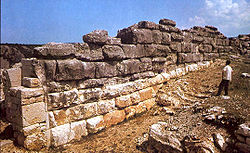
Idris is of two different origins and is used in two separate cultures. In Welsh, it is composed of the elements, udd (lord; prince) and ris (ardent, enthusiastic.” In Welsh mythology it was borne by a giant who used the mountain peak of Cadair Idris (Seat of Idris) as an observatory. Legends claims that if you spend one night on the mountain peak you wake up either as a madmen or as a great poet. The name was also borne by a 7th-century Welsh prince, Idris ap Gwyddno.

In the Qu’ran, the name is borne by a prophet, traditionally ascribed to being the same as the Biblical prophet Enoch. Many modern Islamic scholars now believe that Idris was a separate person from Enoch. In this case, the name is believed to be of pre-Islamic and possibly of non-Arabic roots of undeterminate etymology, some, however have connected the name with the Arabic root d-r-s, meaning, “study.”

As of 2009, Idris was the 479th most popular male name in France. In France it is used both among the Bretons and among recent Muslim immigrants.

Other forms of the Arabic include:

  • Idris إدريس‎) Идрис (Albanian/Arabic/Baloch/Bosnian/Bulgarian/Circassian/Dagestani/Ethiopian/Indonesian/Javanese/Malaysian)
  • İdris (Azeri/Turkish)
  • Idriss (Chadian)
  • Driss (Berber/Maghrebi Arabic)
  • Ydyrys Ыдырыс (Chechen/Kazakh/Kyrgyz/Tajik/Tatar/Turkmen/Uzbek)
  • Idrîs (Kurdish)
  • Idriis (Somali)
  • Idrissa (West African)

Ilona

Gender: Feminine
Origin: Hungarian/Finnish Илона
Hung (EE-loh-naw); Fin (EE-loh-nah); Germ/Pol (ee-LOH-nah)

The name was initially a Hungarian form of Helen, but its usage has spread throughout Eastern Europe and as even appeared north as Finland.

In Finland and Estonian, its etymology has often been traced to the Finnish ilona, the essive of the word, ilo, meaning, “joy.”

In Hungarian, it is a translation of Helen, via the Slavic, Jelena, in Old Hungarian it was Jelona. However, it has been suggested that it may be derived from an old Magyar source of uncertain etymology. The name appears quite often in Hungarian folklore.

Ilona is one of the few Hungarian names that has made a name for itself in other cultures, (no pun intended). It is a common female name in Albania, Belarus, the Czech Republic, Germany, Finland, France, Estonia, Latvia, Lithuania, the Netherlands, Poland, Romania, Russia, Slovakia, Slovenia, the Ukraine, the former Yugoslavian Republics and it is occasionally used in some Spanish-speaking countries.

As of 2011, Ilona was the 37th most popular female name in Finland. Her rankings in other countries are as follows:

  • # 178 (France, 2009)
  • # 478 (the Netherlands, 2010)

A few notable bearers include Ilona Zrinyi (1643-1703), a national heroine in both Hungary and Croatia, a representative of national freedom for both nations. She is famous for opposing the advances of the Habsburg takeover.

A common Hungarian diminutive is Ilonka.

Aura

The name could be of a few different etymologies.
In Greek, it is derived from the word for “breeze”, and is borne by several characters in Greek myth. One was a Titan goddess who was the personification of the fresh breezes and the cool air that accompanies early mornings.

According to one legend, Aura was so proud of her virginity that she mocked the virgin goddess Artemis, claiming that Artemis was not as pure as she, since Artemis was too “womanly.” In revenge, Artemis had Dionysus rape Aura. As a result, the Titaness went mad, becoming a slayer of men. When her twin sons were born, Aura ate one twin, while Artemis rescued the other. Zeus eventually transformed her into a breeze. Other legends state that she was transformed into a stream.

The aurai (the breezes) were a type of nymph, fathered by the sea god Oceanus.

Aura appears in the English lexicon describing a glow or metaphysical halo that is given off by a person’s or object’s energy.

The name has also experienced usage in Scandinavia. Its earliest attestation is in Sweden in 1818. In this case, the name may be a borrowing from the Greek, or it could be a contracted form of Aurora or AureliaHowever, it has been popularly attributed as being derived from a Norse element, aurr, meaning, “clay.”

In Finland, the name is a somewhat of a patriotic name as this was given as a name to the Maiden of Finland, the personification of Finland. In this case, her name is taken from the name of a river. The river name is believed to be related to an archaic Swedish word, aathra, meaning, (waterway), but in Finnish could be translated as meaning, “plow.”

As of 2010, Aura was the 8th most popular female name in the Faroe Islands.

Other forms of the name include:

  • Aura (English/Faroese/Finnish/Latin/Portuguese/Scandinavian/Spanish)
  • Ára (Faroese)
  • Aure (French)
  • Avra (Greek)
  • Aula (Italian)
  • Ávrá (Sami)

Tara

Gender: Feminine
Origin: Various
Eng (TAH-rah; TARE-uh)

The name can be of several different origins and meanings depending on the bearer of the name. It could be from the Sanskrit and Hindi तारा meaning, “star.”

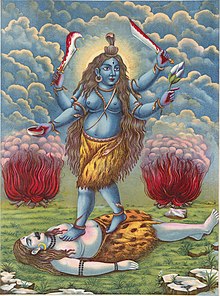
In Hinduisim, Tara (Devi), a Mahavidya of Mahadevi, Kali or Parvati is a star goddess, she is considered one of the Great Wisdom goddesses.

In Buddhism, Tara is the name of a tantric meditation goddess.

In the Hindu epic, the Ramayana, it is the name of the wife of the monkey king, Vali, who married the king’s brother, Sugriva, after Vali’s death.

Among the Irish Diaspora, the name was usually used in reference to the sacred hill, Tara, where the high kings were usually coronated. In this case, the name is an anglicized form of the Gaelic, Teamhair, meaning, “elevated place.”

It may have been further popularized in the English-speaking world by the 1936 Margaret Mitchell novel, Gone with the Wind, in which the plantation is called Tara, in honour of the hill in Ireland.

In South Slavic languages, it could either be a contracted form of Tamara, or it could be taken from the name of the river which runs through Montenegro and Bosnia and Herzegovina. It is also the name of a river in Russia.

As of 2009, Tara was the 30th most popular female name in Croatia. Her popularity in other countries are as follows:

  • # 50 (Slovenia, 2010)
  • # 62 (Ireland, 2010)
  • # 77 (Northern Ireland, 2010)
  • # 126 (Netherlands, 2010)
  • # 774 (United States, 2010)

It is also the name of a sea goddess in Polynesian Mythology.

Hrvoje

Gender: Masculine
Origin: Croatian
Meaning: “Croat.”
(HR-voy-eh)

The name is derived from the Croatian word hrvat, meaning, “Croat”. The name is an ethnic first name and is used exclusively among Croatians. It is somewhat of a patriotic name.

As of 2009, Hrvoje was the 79th most popular male name in Croatia.

Other forms of the name include:

  • Hrvoj (Croatian)
  • Hrvratin (Croatian)

Feminine forms are Hrvoja and Hrvojka.

Azur

Gender: Masculine
Origin: Bosnian
Meaning: “blue.”
(AH-zoor)

The name comes directly from the Bosnian word, azur, meaning, “blue.” It shares the same etymology with azure.

As of 2010, Azur was the 86th most popular male name in Bosnia & Herzegovina, (2010).

The national colours of Bosnia are blue (more azure), white and yellow, this fact may have inspired the name to become popular, perhaps representing patriotism.

The feminine form is Azura.

Uma

The name could be of a few different etymologies depending on the bearer of the name.

In Hinduism, it is an epithet for the goddess, Parvati, said to be derived from the Sanskrit exclamation,  उ मा  (u ma) meaning, “oh don’t” a reprimand from the goddess’ mother from severe austerity.

It could also be a Hebrew name meaning, “nation.”

The name is currently very popular in Bosnia & Herzegovina, coming in as the 81st most popular female name, (2010). In this case, the name may be a borrowing from the Sanskrit or it could be a short form of the Bosnian female name, Umihana, which is a Bosnian form of the Islamic epithet, Umm-ul-Banin, meaning (mother of several sons). Umm-ul-Banin was the epithet of Fatimah, the second wife of Ali. Another Bosnian form is Umija.

The name was brought to the spotlight, in the Western World, via American actress, Uma Thurman (b.1970). In the actress’ case, she was named for the Tibetan Dbuma Chenpo, the db being silent.

Arman

Gender: Masculine
Origin: Persian Арман Արման
(AHR-mahn)

The name is most likely derived from an Old Persian male name meaning “ideal, wish; aspiration” or “destination.”

It has entered several Central Asian languages and in Kazakh it refers to “dream; hope” and is used as a male given name.

In Armenia, it is the 5th most popular male name and it is often argued to be derived from the ancient Armenian root ar (sun) or (Armenian man), however, it is most likely a borrowing from the Persian.

It is currently the 29th most popular male name in Bosnia & Herzegovina.

Azad

Gender: Masculine
Origin: Persian
Meaning: “free.”

The name comes directly from the Persian word for “free,” and has been in usage since Pre-Islamic times. It was borne by Azad Shah Afghan (1750-1781) the founder of the Azad dynasty which had ruled most of Central Asia for the later half of the 18th-century. It was also borne by an early Christian saint and martyr who was martyred along with his companions under the Sassanid Empire of the 4th-century. In the Western calendar of Saints, his name is usally latinized as Asatus.

It is currently borne by a German rapper of Kurdish descent, known simply as Azad (b.1974)

Azad is currently the 465th most popular male name in Germany, (2011).

Ardian

Gender: Masculine
Origin: Albanian
Meaning: “of the Ardiaei.”
(ARE-dee-an)

The name is derived from the name of an ancient Illyrian tribe known as the Ardiaei. Their homeland was believed to be located along the Naretva river in present day Bosnia & Herzogivina.

Traditionally, the Albanians pride themselves as being the direct descendant of the Illyrians, and this is one of their many patriotic names. Its feminine form is Ardiana.

Currently, Ardian is the 464th most popular male name in Germany, (2011). Other forms are Ardjan and Ardijan.