Haik

Gender: Masculine
Origin: Armenian
Meaning: “Armenian.”
Հայկ

Currently the 3rd most popular male name in Armenia (2008), the name is borne in Armenian legend by the founder and patriarch of the Armenian nation.

The name is derived from the nominative plural classical Armenian word, հայ, (hay), meaning, “Armenian.”

The name is borne in Armenian legend by Haik, (or Hayk), son of Moses, a Babylonian prince who fled his homeland along with his royal entourage to what is now Armenia to escape the harsh rule of Bel.

Years later, Haik decides to rebel against the wicked Bel, and he and his warriors defeat him, establishing a kingdom which they called Haykashen.

Judah/Jude/Judith

Origin: Biblical Hebrew
Meaning: “celebrated; praise.”

Judah is a Greek form of the Hebrew name, Yehuda יְהוּדָה, which is the name of several characters in the Old Testament and at least two figures in the New Testament. In the Old Testament, the original Judah was said to be the fourth son of Leah and Jacob, the progenitor of the Judah tribe, and he is also traditionally believed to be a direct ancestor of Jesus. In Biblical Greek, Judah, Judas and Jude were all interchangeable, since in Greek, Yehudah was translated as Ioudas, but for convenience sake, especially in English, Judas is usually used to refer to the ex Apostle, Judas Iscariot, who is known for his betrayal of Christ, and due to these associations, this form of the name has extremely dubious connotations, especially among Christians. However, Jude is used in reference to another apostle, known as St. Jude Thaddeus, who is a very popular saint among Roman Catholics.

In Jewish circles, Judah is usually used in reference to the tribe, or in reference to Judah, the fourth son of Leah and Jacob. It is sometimes bestowed upon boys born around the festival of Hanukkah, which is used in honour of Judah Maccabeus, who is considered to be one of the greatest warriors in Jewish history. He was the son of Mattathias, a Cohen, and was known for his uprising against the Seleucid Empire in 167 BCE-160 BCE. The Jewish feast and holiday, known as Hanukkah, (Hebrew for “dedication”), commemorates the restoration of the temple in Jerusalem after Judah Maccabeus removed Pagan statuary from the Temple.

The name Jude has increased in popularity the last 10 years, as of 2008, he ranked in as the # 224th most popular male name in the United States.
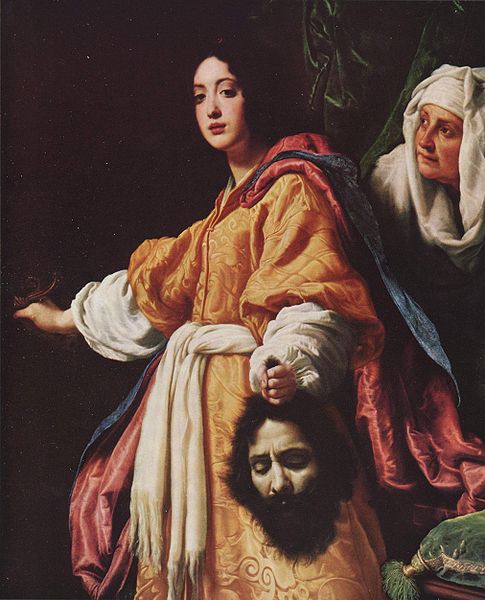
Its feminine form of Judith, Hebrew יְהוּדִית Yehudit, was borne in the Old Testament by a wife of Esau, but is probably most closely associated with the protagonist found in the Book of Judith, which is a deuterocanonical book, included in the Septuagint and in the Roman Catholic and Eastern Orthodox Christian Old Testament of the Bible. The book is rejected by Protestant Christians and Jews since it is mostly apocryphal and believed to be more of a morality tale versus anything based on historical fact, however, though the book is not considered historically accurate by Jews, Judith remained a popular Jewish heroine and symbol. In fact, the name’s popularity among Jews is probably more in association with her than of the wife of Esau. Judith is known for her beheading of the evil, Assyrian invader, Holofernes. She was a popular subject of artists for centuries.

The name experienced some usage in Catholic Europe during the Middle Ages, since Judith was considered as much a heroine among Christians as she was among Jews. The highest Judith ranked in the U.S. popularity charts, was at # 4 in 1940. As of 2008, she ranks in at a measly # 713. In 2006, she was the 6oth most popular female name in Spain.

Other forms of Judah and Jude include:

  • Chudas (Aragonese)
  • Judes (Catalan)
  • Judas (Danish/Dutch/German/Lithuanian/Norwegian/Portuguese/Spanish/Swedish: Portuguese ZHOO-dazh)
  • Jude (English/French)
  • Juudas (Finnish)
  • Juda (German/Czech/Croatian/Slovene)
  • Ioudas Ιουδας (Greek: Modern/Biblical)
  • Yehudah יְהוּדָה (Hebrew)
  • Júdás (Hungarian)
  • Yudas (Indonesian)
  • Iúdás (Irish)
  • Giuda (Italian)
  • Yuda (Kiswahili)
  • Iudas (Late Latin)
  • Juda/Judasz (Polish)
  • Júda (Slovakian)
  • Judá (Spanish/Portuguese: Spanish hoo-DAH, Portuguese zhoo-DAH)
  • Hudas (Tagalog/Filipino)
  • Yudel/Yidel (Yiddish)

Other forms of Judith include:

  • Ioudith Ιουδιθ (Biblical Greek)
  • Iudith (Biblical Latin)
  • Jitka (Czech: originally a diminutive form, now used as an independent given name YEET-kah).
  • Judita (Czech/Romansch/Slovak/Slovene)
  • Júdit (Czech)
  • Judit (Danish/Catalan/Hungarian/Norwegian/Spanish/Swedish)
  • Jytte (Danish)
  • Jutka (Dutch/Hungarian: originally diminutive forms, used as independent given names)
  • Juut (Dutch)
  • Judith (English/Dutch/Icelandic: English nickname is usually Judy)
  • Juudit/Juta (Estonian)
  • Judith/Judithe (French: diminutive is Juju)
  • Xudit (Galician)
  • Juditha (German: Jüdie is a diminutive form)
  • Jutta/Jutte (German/Dutch/Polish: originally a diminutive form, used as an independent given name, now considered dated)
  • Yehudit יְהוּדִית (Hebrew)
  • Yudit (Indonesian)
  • Giuditta (Italian: joo-DEET-tah)
  • Yuditi (Kiswahili)
  • Ita (Polish)
  • Judyta (Polish: yoo-DIH-tah)
  • Judite (Portuguese/Latvian: Portuguese pronunciation: zhoo-DEET, Brazilian Portuguese zhoo-JEE-che )
  • Juditta (Romansch)
  • Yudif/Yudita (Russian)
  • Judetta/Judina (Spanish)
  • Hudes (Yiddish)
  • Yutke (Yiddish)

Other notable bearers of the name include Judah Benjamin (1811-1884), former Attorney General of the Confederacy and the first Jewish American to be seriously considered for the Supreme Court and the first Jewish American to serve as a U.S. Senator. It is also borne by British actor, Jude Law (b.1972).

Notable Judiths include:

Judge Judith Scheindlin (b. 1942) an American judge, TV personality and author, and Judy Jetson of the 1950s cartoon series, The Jetsons.

Designated name-days are: October 28 (France: for Jude), May 5 (France: Judith), December 5th (Czech Republic), December 10 (Estonia, Hungary and Latvia).

Margiris, Margier

Gender: Masculine
Origin: Lithuanian
Meaning: “forest dweller.”
Lit (mar-GEE-rees); Pol (MAR-gyare).

The name was borne by a medieval Lithuanian prince who was known for his heroic stand off at the Pilenai Fortress against the Teutonic Knights (d. 1336). Rather than be taken hostage, he and his subjects killed themselves and then burnt themselves in the fortress. There is a famous epic Polish poem which chronicles his exploits, entitled Margier it was written in 1855 by Wladyslaw Syrokmla. Seldom heard in Poland today, the name is still fairly common in Lithuania and its designated feast day is July 12.

Mindaugas

Gender: Masculine

Origin: Lithuanian
Meaning: “wise thoughts.”
(meen-DOW-gahs).
The name is comprised of the old Lithuanian elements mineti meaning “thoughts” and daugiamints meaning “wise; sage.” The name was born by the first known Grand Duke of Lithuania and the only King of Lithuania. He is credited with bringing Christianity to Lithuania, defeating the Tartar invasions, and establishing Western Civilization in 13-century Lithuania. His name was latinized as Mindowe, Germanicized as Mindaw, Mendog in Polish The feminine form of this name is Mindaugė. His designated nameday in Lithuania is July 6th.

Emese

Gender: Feminine

Origin: Hungarian
Meaning: “mother.”
(EM-eh-sheh)
The name is believed to be derived from the Finno-Ugric element eme meaning “mother.” In Hungarian legend, the name is born by the mother of the High Prince Almos. According to the legend she was impregnated with her son when she saw a Turul bird fly over her head. This was a sign that her womb would bear several future kings who would not only rule the Magyar people but foreign lands as well. According to the Gesta Hungarorum, which was written in the 12-century, Emese was the daughter of a Hun Chief Odenbelia and the wife of Ugyuk. If we are to believe the above legend then a modern descendant of Emese would be, (believe it or not), Queen Elizabeth II of England. Her other supposed descendants are Attila the Hun and the royal house of Hungary, the Arpads.
In Hungary, the name is fairly common and its designated nameday is July 5th. The name might make a more interesting alternative to the rather overused Emma. If you have some Hungarian hertiage the name might be an even bigger plus.

Liberty

Gender: Feminine

Origin: English
(LIB-er-TEE)
Well, it is the fourth of July and I have been saving this name for this occasion. Liberty as a first name came about around the late 1700s, (in the United States), possibly right after the Declaration was signed. It has been used here and there since. It currently comes in at # 620 of the most popular females names in the United States. Liberty has been personified as a goddess or woman since the Roman Empire. The goddess Libertas had a temple erected in her honour after the Second Punic War on the Aventine Hill in Rome. During the French Revolution, Lady Liberty became a sort of secular goddess or religious figure for many of its movers and shakers. In the Notre Dame for example, the church’s name was changed to the Temple of Reason and the Virgin Mary statues were replaced with Lady Liberty statues. The Statue of Liberty in New York is probably one the world’s most famous renditions. One thing appealing about this name is its possible nickname option of Libby. Other possible nickname choices are Bertie or Birdie.

Liber, Libera

Liber: Masculine
(LIE-ber); (LIB-er)
Libera: Feminine
(lie-BARE-uh); (LIB-eh-ruh)
Origin: Latin
Meaning: “free.”

The names are borne in Roman mythology by two fertility gods who were consorts. Liber was originally an old native Italian god, possibly of Etruscan origins, but with the influx of Greek culture later in the Empire he came to be associated with the god Dionysus. His wife/sister Libera was later associated with Ariadne and Persephone.

Liber’s festival was usually celebrated on March 17, known as the festival of the Liberalia, where young boys would receive their first toga virilis.

Eleftheria

Gender: Feminine

Origin: Greek

Meaning: “free”
(eh-lehf-THEH-ree-ah).
Eleftheria comes directly from the Greek word Ελευθερία meaning “free.” Since its the 4th of July weekend, I thought I’d talk about this common Greek female name. Eleftheria might be a nice yet subtle way to express one’s patriotism. Though perhaps a bit out there for a child of non Greek descent, it would still make a great option for one who is Greek American and is proud to call themselves a member of both cultures. Interestingly enough, eleftheria i thanatos (Ελευθερία ή θάνατος) is the motto for the Greek nation. It came about during the Greek war of Independence way back in the 1820s, when Greece was trying to defect from the clutches of the Ottoman Empire. The name has been in usage in Greece for a long time, long before the word became attached to the motto. It was latinized by the Romans as Eleutherius (the masculine form: Eleftherios) and Eleutheria. In fact, it was born by an early pope and several early saints. It is used in Spanish speaking countries as Eleuterio and Eleuteria. If we go further back in history, we find that Eleftheria was sometimes personified as a sort of symbol of freedom, it was also used as in epithet for the goddess Artemis. In modern day Greece it is born by a famous pop singer, Eleuftheria Avarnitaki (b. 1957).

Svea

Origin: Swedish
Gender: feminine
Meaning “Swedes”
(SVEH-ah)

The name is derived from the old name for Sweden, Svea rike, literally meaning “kingdom of the Swedes.” Svea meaning “swede” and rike meaning “kingdom.”

The name became especially popular in Sweden during the first half of the 20th-century. It was used as a patriotic name.

The name is still relatively common in Sweden, in 2007, it was the 97th most popular female name in Sweden.

Its designated name-day is January 2nd

. The name is also in usage in Estonia, the designated name-day being August 14.

Amerigo

Origin: Italian
Gender: Male
Meaning “home ruler.”
(ah-MARE-ee-go)

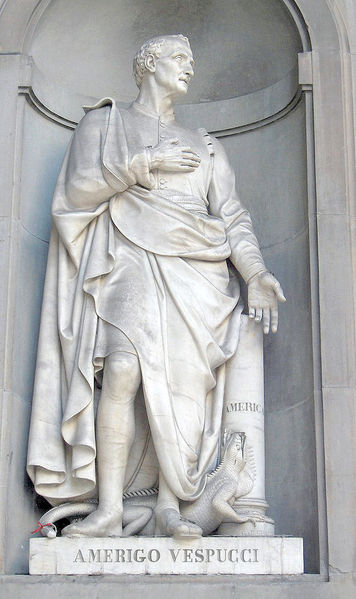
Amerigo is an obscure Italian male name made famous by Amerigo Vespucci, an Italian explorer, navigator and cartographer.

The continents of South and North America get their names from him. America being a feminized latinate version of Amerigo.

Amerigo itself comes from the Germanic elements haim meaning “home” and rich meaning “power, ruler; authority.”

Other forms of the name include:

  • Emerika (Basque)
  • Amèric/Emeric (Catalan)
  • Emmerik (Dutch)
  • Americ/Amery (English)
  • Emery (English: currently the 744th most popular male name in the United States-2008)
  • Aimeric/Aymeric/Émeric (French)
  • Aymeri/Aimery (French)
  • Emmerich (German)
  • Imre/Imrus (Hungarian)
  • Almerigo/Almerico (Italian)
  • Americo (Italian: modern form)
  • Emerico (Italian)
  • Merico/Merigo (Italian)
  • Americus (Latin)
  • Emerikas (Lithuanian)
  • Ajmeryk (P0lish)
  • Amalaryk/Amalryk (Polish)
  • Embryk/Emeryk (Polish)
  • Emmeric (Romanian)
  • Imrich (Slovak/Czech)
  • Américo (Spanish/Portuguese)
  • Emerico (Spanish)
  • Emerik (Swedish/Croatian)

A feminine form is the Spanish, América, currently borne by Ugly Betty star, America Ferrer.

Other feminine forms are:

  • Ameriga/Almeriga (Italian)