Titus

Titus (Roman Emperor)Gender: Masculine
Origin: Latin
Meaning: “title of honour.”
Eng (TY-tus)

The name comes from the Roman praenomen which is derived from the Latin, titulus, meaning “title of honour.”

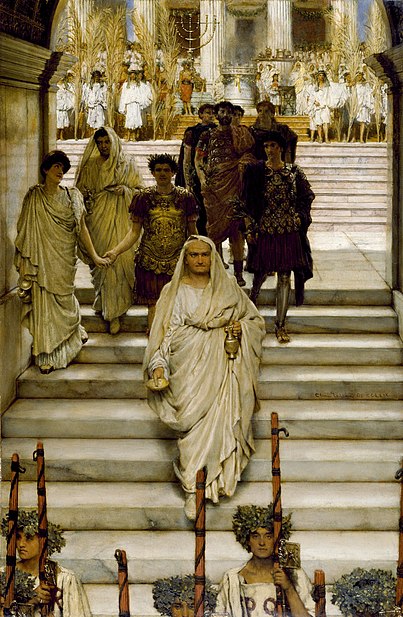
In Ancient History, the name is borne by Titus Flavius Vespasianus, the tenth Roman emperor in the Roman Empire and the second of the Flavian Dynasty.

In the New Testament, the name is borne by a companion of St. Paul who later became the first bishop of Crete and was a recipient of one of Paul’s epistles.

The name was also used by Shakespeare for his tragedy Titus Andronicus (1593).

Currently, Titus is the 253rd most popular male name in Germany, (2011) and the 397th most popular in the United States, (2010).

Other forms of the name include:

  • Tito (Aragonese/Basque/Galician/Italian/Portuguese/Spanish)
  • Titus (Czech/Danish/Dutch/English/French/German/Latin/Norwegian/Swedish)
  • Tiitus (Finnish)
  • Tite (French)
  • Titos Τιτος (Greek Biblical)
  • Titou τιτου (Greek Modern)
  • Titusz (Hungarian)
  • Títus (Icelandic/Slovak)
  • Titas (Lithuanian)
  • Titu Тітъ (Old Church Slavonic)
  • Tytus (Polish)
  • Tit Тит (Romanian/Russian/Croatian/Slovene)

An Italian, Portuguese and Spanish feminine form is Tita.

The designated name-day is January 4th.

Simeon, Simon

Gender: Masculine
Origin: Biblical, Hebrew
Meaning: “he has heard.”
Eng (SIE-mun)

Simeon first appears in the Old Testament as a patriach of the Simeonite tribe and one of the 12 sons of Jacob.

The name origins are debated. The Torah claims that the name is in reference to Leah’s cry of anguish to God over her husband’s deference to her. Being a derivative of the Hebrew shama’on meaning “he has heard my suffering.” In this case, the name would share the same etymology as the name Ishmael (God has heard).

In some classical Rabbinical texts the name is sometimes translated to mean “he who listens to the words of God.” It has even been suggested that it is derived from the Hebrew sham’in meaning “there is sin” which is in reference to Zimri, an ancestor of Simeon’s, who committed the sin of having a relationship with a Midianite woman.

The name was borne by several other characters in the Old and New Testament, in the forms of Simeon and Simon. Simon later became associated with St. Peter. During the early Christian era, the Greek world took the name to mean “snub nosed” due to its similarity in sound to the Greek word σιμοσ (simos).

Simon has always been prevalent in the Western World, it is currently very trendy in continental Europe. The rankings of popularity in various countries are as follows:

  • # 3 (Poland, Szymon, 2010)
  • # 7 (Austria, 2010)
  • # 10 (Belgium, 2009)
  • # 12 (Italy, Simone, 2008)
  • # 26 (Germany, 2011)
  • # 32 (Denmark, 2010)
  • # 37 (Sweden, 2010)
  • # 49 (France, 2009)
  • # 56 (the Netherlands, Siem, 2010)
  • # 60 (Croatian, Šimun, 2010)
  • # 60 (Norway, Simen, 2010)
  • # 64 (Norway, 2010)
  • # 71 (Croatia, Šime, 2010)
  • # 75 (the Netherlands, 2010)
  • # 91 (Hungary, 2010)

Other forms of the name include (divided alphabetically by origin)

  • Simeon Սիմէօն (Albanian/Armenian/Bulgarian)
  • Simon Симон Սիմոն (Albanian/Armenian/English/Finnish/German/Hungarian/Macedonian/Malayalan/Norwegian/Occitanian/Slovenian/Swedish/ Romanian)
  • Samān (Arabic)
  • Shamo (Assyrian)
  • Shamun ܫܡܥܘܢ (Assyrian)
  • Şımon (Azeri)
  • Ximun (Basque)
  • Shyman Шыман (Belarusian)
  • Symon Сымон (Belarusian)
  • Simó (Catalan)
  • Simone (Corsican/Italian)
  • Šime (Croatian)
  • Šimo (Croatian)
  • Šimun (Croatian)
  • Šimon (Czech/Prekmurian/Slovak)
  • Simion (Danish/Romanian)
  • Simoen (Danish)
  • Siemen (Dutch/Frisian)
  • Siem (Dutch)
  • Siimon (Estonian/Finnish)
  • Smeon ስምዖን, (Ethiopian)
  • Símeon /Símun (Faroese)
  • Sema (Finnish)
  • Semen (Finnish/Gascon)
  • Semjon (Finnish)
  • Semoi (Finnish)
  • Siim (Finnish)
  • Siimoni (Finnish)
  • Simeoni (Finnish)
  • Simo (Finnish/Serbian)
  • Symeon Συμεών (Greek)
  • Symeonos Συμεώνος (Greek)
  • Siimuut (Greenlandic)
  • Shimon שמעון (Hebrew)
  • Símon (Icelandic)
  • Síomón (Irish)
  • Sshimeoni (Kosovar)
  • Sīmanis (Latvian) 
  • Sīmans (Latvian)
  • Simons (Latvian)
  • Saimonas (Lithuanian)
  • Saimontas (Lithuanian)
  • Simanas (Lithuanian)
  • Simas (Lithuanian)
  • Simeonas (Lithuanian)
  • Simonas(Lithuanian)
  • Sime Симе (Macedonian)
  • Shimon (Malayalam)
  • Simen/Simian (Norwegian)
  • Simå (Norwegian dialectical form: Norrland & Østerdalen)
  • Sømjo (Norwegian dialectical form: Rogaland)
  • Simonu/Symeonu (Old Church Slavonic)
  • Symeon (Polish)
  • Szymon (Polish: Szymek and Szymuś are diminutives)
  • Simão (Portuguese)
  • Simeão (Portuguese)
  • Simun (Quecha)
  • Schimun (Romansch)
  • Semyon Семён (Russian)
  • Sim (Scottish)
  • Šimej (Slovene)
  • Simón (Spanish)
  • Jimeno (Spanish)
  • Ximeno (Spanish)
  • Simoni (Swahili)
  • Shemod (Syrian)
  • Shimeon (Syrian)
  • Semen/Symon Симон (Ukrainian)
  • Mişon (Turkish)
  • Seimon (Welsh)
  • Simwnt (Welsh)
  • Shimmel (Yiddish)

Feminine forms include:

  • Simona (Czech/Italian/Portuguese/Romanian/Slovak/Slovenian)
  • Simonia/Simonie (Danish)
  • Simoona (Finnish)
  • Simone (French)
  • Simonette (French)
  • Szimóna (Hungarian)
  • Szimonetta (Hungarian)
  • Símonía (Icelandic)
  • Simonetta (Italian)
  • Sima (Lithuanian)
  • Simonė (Lithuanian)
  • Szymona (Polish)
  • Simoneta (Portuguese)
  • Ximena (Portuguese/Spanish)
  • Simoneta/Šimona (Slovak)
  • Simeona (Slovene)
  • Jimena (Spanish)

The designated name-day is October 28, and October 30 in Slovakia.

Elijah, Elias

Gender: Masculine
Origin: Hebrew
Meaning: “Yahweh is God.”
Eng (ee-LIE-jah ; e-LIE-jah)
Eng (ee-LIE-us; eh-LIE-us)

The name is derived from the Biblical Hebrew, אֱלִיָּהוּ, (Eliyyahu), meaning, “Yahweh is God.”

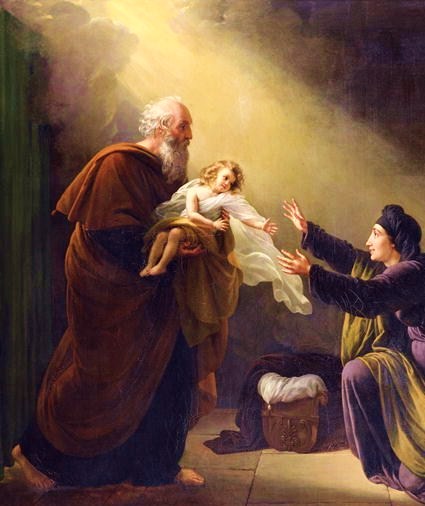
The name is borne in the Old Testament by an extremely important prophet who is speculated to have been alive around the 9th-century C.E.

Many miraculous occurrences were attributed to him, the most spectacular being that he could raise the dead, invoke fire from the sky and it is also believed that he ascended into heaven, (body and soul), via a chariot of fire flanked by cherubs.

He is an extremely popular figure in both Judaism and Christianity.

In the New Testament, it is believed that Elijah appeared with Moses during the Transfiguration of Christ.

Elijah has always been revered as a great saint by the Eastern Orthodox Churches, and in Russia and other Slavo-Orthodox nations, Elijah has been equated as a sort of folk character: he is responsible for bad weather if angered.

In Judaism, Elijah is invoked during the weekly Havdalah, the Passover seder and during the ritual circumcision.

In the the Church of Jesus Christ of Latter-Day Saints, it is believed that Elijah visited Joseph Smith and Oliver Cowdery in 1836.

Unlike other Old Testament names, Elijah has had a longer usage among Christians, going as far back as the Middle Ages. However, in Medieval England, the Middle English form of Elis, was more widely used.

In addition to the prophet Elijah, the name was also borne by at least two Catholic/Orthodox Saints.

Currently, Elijah is the 18th most popular male name in the United States, (2010). So far, this is the highest he has ranked in U.S. naming history. His rankings in other countries are as follows:

  • # 45 (Australia, 2010)
  • # 78 (Canada, B.C., 2010)
  • # 311 (the Netherlands, 2010)
  • # 427 (France, 2009)

His Hellenized counterpart of Elias, is also an up-and-comer, he is currently the # 141st most popular male name in the United States, (2010) and his rankings in other countries are as follows:

  • # 4 (Sweden, 2010)
  • # 9 (Austria, 2010)
  • # 10 (Norway, 2010)
  • # 13 (Germany, 2011)
  • # 18 (Denmark, 2010)
  • # 44 (Belgium, 2009)
  • # 119 (France, 2009)
  • # 225 (the Netherlands, 2010)

Other forms of the name include:

  • Ilyas إلياس (Arabic)
  • Ilia/Ilya Илья (Bulgarian/Old Church Slavonic/Russian)
  • Ilija Илија (Bulgarian/Croatian/Macedonian/Serbian)
  • Elies (Catalan)
  • Elijáš (Czech)
  • Elia (Dutch/Finnish/Georgian/Italian/Norwegian)
  • Eliah (English)
  • Eelis (Finnish)
  • Eljas (Finnish)
  • Élie (French)
  • Elias Ηλιας (English/Estonian/Finnish/German/Greek/Portuguese/Scandinavian)
  • Ellis/Elis (English)
  • Elija (German)
  • Elise ელისე (Georgian)
  • Eliou Ηλιου (Greek)
  • Eliyyahu/Eliyahu אֱלִיָּהוּ (Hebrew)
  • Éliás (Hungarian)
  • Illés (Hungarian)
  • Elías (Icelandic/Spanish)
  • Illyas (Indonesian)
  • Oillil (Irish-Gaelic)
  • Eliya (Kiswahili)
  • Helias (Latin: Biblical)
  • Habacus (Latin: Vulgate)
  • Elijas (Lithuanian)
  • Eliasz (Polish)
  • Ilie (Romanian)
  • Eliáš (Slovakian)
  • İlyas (Turkish)

A Romanian feminine form is Ilinca, (ee-LEEN-kah).

The name is borne by American actor, Elijah Wood (b. 1981)

The designated name days are March 24, July 20 and August 2nd.

Daniel, Danielle

Gender: Masculine
Origin: Biblical Hebrew
Meaning: “God is my Judge.”

If you are like me, you probably think Daniel is dull and overused. Then there is the other camp who might think this is a wonderful classic. It has the youthful nickname options of Dan and Danny and its used in just about every European country with such variants as the Italian Daniele and the Czech and Polish diminutive forms of Danek. Another plus is that, while the name has religious connotations, its doesn’t adhere to a specific denomination. It is fair game for both Jewish and Christian parents alike, Catholic and Protestant. It is even used among Muslims.

The name Daniel is found in the Old Testament, (it has its own book), composed of the Hebrew elements dan meaning “judge” and the 1st person possessive singular suffix of i plus El which was a reference to God.

As for the Biblical Daniel himself, according to the Bible, he was a Jewish boy who was captured by the Babylonians and employed as a sort of dream-reader, (sounds like a pretty cool job). Daniel was so good at his job that he eventually became famous, even among his Persian and Babylonian captives. Due to his prestige and influence, Daniel was also able to persuade his captors to release the Jews back to their homeland. There is far more to the Biblical Daniel’s story than I will write here, but he is probably most noted for his steadfast loyalty to his faith and people as well as his miraculous survival after being thrown in a den of lions.

In the United States, Daniel has been steadfast in its popularity. He currently comes in at # 5. Meanwhile, in the United Kingdom, he comes in at # 7. In Scotland at # 3. In Ireland # 4. While in Spain he comes in at a whopping # 2.

This forms is also used in the Czech Republic, Finland, French-speaking countries, German-speaking countries, Poland, Portuguese-speaking countries, Romania,  Scandinavia, Slovakia and Spanish-speaking countries

Other forms include :

  • Dana (Afrikaans)
  • Danieli (Albanian)
  • Danyal دانيال (Arabic)
  • Taniel (Armenian)
  • Danel (Basque)
  • Danilo (Bosnian/Croatian/Serbian)
  • Deniel (Breton)
  • Danail Данаил (Bulgarian)
  • Danelu (Corsican/Sardinian/Sicilian)
  • Daan (Dutch/Limburgish)
  • Daniël (Dutch)
  • Daaniel/Taaniel (Estonian)
  • Tanel/Tani (Estonian)
  • Taano/Tanno (Estonian)
  • Taneli/Tatu (Finnish)
  • Dāniyyêl דָּנִיֵּאל (Hebrew: Modern)
  • Dániel (Hungarian)
  • Daniló (Hungarian)
  • Dános (Hungarian)
  • Daniele (Italian: dahn-YAY-lay)
  • Daniello (Italian: an archaic version which died out in the 17th-century)
  • Danilo/Danilio (Italian: obscure)
  • Danielius (Lithuanian)
  • Daniilu Данїилъ (Old Church Slavonic)
  • Dani داني (Persian)
  • Daniyal دانيال (Persian)
  • Danil/Dănuṭ (Romanian: duh-NOOTS)
  • Daniil Даниил (Russian)
  • Daniele/Danijel (Slovene)
  • Dani/Däne/Dänu/Danü (Swiss-German: Bern dialect)
  • Danyal/Danyel(Turkish)
  • Deiniol (Welsh)

Czech diminutives are: Dan, Daník, Daneček, Danoušek, Danny, Dandýsek, Dady, Danda, Dáda, Danda, Dannys, Danušík and Dandýsek, Italian diminutive forms are: Nilo, Danio, Danino and Nilio.

Danya Даня is a common Russian and Ukrainian diminutive form.

Let us not forget its feminine versions of Daniella, Daniela and Danielle. As of 2010, its Spanish and Slavic diminutive form of Dania reached the top 1000, coming in as the 999th most popular female name in the United States.

The French Danielle, does not have the same staying power as its masculine counterpart. Though always more common as a middle name, Danielle is one of the quintessential names of the 1980s. In 1987, she came close to reaching the top 10 by hitting # 14. In the last popularity census, Danielle still comes in rather high at # 144.  Its Latinate counterpart of Daniela comes in a tad bit higher at # 121, while the Italian Daniella is all the way down at # 303.

Other forms are:

  • Danijela (Bosnian/Croatian/Serbian/Slovene)
  • Danaila (Bulgarian)
  • Daniela (Czech/German/Polish/Portuguese/Romanian/Scandinavian/Slovene/Spanish)
  • Danielle (English)
  • Danièle (French)
  • Danelia (Italian: obscure)
  • Daniella (Italian)
  • Danila/Danilla (Italian: obscure)

Italian feminine diminutives are : Dana, Dania and Nila.

Designated name-days are: July 21 (Germany/Hungary/Slovakia), December 10 (Poland/Lithuanian), December 11 (Denmark, Estonia, Finland, France, Norway, Sweden), December 17 (Greec/Czech Republic)
Gregory

Gender: Masculine
Origin: Greek
Meaning:”watchful; alert.”
(GREG-eh-ree)

The name is derived from the Late Latin male name, Gregorius, which is derived from the Greek, Gregorios Γρηγόριος, meaning, “watchful; vigilant; alert.”

The name was borne by several saints in the early church, including, St. Gregory Thaumaturgus (3rd-century), St. Gregory of Nyssa (4th-century), St. Gregory of Nazianus (4th-century) and St. Gregory of Tours (6th-century).

It was also borne by St. Gregory 1 the Great, a 6th-century pope and Doctor of the Church. Due to his notoriety, the name became a popular one chosen among popes thereafter.

Currently, Gregory ranks in as the 248th most popular male name in the United States. The highest he has ranked in U.S. naming history was in 1963 coming in as the 21st most popular male name. This may have been in part, due to the fame of American actor, Gregory Peck.

The designated name-days in the West are March 11 and September 3rd.

In the Eastern calendar, the designated name-days are: January 1, January 14, January 18, January 21, January 23, February 1, February 7, February 12, February 23, March 17, March 25, April 15, April 19, April 23, June 6, June 28, August 1, August 21, August 22, August 25, September 10, September 12, October 11, October 13, October 14, November 18, November 20, November 27, November 30, December 3, December 6, December 7, December 11 and December 20.

Other forms of the name include:

Jerjer جريجوري (Arabic)
Krikor/Grigor Գրիգոր (Armenian)
Ryhor Рыгор (Belarusian)
Grigor Григор (Bulgarian/Macedonian/Welsh)
Gregori (Catalan/Romansch)
Grgur (Croatian)
Řehoř (Czech)
Gregers (Danish/Norwegian)
Gregorius (Dutch/Latin)
Gregory (Dutch/English)
Graekaris (Faroese)
Reijo (Finnish)
Reko (Finnish)
Grégory/Grégoire (French)
Joris (Frisian)
Grigol/Grigoli გრიგოლი (Georgian)
Gregor (German/Hungarian/Icelandic/Romansch/Scottish/Slovak/Slovene)
Gergely (Hungarian)
Gréagóir (Irish-Gaelic)
Gregorio (Italian/Spanish)
Goretto (Italian: obscure)
Goriano (Italian: obscure)
Gorino (Italian: obscure)
Grigorijs (Latvian)
Gregoras/Gregorijus/Grigalius (Lithuanian)
Grigorii Григории, Григоріи (Old Church Slavonic)
Grzegosz (Polish)
Gregório (Portuguese)
Gligor/Grigore (Romanian)
Grigoriy Григорий (Russian)
Griogair (Scottish-Gaelic)
Grigoriye Григорије; Gligoriye Глигорије; Grgur Гргур (Serbian)
Grega/Gregori (Slovene)
Greger (Swedish)
Hryhoriy Григорій (Ukrainian)

Diminutives

Greg/Gregg (Dutch/English)
Gregie (Dutch)
Gergõ (Hungarian)
Gorio/Goro (Italian)
Grzeszek (Polish)
Grisha (Russian)
Greig (Scottish)
Goyo (Spanish)

Feminine forms include:

Jorina/Jorinna (Frisian)
Gregoria (Italian/Spanish)
Gregorina (Italian)
Goretta (Italian)
Gorina (Italian)

Source

  1. http://www.behindthename.com/name/gregory

Czesław

Gender: Masculine
Origin: Polish
Meaning: debated
(CHES-wahf)

The name is composed of the Old Slavic elements, cza- (referring to expectation) or chest (honour; worship).

The name was relatively common Poland at the start of the 20th-century all the way to the 1950s. The name is still prevalent, but is considered somewhat dated.

The name was often unofficially anglicized to Chester among Polish immigrants to the United States.

The name was borne by a 13th-century Polish saint; by Polish-Lithuanian poet Czesław Miłosz (1911-2004); and by famous Polish rock musician, Czesław Nieman (1939-2004).

Another Polish form, albeit rare, is Czasław.

Diminutives include: Czach, Czasz, Czaszek, Czaszko, Czesz, Czeszek, Czeszko, Czeszk, Czak and Czakan.

Polish feminine forms are Czesława and Czasława.

Female diminutives include: Czeszka & Czesia.

Other forms include:

  • Časlav Часлав (Croatian/Serbian)
  • Česlav (Czech/Slovak)
  • Ceslas (Dutch)
  • Ceslaus (Late Latin)
  • Česlovas (Lithuanian)
  • Chestislav Честислав (Old Church Slavonic)

A Lithuanian feminine form is Česlova.

Designated name-days are: January 12, April 19, April 20, July 20 and September 2 (Poland).

Sources

  1. http://www.behindthename.com/name/czesl16aw
  2. http://pl.wikipedia.org/wiki/Czesława

Bogdan

Gender: Masculine
Origin: Slavic
Meaning: “God given”

The name is composed of the Old Slavonic elements, bog meaning god and dan meaning “given.”

Since this is one of the very few names to include the element of dan, it is sometimes suggested to be a Scythian remnant, of whom the name Bagadata (same meaning) was frequent.

In the Southern Slavic countries, the name was often used as a vernacular translation of the Greek, Theodosios (given by God)”

The name is very common in just about all the Slavic countries.

Among Eastern European Jews, the name was often used as an equivalent for Nathaniel or Jonathan.

Other forms of the name include:

Bogdan (Bulgarian/Croatian/Polish/Romanian/Ukrainian)
Bohdan Богдан (Czech/Slovene/Serbian/Ukrainian)
Bogdán (Hungarian/Slovak)
Bodan (Polish: archaic)
Bogodan/Bogudan (Polish: archaic)

A Croatian/Serbian diminutive is: Boško.

Czech diminutives are: Bohdánek, Bóža, Dan, Boja, Bodik, Boďa and Bohdy.

Slovene diminutives include: Bogo, Dan, Danče, Danček, Dančo, Dane and Dani.

Bogdana is the feminine form used in all of the above listed countries.

Bohdana is the Ukrainian feminine form.

Bogdan was borne by several Moldovian rulers.

The designated name-days are: January 6 (Bulgaria); March 19 (Poland); July 17 (Poland); August 10 (Poland) and October 9 (Poland).

Sources

  1. http://en.wikipedia.org/wiki/Bogdan
  2. http://pl.wikipedia.org/wiki/Bogdan
  3. http://www.behindthename.com/name/bogdan

Philip

Gender: Masculine
Origin: Greek
Meaning: “lover of horses.”
ENG (FIL-ip)

The name is derived from the Greek Philippos (Φίλιππος), which is composed of the Greek elements φιλος (philos) meaning “friend; lover” and ‘ιππος (hippos) meaning “horse.”

The name was borne by several illustrious characters throughout history, including Philip of Macedon (the father of Alexander the Great), an apostle of Jesus, several early saints and several French monarchs.

The name has been popular in England since the Middle Ages and never really went out of fashion, even after the Reformation. Though in the United States, he ranks rather low, coming in as the # 378th most popular male name, his rankings in other countries are as follows:

  • # 3 Filip (Croatia, 2009)
  • # 5 Filip (Czech Republic, 2009)
  • # 44 Philip (Denmark, 2009)
  • # 4 Filip (Faroe Islands, 2009)
  • # 18 Philip/Philipp (Germany, 2009)
  • # 95 Filip (Ireland, 2008)
  • # 18 Filippo (Italy, 2007)
  • # 42 Filip (Norway, 2009)
  • # 80 Philip (Norway, 2009)
  • # 7 Filip (Poland, 2008)
  • # 10 Filip (Serbia, 2009)
  • # 26 Filip (Slovenia, 2005)
  • # 24 Filippo (Switzerland, among Italian-speakers, 2008)
  • # 11 Filip (Sweden, 2009)

Other forms of the name include:

  • Philippus (Afrikaans/Latin)
  • Philip Філіп (Belarusian/English/Scandinavian)
  • Fulub/Fulup (Breton)
  • Filip ФилипBulgarian/Croatian/Czech/Dutch/Finnish/Hungarian/Macedonian/Polish/Russian/Romanian/Romansch/Scandinavian/Slovak/Slovene
  • Felip (Catalan)
  • Filippus (Dutch)
  • Philipp (Estonian/German)
  • Vilpas (Finnish)
  • Vilppi/Vilppo/Vilppu (Finnish)
  • Philippe (French)
  • Filipe (Galician/Portuguese)
  • P’ilip’e ფილიპე (Georgian)
  • Filippos Φιλιππος (Greek: Modern)
  • Philippos Φίλιππος (Greek: Ancient)
  • Fülöp (Hungarian)
  • Pilib (Irish-Gaelic)
  • Filippino (Italian: obscure)
  • Filippo (Italian)
  • Filips (Latvian)
  • Pilypas (Lithuanian)
  • Piripi (Maori)
  • Felip (Occitanian)
  • Filippu Фїліппъ (Old Church Slavonic)
  • Felipe (Portuguese/Spanish)
  • Flep (Romansch)
  • Filipp Филипп (Romansch/Russian)
  • Filib (Scottish-Gaelic)
  • Pylyp Пилип (Ukrainian)
  • Fiłipo (Venetian)
  • Ffilip (Welsh)

Dutch diminutives are Flip and Flupke
English short forms are Pip and Phil
French diminutives include: Flit, Flitou, Phil, Philou and Pip
German short forms are Phil and Lips
Italian short forms are: Filo, Firpo, Lippo and Pippo
Polish diminutive is Filipek

Feminine versions include:

  • Filipa Филипа (Breton/Croatian/Polish/Portuguese/Serbian/Slovene)
  • Filippa Филиппа Φιλιππα (Danish/Finnish/Greek/Hungarian/Icelandic/Italian/Russian/Norwegian/Swedish)
  • Philippa (English/German)
  • Pippa (English: originally a diminutive form now occasionally used as an independent given name)
  • Philippina (German: obscure)
  • Hilppa (Finnish)
  • Philippine (French)
  • Filippina (Italian)
  • Filipina (Polish)
  • Felipa (Spanish)

Filippa is the 51st most popular female name in Sweden, (2009)

The name is currently borne by British Monarch, Prince Philip, Duke of Edinburgh (b.1921).

The designated name-day is May 3rd.

Sources

  1. http://www.askoxford.com/firstnames/philip?view=uk
  2. http://www.behindthename.com/php/find.php?name=philipp

Matthias, Mathias

Gender: Masculine
Origin: Hebrew
Meaning: “gift of yahweh.”
Eng (muh-THIGH-us); Germ/Scand (mah-TEE-ahs)

Matthias is a form of Matthew, but has been treated as a different name for centuries. He has been a staple in Central and Northern Europe, especially in Germany, the Netherlands and Scandinavia.

In the New Testament, the name was borne by the replacement of Judas Iscariot. Matthias was considered an apostle and according to legend, he went on to convert the Georgians where he died a martyr by crucifixion.

He is currently one of the most popular male names in all of Europe, his rankings are as follows:

  • # 8 Mathis (Belgium, 2008)
  • # 13 Matyáš (Czech Republic, 2009)
  • # 10 Mathias (Denmark, 2009)
  • # 8 Mattias/Mathias (Estonia, 2008)
  • # 60 Mathias (France, 2006)
  • # 71 Matthis/Mathis/Mattis/Matis (Germany, 2009)
  • # 131 Matthias (Germany, 2009)
  • # 54 Mátyás (Hungary, 2008)
  • # 31 Matthías (Iceland, 2008)
  • # 7 Mattia (Italy, 2007)
  • # 5 Mathias (Liechtenstein, 2008)
  • # 1 Matas (Lithuania, 2009)
  • # 1 Matthias (Malta, 2008)
  • # 6 Thijs (the Netherlands, 2009)
  • # 52 Ties (the Netherlands, 2009)
  • # 92 Matthijs (the Netherlands, 2009)
  • # 5 Mathias/Matias (Norway, 2009)
  • # 11 Maciej (Poland, 2008)
  • # 35 Matija (Slovenia, 2005)
  • # 90 Matjaz (Slovenia, 20o5)
  • # 97 Mattias (Sweden)
  • # 33 Mathis (Switzerland, among French-speakers, 2008)
  • # 4 Mattia (Switzerland, among Italian-speakers, 2008)
  • # 4 Mattia (Switzerland, among Romansch-speakers, 2008)

Other forms of the name include:

  • Matthias Ματθιας Матті́й (Afrikaans/English/French/German/Greek/Maltese/Scandinavian/Ukrainian)
  • Matthes (Afrikaans)
  • Mattheis (Afrikaans)
  • Matthies (Afrikaans)
  • Matta متى (Arabic)
  • Matai (Aramaic)
  • Matta/Mətta (Azeri)
  • Matia (Basque)
  • Maciej Maceй (Belarusian/Polish: MAHT-chay)
  • Matties (Catalan)
  • Matija Матија (Croatian/Serbian/Slovene)
  • Matyáš (Czech)
  • Matthijs (Dutch)
  • Thijs (Dutch: originally a diminutive form, now a very popular independent given name. TIES)
  • Ties (Dutch: originally a diminutive form, now a very popular independent given name. TEES)
  • Madis (Estonian)
  • Matias (Finnish/Portuguese)
  • Mat’at”a მატათა (Georgian)
  • Mathias (French/German/Scandinavian)
  • Mathis (French/German)
  • Matis (German)
  • Mattias (German/Swedish)
  • This (German)
  • Mathaios Ματθαιος (Greek: Biblical)
  • Makaio (Hawaiian)
  • Mattithyahu מַתִּתְיָהוּ (Hebrew)
  • Mátyás (Hungarian)
  • Maitiú (Irish-Gaelic)
  • Mattia (Italian)
  • Mathia (Kiswahili)
  • Matiass (Latvian)
  • Matas (Lithuanian)
  • Motiejus (Lithuanian)
  • Mathai (Malayalam)
  • Matius (Malay)
  • Matthia Матѳіа (Old Church Slavonic)
  • Täis (Plattdeutsch)
  • Matia (Romanian)
  • Mateias/Matteias (Romansch)
  • Teias (Romansch)
  • Tia (Romansch)
  • Tias (Romansch)
  • Maitias (Scottish-Gaelic)
  • Matia (Sardinian)
  • Maćij (Sorbian)
  • Matías (Spanish)

An obscure Feminine form is the Polish: Macieja

In France, the designated name-day is May 14.

The name has been borne by several Hungarian kings.

Sources

  1. http://www.behindthename.com/php/find.php?name=matthias
  2. http://www.askoxford.com/firstnames/matthias?view=uk
  3. http://www.newadvent.org/cathen/10066a.htm

Onesimus

Gender: Masculine
Origin: Greek
Meaning: “beneficial, profitable.”
Fre (oh-nay-SEEM)

The name is derived from the Greek, Ονησιμος, (Onesimos), which means, “beneficial, profitable.”

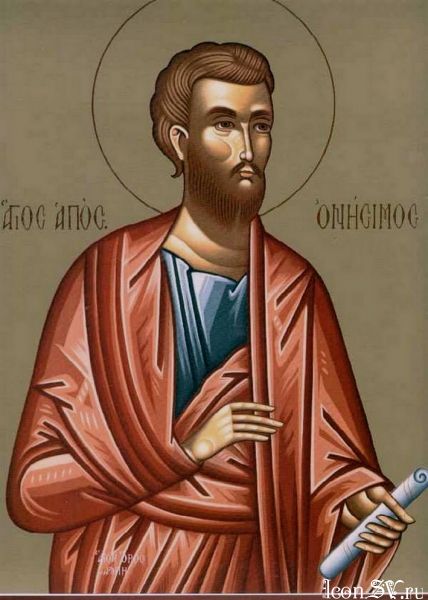
In the New Testament, it is the name of an escaped slave of Philemon who was converted by St. Paul. He is revered as a saint in the Orthodox and Catholic Churches.

Other forms of the name include:

  • Onesimus (Dutch/English/German/Latin)
  • Onésime (French)
  • Onésimo (Galician/Portuguese/Spanish)
  • Onisime ონისიმე (Georgian)
  • Onesimos Ονησιμος (Greek)
  • Onesimo (Italian)
  • Onisimu Онисїмъ (Old Church Slavonic)
  • Onezym (Polish)
  • Anisim/Onisim Анисим (Russian)

The designated name-day in France is February 16.

Sources

  1. http://www.behindthename.com/name/onesimus
  2. http://www.catholic.org/saints/saint.php?saint_id=4908
  3. http://wordbytes.org/saints/DailyPrayers/Onesimus.htm
  4. Paul Guérin (a cura di), Vie des Saints des Petits Bollandistes, Parigi, Bloud et Barral editori, 1876, tomo II, p. 545