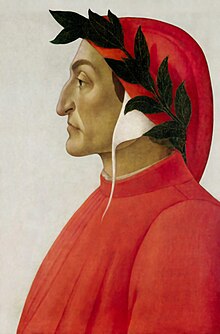
Bastian

Gender: Masculine
Origin: German

The name is a contracted form of Sebastian, originally used in Germany and the Netherlands, it is now used as an independent given name in several countries. It is currently the 17th most popular male name in Chile, (2010). His rankings in other countries are as follows:

  • # 69 (France as Bastien, 2008)
  • # 76 (Germany, 2011)
  • # 208 (the Netherlands as Bastiaan, 2010)

Other forms of the name include:

  • Bastiaan (Dutch)
  • Bastien (French)
  • Boštjan (Slovene)

A French feminine form is Bastienne.

Joachim, Joaquin

Gender: Masculine
Origin: Hebrew
Meaning: “Yahweh has established.”
Eng (JOKE-im); Sp (wah-KEEN)

The name is possibly derived from the Biblical Hebrew male name, Jehoiachin, which is found in the Old Testament as the name of king of Judah imprisoned during the Babylonian exile.

Joachim appears in the apocryphal Gospel of James as the name of the husband of St. Anne and the father of the Virgin Mary. In the Qu’ran the father of Mary is named Imran, though Joachim and Imran are not etymological related. The Catholic Church, Eastern Orthodox Churches and the Anglican Church has traditionally revered this legendary character as a saint and as a result, the name became extremely popular across Europe, especially in Catholic countries.

The name was never very common in the English-speaking world but was occasionally used by Irish-Catholics and American-Catholics.

Currently Joachim is the 319th most popular male name in France, (2009) and the 496th most popular in the Netherlands (2010). Its Spanish form of Joaquin, however, ranks even higher in a couple of countries. His rankings are as follows:

  • # 5 (Chile, 2010)
  • # 99 (Spain, 2010)
  • # 306 (United States, 2010).

Other forms of the name include:

  • Iyakem (Amharic/Ethiopian)
  • Chuaquín (Aragonese)
  • Xuaco/Xuacu (Aragonese)
  • Jokin (Basque)
  • Chaosum (Breton)
  • Joasim (Breton)
  • Jechim (Breton)
  • Joasin (Breton)
  • Jaouas (Breton)
  • Yoakim Йоаким (Bulgarian)
  • Yakim Яким (Bulgarian)
  • Yokim Йоким (Bulgarian)
  • Joaquim (Catalan/Portuguese)
  • Quim (Catalan/Portuguese)
  • Ximo (Catalan/Valencian)
  • Youakim (Coptic/Syrian)
  • Jáchym (Czech)
  • Jokum (Danish)
  • Jochem (Dutch/German)
  • Aki (Finnish)
  • Jaakkima (Finnish)
  • Joachim (English/French/German/Hungarian/Polish)
  • Kim (Finnish/Scandinavian)
  • Kimi (Finnish)
  • Xaquín (Galician)
  • Xoaquin (Galician)
  • Xocas (Galician)
  • Ioa’kime იოაკიმე (Georgian)
  • Achim (German)
  • Jochen (German)
  • Jochim (German)
  • Jóakim (Icelandic)
  • Gioacchino/Gioachino (Italian)
  • Giovacchino (Italian)
  • Yoakima (Lingala)
  • Joakim Јоаким (Macedonian/Serbian/Scandinavian) 
  • Akimka (Maldovan)
  • Iacin (Murcian)
  • Juaqui (Murcian)
  • Quino (Murcian)
  • Ioachim (Romanian)
  • Giuachin (Romansch)
  • Akim АкимЯким (Russian)
  • Yakim (Russian)
  • Joaquín (Spanish)
  • Joakym Йоаким (Ukrainian)

Feminine forms include:

  • Gioacchina (Italian)
  • Gioachina (Italian)
  • Giovacchina (Italian)
  • Joachima (Polish)


Maite

Gender: Feminine
Origin: Basque
Meaning: “beloved; loveable.”
(MY-tey)

The name could either be a contracted form of María Teresa or it could come directly from the Basque word meaning, “loveable; beloved.”

As of 2006, it was the 24th most popular female name in Chile and the 65th most popular female name in Mexico, (2010).

The name is borne by Mexican actress and singer, Maite Perroni (b.1983).

Sources

  1. http://es.wikipedia.org/wiki/Maite
  2. http://www.behindthename.com/name/maite-2
  3. http://www.babycenter.com.mx/pregnancy/nombres/nombres_populares_2010/

Assia

The name can either be from a Russian diminutive form of Anastasia or it may be from the Arabic آسية.

In the Qu’ran, it is the name of the wife of Pharoah, the women who found Moses and raised him as her own child. Unlike her evil husband, she is considered to be one of the most pious women who ever lived in Islamic tradition. The meaning and origin of the name seems to be lost.

It is currently the 104th most popular female name in France (2009) and the 472nd most popular in Quebec, Canada (2010).

It was borne by Assia Weville, the lover of English poet Ted Hughes. It is also borne by a French pop singer simply known as Assia.

Other forms of the name include:

  • Asiya (Azeri)
  • Asija (Bosnian)
Source

Rita

The name is a contraction of Margaret but seems to have been used as an independent given name since the Middle Ages.

It was borne by Rita of Armenia (1278-1333) a Byzantine Empress. The name was further popularized in Europe due to the cult of St. Rita of Cascia (1381-1457) a Medieval Italian saint.

The name is used across Europe, including Armenia. Currently, Rita is the 461st most popular female name in Quebec, Canada (2010).

In more recent history it was borne by actress Rita Hayworthe (1918-1987).

Other forms of the name include:

  • Riet (Dutch)
  • Reeta (Finnish)
  • Reetta (Finnish)
  • Riitta (Finnish)
  • Ryta (Polish)

A common Sicilian diminutive is Rituzza.

Source

  1. http://www.behindthename.com/name/rita

Maya

The name can either be from the Sanskrit meaning “illusion.” In this case it is the name of a concept found both in Hinduisim and Sikhism. It is also another name for the goddess Durga.

In Buddhism it is the name of the mother of Buddha.

It could also be a contraction of Maria.

In Eastern European languages, it is the word for May and may be used in reference to the month.

Currently, Maya is the 19th most popular female name in the United States, (2010). Her rankings in other countries are as follows:

  • # 46 (Australia, NSW, 2010)
  • # 51 (Belgium, 2010)
  • # 57 (England/Wales, 2010)
  • # 64 (Scotland, 2010)
  • # 67 (United States, 2010)
  • # 75 (France, 2009)
  • # 84 (Ireland, 2010)
  • # 91 (Norway, 2010)
  • # 193 (the Netherlands, 2010)

Spelled Maja she is one of the most popular female names on continental Europe. Her rankings are as follows:

  • # 1 (Sweden, 2010)
  • # 2 (Poland, 2010)
  • # 7 (Denmark, 2010)
  • # 10 (Slovenia, 2010)
  • # 19 (Norway, 2010)
  • # 26 (Croatia, 2010)
  • # 35 (Austria, 2010)
  • # 37 (Hungary, 2010)
  • # 54 (Ireland, 2010)
  • # 277 (the Netherlands, 2010)
Another form is the Finnish Maija.

Source

  1. http://www.behindthename.com/name/maja-2

Sadie

The name is a contraction of Sarah, but has been used as an independent given name since at least the 19th-century. It is also sometimes used as a short form of Mercedes.

In 1889 she was the 67th most popular female name in the United States. Today she ranked in as the 78th most popular female name in British Columbia, Canada (2010) and the 118th most popular in the United States, (2010).

In the United States, Sadie Hawkins’ Day is a folk holiday in which junior high girls invite boys to a dance.

Source

  1. http://www.behindthename.com/name/sadie

Lila

The name can have several different etymologies, in Sanskrit it is derived from the word  लीला (lilá) meaning, “play; amusement; sport.” In Hinduisim, lila is used to describe how the Universe is a playground for the Gods.

In English it could be an abbreviated form of Delilah, sometimes also spelled Lilah.

In German, Finnish, French and Spanish, it may be taken directly for the word for purple or lilac.

Currently, Lila is the 105th most popular female name in France and the 155th most popular in the United States. In English it is pronounced (LIE-lah) but in all other languages (LEE-lah).

Source

  1. http://www.behindthename.com/name/lila-1

Gianna

Gender: Feminine
Origin: Italian
(JAHN-nah)

Originally a contracted form of Giovanna, the name has been in use as an independent given name since the Middle Ages.

It is currently the 66th most popular female name in the United States (2010).

The name is also used in Greece pronounced (yee-YAH-nah).

Another form is Giannina. Masculine forms are Gianni and Giannino.

Source

  1. http://www.behindthename.com/name/gianna

Dante

Gender: Masculine
Origin: Italian
Meaning: “enduring.”
(DAHN-te)

The name is an Italian short form of the now archaic Italian male name Durante meaning “enduring.” It was popularized as an independent given name by the 13th-century Italian poet Dante Alighieri.

Currently, Dante is the 255th most popular male name in the United States, (2010) and the  420th most popular in the Netherlands (2010).

Among Italian-Americans, the name was often anglicized as Danny.

Other forms of the name include:

  • Duran (English)
  • Durando (Italian)
  • Durante (Italian)
  • Durantino (Italian)
  • Durans (Late Latin)

Source

  1. http://www.behindthename.com/name/dante