Theodore

Gender: Masculine
Origin: Greek
Meaning: “god’s gift.”

The name is derived from the Greek Theodoros (Θεοδωρος) which is composed of the elements θεος (theos) meaning “god” and δωρον (doron) “gift.” The name was borne by several early saints, two popes and three tsars of Russia.

In recent American history the name was borne by President Theodore Roosevelt (1858-1919) of whom the Teddy Bear was named for.

It is currently the 263rd most popular male name in the United States, (2010).

An interesting fact: Dorothy is derived from the same Greek roots but in reverse order.

Other forms of the name include:

  • Tewodros ተውዶሮስ (Amharic)
  • Tadros تادرس (Arabic: used among Arab Christians)
  • Todos ܛܘܕܘܫ (Aramaic: used among Assyrian and Chaldean Christians)
  • Hvejdar Хведар (Belarusian)
  • Teodor Теодор (Bulgarian/Catalan/Croatian/Czech/Danish/Estonian/Finnish/Hungarian/Polish/Romanian/Scandinavian/Slovakian/Slovene/Ukrainian)
  • Todor (Bulgarian/Serbiab/Northern Greek)
  • Theirn (Cajun)
  • Theodoor (Dutch)
  • Theodorus (Dutch/Latin)
  • Theodore თევდორე (English/Georgian)
  • Tuudor (Estonian)
  • Teuvo (Finnish)
  • Théodore (French)
  • Theodor (German)
  • Theodoros Θεόδωρος (Greek)
  • Thodoros Θόδωρος (Greek)
  • Fedor (Hungarian)
  • Tivadar (Hungarian)
  • Tódor (Hungarian)
  • Téodóir (Irish)
  • Teodoro (Italian/Portuguese/Spanish)
  • Todaro (Italian)
  • Teodors (Latvian)
  • Thei (Limburgish)
  • Teodoras (Lithuanian)
  • Toše Тоше (Macedonian)
  • Tiodore (Occitanian)
  • Toader (Romanian)
  • Tudor (Romanian/Welsh)
  • Fedor Федор (Russian/Slovene)
  • Fjodor Фёдор (Russian)
  • Teodoru (Sicilian)
  • Fedja (Slovene)
  • Todor (Slovene)
  • Fedir Федір (Ukrainian)
  • Tewdwr/Tudur (Welsh)
Common diminutives include:
  • Tosho Тошо (Bulgarian)
  • Toshko Тошко(Bulgarian)
  • Ted/Teddy (English)
  • Tedo თედო (Georgian)
  • Fedja Федя (Russian)

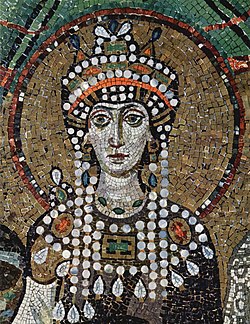
Its feminine form of Theodora was very popular in Byzantium, it was borne by at least five Byzantine Empresses including Empress Theodora who is also revered as a saint.

Other feminine forms include:

  • Teodora Теодора თეოდორა (Bulgarian/Catalan/Crotian/Georgian/Italian/Macedonian/Polish/Portuguese/Romanian/Serbian/Slovene/Spanish/Swedish)
  • Todorka Тодорка (Bulgarian/Macedonian)
  • Theodora Θεοδώρα (Czech/English/German/Greek)
  • Theda (English/German)
  • Théodora (French)
  • Teodóra (Hungarian)
  • Fedora Федора (Russian/Slovene)
  • Feodora Феодора (Russian)

Lawrence

Gender: Masculine
Origin: Latin
Meaning: “from Laurentum.”
Eng (LAW-rents)

The name is derived from the Latin cognomen Laurentius meaning “from Laurentum.” It was popularized by an early Roman deacon, martyr and saint who was roasted alive when he refused to turn over church property to the Roman authorities. According to legend, he is the patron saint of comedians because when he was being roasted he told his torturers “turn me over, I am done on this side.”

It was borne by several other saints.

Lawrence has been a popular given name since Medieval times and it consistently appeared in the U.S. top 100 from 1880-1971. By 1972 it mysteriously and suddenly fell completely out of popularity and it has been so since. It is currently only the 457th most popular male name, (2010).

Other forms include:

  • Nadja/Nadjeh (Arabic: used among Arab Christians)
  • Toufiq  لورنس (Arabic: used among Arab Christians)
  • Loren (Aragonese)
  • Lorient (Aragonese)
  • Lari (Basque)
  • Lawrencij Лаўрэнцій (Belarusian)
  • Laorañs (Breton)
  • Llorenç (Catalan)
  • Larenzu (Corsican)
  • Lovrenco (Croatian)
  • Lovre (Croatian. Currently the 58th most popular name in Croatia, 2010)
  • Lovro (Croatian)
  • Vavřinec (Czech/Slovak: literally from the Czech word for laurel, it has been used as the proper cognate for Lawrence since Christianity was introduced to the area)
  • Laurits/Lauritz (Danish/Estonian/Icelandic/Norwegian)
  • Lasse (Dutch/Norwegian/Swedish. LAHS-se)
  • Laurens (Dutch)
  • Loris (Dutch/French/German/Italian. Currently the 100th most popular male name in France, 2009)
  • Rens (Dutch. Currently the 79th most popular male name in the Netherlands)
  • Larkin (English: a Medieval diminutive form of Lawrence)
  • Lauri (Estonian/Finnish)
  • Lars (Finnish/Norwegian/Swedish. Currently the 14th most popular male name in the Netherlands, the 23rd most popular in Belgium and the 57th most popular in Norway)
  • Lassi (Finnish)
  • Laurent (French)
  • Laurentin (French)
  • Lourens (Frisian)
  • Labhrás (Gaelic) 
  • Loenso (Genovese)
  • Laurenzius (German: archaic)
  • Lenz (German)
  • Lorenz (German)
  • Lavrentios Λαυρεντιος (Greek)
  • Lőrinc (Hungarian)
  • Lárus (Icelandic)
  • Lorenzo (Italian/Spanish. Currently the 5th most popular male name in Italy and 52nd most popular in France (2009). It is also the 187th most popular in the Netherlands and the 322nd most popular in the United States, 2010)
  • Laurentius (Latin)
  • Lau (Limburgish)
  • Lor (Limburgish)
  • Laurynas (Lithuanian)
  • Lawrenz (Maltese)
  • Laurys (Manx)
  • Louothains (Norman)
  • Lavrans (Norwegian)
  • Laurenç (Occitanian)
  • Lleurant (Occitanian)
  • Laurencjusz (Polish)
  • Laurenty (Polish)
  • Wawrzyniec (Polish: literally from the Polish word for laurel, it has been used as the proper cognate for Lawrence since Christianity was introduced to the area)
  • Lourenço (Portuguese)
  • Laurențiu (Romanian)
  • Lavrentie (Romanian)
  • Lurintg (Romansch)
  • Lavrenti Лаврентий ლავრენტი (Russian/Georgian)
  • Larentu (Sardinian)
  • Labhrainn (Scottish)
  • Lovrenc (Slovene)
  • Laurisch (Sorbian)
  • Lorencio (Spanish: Medieval)
  • Lorens (Swedish)
  • Lavrentij Лаврентій (Ukrainian)
  • Lorenso (Venetian)
A common English diminutive is Larry a less common one Laurie
  • Toufiqia (Arabic)
  • Laurendia (Basque)
  • Laurenza (Corsican)
  • Laurenzia (Corsican)
  • Laurentien (Dutch)
  • Renske (Dutch)
  • Laurence (French)
  • Laurentine (French)
  • Lavrentia Λαυρεντία (Greek)
  • Lorentina (Italian)
  • Lorenza (Italian/Spanish)
  • Lorenzina (Italian)
  • Larentia (Latin)
  • Laurentina (Latin)
  • Laurencja (Polish)
  • Laurentyna (Polish)
Source

Adelaide

Gender: Feminine
Origin: Old German
Meaning: “noble kind; noble sort.”
Eng (AD-ə-layd)

An English form of the German name, Adelheid, it is composed of the Germanic elements, adel (noble) and heid (kind, sort, type). It was borne by a 10th-century saint and wife of Otto the Great.

Its popularity in the English-speaking world was sparked in the 19th-century when William IV took Adelaide of Saxe-Meiningen as his wife. As a result, several places throughout the former British Empire were named in her honour, including Adelaide, Australia.

In addition, the name has been borne by several other royal personages throughout history.

Currently, Adelaide is the 434th most popular name in the United States, (2010).

Other forms of the name include:

  • Adelgjejda Адэльгейда (Belarusian)
  • Adeljajda АдэлЯйда (Belarusian)
  • Adelaid (Breton)
  • Adelaida Аделаида (Catalan/Czech/Hungarian/Russian/Slovene/Spanish)
  • Adléta (Czech)
  • Adelaide (Danish/English/Italian/Portuguese/Swedish)
  • Alhed (Danish)
  • Adelheid (Dutch/Finnish/German/Norwegian)
  • Adelheidis (Dutch)
  • Aleida (Dutch/German)
  • Alida (Dutch/Hungarian/Latvian)
  • Aadelheide (Estonian)
  • Alide (Estonian)
  • Adélaïde (French)
  • Alette (French/Norwegian)
  • Aleit (Frisian)
  • Elke (Frisian)
  • Talea (Frisian)
  • Tale (Frisian)
  • Talia/Thalia (Frisian)
  • Talisa (Frisian)
  • Talke/Thalke (Frisian)
  • Adelaira (Galician)
  • Delaira (Galician)
  • Alheit (German)
  • Alke (German)
  • Heide (German)
  • Heidi (German)
  • Adina (Hungarian)
  • Aletta (Hungarian/Italian)
  • Alett (Hungarian)
  • Alitta (Hungarian)
  • Adelasia (Italian: archaic)
  • Aalis (Medieval French)
  • Alides (Norwegian: archaic)
  • Adalais (Occitanian)
  • Asalais or Azalaïs (Occitanian)
  • Ahlheid (Plattdeutsch)
  • Ahlheit (Plattdeutsch)
  • Adelajda (Polish)

Common English diminutives are: Addie, Del and Lady.

The designated name-days are: January 30 (Poland), February 5 (Poland), December 12 (Poland), December 16 (Estonia/Germany/Poland), December 17 (France).

Source

  1. http://www.behindthename.com/name/adelaide

Nia

The name has several different origins and meanings, it could either be from the Swahili word meaning “purpose,”, in which case, it is the name of the of the 5th day of Kwanzaa which celebrates the principle of community.

It can also be a Welsh form of the Gaelic Niamh.

In South Eastern Europe, such as Croatia, Slovenia and Greece it is a contracted form of Antonia, now used exclusively as an independent given name.

Currently, Nia is the 90th most popular female name in Slovenia (2010) and the 469th most popular in the United States. Another form is the Slovene Nija.

The name is borne by actresses Nia Long and Nia Vardalos.

Sources

  1. http://www.behindthename.com/name/nia-1
  2. http://www.behindthename.com/name/nia-2
  3. http://www.beliefnet.com/Love-Family/Holidays/Kwanzaa/Day5.aspx
  4. http://www.officialkwanzaawebsite.org/NguzoSaba.shtml

Asia

Gender: Feminine
Origin: Greek Ασιη Ασια
Meaning: uncertain
Eng (AY-juh)

The name is found in Greek mythology as the name of the daughter, (also referred to as Clymene and Clymene-Asie), of Oceanus and Tethys, the wife of Lepatus and mother of Atlas, Prometheus, Epimetheus and Menoetius. It was also the name of a Lydian nymph.

The etymology of the name is uncertain, the myth of Asia existed long before the area of what is now known as Turkey got its name. Herodotus argued that the region was in fact named for the Lydian nymph, while the ancient Lydians themselves claimed that their homeland got its name from a Sardisian prince named Asies.

In the English-speaking world, the earliest usage of the name seems to trace back to Asia Frigga Booth Clarke (1835-1888), the sister to the infamous presidential assassin John Wilkes Booth. Her father, Junius Brutus Booth, a famous actor in his time, chose the name as he believed the Garden of Eden was located in the continent of Asia. Asia Clarke is most noted for her memoires entitled John Wilkes Booth: a sister’s memoir.

Coincidentally, it is also the default Polish diminutive form of Joanna. In this case, it is pronounced (AH-shah).

Currently, Asia is the 23rd most popular female name in Italy (2008) and the 532nd most popular female name in the United States, (2010).

It is currently borne by Italian actress Asia Argento (b.1975).

The name has always been used as a female name in Greece.

Sources

  1. http://www.behindthename.com/name/asia-1
  2. http://www.theoi.com/Nymphe/NympheAsie.html
  3. Hesiod, Theogony – Greek Epic C8th-7th BC
  4. Apollodorus, The Library – Greek Mythography C2nd BC
  5. Herodotus, Histories – Greek History C5th BC


Rosemary, Romy

Rosemary seems to have been coined in the 19th-century, either being taken from the name of the herb or used as a combination of both Rose and Mary.

In the case of the herb, it is derived from the Latin ros marinus which literally means “dew from the sea.”

The name seems to have been especially common among Irish-Catholic families as the rose is a symbol for the Virgin Mary.

Its popularity peaked in 1946 when it was the 75th most popular female name in the United States. As of 2010, it was 720th most popular female name.

Its Germanic form of Rosemarie has spawned the diminutive of Romy, now commonly used as an independent given name in the Netherlands. As of 2010, Romy was the 55th most popular female name in the Netherlands and the 202nd most popular in France (2008).

Source

  1. http://www.behindthename.com/name/rosemary

Conrad, Cord, Kurt & Koen

It sounds like it could be the name of a law firm, but all of the above are derivatives of the Germanic name Conrad.

Conrad is composed of the Germanic elements, kuoni (brave) and rad (counsel). It was borne by a 10th-century Bavarian saint, and his name has left its mark on Catholic Germany since. In fact, it was a very popular name in Medieval Germany and Konrad has seemed to have been so common that the proverb Hinz und Kunz (the equivalent of the English, Every Tom, Dick & Harry) was created.

It was also borne by several illustrious German kings and dukes.

Conrad is still a fairly common name  modern Germany and is currently rising in popularity in the United States. As of 2010, it was the 772nd most popular male name. Its Dutch diminutive form of Koen has recently appeared in the U.S. top 1000, coming in as the 940th most popular male name (2010). In the Netherlands, Koen ranks significantly higher, he is the 39th most popular male name (2010). In English, it is pronounced (KOH-en) like the common Jewish surname, while in Dutch it is pronounced (KOON).

In 2009, Konrad was the 44th most popular male name in Poland.

The once popular Kurt and the newly introduced Cord are also Germanic contractions.

Other forms of the name include the following:

Conráu (Asturian)
Korrada (Basque)
Konrad Конрад (Belarusian/Bulgarian/Estonian/Finnish/Polish/Scandinavian/Slovene/Ukrainian/Russian)
Conradí (Catalan)
Conradu (Corsican)
Konrád (Czech/Hungarian/Slovak)
Coenraad (Dutch)
Kiefer (Dutch)
Koenraad (Dutch)
Konradijn/Conradijn (Dutch)
Kuber (Dutch)
Conrad (English/French/German/Swedish)
Konradin (German: archaic)
Kunó (Hungarian)
Konráður (Icelandic)
Corrado (Italian)
Corradino (Italian: archaic)
Konrads (Latvian)
Konradas (Lithuanian)
Kondrat (Polish: archaic)
Conrado (Portuguese/Spanish)
Corràdu (Sardinian)
Currado (Sicilian)
Curradino (Sicilian)

In German, Conrad/Konrad has a plethora of diminutives such as: Cohen, Conni, Conz, Curd, Keno, Koni, Konni, Konz, Kord, Kuno and Kuntz.

Feminine forms include:

Conradine/Konradine (German/Norwegian)
Corrada (Italian)
Corradina (Italian)
Konradyna (Polish)

The designated name-days are: February 14 (Poland), February 19 (Poland), April 21 (Hungary & Poland), June 1 (Poland), August 1 (Poland), October 4 (Poland), November 12 (Estonia & Poland), November 21 (Poland) and November 26 (Poland & Germany).

Source

  1. http://www.behindthename.com/name/conrad


Mina

The name has several origins, meanings and derivatives depending on where in the world you find the bearer of the name. In the Western world, it is a female name, a contracted form of Wilhelmina and Hermina. It was always common in Germanic and Scandinavian countries, but was first introduced into the English-speaking world through Bram Stoker’s Dracula (1897).

It is also an Indian name, derived from the Sanskrit word for fish मीना , it is sometimes transliterated as Meena. In Hinduism, it is the name of the daughter of the Goddess Usha and the God Kubera.

It is also a common Persian female name, being derived from the Farsi word for “blue glass; enamel; lapis lazuli.” It also coincides with the name of a valley near Mecca, and is therefore found as feminine given name in the Arabic-speaking world. In Arabic it means “port; harbor.”

Among Coptic Christians, it is a very popular male name. It is borne by a renowned early Christian Egyptian martyr and saint, known in the Western world as St. Menas. Mīna  مينا‎‎ is its original Coptic version and according to legend, the saint’s mother heard a voice saying “amen” while praying for a pregnancy.

Currently, Mina is 41st most popular female name in Norway (2010), the 314th most popular in France (2009) and the 961st most popular in the United States (2010).

The designated name-days are: November 24 (Poland) and December 23 (Lithuania/Poland).

Other forms its masculine Egyptian counterpart include:

Menna (Catalan)
Ménas (French)
Menas (Greek)
Mena (Italian: RARE)

Source

  1. http://www.behindthename.com/name/mina-1
  2. http://www.behindthename.com/name/mina-2


Ralph

Gender: Masculine
Origin: Old Norse
Meaning: wolf counselor
British English (RAFE); American English (RELF)

The name is derived from the Norse male name, Raðulfr, which is composed of the elements, rað (counsel) and ulfr (wolf). The name has been in usage in England since Anglo-Saxon times, due to viking settlers and remained common even after the Norman conquest. Throughout the centuries, the name has gone through an evolution. In Medieval times it was often rendered as Ralf, then by the 17th-century it was commonly spelled Rafe to reflect the proper pronunciation and by the turn of the century Ralph became a household name (pronounced RELF) in the United States. Within the United States, it was also commonly used as a diminutive form of Raphael or at least as an English equivalent by various immigrants.

The highest the name has ever ranked in U.S. naming history was between 1914 and 1917, consecutively ranking in at # 21. As of 2010, it was the 968th most popular male name. It is currently the 447th most popular male name in the Netherlands (2010).

Its Latin equivalent of Raul ranked in significantly higher, it was the 336th most popular male name in the United States (2010), the 48th most popular in Catalonia (2009) and the 32nd most popular in Spain (2010)

Other forms of the name include:

Raül (Catalan)
Rafe (English)
Ralf (English/German/Scandinavian)
Raul (Estonian/Italian/Portuguese)
Raoul (French)
Radulf (German)
Raulo (Italian)
Rault (Old French)
Raoult (Old French)
Roul (Old French)
Raðulfr (Old Norse)
Raou (Occitanian)

Raúl (Spanish)

Ralphie is a common diminutive form in the English-speaking world.

The name was borne by a 12th-century male saint. It is also borne by Ralph Waldo Emerson.

Designated name-days are: March 7 (Estonia), March 27 (Sweden) July 7 (France), August 27 (Sweden)

Raul is also the name of a volcanic island in the Kermadec archipelago.

Sources

  1. Ernst Förstemann, Altdeutsches namenbuch (1900), page 1219
  2. http://www.behindthename.com/name/ralph

Daniel, Danielle

Gender: Masculine
Origin: Biblical Hebrew
Meaning: “God is my Judge.”

If you are like me, you probably think Daniel is dull and overused. Then there is the other camp who might think this is a wonderful classic. It has the youthful nickname options of Dan and Danny and its used in just about every European country with such variants as the Italian Daniele and the Czech and Polish diminutive forms of Danek. Another plus is that, while the name has religious connotations, its doesn’t adhere to a specific denomination. It is fair game for both Jewish and Christian parents alike, Catholic and Protestant. It is even used among Muslims.

The name Daniel is found in the Old Testament, (it has its own book), composed of the Hebrew elements dan meaning “judge” and the 1st person possessive singular suffix of i plus El which was a reference to God.

As for the Biblical Daniel himself, according to the Bible, he was a Jewish boy who was captured by the Babylonians and employed as a sort of dream-reader, (sounds like a pretty cool job). Daniel was so good at his job that he eventually became famous, even among his Persian and Babylonian captives. Due to his prestige and influence, Daniel was also able to persuade his captors to release the Jews back to their homeland. There is far more to the Biblical Daniel’s story than I will write here, but he is probably most noted for his steadfast loyalty to his faith and people as well as his miraculous survival after being thrown in a den of lions.

In the United States, Daniel has been steadfast in its popularity. He currently comes in at # 5. Meanwhile, in the United Kingdom, he comes in at # 7. In Scotland at # 3. In Ireland # 4. While in Spain he comes in at a whopping # 2.

This forms is also used in the Czech Republic, Finland, French-speaking countries, German-speaking countries, Poland, Portuguese-speaking countries, Romania,  Scandinavia, Slovakia and Spanish-speaking countries

Other forms include :

  • Dana (Afrikaans)
  • Danieli (Albanian)
  • Danyal دانيال (Arabic)
  • Taniel (Armenian)
  • Danel (Basque)
  • Danilo (Bosnian/Croatian/Serbian)
  • Deniel (Breton)
  • Danail Данаил (Bulgarian)
  • Danelu (Corsican/Sardinian/Sicilian)
  • Daan (Dutch/Limburgish)
  • Daniël (Dutch)
  • Daaniel/Taaniel (Estonian)
  • Tanel/Tani (Estonian)
  • Taano/Tanno (Estonian)
  • Taneli/Tatu (Finnish)
  • Dāniyyêl דָּנִיֵּאל (Hebrew: Modern)
  • Dániel (Hungarian)
  • Daniló (Hungarian)
  • Dános (Hungarian)
  • Daniele (Italian: dahn-YAY-lay)
  • Daniello (Italian: an archaic version which died out in the 17th-century)
  • Danilo/Danilio (Italian: obscure)
  • Danielius (Lithuanian)
  • Daniilu Данїилъ (Old Church Slavonic)
  • Dani داني (Persian)
  • Daniyal دانيال (Persian)
  • Danil/Dănuṭ (Romanian: duh-NOOTS)
  • Daniil Даниил (Russian)
  • Daniele/Danijel (Slovene)
  • Dani/Däne/Dänu/Danü (Swiss-German: Bern dialect)
  • Danyal/Danyel(Turkish)
  • Deiniol (Welsh)

Czech diminutives are: Dan, Daník, Daneček, Danoušek, Danny, Dandýsek, Dady, Danda, Dáda, Danda, Dannys, Danušík and Dandýsek, Italian diminutive forms are: Nilo, Danio, Danino and Nilio.

Danya Даня is a common Russian and Ukrainian diminutive form.

Let us not forget its feminine versions of Daniella, Daniela and Danielle. As of 2010, its Spanish and Slavic diminutive form of Dania reached the top 1000, coming in as the 999th most popular female name in the United States.

The French Danielle, does not have the same staying power as its masculine counterpart. Though always more common as a middle name, Danielle is one of the quintessential names of the 1980s. In 1987, she came close to reaching the top 10 by hitting # 14. In the last popularity census, Danielle still comes in rather high at # 144.  Its Latinate counterpart of Daniela comes in a tad bit higher at # 121, while the Italian Daniella is all the way down at # 303.

Other forms are:

  • Danijela (Bosnian/Croatian/Serbian/Slovene)
  • Danaila (Bulgarian)
  • Daniela (Czech/German/Polish/Portuguese/Romanian/Scandinavian/Slovene/Spanish)
  • Danielle (English)
  • Danièle (French)
  • Danelia (Italian: obscure)
  • Daniella (Italian)
  • Danila/Danilla (Italian: obscure)

Italian feminine diminutives are : Dana, Dania and Nila.

Designated name-days are: July 21 (Germany/Hungary/Slovakia), December 10 (Poland/Lithuanian), December 11 (Denmark, Estonia, Finland, France, Norway, Sweden), December 17 (Greec/Czech Republic)