Lena

Eng (LEE-nuh; LAY-nuh); Germ (LEH-nah)

The name is currently very popular in German-speaking countries and the most popular consensus is that it is a contraction of Magdalena or Helena.

It also happens to be the name of a river in Siberia, of which, Lenin took his name. Lena’s usage in Russia may be in reference to the river, but I have been unable to confirm if this is so.

In Poland, its usage as an independent given name is recorded as early as 1418, though the name did not become popular in Poland until the last 10 years.

It was also very in vogue at the turn of the 20th-century in the United States.

It is currently the 3rd most popular female name in Austria, (2010) and her rankings in other countries are as follows:

  • # 9 (Poland, 2010)
  • # 10 (Germany, 2011)
  • # 16 (France, 2009)
  • # 44 (Belgium, 2009)
  • # 47 (Hungary, 2010)
  • # 68 (Croatian, 2010)
  • # 83 (Ireland, 2010)
  • # 94 (Slovenia, 2010)
  • # 121 (Netherlands, 2010)
  • # 382 (United States, 2010)

Other forms of the name include:

  • Lena Лена (Croatian/Dutch/English/French/German/Hungarian/Italian/Polish/Russian/Scandinavian/Slovene/Ukrainian)
  • Lenka Ленка (Czech/Slovak/Slovene/Serbian/Sorbian)
  • Lene (Danish/German/Norwegian)
  • Leni (Danish/German)
  • Lenette (Danish)
  • Lenna (Estonian)
  • Leena (Finnish)
  • Leeni (Finnish)
  • Lenke (Hungarian)
  • Lejna (Sorbian)
  • Leńka (Sorbian)
The name was borne by singer, actress and civil rights activist, Lena Horne (1917-2010). It is also borne by Swedish actress, Lena Olin (b.1955) and Swedish pop singer, Lena Philipsson (b.1966)

Annika

Gender: Feminine
Origin: Swedish
Eng/Swe: (AHN-nik-kah)

The name is believed to be derived from a low German diminutive form of Anna and was popularized in Sweden via a character in Astrid Lingren’s Pippi Longstockings.

The name has experienced usage in surrounding Northern European countries, such as Estonia, Norway and Finland, and has become very popular in German-speaking countries. It is currently the 49th most popular female name in Austria, (2010). Her rankings in other countries are as follows:

  • # 52 (Germany, 2011)
  • # 379 (Netherlands, 2010)
  • # 466 (United States, 2010).

Other forms of the name include:

  • Anika (Danish/Polish/Slovene)
  • Annika (Danish/Dutch/Estonian/Faroese/Finnish/German/Icelandic/Norwegian/Swedish)
  • Anneke (Dutch)
  • Anneken (Dutch)
  • Annikka (Finnish)
  • Annikki (Finnish)
  • Annukka (Finnish)
  • Anniken (Norwegian)
  • Annica (Swedish)

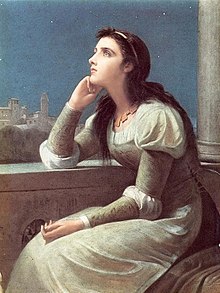
Juliet

Gender: Feminine
Origin: English
(JOO-lee-et, JOOL-yət)

The name is probably an anglicized form of the Italian, Giulietta, which was originally a diminutive form of Giulia.

In the English-speaking world, the name is first found in Shakespeare’s Romeo & Juliet (1596) which he based on Luigi Porto’s Giulietta e Romeo (1530)

Currently, Juliet is the 285th most popular female name in the United States, but its Spanish form of Julieta is currently the 6th most popular female name in Argentina, (2009). Her rankings in other countries are as follows:

  • # 21 (Belgium, Juliette, 2009)
  • # 22 (France, Juliette, 2009)
  • # 139 (the Netherlands, Juliette, 2010)
  • # 371 (United States, Juliette, 2010)

Other forms of the name include:

  • Cülyetta (Azeri)
  • Juliette (French)
  • Xulieta (Galician)
  • Juliet’a ჯულიეტა (Georgian)
  • Giulietta (Italian)
  • Džuljeta (Latvian/Lithuanian)
  • Julietta (Polish)
  • Julieta (Portuguese/Romanian/Spanish)
  • Dzhul’etta Джульетта (Russian)


Candela

Gender: Feminine
Origin: Spanish
Meaning: “candle.”
kahn-DE-lah

The name literally means “candle” in Spanish, but as a given name is contracted from the name Candelaria which is Spanish for Candlemas. Candlemas is a holiday that occurs on February 2nd and commemorates the day Christ was prensented in the Temple and the Virgin Mary’s purification. Originally, the name was usually given to girls born on the holiday.

Currently, Candela is the 7th most popular female name in Argentina, (2009). Her rankings in other countries are as follows:

  • # 37 (Spain, 2010)
  • # 80 (Catalonia, 2009)
In Chemistry, candela is an SI base unit used to measure luminous intensity.

Bettina

Gender: Feminine
Origin: Italian

The name is from a Medieval Italian diminutive form of either Elisabetta or Benedetta. One of its earliest attestations is that of Bettina d’Andrea (d.1335) a famous Italian legal scholar of Medieval Italy.

The name was later introduced to Germany via Elisabeth Catharina Ludovica Magdalena Brentano (1785-1859), a German countess of Italian descent who was a prolific writer, novelist and one of the pioneers of German romanticism, her pen name was Bettina von Arnim.

The name has also been used in Hungary, the English-speaking world, the Netherlands and Scandinavia. Currently, Betina is the 98th most popular female name in Brazil. Another German form is Bettine.

Nico

The name could either be a contraction of Nicholas or Nicodemus or come directly from the Greek νικη (nike) meaning, “victory.”

The name is currently very popular in German-Speaking countries. It is the 23rd most popular male name in Austria, (2010) and the 28th most popular in Germany, (2011). His rankings in other countries are as follows:

  • # 23 (Croatia, Niko, 2010)
  • # 82 (Slovenia, Niko, 2010)
  • #591 (United States, Nico, 2010)
  • # 788 (United States, Niko, 2010)

Sol

Gender: Feminine
Origin: Old Norse/Latin/Spanish
Meaning: “sun”

The name is believed to be of ancient Indo-European roots and in Norse Mythology, she is the personification of the sun. Sól appears in Old Nordic literature, such as, the Prose Edda, where she is attested as being the sister of the Moon (Máni) and the daughter of Mundilfari. It is foretold that in the coming days of Ragnarók, she shall be devoured by the Fenris wolf, but beforehand, she shall give birth to a daughter who will take her place after the great battle.

Many scholars have theorized that the goddess may be an extension of a proto-European bronze age goddess and may be related to the Sanskrit Surya. This theory is supported by the fact that similar attestations and names appear in other Pre-Christian European religions, such as the Lithuanian Saulė, the Gaulic Saulis and the Slavic Solnitse. In Roman mythology, Sol was personified as a man.

In modern Spanish, Swedish and Norwegian, it is the word for sun and is occasionally bestowed as a female given name. It has recently become more common in Latin America, where it was originally used as a short form of Marisol, but is now more often used as an independent given name.

Currently, Sol is the 27th most popular female name in Argentina, (2009).


Antonella

Gender: Feminine
Origin: Italian

Originally an Italian diminutive of Antonia, it is now used strictly as an independent given name both in Italy and abroad. It is especially popular in Italian diaspora communities. It is currently the 6th most popular female name in Chile, (2010) and the 21st most popular in Argentina (2009).

Another form of the name is the Croation, and occasionally, Spanish form Antonela.

In fact, Antonela is currently the 80th most popular female name in Croatia, (2010).

The name is borne by Italian-Argentine actress, Antonella Costa (b.1980).

Alphonse, Alonso

Gender: Masculine
Origin: German
Meaning: “noble and ready.”

The name is believed to be derived from a Visigothic male name Adalfuns which is composed of the elements adal (noble) and funs (ready). It has also been associated with another Visigothic name Hildefuns meaning (battle ready). The name has always been popular in its various forms throughout Southern Europe, especially in the Iberian Peninsula where it was borne by several kings.

In its French form of Alphonse, it is the name the title character in Alexander Dumas’ 1873 book Monsieur Alphonse, which recounts the exploits of a pimp. Due to this literary association the name has come to mean “pimp” in several languages, most notably in Danish and in Polish.

Its Spanish form of Alonso, however, remains a very common name throughout the Spanish-speaking world. It is currently the 16th most popular male name in Chile (2010). It is also the 84th most popular in Spain (2010) and the 637th most popular in the United States (2010).

The more archaic Italian and Spanish form of Alfonso appears in the U.S. top 1000, coming in as the 742nd most popular male name (2010).

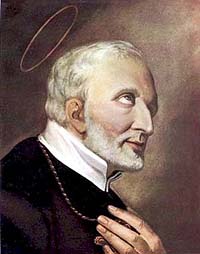
The name was most famously borne by St. Alphonsus Liguori, an Italian saint who founded the order of the Redemptorists and is considered a Doctor of the Church by the Catholic Church.

Other forms of the name include:

  • Adalfuns (German: archaic)
  • Alifonso (Aragonese)
  • Alfonsu (Asturian/Sardinian/Sicilian)
  • Fonsu (Cantabrian)
  • Alfontso (Basque)
  • Alfoñs (Breton)
  • Alfons (Catalan/Czech/Dutch/Finnish/German/Maltese/Polish/Romanian/Scandinavian: also the word for pimp in Polish and Danish)
  • Fons (Dutch)
  • Funs (Dutch)
  • Alfo (Finnish)
  • Alhvo (Finnish)
  • Altto (Finnish)
  • Alphonse (French)
  • Afonso (Galician/Portuguese)
  • Alphons (German)
  • Alfonz (Hungarian)
  • Alfonzino (Italian)
  • Alfonso (Italian/Portuguese/Spanish)
  • Alfonzo (Italian)
  • Alonzo (Italian)
  • Alphonsus (Late Latin)
  • Alfonss (Latvian)
  • Funske (Limbergish)
  • Alfonsas (Lithuanian)
  • Alonso (Portuguese/Spanish)
  • Affonzu (Sicilian)
  • Arfansu/Arfanzu (Sicilian)
  • Alfonz (Slovak/Slovene)

Feminine forms include:

  • Alphonsine (French)
  • Alfonza (Hungarian)
  • Alfonzin (Hungarian) 
  • Alfonzina (Hungarian)
  • Alfonsa (Italian/Portuguese/Spanish)
  • Alfonsina (Italian/Portuguese/Spanish)
  • Alfonza (Italian)
  • Alfonzina (Italian)

Franco

Gender: Masculine
Origin: Italian

The name is a contracted form of Francesco and is commonly used as an independent given name, especially in among the Italian diaspora. It is currently the 8th most popular male name in Argentine, (2009), the 33rd most popular in Chile (2010) and the 838th most popular in the United States, (2010).

The name was in fact banned from usage in Argentina until recently due to its negative associations with the Spanish dictator Francisco Franco.

A feminine form is Franca.