Gabija

Gender: Feminine
Origin: Lithuanian
Meaning: “to cover; to console; to bend.”
(gah-BIH-yah)

Borne in Lithuanian mythology by the goddess of fire or hearth, the name can either be traced to the Lithuanian element gaubti, which could either mean “to cover; to protect; to bend” or “to console.”

Other sources suggest that Gabija is a newly designated name for the goddess, whose true name has been lost to history. Some sources have suggested that the goddess was given a new name by the Polish historian, Jan Łasicki in 1615, being a corruption of the Russian Gafiya, which is an archaic form of Agatha.

According to Łasicki, the sacred fire of the household was thought to be an incarnation of Gabija herself, it was essential for devotees to keep the fire alive and to feed it bread and salt. The women of the household were required to put the fire to bed, by stoking it to sleep, so that the fire wouldn’t wonder off to places where it was not allowed to be.

If Gabija was ever angered, she would take revenge by burning your house down.

Gabeta and Gabieta are other forms.

A male form is Gabijus.

In 2005, she was the most popular female name in Lithuania and in 2008, she was overthrown by Ona, and became the 2nd most popular female name in Lithuania.

The designated name-day is January 9.

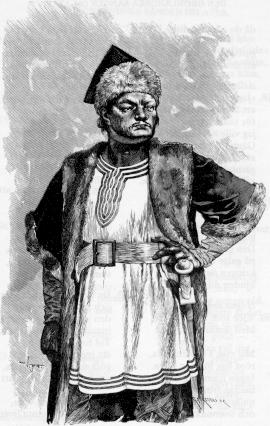
Attila

Gender: Masculine
Origin: Hungarian
Meaning: debated

A classic Hungarian male name that strikes a tone of fear and historical curiosity for the rest of Europe, the meaning and actual origins of the name have been long debated.

Among the many possible derivations that have been suggested are:

  • From an old Turkic source meaning “big river.”
  • From an old Turkic composition, being composed of the elements, at meaning “horse”, and tilla meaning, “arrow.”
  • From a Gothic, (Germanic source), meaning “little father”, being a derivative of the Gothic word atta (father), with the Latin diminutive suffix –ila, added
  • From a Hunnic source, avithohol, meaning “bred by a deer” or “weened by a deer.”

Many sources believe that the true form of the name has been lost to history, as it may have been a misinterpretation or mistranslation of another name that the Latin speaking chroniclers wrote wrong.

In Hungary, the designated name-day is January 7, and the name is occasionally used in Italy.

Emily, Emil

Gender: Feminine
Origin: Latin
Meaning: “rival.”
(EM-ih-LEE)

The name is an anglicization of the Roman gens name Aemilius which was derived from the Latin aemulus meaning, “rival.”

Contrary to popular belief, Emily is not related to the Germanic, Amalia/Amelia, which is most likely derived from the Germanic element, amal, meaning “to work.”

Emily is just the English feminine form of the Germanic, Emil.

It is believed that Emily was introduced into the English speaking world in the 18th-century, after the German Hanover line had inherited the British throne, but evidence shows that Emily had been in usage in England since at least Norman times and that it may have been introduced through the Normans in 1066.

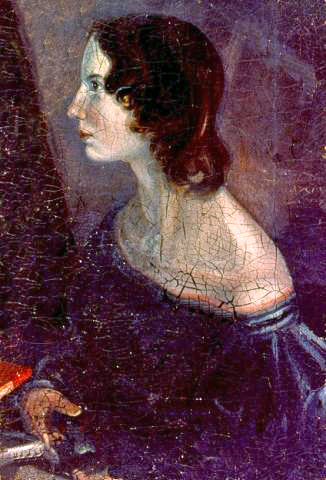
The name was borne by famous American poet, Emily Dickenson (1830-1886) and by English novelist and poet, Emily Brontë (1818-1848).

In modern history, Emily has been extremely popular in the English speaking world for at least a decade. She is currently the 3rd most popular female name in the United States-2008, and was # 1 in 2007, but was overthrown by the similar sounding Emma.

The lowest that Emily has ranked in U.S. history was in 1962, coming in as the 274th most popular female name.

In other countries, her rankings are as follows:

  • # 5 (Australia, 2008)
  • # 3 (Canada, B.C., 2008)
  • # 72 (Chile, 2006)
  • # 3 (England/Wales, 2008)
  • # 7 (Germany, 2009)
  • # 4  (Ireland, 2008)
  • # 3 (Isle of Man, 2008)
  • # 8 (Luxembourg, 2008)
  • # 137 (the Netherlands, 2008)
  • # 6 (New Zealand, 2009)
  • # 6 (Northern Ireland, 2009)
  • # 4 (Scotland, 2009)

Its more Latinate counterpart of Emilia is as follows:

  • # 6 (Faroe Islands, 2008)
  • # 9 (Finland, among Finnish-speakers, 2007)
  • # 2 (Finland, among Swedish-speakers, 2007)
  • # 3 (Iceland, 2004-2007)
  • # 5 (Liechtenstein, 2008)
  • # 401 (United States, 2008)

Its masculine counterpart has never been widely used in the English speaking world, but has been a long time favorite in Northern Europe.

The last time Emil was seen in the U.S. top 1000 was in 1984, coming in at # 967.

The highest that Emil ever ranked in U.S. naming history was at # 90, back in 1881, the same year that the United States saw a huge influx of Scandinavian immigrants.

Currently, Emil is the 5th most popular male name in Norway (2007) and the 9th most popular in Sweden (2007).

Other forms of Emily are:

  • Emiliya Емилия (Bulgarian)
  • Emílie (Czech: eh-MEEL-yeh)
  • Emilý (Faroese)
  • Émilie (French: ay-mee-LEE. 24th most popular female name in Belgium-2006; 41st most popular in France-2006; 292nd most popular in the Netherlands-2008.)
  • Émilienne (French)
  • Eimíle (Gaelic-Irish)
  • Emelie (German/Swedish: 48th most popular female name in Sweden; EM-eh-LEE)
  • Emilie (German/Danish/Dutch/Norwegian/Swedish: EM-ih-LEE)
  • Emele (Hawaiian)
  • Emilía (Icelandic)
  • Emilia (Italian/Dutch/Estonian/Faroese/Finnish/Polish/Romanian/Scandinavian/Spanish: 16th most popular in Chile-2006; 97th most popular in England/Wales-2008; 18th most popular in Sweden-2007).
  • Emiliana (Italian/Portuguese/Romanian/Spanish)
  • Emilietta/Milietta (Italian: obscure diminutive form that were used as independent given names)
  • Aemilia (Latin: ay-MEE-lyah)
  • Aemiliana (Latin)
  • Emīlija (Latvian)
  • Emilija (Lithuanian/Serbian/Croatian/Slovene)
  • Emília (Portuguese/Hungarian/Slovak: 83rd most popular female name in Hungary-2008)
  • Emilja (Slovene)
  • Emilijana (Slovene)
  • Emila (Spanish: obscure, Emilia is more common)

Masculine forms include:

  • Emilli (Basque)
  • Emilion (Breton)
  • Milig (Breton)
  • Emil Емил (Bulgarian/Serbian)
  • Emili (Catalan)
  • Emiel (Dutch)
  • Eemil (Estoanian/Finnish)
  • Eemeli (Finnish)
  • Émile (French)
  • Émilien (French)
  • Amil (German)
  • Emil (German/Croatian/Czech/Faroese/Hungarian/Icelandic/Norwegian/Polish/Slovene/Swedish)
  • Emilián (Hungarian)
  • Emiliano (Italian/Spanish)
  • Emilietto (Italian: obscure diminutive form that was used as an independent given name)
  • Emilio (Italian/Portuguese/Spanish)
  • Miliano (Italian: obscure contracted form)
  • Aemilianus (Latin)
  • Aemilius (Latin/Dutch)
  • Aimil (Manx/Scottish)
  • Emilian (Romanian)
  • Emilij (Russian)
  • Jemilijan (Russian)
  • Emilijan (Serbo-Croatian/Slovene)
  • Ymil/Yjmil (Silisian: a dialect of Polish)
  • Emilijano (Slovene)
  • Emilij (Slovene)
  • Emilijo (Slovene)

The name-days for Emily/Emilia are:  May 19 (Finland); May 23 (Poland); June 24/30 (Poland); July 19 (Hungary); August 19 (Poland); November 14 (Sweden); November 24 (Poland/Slovakia).

The name-days for Emil are: January 31st (Slovakia); May 22 (Czech Republic/Poland); May 28 (Hungary); July 18 (Bulgaria); August 5/8 (Poland); August 8 (Bulgaria); October 6/11 (Poland).

The masculine and feminine forms are borne by several saints and Emilia is the name of at least three Shakespearean characters.

Common English diminutives are Em, Emmie and Millie. A Spanish diminutive is Emilita. A Slavic diminutive is Emilka; in Polish it is sometimes Milcia.

Ethan

Gender: Masculine
Origin: Hebrew
Meaning: “strong; enduring; solid.”
Eng (EE-then); Heb (ay-TAHN)

Currently the 3rd most popular male name in the United States, Ethan is a Biblical Hebrew name that is mentioned eight times in the Bible.

Not much is known about the Biblical Ethan, other than that it was the name of a possible magi or cymbal player of King David.

The name’s popularity is relatively recent. It was not used much outside the Jewish community until after the Protestant Reformation, even then, the name was still very uncommon.

In 1880, Ethan did not appear in the U.S. top 1000, in 1884, he suddenly appeared coming in at # 613, then fell out of the top 1000 the next year, coming in again at # 846 in 1886.

For the next 80 or so years, Ethan had had a history of disappearing from the top 1000 every few years, and then reappearing, but never ranking very high. It wasn’t until, starting in 1956, that Ethan remained steadily in the top 1000 each year.

For ’56, he was the 948th most popular male name.

Ethan jumped several places towards the end of the 1980s. He came in at # 236 in 1988 and then jumped a couple hundred spots the following year, cracking the top 100, he came in at # 87 for 1989.

In 2002, he hit the top 10, coming in at # 5.

His popularity in other countries are as follows:

  • # 10 (Australia, 2007)
  • # 36 (Belgium, 2006)
  • # 1 (Canada, B.C., 2008)
  • # 15 (England/Wales, 2008)
  • # 24 (France, 2006)
  • # 46 (Ireland, 2007)
  • # 31 (Scotland, 2008)

Other forms of the name include:

  • Etan (German/Polish)
  • Aithan Αιθαν (Greek: Biblical)
  • Eitan/Eytan אֵיתָן (Hebrew: Modern)

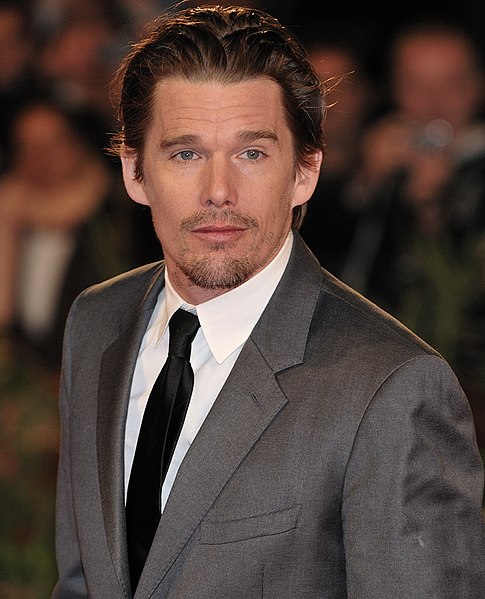
The name is also borne American revolutionary Ethan Allen (1738-1789) and by actor, Ethan Hawke (b. 1970).

It is also the name of the protagnostis in Edith Wharton’s novel Ethan Frome (1911)

Michael

Gender: Masculine
Origin: Hebrew
Meaning: “who is like God?”
Eng (MI-kel)

One of the most prevalent male names in the Western World, and to a certain extent, the Middle Eastern world, the name is derived from a rhetorical Hebrew question מִיכָאֵל (Mikha’el) meaning “who is like God?” or “who is like El” the answer being that no one is like God.

This is in reference to the legend of when one of God’s most powerful angels, (Lucifer depending on the theological tradition), became so arrogant and prideful that he built an army of angels in order to overthrow the throne of God, thinking that he himself could be like God, Michael is believed to have smite the fallen angel, asking him the question “who is like God?” after casting him out of the gates of heaven.

According Mormon saint theology, “who is like God?” refers to the idea that Michael was Adam before he was created by God in human form. The meaning of the name explains that all humans are created in God’s image.

Michael is believed to be a powerful angel in Islamic, Christian and Jewish tradition. He appears several times in the Bible, being mentioned in the Book of Daniel, the Book of Jude and the Book of Revelations. He even appears in the apocryphal Book of Enoch.

In Roman Catholicism, Michael is referred to as St. Michael the Archangel and is considered a powerful saint, especially powerful against demonic attacks and is the patron saint of chivalry, the warrior, police officers, paratroopers, firefighters, soldiers and fighter pilots. Among German Catholics, he is the patron saint of Germany, and in Belgium, he considered the patron saint of Brussels.

In the Eastern Christian tradition, is known as Taxiarch Archangel Michael or simply as Archangel Michael.

In Jewish tradition, Michael is the protector and heavenly warrior of Israel and the advocate of the Jews.

In Islam, he is mentioned in the Qu’ran once, in Sura 2:98 and that Michael was a good angel who stood on the left hand of God (Allah’s) throne.

The archangel is also important in the Bahai faith and the New Age religions.

He plays a role in John Milton’s epic poem, Paradise Lost.

There is no reason to explain why Michael is so popular, especially in the U.S. As of 2008, Michael was the 2nd most popular male name. He was moved down from the 1st position down to the 2nd position back in 1999, when he was overthrown by Jacob.

Between the years 1954 and 1999, Michael was the most popular male name. The lowest that Michael ever ranked in U.S. naming history was in 1892 when he came in as the 59th most popular male name in the United States. In other countries, Michael’s rankings are as follows:

  • # 36 (Australia, 2007)
  • # 36 (Canada, B.C. 2008)
  • # 4 (Denmark, 2009)
  • # 52 (England/Wales, 2008)
  • # 10 (Ireland, 2007)
  • # 239 (the Netherlands, 2008)
  • # 33 (Scotland, 2008)

The Michael form is also used in Afrikaans, Danish, Czech, German and Ripoarisch.

Other forms of the name include:

  • Mëhill/Mhill (Albanian)
  • Mighel (Amazigh/Moroccan)
  • Mikhael/Mikail ميخائيل‎, (Arabic/Coptic)
  • Miguel (Aragonese/Galician/Portuguese/Spanish: mee-GEL)
  • Mikael Միքաել (Armenian)
  • Micael (Asturian)
  • Mikayıl (Azeri)
  • Mikel (Basque)
  • Mitxel (Basque)
  • Miquèu (Bearnais/Occitanian/Gascon/Provençal)
  • Mickaël (Breton)
  • Mikael (Breton/Finnish/Icelandic/Norwegian/Swedish: a Finnish diminutive form is Mika)
  • Mihail Михаил (Bulgarian/Russian: Misha is the most common diminutive form)
  • Michjeli (Calabrian: Chjeli is the diminutive mee-KYAY-lee)
  • Miquel (Catalan: mee-KEL. Quelo is a common diminutive form)
  • Myghal (Cornish)
  • Michal (Czech/Slovak: mee-HAHL: 15th most popular male name in the Czech Republic-2007)
  • Mihajlo/Mihovil (Croatian: diminutive form is Miho)
  • Mihail Михаил (Croatian/Serbian)
  • Mikkel (Danish/Norwegian/Swedish: 6oth most popular male name in Norway-2007)
  • Maikel (Dutch: MY-kel)
  • Michaël (Dutch/Frisian: mee-kah-EL)
  • Michiel (Dutch: 307th most popular male name in the Netherlands-2008)
  • Miikael/Mikhel (Estonian)
  • Mikko (Finnish)
  • Michel (French: MEE-shel)
  • Michêl (Fruilian)
  • Mícheál (Gaelic-Irish)
  • Mìcheal (Gaelic-Scotch)
  • Micheil (Gaelic-Scotch)
  • Mikheil მიხეილი (Georgian)
  • Mikhael/Mikhalis Μιχάλης/Μιχαήλ (Greek: Μίκης (Mikis) is the common pet form))
  • Mikala (Hawaiian)
  • Micha’el מִיכָאֵל‎, (Hebrew)
  • Mihály (Hungarian: 60th most popular male name in Hungary-2008. Misi and Miska are the most common pet forms. MEE-hie)
  • Mikhael (Indonesian)
  • Michea (Italian: obscure/archaic mee-KAY-ah)
  • Michele (Italian: mee-KAY-lay)
  • Michelino (Italian: obscure)
  • Miķelis/Mihails (Latvian)
  • Mykolas (Lithuanian)
  • Mikail (Malayalam)
  • Mikiel (Maltese)
  • Mikaere (Maori)
  • Migueltzin (Nahuatl)
  • Michè (Neopolitan)
  • Miché/Michi (Norman)
  • Miqueu (Occitanian)
  • Mikhailu Мїхаилъ (Old Church Slavonic)
  • Michał (Polish/Sorbian: mee-HOW)
  • Mihai/Mihail (Romanian: diminutive form is Mihaita)
  • Micheli/Mikelli/Migali (Sardinian)
  • Mihailo Михаило (Serbian)
  • Miceli (Sicilian: Celi is a diminutive form. mee-KAY-lee)
  • Miha (Slovene: originally a diminutive form of Mihael, now used exclusively as an independent given name, it was the 11th most popular male name in Slovenia-2005)
  • Mihael (Slovene: 86th most popular male name in Slovenia-2005)
  • Mikâil (Turkish)
  • Mikhailo/Mykhailo Михайло (Ukrainian)
  • Michełe (Venetian)
  • Meical (Welsh)

English diminutive forms are: Mick, Micky, Mike and Mikey. German diminutive forms are Maik (pronounced like Mike), Maiki, Michi and Micki. A Swiss-German dialectical diminutive is is Michu (Bern)

There are also forms that mean “Michael Archangel” and are used in reference to the angel. These are:

  • Michelangelo (Italian)
  • Michelarcangelo (Italian)
  • Michelangiolo (Romansch)
  • Mihangel (Welsh)

Michelangela is an Italian feminine form.

An Italian smush is Michelantonio.

The feminine form of Michelle (an English corruption of the French feminine form Michèle), has been used in the English speaking world since the early 20th-century.

It currently ranks in as the 103rd most popular female name, and the highest it peaked was # 2, in the years 1968, ’69 and again in ’71, ’72.

Its Latinate feminine form has recently sparked in popularity as well (see Michaela for more details)

Other feminine forms include:

  • Micaela (Asturian)
  • Mikelle (Basque)
  • Miquèla (Bearnais)
  • Mikaela (Breton)
  • Miquela (Catalan/Occitanian/Gascon/Provençal)
  • Michelle (English/German: a phonetic corruption of the French Michèle)
  • Michèle (French)
  • Michéline (French: mee-shay-LEEN)
  • Michaelina/Michaeline (Irish: an Irish corruption of the French Micheline and the Italian, Michelina, common diminutive form is Micki/Micky. MY-keh-LEEN-ah; MY-keh-LEEN)
  • Michela (Italian: mee-KAY-lah)
  • Michelina (Italian: mee-kay-LEE-nah)
  • Michalina (Polish: mee-ha-LEE-nah: Michalinka and Misia are the diminutive forms)
  • Miguela (Spanish)
  • Miguelina (Spanish)

The designated name-day for Michael is September 29.

Isabella, Isabelle, Isabel

Gender: Feminine
Origin: Provencal/French/Spanish/Portuguese

It is generally believed that Isabel, or Isabella, was originally a Provençal cognate of the Hebrew Elisheva, (Elizabeth).

The Medieval Latinate form of Elizabeth, was Elisabel. Over the years, and eventually in Provençal, it was somehow condensed down to Isabel, (the El being dropped from the first syllable).

In the 12th-century, it spread throughout the rest of France, Italy, Spain and Portugal, becoming a popular name among most of their ruling houses.

The name even made an impression in Medieval England, after the marriage of Isabella of Angoulême to King Edward II, since then, Isabella and Isabel have been in wide usage in England and in other English-speaking countries.

In Spain, Portugal, France and Italy, this the more common cognate for Elizabeth, though it is still considered a parallel name.  Isabel/Ysabel are the Spanish forms, Isabelle the French and Isabella is the Italian form.

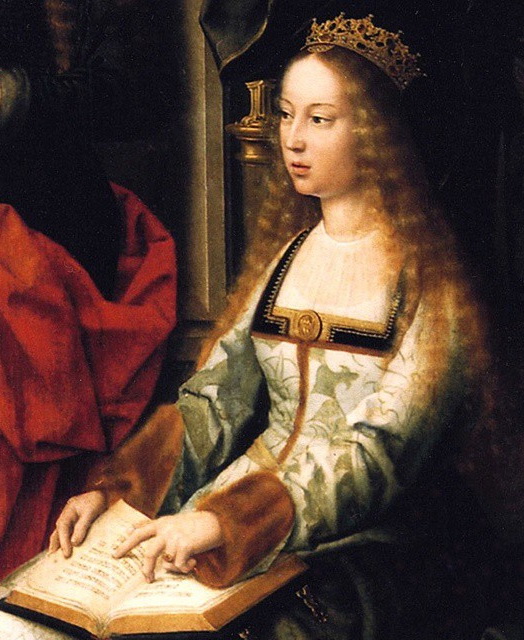
The name was further popularized in Southern Europe, and especially in Spain, after Isabella I of Castile hit the throne (1451-1504). Known for many exploits, the most famous association with her was her funding of Christopher Columbus’ exposition to the New World. She is still considered a national heroine in modern day Spain.

Other sources suggest that it is related to an ancient Phoenician name, possibly being related to Jezebel, which in Biblical Hebrew, was rendered as אִיזֶבֶל (‘Izevel), a Hebrew play on words meaning “not exalted,” but in Phoenician would have meant “exalted by Baal.”

In the Old Testament, Jezebel was a wicked queen who, eventually, in fulfillment of the prophecy of Elijah, was eaten by dogs.

Since the Jezebel of the Bible was so disdained, it is less likely that Isabel is related, rather, due to its similar sonority many scholars connected the name with Jezebel.

Currently, Isabella is the 2nd most popular female name in the United States. Just 20 years ago, in 1990, Isabella was the 893rd most popular female name, she jumped a couple hundred spots the following year, in 1991, coming in at # 698. Over the following 10 years, she kept jumping 200 hundred spots a year until she hit # 7 in 2004.

It is uncertain what exactly made Isabella from being a relatively unheard of name, to one of the most popular female names of the decade. It may have been due to the wide coverage of Nicole Kidman’s and Tom Cruise’s adopted daughter, Isabella Jane in 1992.

Isabella’s popularity does not stop in the United States, her rankings in other countries are as follows:

  • # 1 (Australia, 2007)
  • # 7 (Canada B.C., 2008)
  • # 89 (Chile, 2006)
  • # 18 (England/Wales, 2008)
  • # 72 (Ireland, 2007)
  • # 70 (the Netherlands, 2008)
  • # 76 (Norway, 2007)
  • # 69 (Scotland, 2008)
  • # 35 (Sweden, 2007)

and with the public’s attention on Stephanie Meyer’s vampire series, Twilight, in which the heroine is named Isabella Swan, it looks that Isabella may be here to stay for quite awhile.

Her Spanish sister of Isabel ranks in the top 100, coming in at # 96. Her rankings in other countries are as follows:

  • # 65 (Australia, 2007)
  • # 84 (Canada, B.C., 2008)
  • # 78 (Chile, 2006)
  • # 50 (England/Wales, 2008)
  • # 66 (Ireland, 2006)
  • # 59 (the Netherlands, 2008)
  • # 46 (Spain, 2006)

As for her French counterpart of Isabelle, she came in as the 98th most popular female name in the United States (2008). Her rankings are as follows:

  • # 30 (Australia, 2007)
  • # 34 (Canada, B.C., 2008)
  • # 17 (England/Wales, 2008)
  • # 43 (Ireland, 2007)
  • # 107 (the Netherlands, 2008)
  • # 22 (Sweden, 2007)

Other forms of the name include:

  • Zabel (Armenian)
  • Isabèu (Bearnais/Gascon/Provenςal)
  • Isabela Изабела (Croatian/Czech/Spanish/Portuguese/Romanian/Serbian. Isabela is the 533rd most popular female name in the United States-2008)
  • Bella/Belle (English: contractions of Isabella/Isabelle, also associated with the Italian and French words for beautiful. In 2008, Bella was the # 122nd most popular female name in the United States. In Australia it was the 41st most popular-2007. Belle, on the otherhand, did not rank in the U.S. top 1000, she was the #429th most popular female name in the Netherlands-2008)
  • Isbel (English: archaic form)
  • Isebeeuke (Flemmish)
  • Isabelle (French/English/German/Dutch)
  • Isabelline (French: archaic French diminutive form, used as an independent given name, and the name of a creme colour in English).
  • Isabeau (French: archaic, a medieval fraconized form of the Provençal Isabèu, in French, this is pronounced ee-zah-BOH).
  • Sabela (Galician)
  • Isabell (German)
  • Izabella (Hungarian/Latvian: 81st most popular female name in Hungary-2008)
  • Izabel/Izabell (Hungarian)
  • Ísabella (Icelandic)
  • Isibéal (Irish-Gaelic: ISH-bale)
  • Sibéal (Irish-Gaelic: SHIH-bale)
  • Isabella (Italian: Isa is the common pet form)
  • Isabèl/Isabèla (Occitanian)
  • Izabela (Polish/Slovakian/Slovene: a common Polish diminutive form is Iza)
  • Isabella Изабелла (Russian)
  • Beileag (Scotch-Gaelic: originally a diminutive form, used as an independent given name)
  • Iseabail (Scotch-Gaelic: ISH-uh-bel)
  • Ishbel (Scotch-Gaelic: anglicization of Iseabail)
  • Isobel (Scottish)
  • Ysabel (Spanish/Catalan: archaic form, still in usage)

English diminutives include Ibby, Izzy, Belle and Bella. Spanish diminutives include Isabelita, Belita and Chabeli. In French, the diminutive form is Zabou.

Isabella is also used in Danish, Dutch, Finnish, German, Norwegian and Swedish, as is Isabelle and Isabel.

An Italian masculine form is Isabello.

The name is also borne by several saints.

Its designated name-days are:

February 22 (France) and October 30 (Sweden).

Melchior

Gender: Masculine
Origin: Debated
Meaning: Debated

The name is of uncertain origin or meaning, but may be related to the Phoenician deity name, Melqart, which means “king city” or possibly even to the Hebrew components, malki (my king) and or (light), which would roughly translate as “my king is light.”

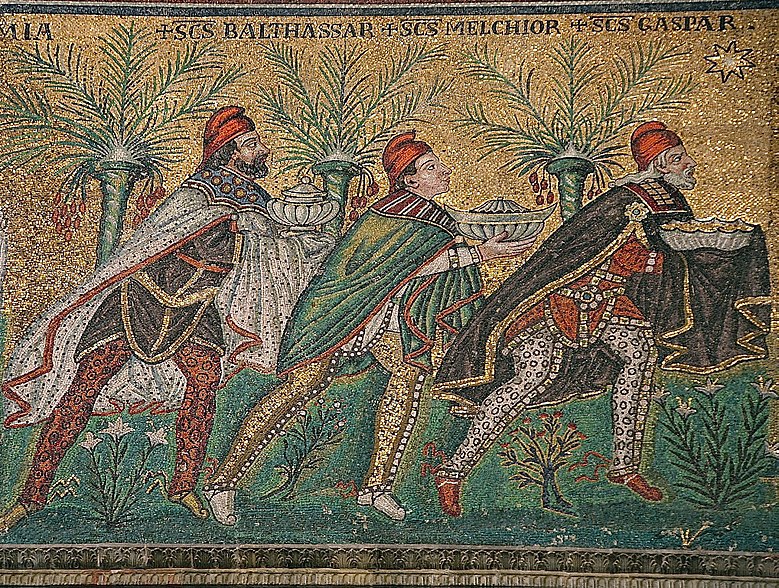
According to Christian lore, it is the name of one of the Three Wise Men (Magi) who visited Christ.

Its designated name-day is January 6th.

Other forms of the name include:

  • Meltxor (Basque)
  • Melcion/Melcior (Catalan)
  • Melchioru (Corsican)
  • Melkior (Croatian/Serbian/Slovene)
  • Melker (Danish/Norwegian/Swedish: currently very popular in Sweden, in 2007, it was the 54th most popular male name in Sweden)
  • Melchior (English/French/German/Polish/Slovak)
  • Malchior (German/Polish: older forms)
  • Marchal/Melcher (German: archaic)
  • Melchiorre (Italian)
  • Melchioras/Melkijoras (Lithuanian)
  • Merkelis (Lithuanian)
  • Melkjor (Maltese)
  • Marchion (Occitanian)
  • Melhior (Polish: very obscure)
  • Belchior (Portuguese)
  • Melkhior (Russian)
  • Melichar (Slovak)
  • Melchor (Spanish/Galician)

an obscure feminine form is Melchiora.

Balthazar

Gender: Masculine
Origin: Phoenician
Meaning: “Ba’al protects the king.”
Eng (Bel-the-Zar)

The name is believed to be a corruption of the Biblical Phoenician name, Belshazzar, which appears in the Book of Daniel as the name of a Babylonian king.

In Christian folklore, the name is attributed to one of the Three Wise Men, in both the Eastern and Western Christian Church, Balthazar is honored as a saint.

The designated name-day is January 6th.

Other forms of the name include:

  • Baltasar (Basque/Galician/Maltese/Spanish)
  • Hausl (Bavarian)
  • Balthazar (Catalan/English/French/Dutch/German)
  • Baltazaru (Corsican)
  • Baltazar (Croatian/Czech/Polish)
  • Hauser (German: Austrian dialectical form)
  • Boldizsár/Baltazár (Hungarian)
  • Baldasarre (Italian)
  • Baltazaras (Lithuanian)
  • Bautesar (Occitanian)
  • Balser/Balzer (Romansch)
  • Valtasar (Russian)
  • Baltazár (Slovak)
  • Boltežar (Slovene)
  • Baltsar (Swedish)

As for nicknames, Bolt might make an interesting choice.

Casper/Jasper

Gender: Masculine
Origin: Persian
Meaning: “treasurer; treasure bringer.”

Caspar, Casper and Jasper are Greek corruptions of an ancient Chaldean or Persian word, gizbar, which means “treasurer.” In modern Hebrew, gizbar is still the word for “treasurer.”

Traditionally, the name is attributed to one of the three Magi, or the Three Wise Men, who are noted for bearing the Christ child gifts. Gaspar is supposedly the one who brought frankincense.

The names of the Magi first appeared in Latin texts which date from the 9th-century C.E. Since then, the name has been in usage in Europe since the Middle Ages, and Gaspar/Caspar is attributed as a saint.

Currently, Jasper ranked in as the # 451st most popular male name in the United States. In Belgium, it is the 51st (2006) and in the Netherlands, the 35th (2008).

Casper did not make it into the U.S. top 1000, the name has not been in the top 1000 since 1933, when it came in as the 978th most popular male name for that year. Its disfavor may have been due to the popular children’s cartoon series, Casper the Friendly Ghost.

His rankings in other countries are as follows:

  • # 77 (the Netherlands, 2008)
  • # 86 (Norway, 2007)
  • # 46 (Sweden, 2007)

Other forms of the name include:

  • Karsudan (Amharic/Ethiopian)
  • Kagpha (Armenian)
  • Gasparu (Corsican)
  • Kašpar (Czech)
  • Jesper (Danish/Dutch/Norwegian/Swedish: YES-per. The 97th most popular male name in the Netherlands-2008, 56th most popular in Norway-2007 and the 74th most popular in Sweden-2007)
  • Kasper/Kaspar (Danish/Dutch/German/Maltese/Norwegian/Swedish)
  • Casper/Caspar (Dutch/English)
  • Jasper (Dutch/English/German: pronounced YAHS-per in Dutch and German)
  • Gaspard (French/Portuguese)
  • Jaspert (Frisian)
  • Gaspare (Italian: gahs-PAH-re)
  • Gasparo/Gaspero (Italian)
  • Gasparino/Gasperino (Italian)
  • Caspar/Gasparus (Latin)
  • Gaspars (Latvian)
  • Kasparas (Lithuanian)
  • Ġaspar (Maltese)
  • Kacper (Polish: most common form)
  • Kasper/Gaspar (Polish)
  • Gašpar (Prekmurian)
  • Chasper/Chispar (Romansch: diminutive is Chasprot)
  • Hasper (Romansch)
  • Papper (Romansch)
  • Tgasper (Romansch)
  • Aspano/Asparinu (Sicilian)
  • Gašpar (Slovene/Croatian)
  • Gaspar (Spanish/Basque/French/Occitanian)
  • Gushnasaph (Syrian)

Feminine forms are the Dutch Jasperine, the French Gasparine and the Italian Gasparina.

The designated name-day is January 6th.